
TL;DR

Get school and study supplies delivered free — and shop member deals
- Fast, free delivery on millions of items
- Access to Prime Big Deal Days deals on October 6–7
- Prime Video, Amazon Music and more included
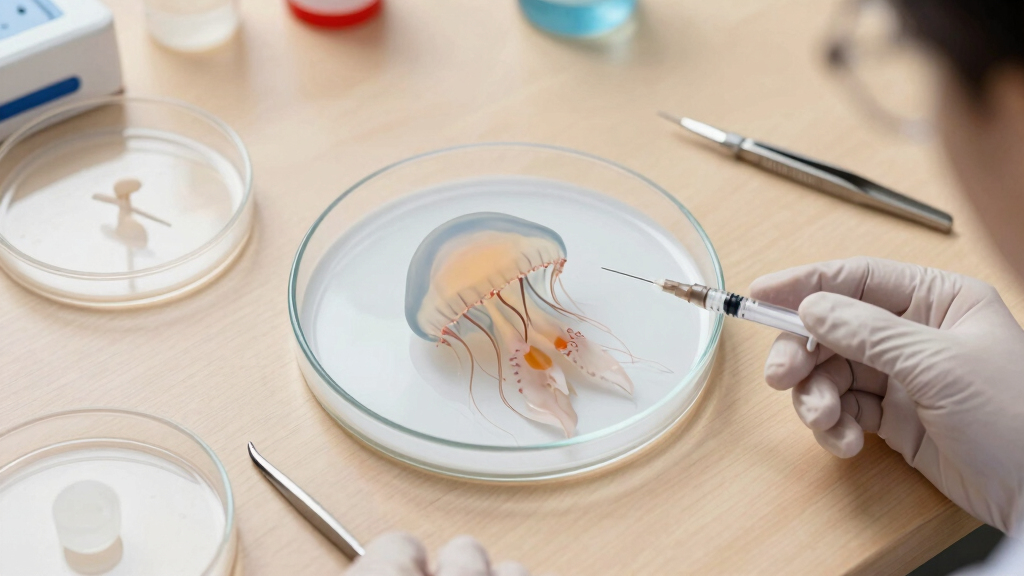
Recent studies confirm that jellyfish can rapidly heal wounds in minutes. Scientists are now exploring their biological mechanisms to develop new medical treatments. This discovery could revolutionize wound care.
Scientists have confirmed that jellyfish can heal wounds within minutes, a discovery that could have significant implications for medicine. This rapid regenerative ability has attracted attention from researchers seeking new ways to improve human wound healing and tissue regeneration.
Recent experiments conducted by marine biologists have demonstrated that certain species of jellyfish can close wounds remarkably quickly—within a few minutes. This rapid healing is attributed to unique cellular and molecular mechanisms that differ from those in humans. Researchers from multiple institutions are now investigating these mechanisms to understand how jellyfish achieve such swift tissue repair. The findings, published in a preliminary study, suggest that jellyfish possess specialized proteins and immune responses that facilitate rapid regeneration. While the research is still in early stages, the potential for translating these biological processes into human medicine has generated considerable interest among biomedical scientists and pharmaceutical developers.Potential Breakthroughs in Human Wound Treatment
The discovery that jellyfish can heal wounds so quickly could lead to revolutionary advances in medical care. If scientists can decode the biological processes behind this rapid healing, it may be possible to develop new treatments for chronic wounds, burns, and other tissue injuries. Such innovations could reduce healing times, lower infection risks, and improve outcomes for patients with difficult-to-heal wounds. The research also opens avenues for bioengineering tissues or creating new biomaterials inspired by jellyfish proteins. However, translating these findings from jellyfish to humans remains a complex challenge, and much research is needed before clinical applications are realized.
As an affiliate, we earn on qualifying purchases.
Previous Research on Marine Regeneration Capabilities
Jellyfish are known for their regenerative abilities, but recent studies have documented their capacity to close wounds in unprecedented timeframes. Historically, marine organisms like starfish and sea cucumbers have been studied for their regenerative properties, but jellyfish’s rapid wound closure is a new focus. The current research builds on earlier findings about jellyfish’s cellular responses to injury, with scientists now pinpointing specific proteins and immune responses involved. The discovery aligns with broader scientific efforts to understand natural regeneration and apply it to human medicine, although practical applications are still in early development stages.
“The speed at which jellyfish can close wounds is astonishing, and understanding their biology could unlock new pathways for regenerative medicine.”
— Dr. Emily Carter, Marine Biologist
As an affiliate, we earn on qualifying purchases.
Challenges in Applying Jellyfish Healing Mechanisms to Humans
While scientists have confirmed the rapid wound-healing ability of jellyfish, it is not yet clear how feasible it is to replicate or adapt these mechanisms for human medicine. The specific proteins and immune responses involved are still being studied, and translating these biological processes into safe, effective treatments presents significant scientific and technical challenges. Researchers caution that much remains unknown about the complexity of jellyfish regeneration and how it might be harnessed in human tissues.
biomaterials for tissue regeneration
As an affiliate, we earn on qualifying purchases.
As an affiliate, we earn on qualifying purchases.
Ongoing Research to Decode Jellyfish Regenerative Biology
Researchers plan to continue laboratory studies to identify the key molecules responsible for rapid wound closure in jellyfish. Future steps include isolating these proteins, understanding their functions, and experimenting with synthetic or bioengineered versions. Clinical trials for potential medical applications are not expected in the immediate future, but the research marks a promising step toward bio-inspired regenerative therapies. Expect further publications and collaborations in the coming months as scientists work to translate these findings into practical solutions.
protein-based wound healing treatments
As an affiliate, we earn on qualifying purchases.
As an affiliate, we earn on qualifying purchases.
Key Questions
How do jellyfish heal wounds so quickly?
Scientists believe that jellyfish possess unique proteins and immune responses that enable rapid tissue repair, but the exact biological mechanisms are still under investigation.
Can this discovery lead to new human wound treatments?
Potentially, yes. If researchers can understand and replicate the jellyfish’s healing processes, it could inspire new therapies for human injuries. However, this is still in early research stages.
What are the main challenges in applying this research?
The primary challenges include identifying the specific biological molecules involved, ensuring safety and efficacy in humans, and developing practical methods to harness these mechanisms for medical use.
When might these findings lead to actual treatments?
It is difficult to predict exact timelines. Clinical applications are likely several years away, as extensive research and testing are required before any new therapies are available.
Source: hn
Fall Picks
fall essentials
As an affiliate, we earn on qualifying purchases.