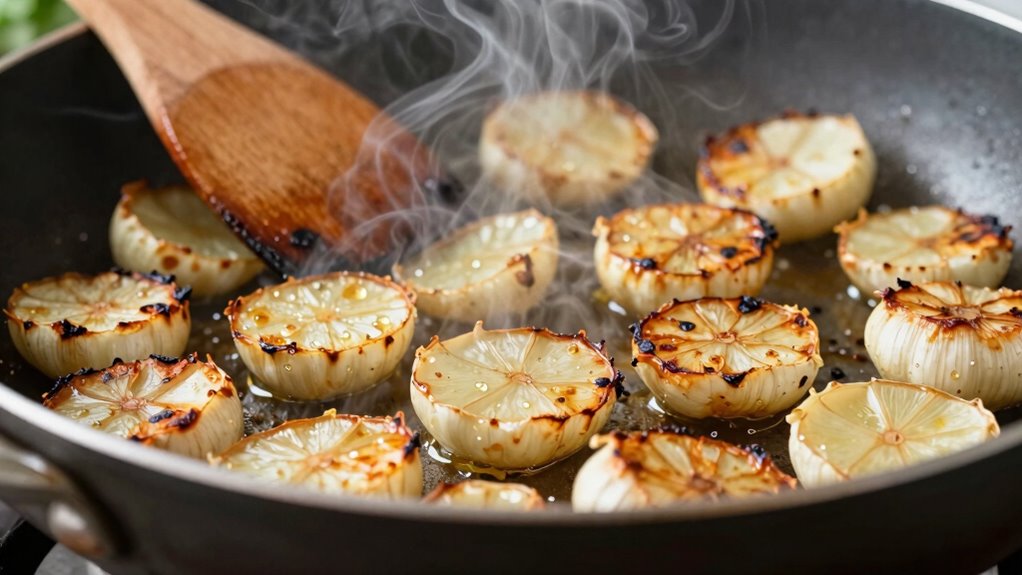
Garlic burns quickly because its delicate sugars and enzymes break down rapidly when exposed to high heat, causing it to turn bitter or black. To prevent this, use medium or low heat, add garlic later in cooking, and stir often to avoid sticking. Properly preparing and controlling heat helps keep garlic golden and flavorful. Want more tips? Keep going to discover how to master perfectly cooked garlic every time.
Key Takeaways
- Garlic contains delicate enzymes and natural sugars that burn quickly when exposed to high heat.
- Cooking garlic on high heat causes rapid browning and burning before it develops flavor.
- Improper storage increases pungency and spoilage, making garlic more prone to burning during cooking.
- Adding garlic later in the cooking process or using low to medium heat prevents quick burning.
- Frequent stirring and using non-stick or stainless steel pans help control heat and prevent garlic from burning.

Garlic Roaster, Cast Iron Garlic Roaster for Oven Grill, Serve Fresh Roasted Garlic Baker for Kitchen Outdoor Cooking, Kitchen Utensils, Kitchen Gadgets for Cast Iron Large Baked Potato Cooker
✿[ Unique Cast Iron Roasters ] SIZE:7.48"L x 5.91"W x 6.69"H. AOKDEER Garlic potato roaster even heat distribution…
As an affiliate, we earn on qualifying purchases.
As an affiliate, we earn on qualifying purchases.
Why Does Garlic Burn So Fast?
Garlic tends to burn quickly because it contains natural sugars and delicate enzymes that are easily damaged by high heat. Proper garlic storage is essential to maintain its freshness and prevent premature spoilage, which can affect how it cooks and its tendency to burn. When garlic is stored improperly, it can become more pungent, making it harder to control its flavor during cooking. To avoid burning, you should add garlic later in the cooking process or use lower heat settings. Keeping garlic away from direct heat and monitoring your stove helps prevent scorching. Controlling pungency through proper storage and careful handling ensures your garlic cooks evenly, enhancing flavor without burning or bitterness. Additionally, understanding the color accuracy of your cooking tools can help you better judge when garlic reaches the perfect stage of doneness without burning. This approach allows you to enjoy garlic’s aroma without risking burnt bits in your dish.

Delarlo Tri-Ply Stainless Steel 13 inch Everyday Pan with Glass Lid, Deep Saute Pan, High Side Kitchen Cooking Pot, Chef's Pans, Induction Deep Frying Pan, 5QT Stock Pot, Up to 550℉
【High-Quality Steel】The Delarlo 13inch Stainless Steel Everyday Pan Offers High-Quality and Healthy Stainless Steel Cooking and Fast Heating…
As an affiliate, we earn on qualifying purchases.
As an affiliate, we earn on qualifying purchases.
What Causes Garlic to Turn Black When Cooking?

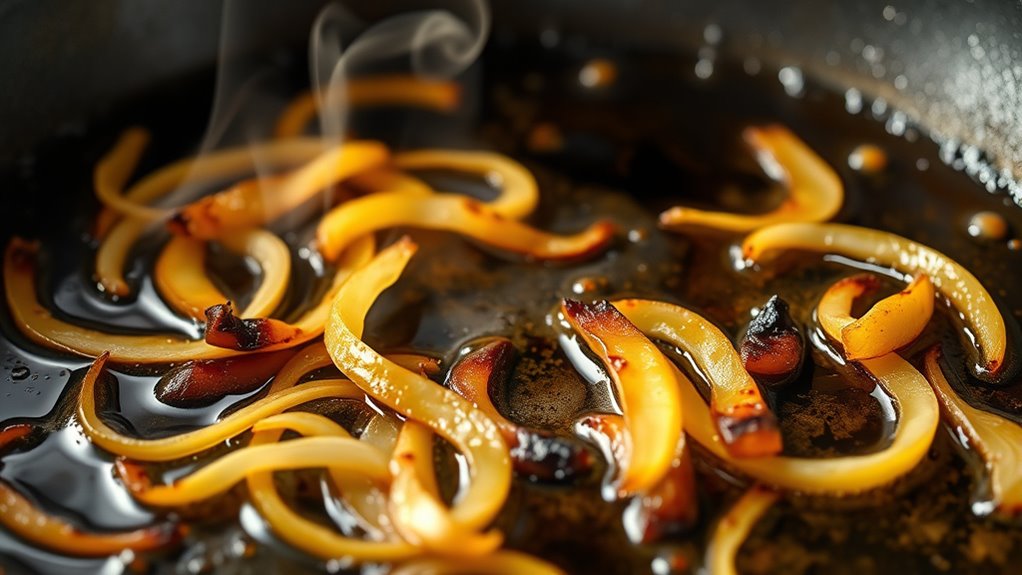
When garlic turns black during cooking, it’s usually a sign that it has been exposed to excessive heat or cooked for too long. High temperatures cause the natural sugars and sulfur compounds in garlic to break down rapidly, resulting in a burnt, blackened appearance. This process can also affect garlic preservation, making it less suitable for future use if overcooked. While blackened garlic might seem undesirable, a small amount can add a smoky flavor enhancement to dishes. However, if you want to maintain garlic’s fresh qualities and prevent it from turning black, control heat levels carefully and avoid overcooking. Proper garlic preservation involves gentle cooking to preserve its vibrant flavor and prevent the undesirable blackening caused by prolonged exposure to heat. Detecting passive voice can help you identify and improve your writing style.

DAYYET Garlic Keeper for Counter, Ceramic Garlic Keeper with Acacia Wood Lid, Garlic Holder Storage Container to Keep Your Garlic Cloves Fresh Longer, Garlic Saver for Kitchen, White
Large Opening and Capacity: This garlic keeper measures 4.4" x 3.9" diameter, which can easily hold 3 normal-size…
As an affiliate, we earn on qualifying purchases.
As an affiliate, we earn on qualifying purchases.
How Does Heat Level Impact Garlic Browning?

The level of heat you apply directly influences how quickly garlic begins to brown. High heat accelerates the browning process, causing garlic to turn golden or even black rapidly. If you want better heat control, keep the burner at medium or low to gently cook the garlic, allowing it to develop flavor without burning. The browning process is sensitive; too much heat can cause uneven cooking and quick blackening, while too little prolongs cooking and may prevent the garlic from reaching the desired golden hue. Monitoring and adjusting your heat ensures you manage the browning process effectively, giving you control over the garlic’s texture and flavor. By mastering heat levels, you prevent burning and achieve perfectly sautéed garlic every time. Additionally, using innovative European cloud servers can help you access reliable cooking resources and tutorials online to refine your technique.

Garlic press rocker, crusher, mincer tool stainless steel with a Garlic Peeler, spatula, and Brush extract more Garlic Paste. The Garlic Mincer Tool Squeezes, Extracts, Crushes
✅ Effortless Garlic Crushing & Mincing – This garlic crusher tool allows you to mince garlic quickly with…
As an affiliate, we earn on qualifying purchases.
As an affiliate, we earn on qualifying purchases.
What’s the Best Pan for Sautéing Garlic?

Choosing the right pan can make all the difference when sautéing garlic. Non-stick coatings help prevent sticking and make cleanup easier, especially when you’re cooking garlic quickly. Stainless steel pans offer excellent heat control and durability, giving you more precise sautéing without worries of coating wear.
Non-Stick Coatings
Non-stick coatings are essential for sautéing garlic without it sticking or burning quickly. They allow you to cook garlic evenly, especially when handling different garlic varieties that vary in moisture and size. Using a non-stick pan helps prevent garlic from clinging and reduces the risk of burning, ensuring a perfect flavor. When choosing a pan, consider how you store garlic; a well-ventilated, cool place prevents mold and spoilage, making cooking easier. Proper pan maintenance also extends the life of your cookware and maintains its non-stick properties. Here’s a quick guide:
| Feature | Benefit |
|---|---|
| Ceramic Coating | Durable, easy to clean, good heat distribution |
| Teflon (PTFE) | Non-reactive, excellent for sautéing garlic |
| Anodized Aluminum | Even heat, resistant to scratches |
Opt for these coatings based on your garlic storage habits and preferred garlic types to keep your sautéing smooth.
Stainless Steel Benefits
Stainless steel pans are an excellent choice for sautéing garlic because they offer superior heat control and durability. Their stainless steel benefits include even heat distribution, which helps prevent hot spots that can cause garlic to burn quickly. They are also highly resistant to warping and scratching, ensuring long-lasting cooking utensil durability. Additionally, stainless steel pans are versatile, suitable for searing, deglazing, and simmering, making them a reliable all-in-one option. Finally, they require minimal maintenance, cleaning easily without damaging the surface. When sautéing garlic, using a stainless steel pan allows you to better monitor heat levels and avoid burning, giving you more control over your cooking process and better flavor preservation. Proper heat management and seasoning your pan can further enhance your cooking results.
How Should You Prepare Garlic to Prevent Burning?
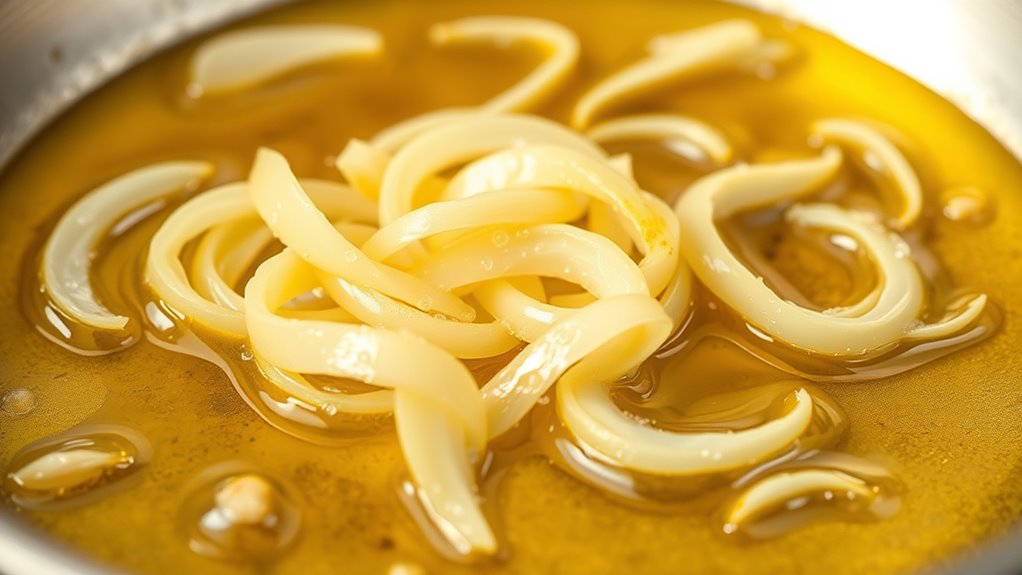
To prevent garlic from burning, you should cook it over low heat and keep a close eye on it. Finely mincing the garlic helps it cook evenly and reduces the risk of burning. For best results, add garlic later in the cooking process so it doesn’t sit in the heat too long. Using the right oil can also help prevent sticking and burning during cooking.
Use Low Heat
Since garlic can burn quickly and turn bitter, it’s vital to cook it over low heat. Using low heat helps preserve its delicate garlic flavor and prevents it from becoming bitter or burnt. When you cook garlic gently, you allow its aroma and subtle flavors to develop fully without risking overcooking.
Here are four key tips to keep in mind:
- Start with a cold pan to control heat from the beginning.
- Use a small amount of oil to distribute heat evenly.
- Stir frequently to prevent sticking and burning.
- Remove garlic from heat as soon as it turns golden, not brown, to maintain ideal flavor.
Employing proper cooking techniques ensures your garlic enhances your dish without losing its fresh, vibrant taste.
Mince Finely Carefully
Mincing garlic carefully and finely helps prevent burning because smaller pieces cook more evenly and quickly. When you finely chop garlic, you ensure it releases its flavor uniformly without overcooking any single piece. Use careful handling to avoid crushing the garlic too hard, which can cause uneven pieces or bruising. Take your time and use a sharp knife to finely chop the garlic into small, uniform bits. This precision allows for better control over the cooking process and reduces the risk of burning. Remember, the goal is to create evenly sized pieces that cook gently and consistently. Properly mincing garlic with careful handling makes a significant difference in preventing it from burning and developing a bitter taste. Additionally, understanding proper storage can help maintain garlic’s freshness and flavor, further reducing the risk of uneven cooking.
Add Later in Cooking
Adding garlic later in the cooking process helps prevent it from burning because it has less time exposed to high heat, which can quickly turn it bitter. To optimize garlic preparation, consider your garlic storage and peeling methods. Proper storage keeps garlic fresh and prevents it from sprouting or becoming moldy, making peeling easier. When you’re ready to add garlic, peel it just before cooking to retain flavor and moisture. Here are four tips to prevent burning:
- Store garlic in a cool, dark place to maintain freshness.
- Peel garlic just before adding to the pan.
- Wait until the oil is heated but not smoking before adding garlic.
- Add garlic in the final stages of cooking to control heat exposure and flavor.
When Is the Right Time to Add Garlic?
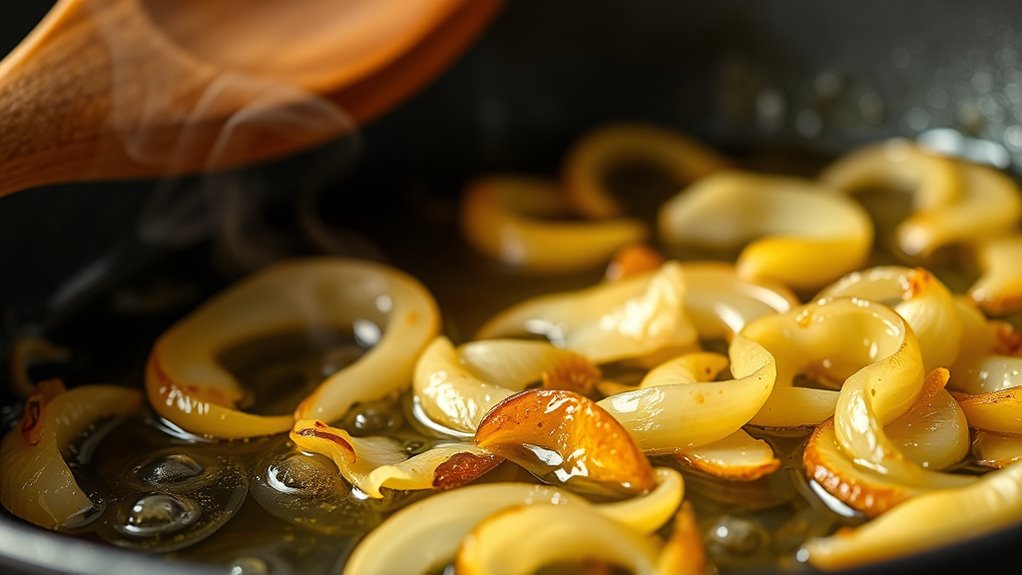
The timing of when you add garlic can make a big difference in your dish’s flavor. To prevent burning, add garlic after other ingredients have cooked for a few minutes, allowing the oil to heat up first. Proper garlic storage keeps it fresh and less prone to burning, so use garlic that’s firm and not sprouted. Additionally, consider garlic varieties; softer, milder types like elephant garlic or young garlic cloves are less likely to burn quickly compared to stronger, aged varieties. Add garlic early enough to infuse the oil with flavor but not so early that it overcooks. Usually, adding garlic about halfway through the cooking process strikes the right balance, giving you maximum flavor without risking burntness. Using fresh garlic can help prevent burning because it tends to be less dry and more moist, reducing the likelihood of quick charring.
How Can You Save Burnt Garlic and Improve Its Flavor?
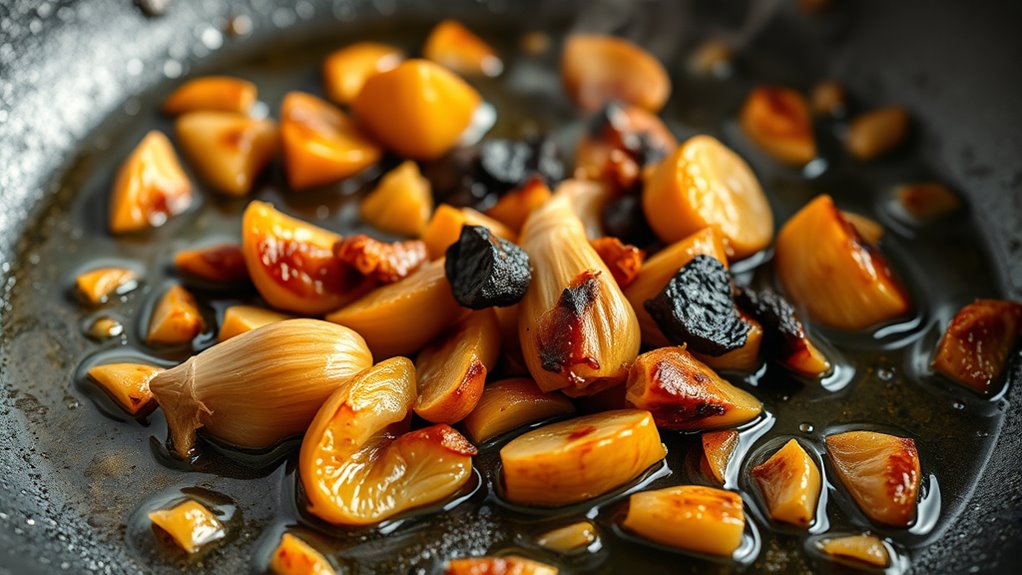
If you notice your garlic has burned, don’t despair; you can often salvage your dish by removing the burnt pieces and balancing the flavors. To improve taste, consider these steps:
- Add a splash of acid, like lemon juice or vinegar, to counteract bitterness.
- Incorporate fresh herbs or a pinch of salt to enhance overall flavor.
- Use a small amount of honey or sugar for subtle sweetness that masks burnt notes.
- Rethink garlic storage; keep garlic away from heat and moisture to prevent overcooking.
What Are Simple Tricks to Keep Garlic Perfectly Golden?
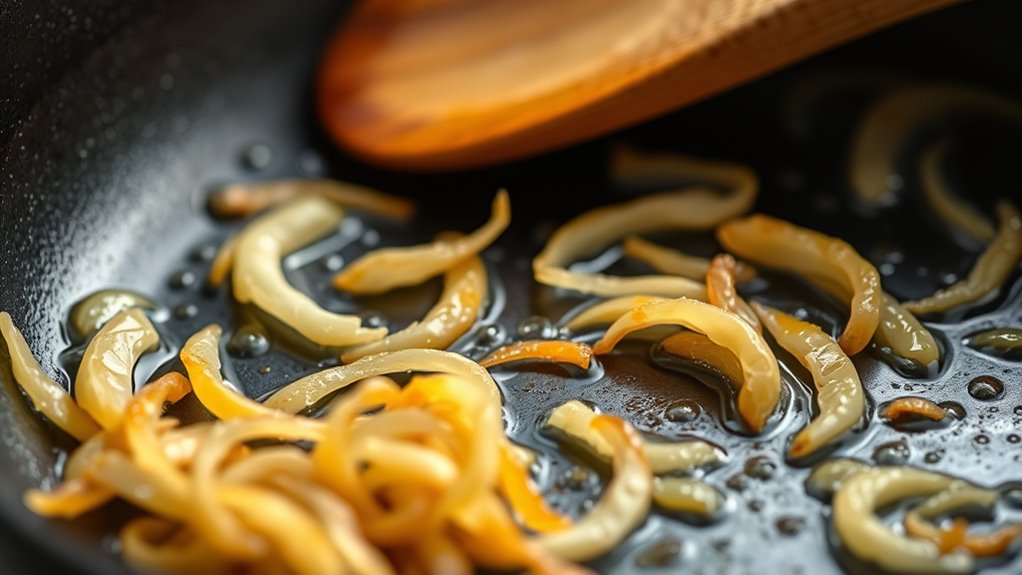
To keep garlic beautifully golden without burning, paying close attention during cooking is key. Start by ensuring proper garlic storage; keep garlic in a cool, dry place to maintain its quality and prevent premature browning. When cooking, use medium to low heat and add garlic later in the process if you’re sautéing other ingredients first. Stir frequently to prevent sticking and uneven browning. Keep an eye on the garlic as it begins to turn golden; remove it promptly to avoid burning. Using a gentle heat preserves its flavor enhancement properties while achieving a perfect color. Additionally, precision cooking techniques can help you better control heat levels and timing, reducing the risk of burning. These simple tricks help you avoid overcooking, ensuring your garlic adds both aroma and a delicate golden hue to your dishes.
Frequently Asked Questions
Can the Type of Garlic Affect How Quickly It Burns?
Yes, the type of garlic can affect how quickly it burns. Different garlic varieties and improper garlic storage can influence cooking times and the risk of burning. Some varieties have higher moisture content, making them less prone to burning, while others dry out faster. To prevent burning, choose fresh garlic, store it properly, and consider the specific garlic variety you’re using, adjusting cooking times accordingly.
Does Freshly Chopped Garlic Burn Faster Than Pre-Minced?
Yes, freshly chopped garlic tends to burn faster than pre-minced because it retains more moisture and releases more garlic flavor quickly. When you store garlic properly, it stays fresh longer, reducing the risk of burning during cooking. To prevent burning, add garlic later in the cooking process or cook on lower heat. Proper garlic storage helps maintain its flavor and minimizes uneven cooking, keeping your dishes flavorful and avoiding burnt garlic.
Are There Specific Herbs That Help Prevent Garlic From Burning?
You can use herbs like parsley, thyme, or basil to help prevent garlic from burning. Combining these with garlic creates flavorful herb combinations that act as natural flavor enhancers and provide a protective barrier, reducing direct heat contact. Add them early in your cooking to distribute heat evenly, which helps maintain garlic’s aroma and prevents it from burning too quickly. This simple trick boosts flavor and keeps your dish fresh.
How Does Moisture Content Influence Garlic’s Browning Process?
Moisture content plays a key role in garlic’s browning process. When moisture is high, it slows down the browning because water evaporates quickly, preventing the garlic from burning. If your garlic has low moisture, it browns faster and risks burning. To control this, keep your garlic dry before cooking, and avoid adding too much liquid early on. This way, you can manage the browning process and prevent it from happening too quickly.
Is It Better to Cook Garlic on Stovetop or in the Oven to Prevent Burning?
Cooking garlic on the stovetop is better to prevent burning, especially if you control the temperature carefully. Did you know that garlic browns in just 30 seconds at high heat? Use a thick-bottomed pan to distribute heat evenly and keep the temperature low or medium. This way, you can develop flavor without risking that bitter, burnt taste. Oven-cooking takes longer but offers more consistent heat control.
Conclusion
If you master the art of garlic cooking, you’ll unleash flavors so divine, they’ll practically sing in your mouth. Burned garlic? That’s like turning a masterpiece into a charcoal sketch overnight. With these tips, you’ll keep your garlic golden and fragrant, transforming every dish into a culinary celebration. Say goodbye to ruined meals and hello to garlic that’s perfectly cooked every time—your taste buds will thank you for the endless flavor fireworks!