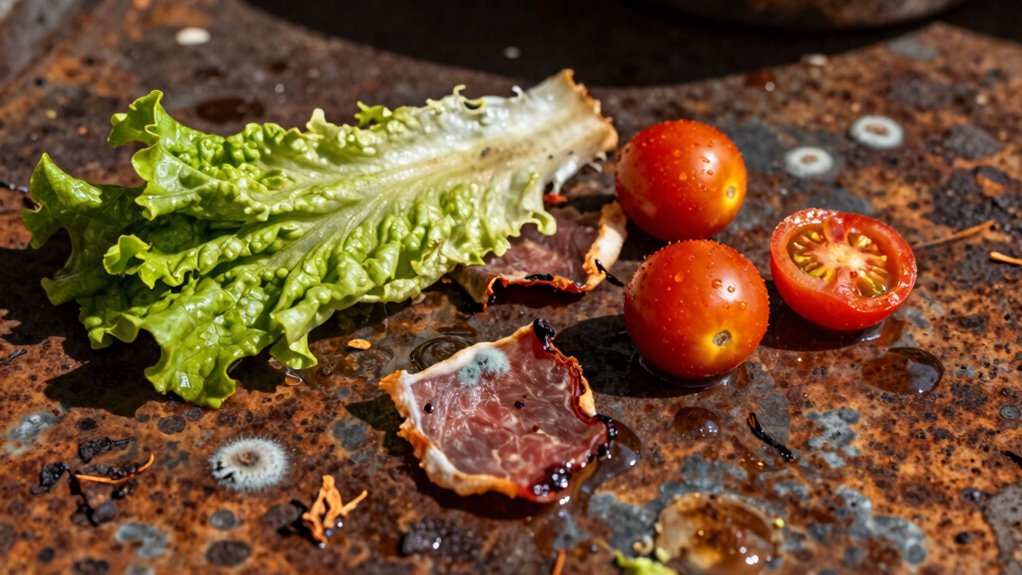

The “Danger Zone” between 40°F and 140°F is where bacteria grow most rapidly, risking food spoilage and foodborne illnesses. If your food stays in this temperature range too long, bacteria can double every 20 minutes, making it unsafe to eat quickly. Keeping food out of this zone by storing and cooling properly is essential. To learn how to keep your food safe and prevent spoilage, continue exploring these crucial tips.
Key Takeaways
- The danger zone is 40°F to 140°F, where bacteria grow rapidly and spoil food quickly.
- Bacteria double every 20 minutes within this temperature range, increasing contamination risk.
- Leaving perishable food in the danger zone for over two hours accelerates spoilage and foodborne illnesses.
- Proper refrigeration below 40°F slows bacterial growth and preserves food safety.
- Prompt cooling, reheating, and temperature monitoring prevent food from entering the danger zone.
Understanding the Temperature Range of the Danger Zone

The danger zone for food safety refers to the temperature range where bacteria grow most rapidly, increasing the risk of foodborne illnesses. This range typically spans from 40°F to 140°F (4°C to 60°C). Proper temperature control within this zone is vital to prevent microbial growth. When food is left within these temperatures for too long, bacteria can multiply quickly, making the food unsafe to eat. Keeping cold foods below 40°F slows down microbial growth, while hot foods should be kept above 140°F. Knowing the specific temperature range helps you take immediate action—either refrigerating or reheating—to reduce bacteria proliferation. Monitoring temperatures carefully guarantees your food stays safe and minimizes the risk of contamination. Temperature control is a key aspect of maintaining food safety standards and avoiding health hazards. Additionally, understanding the danger zone can help you better plan storage and reheating procedures to ensure food remains safe for consumption. Properly managing food storage temperatures is essential for preventing dangerous bacterial growth and ensuring food safety at all times. Implementing reliable temperature monitoring devices can further enhance your ability to keep food out of the danger zone.
How Bacteria Multiply Rapidly in the Danger Zone

Bacteria thrive and multiply quickly when food remains within the danger zone’s temperature range of 40°F to 140°F. In this range, bacterial growth accelerates, doubling in number every 20 minutes. Without proper temperature control, harmful bacteria can reach dangerous levels in just a few hours. The quicker bacteria multiply, the higher your risk of foodborne illness. That’s why maintaining proper refrigeration and hot holding is essential. When food sits in the danger zone, bacteria can reproduce exponentially, making it harder to eliminate them later. Effective temperature control slows or stops bacterial growth, ensuring food stays safe to eat. By keeping foods out of this temperature range, you prevent bacteria from multiplying rapidly and reduce the risk of contamination. Proper temperature management is a key component of food safety systems that help prevent bacterial proliferation. Additionally, understanding and monitoring temperature zones can help you better manage food safety practices in your kitchen. Implementing temperature monitoring devices can provide real-time data and help ensure foods remain outside the danger zone. Regularly checking food storage conditions is also vital for maintaining overall food safety. Properly maintaining temperature control equipment is equally important in preventing bacterial growth and maintaining safe food temperatures.
Common Foods Most Affected by Temperature Abuse

Perishable foods like dairy, seafood, meats, and cooked leftovers are especially vulnerable to temperature abuse because they can quickly become unsafe when left in the danger zone. When these foods aren’t kept at proper temperatures, food spoilage accelerates, increasing the risk of harmful bacteria growth. Temperature control is critical to prevent the rapid proliferation of bacteria that cause foodborne illnesses. Dairy products like milk and cheese spoil fast if not refrigerated properly. Seafood and raw meats are highly susceptible to spoilage and should be stored below 40°F. Cooked leftovers also need prompt refrigeration, as they can enter the danger zone within two hours. Failing to maintain proper temperature control allows bacteria to multiply, making these common foods unsafe to consume and increasing the risk of food poisoning. Proper temperature regulation is essential for maintaining food safety and preventing spoilage. Additionally, understanding how herbal properties can support your health may help reduce reliance on processed foods that are more vulnerable to spoilage when not stored correctly. Being aware of food safety guidelines can help you better manage and store perishable items to minimize risks. Incorporating knowledge about food preservation techniques can further extend the freshness and safety of your perishable foods. Recognizing the thermal behavior of different foods can also help you optimize storage conditions and prevent temperature abuse.
Best Practices for Keeping Food Safe
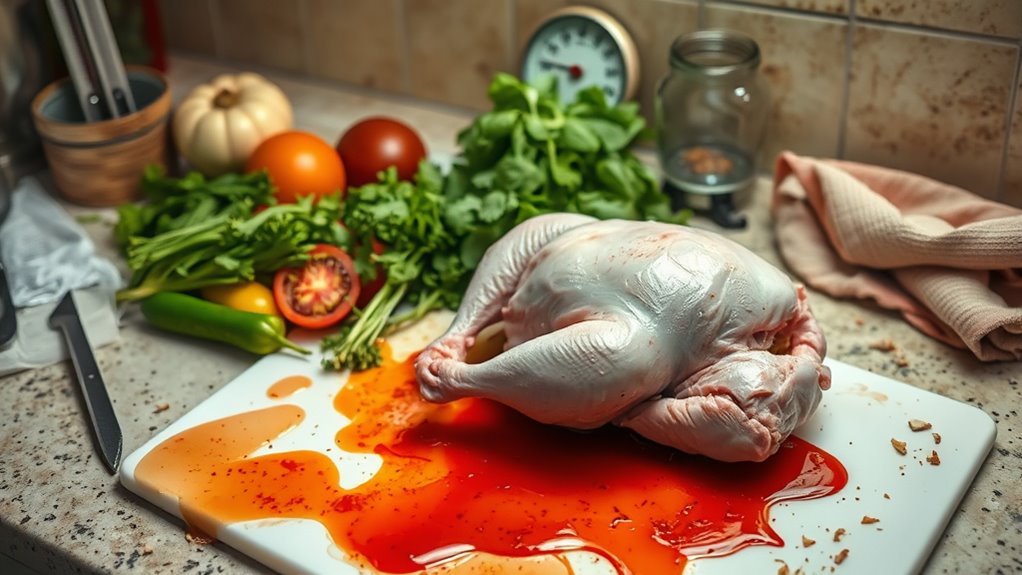
To keep your food safe, you need to follow simple but effective best practices that prevent temperature abuse and contamination. Proper food storage is essential; always keep perishable items refrigerated at 40°F or below and store raw meats separately from cooked foods. Use airtight containers to prevent cross contamination and keep foods covered to avoid spills. Maintain cleanliness by washing hands, utensils, and surfaces regularly. When handling different foods, avoid cross contamination by using separate cutting boards and knives. Additionally, never leave perishable food out at room temperature for more than two hours. Regularly monitoring storage temperatures with thermometers ensures your food remains within safe limits. Proper storage techniques are vital for maintaining food quality and safety. Good ventilation in your food storage areas can also prevent mold and spoilage. Being aware of temperature control is crucial for maintaining food safety and preventing bacterial growth. Following these practices reduces the risk of bacteria growth and keeps your food safe to eat. Staying vigilant about food storage and preventing cross contamination are key steps in maintaining food safety.
Recognizing and Responding to Food Safety Risks

Recognizing food safety risks early can prevent illness and food spoilage. Keep an eye out for signs of food spoilage, such as strange odors, discoloration, or slimy textures. If you notice any of these, discard the food immediately. Be vigilant about cross contamination, which can transfer harmful bacteria between raw and cooked foods. Always use separate cutting boards and utensils, and wash them thoroughly after each use. When handling perishable items, monitor temperatures carefully; foods left in the danger zone (40°F-140°F) for too long increase risks. Respond promptly to concerns by cleaning surfaces and sanitizing equipment. Understanding modern kitchen technology can help you better control food safety through connected appliances and automation. Incorporating smart food safety devices, such as temperature sensors and automated alerts, can further enhance your ability to maintain a safe food environment. Utilizing food safety management systems can help track and document safety protocols efficiently. Staying informed about food safety standards is essential for ensuring compliance and protecting consumers. Being aware of proper storage practices can also significantly reduce the risk of contamination and spoilage. By staying alert and acting quickly, you can substantially reduce the chances of foodborne illnesses and maintain a safe food environment.
Frequently Asked Questions
How Long Can Food Safely Stay in the Danger Zone?
You should not leave food in the danger zone for more than two hours. During this time, bacterial growth accelerates, increasing the risk of food spoilage and foodborne illness. If the temperature is above 90°F (32°C), cut that time to just one hour. Keeping food out longer allows bacteria to multiply rapidly, making it unsafe to eat. Always refrigerate or keep food hot to prevent spoilage.
What Temperature Specifically Defines the Danger Zone?
The temperature that establishes the danger zone for food safety is between 40°F (4°C) and 140°F (60°C). During this range, bacteria can grow rapidly, increasing the risk of foodborne illnesses. To keep your food safe, always store perishable items outside this temperature window, and refrigerate or reheat food promptly. Following these temperature guidelines helps prevent bacteria growth and ensures your food stays safe to eat.
Are There Foods That Are Less Affected by Temperature Abuse?
Sure, some foods are less affected by temperature abuse, making them the “tough guys” of food preservation. Dried fruits, canned goods, honey, and hard cheeses can handle a bit of chaos in your fridge without turning into a health hazard. Their shelf stability and low moisture content mean they resist bacteria and spoilage, giving you a break from strict temperature control. Remember, not all foods need a climate control drama!
How Can Consumers Monitor Food Temperatures at Home Effectively?
You can effectively monitor food temperatures at home by using digital thermometers. Insert the thermometer into the thickest part of meats or the center of leftovers to get accurate readings. Always store perishable foods at proper temperatures to prevent entering the danger zone. Regularly check the temperature during cooking and storage, and make certain your thermometer is calibrated correctly for consistent, reliable results that keep your food safe.
What Are the Legal Standards for Restaurant Food Safety Regarding Temperature Control?
You need to follow strict food safety protocols and adhere to legal standards that set specific temperature regulation guidelines for restaurants. These standards require maintaining hot foods at 140°F or higher and cold foods at 40°F or lower to prevent bacteria growth. Regular temperature checks and proper storage are essential. By complying with these legal standards, you help guarantee food stays safe and reduces the risk of foodborne illnesses.
Conclusion
By keeping food out of the danger zone, you prevent harmful bacteria from multiplying quickly. You might think a few hours won’t cause problems, but even a short lapse can lead to unsafe food. Staying vigilant with proper storage and handling keeps your meals safe and your family healthy. Remember, it’s worth the effort—because no meal is worth risking foodborne illness. Protect your food, and enjoy peace of mind with every bite.