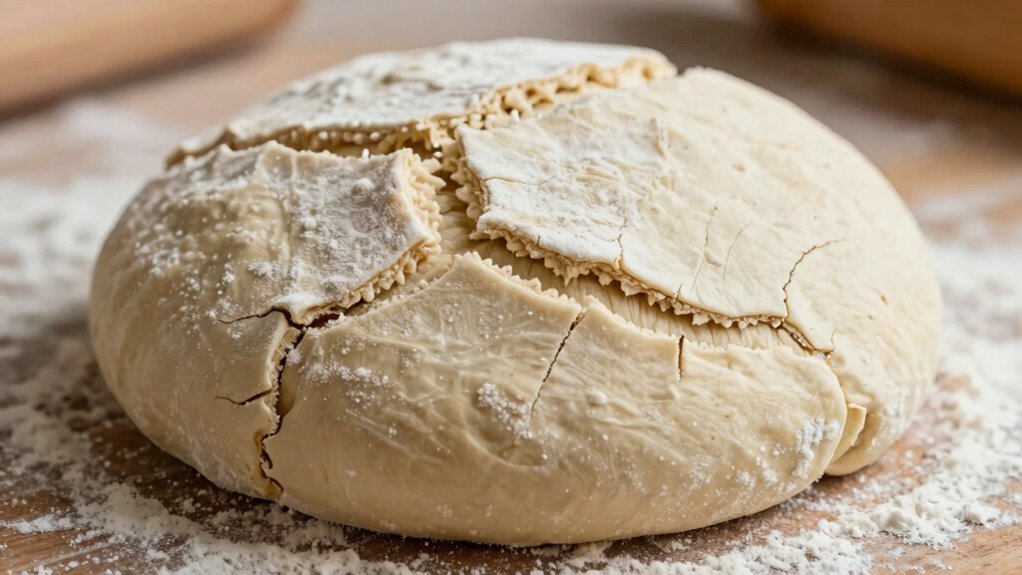

If your dough turns tough faster than expected, it’s likely because you’ve overmixed or kneaded it too vigorously. This tightens the gluten network quickly, making the dough tough and difficult to work with. Using ingredients that aren’t fresh or at the wrong temperature can also accelerate gluten development. Proper measuring and controlling environmental factors matter too. Keep these things in mind, and you’ll discover how to avoid this issue and improve your dough’s texture.

Prime made for students and young adults
- Fast, free delivery for dorm and study essentials
- Prime Video and Amazon Music included
- Member-only deals
Key Takeaways
- Over-kneading or vigorous mixing tightens the gluten network, leading to tougher dough.
- Using old or stale flour impairs proper gluten hydration and development.
- Excessive flour or insufficient liquids disrupt the optimal ingredient ratio, causing toughness.
- Cold ingredients slow gluten bonding, resulting in a denser, tougher dough.
- Environmental factors like low humidity can cause dough to dry out and become tough quickly.
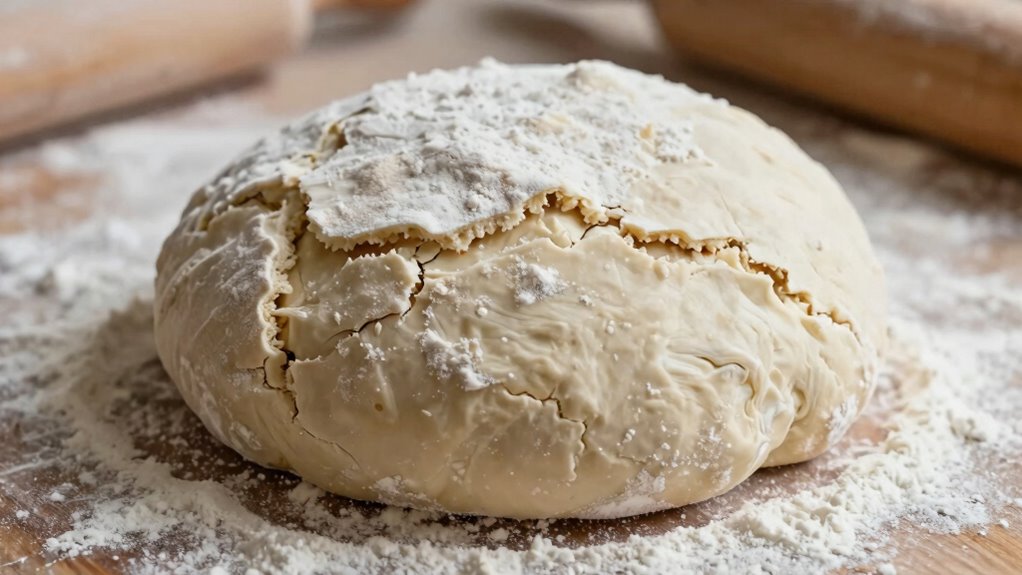
Have you ever noticed that some doughs become tough surprisingly quickly, even when you’re following your usual recipe? It’s frustrating, especially when you’re aiming for a tender, flaky result. One common reason behind this is how gluten development happens during mixing. When you knead the dough, gluten proteins link together, forming a network that gives the dough its structure. If you overmix or knead too vigorously, this network becomes too tight, making the dough tougher than intended. The process is delicate—stop too soon, and the dough won’t hold together well; go too long, and it turns stiff and difficult to work with. Paying attention to how long you knead is key, but so is understanding what ingredients you’re using. Additionally, ingredient freshness can influence the strength of the gluten network, impacting dough elasticity and tenderness. Properly measuring ingredients is also essential to ensure consistent results, as imbalances can affect gluten formation and dough texture. The hydration level of your ingredients can also impact how quickly gluten develops, influencing the final dough texture. Ingredient freshness plays a significant role in how your dough turns out. Flour, for example, contains natural oils and proteins that can degrade over time. Old or stale flour may not hydrate as well, which impacts gluten development. When the flour isn’t fresh, it can lead to uneven gluten formation, resulting in a dough that’s either too tough or too weak. Similarly, if your fats like butter or oils are not fresh, they won’t distribute evenly within the dough, affecting its texture. Fresh ingredients tend to produce a more consistent gluten network, giving you a dough that’s pliable and easy to work with. Using fresh ingredients also ensures that enzymes and other natural compounds are active, helping the dough develop the right amount of elasticity without becoming overly tough. Additionally, ingredient temperature can influence how quickly the gluten proteins bond, impacting the dough’s final texture. Moreover, baking environment factors such as humidity and temperature can also affect gluten formation and dough consistency.
As an affiliate, we earn on qualifying purchases.
Frequently Asked Questions
How Does Humidity Affect Dough Toughness?
Humidity levels directly affect dough toughness by influencing moisture content. When humidity is high, your dough absorbs more moisture, making it softer and easier to work with. Conversely, low humidity causes moisture to evaporate quickly, leading to a drier, tougher dough. To prevent this, practice climate control by covering your dough properly and adjusting ingredients or kneading time based on current humidity conditions.
Can Using Expired Ingredients Cause Dough to Toughen Quickly?
Using expired ingredients can cause your dough to toughen quickly because they may have lost moisture or qualities that help keep the dough tender. Expired flour, for example, can alter the dough’s texture, making it denser and tougher. When you incorporate expired ingredients, you risk affecting the dough’s elasticity and overall quality, leading to a less desirable, tougher final product. Always check ingredient freshness to maintain ideal dough texture.
Does Over-Proofing Impact Dough Toughness?
Over-proofing dough can definitely impact its toughness. When you over-proof, the fermentation process continues too long, weakening gluten development and causing the dough to lose elasticity. This results in a dense, tough texture once baked. Think of it as pushing your luck—you end up with a dough that’s overly fermented and less capable of holding shape. Keep an eye on proofing times to maintain that perfect balance for ideal gluten structure.
How Does Altitude Influence Dough Consistency?
Altitude effects your dough’s consistency because lower air pressure at higher elevations causes the dough to rise faster and more extensively. This can lead to over-proofing or a weaker gluten structure, making the dough tougher or less elastic. You should adjust your recipe by reducing yeast or increasing flour, and monitor rising times carefully. These changes help counteract altitude effects, ensuring your dough remains tender and easy to work with.
Are Certain Types of Flour More Prone to Quick Toughening?
Yes, certain flours are more prone to quick toughening due to their gluten development and protein content. Flours with higher protein levels, like bread flour, develop more gluten, which can make dough tougher faster if overmixed or left to rest too long. Conversely, lower-protein flours, like cake flour, tend to stay softer longer. Monitoring gluten development and adjusting mixing times help prevent dough from turning tough prematurely.
As an affiliate, we earn on qualifying purchases.
Conclusion
So, when dough turns tough too soon, remember to watch your mixing, control your kneading, and avoid overworking your dough. Keep an eye on moisture, temperature, and ingredients, because each plays a part in the texture. By paying attention to these details, you can prevent toughness and enjoy soft, tender results every time. Consistency, patience, and care are your best tools—because the perfect dough is just a few mindful steps away.
kitchen digital scale for baking
As an affiliate, we earn on qualifying purchases.
As an affiliate, we earn on qualifying purchases.
As an affiliate, we earn on qualifying purchases.
Fall Picks
fall essentials
As an affiliate, we earn on qualifying purchases.