You might be surprised to find high VOC levels in your new home even if it looks clean. This happens because VOCs are often odorless and can off-gas from furniture, paint, and cleaning products for weeks after moving in. Poor ventilation allows these fumes to accumulate, which can cause health issues. Understanding where VOCs come from and how to manage them helps guarantee a safer, healthier living space. Keep going to discover essential tips to improve your indoor air quality.
Listen free for 30 days with Audible
Thousands of audiobooks and originals — cancel anytime.
As an affiliate, we earn on qualifying purchases.
Key Takeaways
- VOCs are often odorless initially, making unexpected high readings surprising to homeowners.
- Emissions from new furniture, paint, and cleaning products can persist for weeks, causing unexpected spikes.
- Fluctuations in VOC levels during the first months can catch homeowners off guard.
- Poor ventilation can trap VOCs indoors, leading to higher-than-anticipated readings.
- Lack of awareness about ongoing emissions from new items results in unexpected indoor air quality issues.

Are you aware of how volatile organic compound (VOC) levels can impact your health when moving into a new home? It’s a common concern among new homeowners, especially since VOCs aren’t always visible or smell strongly at first. Even if your house seems clean and fresh, the indoor air quality may still harbor elevated VOC levels that could affect your well-being. This surprise often catches people off guard, leading to questions about where the chemicals are coming from and how to reduce exposure quickly.
VOC readings tend to fluctuate more than most people expect, especially in the first few weeks or months after moving in. Many new homeowners assume that once the construction dust settles and the paint dries, the air quality will improve almost immediately. However, VOCs can linger from various sources like new furniture, carpets, paints, sealants, and cleaning products. These emissions can be slow to off-gas, meaning your indoor air might contain higher VOC levels than you’d anticipate, even if the house looks spotless. This can result in unexpected health effects such as headaches, dizziness, or respiratory irritation, making you realize that initial perceptions of a safe environment might be misleading.
VOC levels can remain high for weeks due to off-gassing from new furniture, paint, and cleaning products.
One key reason for these surprises is that VOC levels are influenced heavily by indoor air quality, which can vary depending on your ventilation strategies. Proper ventilation improvements are essential to managing VOC concentrations. If your home isn’t well-ventilated, VOCs can accumulate, making the air quality worse over time. Conversely, increasing airflow through ventilation improvements—like opening windows, using exhaust fans, and installing air purifiers—can considerably lower VOC levels. These actions help to dilute indoor pollutants and promote a healthier environment. Additionally, understanding the sources of VOCs can help you identify potential emission points before they become problematic. Recognizing the emission sources early can save you time and reduce your exposure to harmful chemicals.
Many new homeowners don’t realize that indoor air quality is a dynamic aspect of their home’s environment. It’s not just about the initial cleaning or the new smell of fresh paint; it’s about ongoing management of VOC sources and ensuring good air circulation. Regularly monitoring VOC readings can reveal trends and help you identify when to boost ventilation or remove sources of emissions. Additionally, understanding the role of indoor air quality can guide you in making smarter choices about household products and furnishings. Taking proactive steps to improve indoor air quality can ease your concerns and create a safer, more comfortable living space. Ultimately, understanding that VOC levels can surprise you highlights the importance of continuous ventilation improvements and mindful choices about new furnishings and household products.
As an affiliate, we earn on qualifying purchases.
Frequently Asked Questions
How Often Should VOC Levels Be Tested in a New Home?
You should test your indoor air for VOC levels every few months in a new home. Regular testing helps you monitor indoor air quality and identify potential VOC issues early. Good ventilation practices, like opening windows or using exhaust fans, help reduce VOC concentrations. By staying proactive and testing regularly, you guarantee a healthier living environment, especially during the initial months when VOCs tend to off-gas more from new materials.
What Specific VOCS Are Most Common in New Construction?
Did you know that formaldehyde, benzene, and toluene are among the most common VOCs in new construction? These chemicals often come from indoor air sources like pressed wood, paints, and adhesives. You should expect higher chemical emissions initially, as new homes off-gas. It’s vital to ventilate well and test indoor air regularly to reduce exposure and guarantee a healthier living environment.
Can VOC Readings Indicate Hidden Mold or Other Issues?
VOC readings can hint at issues with indoor air quality, but they don’t directly indicate hidden mold or other problems. Elevated VOC levels often come from chemical off gassing from new materials, furniture, or paints. While high VOCs might signal ongoing chemical emissions affecting your indoor environment, you’ll need specialized inspections to identify hidden mold or structural issues. Keep monitoring VOCs to make certain your home’s air quality stays safe.
Are High VOC Levels Harmful Immediately or Over Time?
High VOC levels can be harmful both immediately and over time. When you’re exposed to elevated indoor air chemical levels, you might experience instant symptoms like headaches or dizziness. Long-term exposure increases your risk of respiratory issues and other health problems. It’s essential to address high VOC readings quickly, as they directly impact your indoor air quality and your overall well-being through chemical exposure.
How Can Homeowners Reduce VOC Levels After a Reading?
To reduce VOC levels after a high reading, you can improve air purification and ventilation strategies. Use high-quality air purifiers with activated carbon filters to trap VOCs effectively. Increase ventilation by opening windows and using exhaust fans to circulate fresh air. Regularly maintain HVAC systems and avoid new furniture or paints that emit VOCs. These steps help clear indoor air, making your home safer and more comfortable over time.
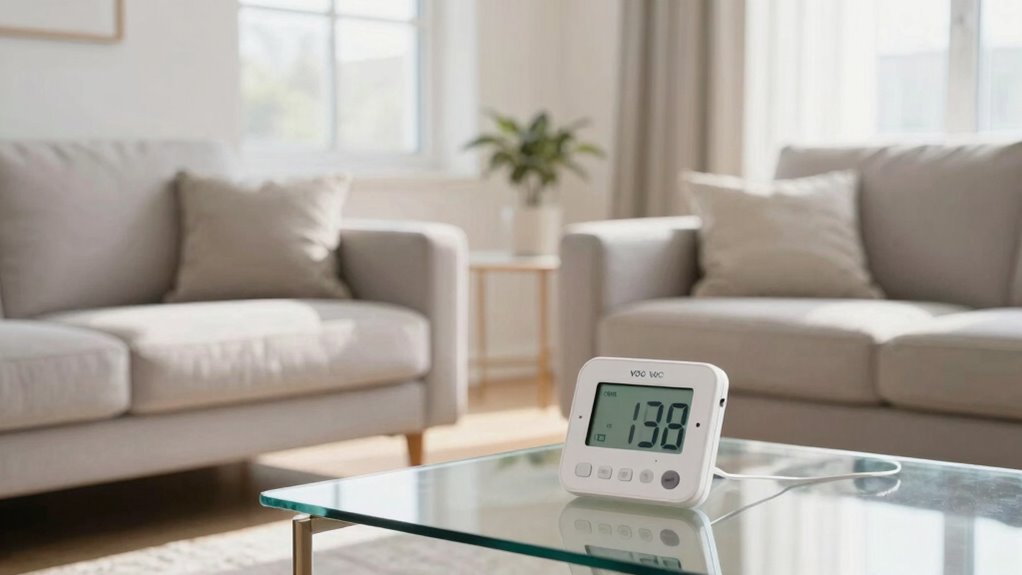
VOC test kit for indoor air quality
As an affiliate, we earn on qualifying purchases.
As an affiliate, we earn on qualifying purchases.
Conclusion
Understanding VOC readings can be surprising for new homeowners, especially since levels often spike right after moving in. Did you know that nearly 60% of new homeowners report initial VOC levels above recommended limits? That’s because new paint, furniture, and building materials emit volatile organic compounds as they off-gas. Don’t worry—ventilation and time usually help decrease these levels. Staying vigilant and testing regularly ensures your home remains safe, making your new space truly comfortable and healthy.
As an affiliate, we earn on qualifying purchases.
As an affiliate, we earn on qualifying purchases.
Fall Picks
fall essentials
As an affiliate, we earn on qualifying purchases.