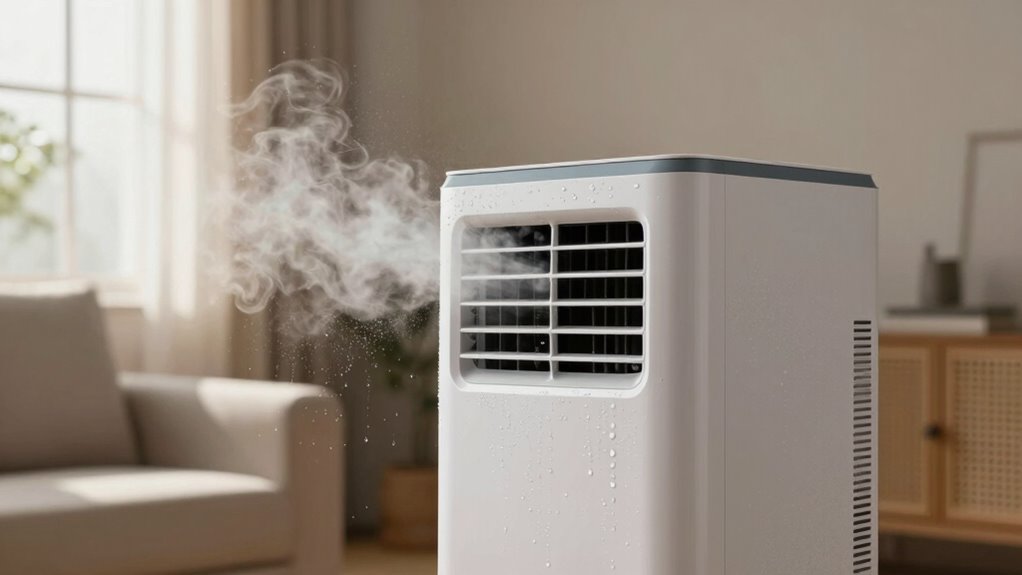

Portable ACs can cause humidity issues because their cooling process creates moisture that can build up indoors if it’s not managed properly. Warm air condenses on the evaporator coil, and if drainage or venting isn’t effective, this moisture can linger, making the room feel muggy and uncomfortable. To prevent this, guarantee proper venting, use built-in dehumidification features, and maintain the unit well. Keep going to discover simple tricks to keep humidity in check.
Key Takeaways
- Portable ACs produce moisture as a byproduct of cooling, which can lead to humidity buildup if not properly vented.
- Ineffective drainage or moisture control causes condensation to linger, increasing indoor humidity levels.
- Improper installation of the exhaust hose prevents moist air from escaping, worsening humidity issues.
- Without adequate ventilation or dehumidification, indoor humidity can become uncomfortable and promote mold growth.
- Regular maintenance and using additional dehumidifiers help prevent excess moisture and maintain balanced indoor air quality.
Portable air conditioners offer a convenient way to cool your space without permanent installation, but they can also introduce humidity problems that affect comfort and air quality. When you use a portable AC, moisture is often a byproduct of the cooling process, especially if the device isn’t equipped with an effective drainage system or moisture control features. As warm, humid air passes over the cold evaporator coil, condensation forms, and if this moisture isn’t properly vented or removed, it can linger in the room, leading to increased humidity levels. High humidity not only makes the air feel muggy and uncomfortable but can also promote mold growth and dust mite proliferation, which can impact your health and air quality.
To prevent these humidity issues, you need to adopt proper ventilation strategies. Ventilation plays a essential role in moisture management because it helps circulate air and expel excess humidity from the room. When setting up your portable AC, ensure that the exhaust hose is correctly installed and vented outside, as this is critical to removing warm, moist air from the space. Using additional fans or opening windows slightly can help improve air exchange, especially in highly humid environments. If you’re in a particularly damp area, consider using a dehumidifier alongside your portable AC to actively reduce moisture in the air, creating a more balanced and comfortable environment. Proper understanding of moisture control can significantly enhance the effectiveness of your cooling system.
Moisture control is also about understanding your device’s capabilities. Some portable air conditioners come with built-in dehumidification functions, which can help manage humidity without the need for extra equipment. If your unit doesn’t have this feature, you might need to empty the condensate tank frequently or set up a continuous drainage system using a hose. Proper maintenance ensures that the moisture generated doesn’t accumulate and contribute to higher humidity levels. Additionally, keeping doors and windows closed while running your portable AC prevents outside humid air from entering the space, making it easier to maintain a comfortable, dry environment.
Frequently Asked Questions
Can Portable ACS Dehumidify Without Increasing Humidity?
Portable ACs can dehumidify without increasing humidity if they have a good dehumidification efficiency. These units remove moisture from the air through their cooling process, reducing humidity levels. To maximize moisture removal, choose a portable AC designed with dehumidification functions, and guarantee proper drainage to prevent excess moisture buildup. Regular maintenance and using a dedicated dehumidifier alongside can also help maintain ideal indoor humidity.
Do Portable ACS Work Effectively in Very Humid Climates?
In extremely humid climates, portable ACs are like trying to tame a wild storm with a tiny umbrella—they struggle! They can provide some humidity control, but they’re not perfect climate adaptors. Expect them to work less effectively, leaving your space feeling damp and sticky. To truly beat the humidity, consider additional dehumidifiers or larger, more powerful cooling systems that can handle the intense moisture levels.
How Often Should I Empty the Water Tank in My Portable AC?
You should empty your portable AC’s water tank regularly, ideally every day or whenever it reaches the full line. Proper water tank maintenance prevents overflow and keeps your unit running efficiently. The cleanup frequency depends on how often you use the AC and the humidity level in your space. Check the tank daily during peak use, and clean it thoroughly at least once a week to avoid mold and odors.
Are There Portable AC Models With Built-In Humidity Control?
Yes, some portable AC models come with built-in humidity control features, including humidity sensors that monitor moisture levels. These units actively adjust their operation to maintain ideal humidity, helping you stay comfortable without excess moisture. Look for models labeled with moisture control capabilities or smart humidity sensors, ensuring your space stays cool and dry. This way, you avoid the discomfort and potential issues caused by high humidity.
What Are the Signs My Portable AC Is Causing Humidity Problems?
You might notice mold growth or musty odors around your portable AC, signaling humidity problems. If the air feels damp or you see condensation buildup, your device isn’t effectively managing moisture. These signs indicate excess humidity, which can promote mold and bacteria. To prevent these issues, guarantee proper drainage, use dehumidifiers if needed, and regularly clean your portable AC to keep moisture levels in check and maintain a healthy indoor environment.
Conclusion
To keep your space comfortable, you need to tackle the humidity issues caused by portable ACs. Remember, simply venting isn’t enough—you must also drain or manage the moisture they produce. Think of it as your own personal Robin Hood, balancing the moisture and coolness. With these tips, you’ll prevent mold and dampness, ensuring your modern oasis stays dry and cozy—no need for a time machine to fix humidity woes!