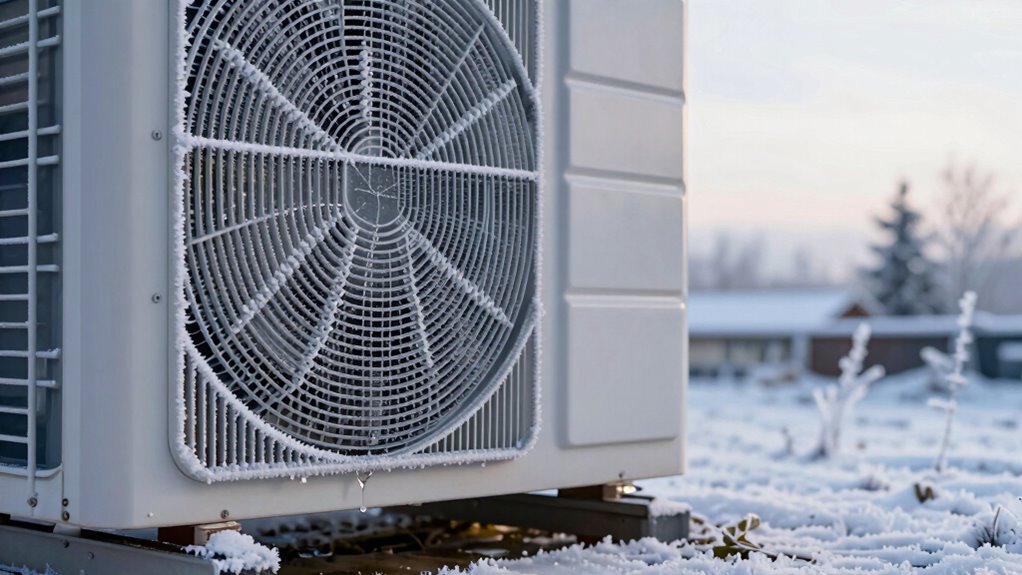
When your heat pump blows cool air occasionally, it’s usually part of its defrost cycle, which prevents ice buildup on outdoor coils. During this process, the system temporarily switches to defrost mode, causing cool air to blow for a few minutes. This is normal and helps keep your heat pump working efficiently. If you want to understand why this happens and how to manage it, there’s more useful information ahead.
Key Takeaways
- Cool air during defrost is normal; it occurs when the heat pump temporarily switches to defrost mode to melt ice.
- Defrost cycles are brief, usually lasting only a few minutes, and help prevent ice buildup on outdoor coils.
- The cool air is a sign that the system is functioning properly to maintain efficiency during winter.
- Frequent or extended cool air periods outside of defrost cycles may indicate issues like dirty coils or refrigerant problems.
- Regular maintenance, such as cleaning coils and filters, helps ensure the heat pump operates efficiently and reduces unnecessary defrost cycles.
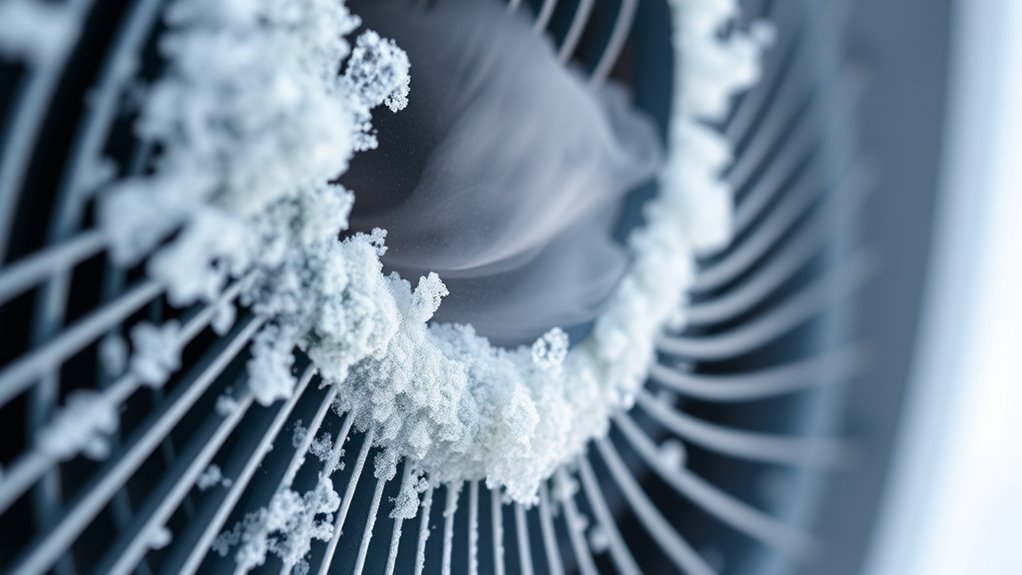
Many refrigeration systems automatically initiate defrost cycles to prevent ice buildup on coils, guaranteeing ideal performance. When it comes to heat pumps and cooling units, these defrost cycles play a pivotal role in maintaining efficiency and preventing damage. You might notice your heat pump blowing cool air during certain times, especially if you’re accustomed to warm, cozy heating. That’s often a sign that a defrost cycle is underway. During this process, the system temporarily switches from heating to defrost mode to melt accumulated frost or ice on the outdoor coil. This prevents reduced airflow and guarantees the unit continues operating efficiently. Understanding the thermal behavior of heat pumps can help you better anticipate these cycles and how they affect airflow.
Heat pumps briefly switch to defrost mode to melt ice, causing temporary cool air during winter months.
Understanding why your heat pump enters defrost mode can help you better manage its operation and maximize energy efficiency. While it may seem counterintuitive for a heating system to blow cool air, this temporary switch is essential for maintaining peak performance. The defrost cycle usually lasts just a few minutes but is indispensable for preventing ice buildup, which can cause the system to work harder, consume more energy, and increase your utility bills. When the cycle ends, your heat pump resumes normal heating, and the cool air stops. If you notice frequent defrost cycles or prolonged periods of cool air, it might be a sign of underlying issues, such as dirty coils, low refrigerant levels, or other maintenance needs.
To keep your system running smoothly and maximize energy efficiency, consider following some simple maintenance tips. Regularly cleaning or replacing filters guarantees unobstructed airflow, reducing the need for frequent defrost cycles. Keep the outdoor coil clear of debris like leaves or dirt that can impede heat exchange and lead to ice formation. Scheduling routine inspections with a professional can help identify and address minor issues before they escalate, keeping your system operating efficiently year-round. Additionally, guaranteeing proper insulation around the outdoor unit can minimize cold air infiltration, reducing frost accumulation.
Being proactive with maintenance not only prolongs the life of your heat pump but also keeps it functioning at maximum energy efficiency. Remember, occasional cool air during a defrost cycle is normal, and understanding its purpose helps you avoid unnecessary concern. When in doubt, consult your HVAC technician for advice tailored to your specific system. They can check for potential problems, fine-tune your setup, and guarantee that your heat pump remains an effective, energy-efficient solution for your home or business. By staying informed and attentive to maintenance, you can enjoy consistent comfort and lower energy costs, even during the coldest months.
Frequently Asked Questions
How Often Should My Heat Pump Perform Defrost Cycles?
Your heat pump typically performs defrost cycles every few hours during cold weather, but this depends on your maintenance schedule and temperature thresholds. If you keep up with regular maintenance, like cleaning filters and checking sensors, it can run efficiently and defrost as needed. When outdoor temperatures drop below the set thresholds, expect more frequent cycles. If you notice abnormal patterns, consult a technician to ensure peak performance.
Can I Manually Initiate a Defrost Cycle?
Think of your heat pump as a car that occasionally needs a manual override to clear the windshield. You can manually initiate a defrost cycle by pressing the defrost button or adjusting the defrost timer, if available. This temporarily overrides automatic controls, helping melt away frost buildup. Just remember, it’s best to use this feature sparingly and follow your manufacturer’s instructions to avoid disrupting your system’s balance.
Will Frequent Defrosting Increase My Energy Bills?
Frequent defrost cycles can slightly increase your energy bills because your heat pump works harder during these periods. However, these cycles are essential for maintaining energy efficiency, especially in cold weather. They prevent ice buildup, ensuring your system runs smoothly. While occasional defrosting is normal, excessive cycles might indicate a problem. Keep an eye on your system’s performance to balance effective defrosting and ideal energy efficiency.
Are Defrost Cycles Harmful to My Heat Pump?
Surprisingly, defrost cycles aren’t harmful; they’re actually your heat pump’s way of saving itself. When your heat pump enters a defrost cycle, it temporarily blows cool air, but that’s just a sign it’s working properly to prevent ice buildup. Ignoring these cycles can cause damage over time. So, embrace the occasional cool blast—your heat pump’s defrost cycle is more friend than foe, ensuring long-term efficiency.
How Do I Know if My Heat Pump’s Defrost Cycle Is Working Properly?
You can tell if your heat pump’s defrost cycle works properly by checking for ice buildup on the outdoor unit; it shouldn’t stay frozen for long. If you notice sensor malfunctions, like inconsistent defrosting or frequent cycling, that’s a sign something’s off. Also, listen for the compressor running smoothly during defrost. Regular maintenance and monitoring help make certain your heat pump defrosts efficiently and prevents issues caused by ice buildup.
Conclusion
Now you know why your heat pump sometimes blows cool air—it’s all part of the defrost cycle, keeping your system running smoothly. Think of it as the superhero cape your heat pump wears to battle frost and ice, preventing disaster and ensuring warmth when you need it most. So, next time you notice the cool breeze, remember it’s just your system’s way of fighting off winter’s worst. Stay confident—your heat pump’s got this, and so do you!