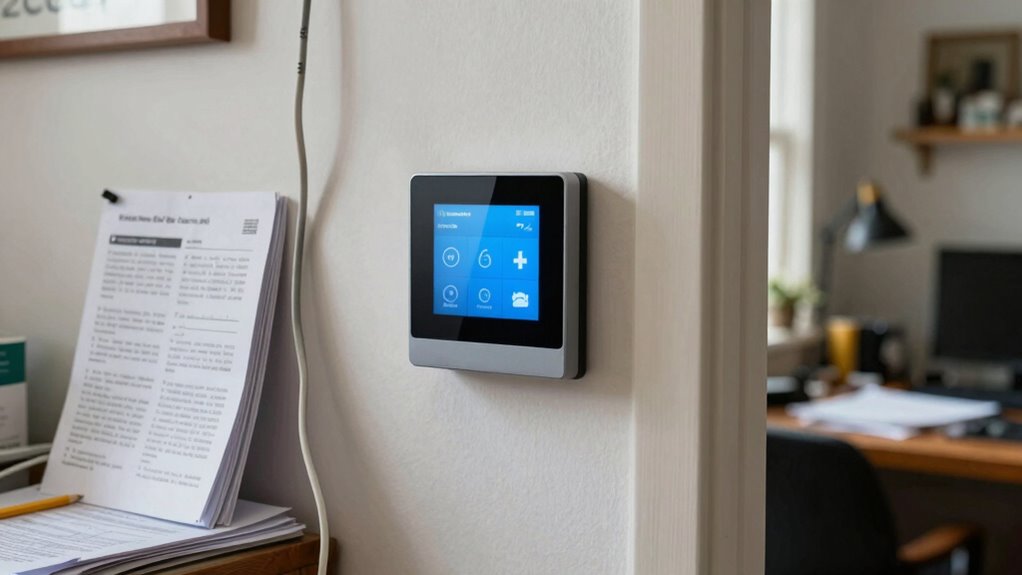

Smart thermostats need better inputs because they rely on detailed and real-time data to optimize your home’s comfort and energy use. If your home lacks occupancy sensors, weather info, or an intuitive interface, the device can’t learn your routines or adjust accurately. Without accurate data, you’ll see more wasted energy and less comfort. Keep exploring to discover how improving your system’s inputs can make your thermostat smarter and more efficient.
Key Takeaways
- Accurate, real-time data enables smart thermostats to optimize heating and cooling efficiently, reducing energy waste.
- User-friendly interfaces encourage detailed input, improving device responsiveness and personalization.
- Proper sensor deployment allows better detection of occupancy and environmental conditions.
- Inadequate data leads to reliance on default settings, decreasing energy efficiency and comfort.
- Enhanced data integration from sensors and smart systems allows thermostats to learn routines and anticipate needs.

Smart thermostats rely on a variety of inputs to optimize your home’s heating and cooling efficiently. Without accurate and thorough data, they can’t perform at their best. Many homes fall short because they don’t provide the rich, real-time information these devices need to make smart decisions. This gap impacts energy consumption, leading to higher bills and unnecessary environmental strain. When your thermostat lacks proper inputs, it can’t precisely adjust temperatures, resulting in wasted energy and discomfort. To truly maximize efficiency, these devices require detailed insights into your daily routines, occupancy patterns, and even weather conditions. But often, the user interface of many smart thermostats isn’t designed to easily gather or interpret this critical information.
The user interface plays a pivotal role in how well your thermostat can adapt to your lifestyle. If it’s complicated or unintuitive, you might not input the right data or may overlook customizing settings that could save energy. A poor interface discourages you from engaging deeply with the device, which means the thermostat operates on limited or outdated information. When you’re unable to easily provide inputs like preferred temperature schedules, occupancy status, or real-time feedback, the device defaults to generic settings that don’t reflect your actual needs. As a result, energy consumption rises because the system can’t fine-tune your home’s climate based on your habits. Additionally, user experience plays a crucial role in encouraging users to optimize their device settings effectively.
Furthermore, many homes lack the sensors or data integrations necessary for smart thermostats to gather meaningful inputs. For example, without occupancy sensors or integration with smart home systems, the thermostat can’t accurately detect whether you’re home or away. This leads to unnecessary heating or cooling when no one’s around, increasing energy consumption. Also, weather data integration is often limited, so your thermostat might not adjust for outdoor temperature fluctuations effectively. All of these shortcomings stem from insufficient data inputs, which would otherwise allow your thermostat to optimize energy use and comfort simultaneously. In addition, the proper sensor deployment can significantly enhance a thermostat’s ability to gather critical environmental data, making its adjustments more precise.
Improving the inputs your smart thermostat receives starts with making the user interface more user-friendly and capable of capturing detailed information. It also involves equipping your home with better sensors and integrating with other smart devices. When your thermostat has access to comprehensive, accurate data, it can learn your routines, anticipate your needs, and make intelligent adjustments. This not only enhances comfort but also reduces your energy consumption, saving you money and helping the environment. The integration of smart home systems can further enhance data collection, enabling more precise and adaptive climate control. In essence, better inputs lead to smarter, more efficient heating and cooling—if only your home’s data collection and user interface are up to the task.

ecobee Smart Sensor 2 Pack – Comfort, Security, Energy Savings, Temperature and Occupancy Detection – Compatible with ecobee Thermostats for Home
Knows when a room is occupied and communicates the temperature to your ecobee smart thermostat from up to…
As an affiliate, we earn on qualifying purchases.
As an affiliate, we earn on qualifying purchases.
Frequently Asked Questions
How Do Smart Thermostats Learn User Preferences Over Time?
Smart thermostats learn your preferences over time using learning algorithms that analyze your user behavior. As you adjust the temperature or set schedules, the thermostat observes these patterns and adapts accordingly. By continuously monitoring when you’re home, away, or sleeping, it fine-tunes its settings to optimize comfort and efficiency. This ongoing process helps the thermostat anticipate your needs, making your home more comfortable and reducing energy costs.
Can Smart Thermostats Detect Room Occupancy Accurately?
Think of your smart thermostat as a vigilant guardian, always watching. With proper sensor calibration, it can accurately detect room occupancy, ensuring your space isn’t unnecessarily heated or cooled. Advanced occupancy detection methods interpret subtle cues like movement and temperature changes, making the system responsive and efficient. When sensors are well-calibrated, your thermostat becomes a reliable sentinel, truly understanding when a room is occupied or empty, saving energy and enhancing comfort.
What External Factors Influence Thermostat Input Accuracy?
External factors like sensor calibration issues and inconsistent data integration can seriously impact thermostat input accuracy. You need to guarantee sensors are properly calibrated to detect temperature and occupancy precisely. Additionally, integrating data from various sources—like weather forecasts or occupancy patterns—helps improve decision-making. When these factors aren’t managed well, your smart thermostat might misjudge your home’s needs, leading to discomfort or wasted energy.
How Do Smart Thermostats Handle Unexpected Weather Changes?
Suddenly, the weather shifts, and your smart thermostat springs into action. It uses weather prediction data to anticipate changes, adjusting your home’s temperature proactively. Sensor calibration guarantees it responds accurately despite unexpected weather. This seamless adaptation keeps your comfort steady, even when conditions surprise you. You can trust your thermostat to handle surprises, as it intelligently interprets weather updates and fine-tunes itself for peak comfort and energy efficiency.
Are There Privacy Concerns With Data Collection From Smart Thermostats?
Yes, there are privacy risks with data collection from smart thermostats, but you can minimize them. These devices gather data on your daily routines, which could be misused if not properly secured. To protect your data security, guarantee your thermostat uses strong encryption, update firmware regularly, and review privacy settings. Being aware of how your data is stored and shared helps you maintain control over your personal information and reduces potential privacy concerns.

Sensi Smart Thermostat, 100 Years Of Expertise, Wi-Fi, Data Privacy, Programmable, Easy DIY Install, Works With Alexa, Energy Star Certified, Mobile App, ST55
PRIVACY PROTECTION*: Sensi won’t sell your personal information to third parties
As an affiliate, we earn on qualifying purchases.
As an affiliate, we earn on qualifying purchases.
Conclusion
To truly unlock the potential of your smart thermostat, you need better inputs than most homes provide. Without accurate data, it’s like trying to steer a ship blindfolded—your energy savings and comfort suffer immensely. Imagine a world where your thermostat knows your schedule, weather, and habits perfectly—transforming your home into a haven of efficiency. Upgrading your inputs isn’t just smart; it’s the key to turning your house into a climate-controlled paradise.

ecobee Smart Thermostat Essential – Energy Star Certified programmable Wi-Fi Thermostat – Works with Siri, Alexa, and Google Assistant
Save up to 23% every year on heating and cooling costs, adjusts to your set schedule to save…
As an affiliate, we earn on qualifying purchases.
As an affiliate, we earn on qualifying purchases.

Aqara Zigbee Temperature and Humidity Sensor, Wireless Thermometer Hygrometer for Home Automation, Remote Monitoring, Requires Aqara Hub (not 3rd-Party), Compatible with Apple HomeKit, Alexa, IFTTT
[Notes] AN AQARA HUB IS REQUIRED AND SOLD SEPARATELY.(NOTE:Not support hubs from other brands.) Requires a secured 2.4…
As an affiliate, we earn on qualifying purchases.
As an affiliate, we earn on qualifying purchases.