
TL;DR

Prime made for students and young adults
- Fast, free delivery for dorm and study essentials
- Prime Video and Amazon Music included
- Member-only deals
The James Webb Space Telescope has returned data that astrophysicists cannot fully explain, prompting a flurry of analysis and debate. This development could reshape theories about the early universe.
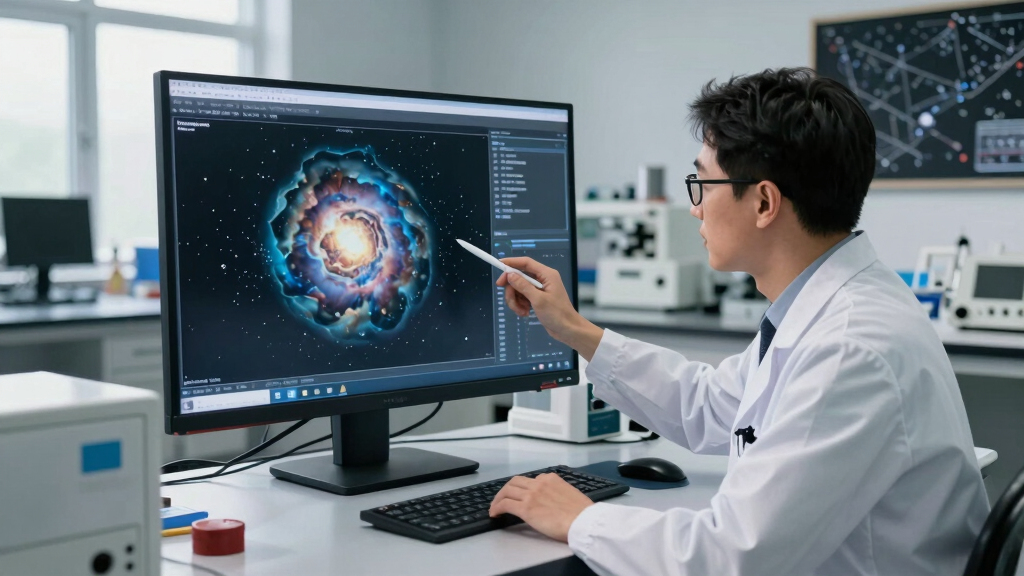
Astrophysicists are investigating unexpected signals detected by the James Webb Space Telescope (Webb), which challenge current models of the universe’s early development. The anomalies, identified in the telescope’s latest deep-field observations, have sparked a scientific debate over their origins and implications.
The James Webb Space Telescope, launched in December 2021, has provided unprecedented data on distant galaxies and cosmic phenomena. Recently, researchers analyzing Webb’s latest deep-field images reported unusual signals that do not fit existing cosmological models, particularly regarding the formation and distribution of early galaxies.
According to preliminary analyses, these signals suggest either unknown astrophysical processes or potential gaps in current understanding of cosmic evolution. The findings were shared at a recent scientific conference by team members from NASA and collaborating institutions, emphasizing that the data remains under intense scrutiny.
Potential Paradigm Shift in Understanding Cosmic Origins
This development could lead to revisions of current theories about the universe’s early stages. If confirmed, the unexpected signals might indicate new physics, previously unrecognized celestial objects, or alternative mechanisms of galaxy formation. Such findings could influence future research directions and impact cosmology as a whole.
As an affiliate, we earn on qualifying purchases.
Webb’s Deep-Field Observations and Recent Anomalies
The James Webb Space Telescope has been operational since late 2021, providing high-resolution infrared observations of the distant universe. Its capabilities have already led to significant discoveries, including detailed images of early galaxies. However, recent data analyses have identified anomalies that differ from predictions made by standard cosmological models.
These anomalies emerged during routine data processing of Webb’s deep-field images, which aim to observe galaxies formed within the first few hundred million years after the Big Bang. The signals are now under detailed examination by astrophysicists worldwide, with some suggesting they could be signs of unknown phenomena or artifacts needing further verification.
“While intriguing, we must remain cautious until the data is thoroughly vetted and confirmed by independent teams.”
— Professor David Lin, cosmologist at Harvard University
As an affiliate, we earn on qualifying purchases.
Unconfirmed Nature of the Anomalies and Possible Explanations
It is not yet clear whether the signals represent genuine astrophysical phenomena or are artifacts caused by instrument calibration, data processing, or other technical factors. Researchers emphasize that further analysis and independent verification are required to confirm the nature of these anomalies.
astronomy telescope for astrophysics
As an affiliate, we earn on qualifying purchases.
As an affiliate, we earn on qualifying purchases.
Ongoing Analysis and Future Webb Observations
Scientists are currently conducting detailed analyses of the data, including cross-checks with other telescopes and simulations to rule out technical errors. Upcoming observation campaigns with Webb aim to replicate and expand upon these findings, potentially providing clarity within the next several months.
As an affiliate, we earn on qualifying purchases.
Key Questions
What specific anomalies has Webb detected?
Webb has identified signals in deep-field images that do not match predicted properties of early galaxies, including unexpected brightness patterns and spectral features. The exact nature of these signals remains under investigation.
Could these anomalies be due to technical issues?
Some scientists suggest the signals might result from calibration errors or data processing artifacts. Confirming their authenticity requires further analysis and independent verification.
Why are these findings important?
If confirmed, the anomalies could indicate new physics or unknown cosmic phenomena, potentially leading to a revision of current cosmological theories about the universe’s origins.
When will more information be available?
Further analyses are underway, with additional data expected from upcoming Webb observation runs. Results could be available within the next few months.
How might this impact future astrophysics research?
Discoveries of this kind could open new research avenues, prompt revisions of existing models, and influence the design of future space telescopes and observational strategies.
Source: hn
Fall Picks
fall essentials
As an affiliate, we earn on qualifying purchases.