
🔍 Read the full analysis: A Question Of Motion: How “TURBINE — WERK 9” Uses SVG on ThorstenMeyerAI.com

Get school and study supplies delivered free — and shop member deals
- Fast, free delivery on millions of items
- Access to Prime Big Deal Days deals on October 6–7
- Prime Video, Amazon Music and more included
TL;DR
TURBINE — WERK 9 presents an industrial space as an interactive field guide, using a scroll-driven SVG rotor to connect movement through the page with the site’s mechanical theme. The available project description does not identify the team or provide technical implementation details, performance data or accessibility information.
TURBINE — WERK 9 uses a scroll-driven SVG rotor to make movement through an interactive web page echo the mechanics of an industrial space. The project is presented on ThorstenMeyerAI.com as a field guide rather than a conventional brochure, with scrolling serving as the input that animates the visual experience, as described in the original project analysis.
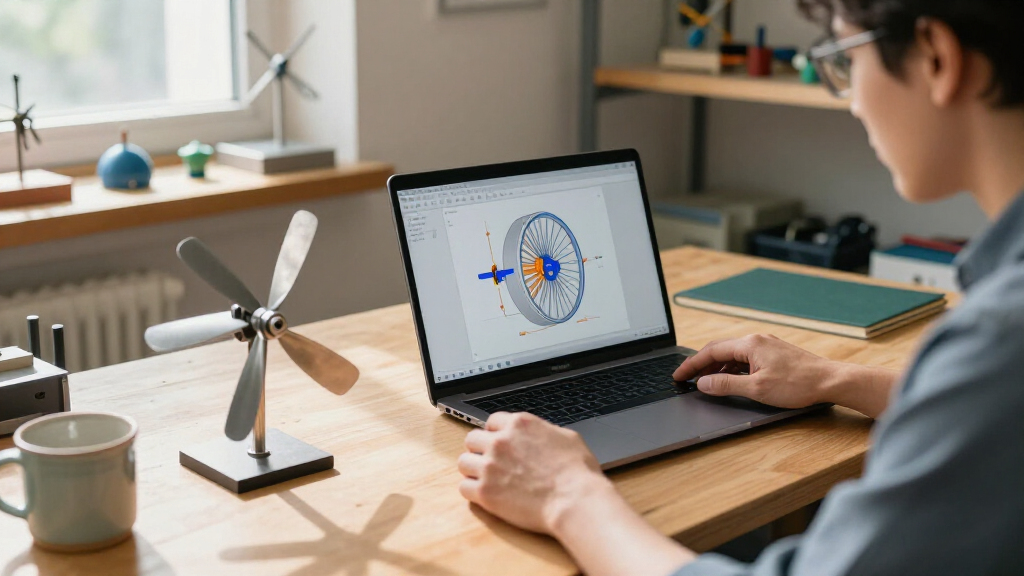
The project description says the page combines a browser, vector paths and the visitor’s scroll input to create a responsive interface. Its central visual device is a rotor rendered as an SVG, with its movement tied to the user’s progress through the page. The description frames that connection as a way to make navigating the website feel related to the machinery and physical setting it represents.
The experience is organized as an interactive field guide, giving visitors a reason to move through the page and explore its contents. ThorstenMeyerAI.com says a fuller design teardown discusses how the team shaped the rotor’s motion, organized the visual system and translated a physical-feeling space into a browser experience. The project description does not spell out those design decisions in detail.
The feature invites readers to view the live room and read the full case study. It describes the work as relevant to people interested in AI tools and automation, but the interaction itself is presented as a web-design approach: a designed SVG responds to scrolling. No AI-generated assets, automated systems or machine-learning features are identified in the project description.
Interactive design / Project feature
A Question of Motion: How TURBINE — WERK 9 Uses SVG
A scroll-driven rotor turns page progress into part of an industrial field guide. The project’s central idea is clear; its technical details remain largely behind the scenes.
01 / The interaction
When scrolling becomes the rotor
The page gives a familiar browser action a mechanical role. As visitors move through the field guide, their scroll input is linked to the movement of an SVG rotor—connecting progress through the page to the industrial theme.
Visitor scrolls
Page movement is the stated input to the experience.
Browser responds
The project description connects browser interaction with vector paths.
SVG rotor moves
A rotor illustration responds as visitors progress through the page.
Theme takes shape
Navigation echoes the mechanics of the industrial setting.
02 / The experience
A field guide in the browser
Rather than presenting the subject as a conventional brochure, TURBINE — WERK 9 is framed as something to explore. The field-guide structure gives the rotor a job in the experience: it links the visitor’s movement to the place’s mechanical character.
Explore, don’t just read
The project overview describes an interactive field guide that invites visitors to move through its contents.
Vector as interface
The SVG rotor is presented as a responsive part of the interface, not simply a static illustration.
A physical sense of motion
The overview says the browser experience should feel connected to the machinery and physical setting it represents.
03 / What is documented
Known interaction, open questions
The published project overview establishes the interaction’s premise, but does not include an engineering account, performance measurements, or an evaluation of the experience.
What the overview tells us
04 / Details not specified
The missing engineering picture
The overview is a short project account. These details cannot be answered from that description alone.
People and timing: who designed or built it, and when it launched.
Tools and code: libraries, implementation, and how rotor motion is calculated.
Input behavior: continuous scroll response, set animation points, and touch-device behavior.
Accessibility: reduced-motion settings, keyboard navigation, and accessibility testing.
Compatibility: browser support and page performance data.
Evaluation: user research or evidence of engagement outcomes.
05 / Reader’s guide
Key questions
What the project description confirms—and where it points readers next.
What is TURBINE — WERK 9?
An interactive web experience presented as a field guide to an industrial space, with a rotor illustration that responds to scrolling.
How does the SVG interaction work?
The visitor’s scroll input is linked to the rotor’s movement. The overview does not explain the underlying code or precise animation behavior.
Does the project use AI?
The overview mentions readers interested in AI tools and automation, but identifies no AI feature or machine-learning use in the experience.
Where can readers learn more?
ThorstenMeyerAI.com points to a live version and a fuller design teardown about the motion and visual system. Further details are not included in this overview.
When Scrolling Becomes the Rotor
The design makes a familiar browser action—scrolling—carry meaning beyond moving from one section to another. By linking that input to a rotor’s motion, the page gives visitors a visual cue that their progress is connected to the subject matter. That is the project’s clearest design proposition: the interface does not only describe a mechanical setting, but uses movement to evoke it.
For readers interested in interactive design, the example shows how SVG graphics can function as part of an interface rather than as static decoration. A vector illustration can be presented as a responsive element, while the field-guide structure gives that response a role in the overall experience. Whether the method improves engagement or accessibility is not established by the published description; those outcomes would require details or evaluation beyond the project summary.
As an affiliate, we earn on qualifying purchases.
A Field Guide in the Browser
The project is introduced with a contrast between a conventional brochure-style page and a web experience that visitors can explore. Its field-guide framing sets an exploratory purpose, while the rotor supplies a visual link between the page and the industrial subject. The description calls the result a browser experience with a physical feel, but does not provide further information about the location or installation represented.
ThorstenMeyerAI.com points readers toward a longer case study covering the motion design and visual system, as well as a live version of the experience. The information available here is a short project overview, not a detailed engineering account. It establishes the core interaction—scrolling drives an SVG rotor—but leaves the implementation and design process largely to the full teardown.
“What if a web page behaved less like a brochure and more like a machine you could walk around?”
— ThorstenMeyerAI.com project description
As an affiliate, we earn on qualifying purchases.
Implementation Details Still Absent
The project overview does not specify who designed or built TURBINE — WERK 9, when it launched, or what tools or code libraries were used. It also does not explain whether the rotor’s movement follows scroll distance continuously, changes at set points, or behaves differently on touch devices.
No information is provided about accessibility testing, reduced-motion settings, keyboard navigation, browser support, page performance or user research. The description characterizes the experience as responsive, but offers no measurements or independent evaluation of how it performs. Those questions cannot be answered from the project overview alone.
As an affiliate, we earn on qualifying purchases.
The Case Study and Live Room
ThorstenMeyerAI.com directs readers to the full design teardown and the live room. The case study is identified as the next place to find more about the rotor’s motion, the visual system and the process of representing a physical-feeling space online. No release schedule or further project updates are stated.
Until more detail is available, the confirmed account remains focused on the interaction’s premise: a visitor scrolls, and an SVG rotor responds as part of a field-guide-style page. The live version and fuller case study may clarify implementation and design choices, but their details are not included in the project description.
Source: ThorstenMeyerAI.com
As an affiliate, we earn on qualifying purchases.
Key Questions
What is TURBINE — WERK 9?
It is an interactive web experience presented as a field guide to an industrial space, with a rotor illustration that responds to scrolling.
How does the SVG interaction work?
The project description says the visitor’s scroll input is linked to the movement of an SVG rotor. It does not explain the underlying code or precise animation behavior.
Does the project use AI?
The overview mentions an audience interested in AI tools and automation, but it does not identify any AI feature or say that machine learning was used to create the experience.
Where can readers learn more?
ThorstenMeyerAI.com points to a full design teardown and a live version of the project. The overview says the teardown covers the rotor’s motion and visual system, but provides no further technical details.
Source: ThorstenMeyerAI.com
Halloween Picks
halloween
As an affiliate, we earn on qualifying purchases.