

TL;DR

Prime made for students and young adults
- Fast, free delivery for dorm and study essentials
- Prime Video and Amazon Music included
- Member-only deals
In 2026, several major AI innovations have been announced, including new models with advanced capabilities. While some features are confirmed, others remain unverified, making this a pivotal year for AI development and adoption.
Several leading AI firms and research organizations have announced groundbreaking innovations for 2026, including new models with enhanced capabilities and broader applications. For example, you can explore the AI In 2026: 10 Innovations Making A Major Impact to see some of the key developments. These developments, confirmed by official sources, are poised to reshape AI’s role across industries and society, making this a pivotal year for artificial intelligence.
In early 2026, major players such as OpenAI, Google DeepMind, and emerging startups unveiled new AI models that boast improved natural language understanding, multi-modal capabilities, and increased efficiency. For instance, OpenAI announced GPT-6, claiming it offers more nuanced contextual comprehension and better safety features. Similarly, Google DeepMind introduced Gemini, a multi-modal AI system capable of integrating text, images, and audio seamlessly. These models are expected to power a range of applications from advanced virtual assistants to autonomous systems. For insights into related hardware, check out the 10 Best Capture Cards in 2026 for relevant tech trends.
While these announcements are confirmed by the organizations, details about the full capabilities, deployment timelines, and regulatory considerations are still emerging. To understand the broader context, see What SaaS Firms Must Know About AI And Market Competition. Experts note that the advancements are significant but caution that real-world implementation may face hurdles related to safety, bias mitigation, and ethical use. Additionally, some claims about performance improvements remain preliminary until peer-reviewed or independently verified.
The 10 picks
- 1
 Elgato 4K S Capture Card for PS5, Xbox Series X/S, Switch 2View on Amazon →
 - 2
 AVerMedia Capture Card for Streaming, 4K60 HDR Passthrough, 1080p60 Video Rec…View on Amazon →
 - 3
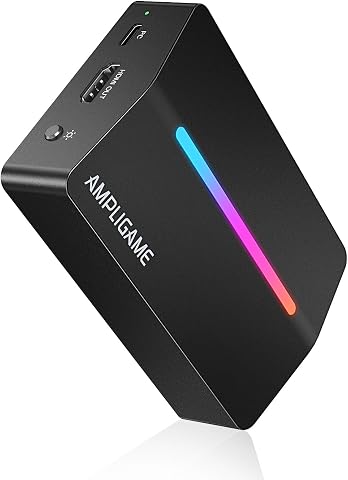 Fifine AmpliGame Video Capture Card, HD 1080p 60fps, 4K HDMI to USB, Compatib…View on Amazon →
 - 4
 4K HDMI Video Capture Card for Streaming and RecordingView on Amazon →
 - 5
 4K HDMI Video Capture Card, 1080P 60FPS Game Capture Device with HDMI Loop-Ou…View on Amazon →
 - 6
 XIIXMASK USB 3.0 HDMI Capture Card, 1080P 60FPS Capture, 4K Pass-ThroughView on Amazon →
 - 7
 Acer USB 3.0 HDMI Capture Card, 4K HDMI Loop-Out, 1080P 60Hz for StreamingView on Amazon →
 - 8
 4K HDMI Capture Card for Streaming, Full HD 1080P 60FPS USB 3.0 Cam Link Game…View on Amazon →
 - 9
 Guermok Video Capture Card, 4K USB3.0 HDMI to USB C, 1080P 60FPS & 2K 30FPSView on Amazon →
 - 10
 Audio Express AXHDCAP 4K HDMI Video Capture CardView on Amazon →
Why 2026 AI Breakthroughs Matter for Society
The 2026 AI innovations signal a new era of more sophisticated and versatile artificial intelligence, with potential impacts across industries, economies, and daily life. Enhanced models could accelerate automation, improve decision-making, and enable new forms of human-AI collaboration. However, they also raise concerns about ethical use, job displacement, and regulatory challenges. Understanding these developments helps stakeholders prepare for both opportunities and risks.
2026 AI Advances in the Broader Technological Landscape
AI research has accelerated over the past decade, with breakthroughs in deep learning, natural language processing, and multi-modal systems. Prior to 2026, models like GPT-5 and DeepMind’s Gato demonstrated increasing capabilities, setting the stage for this year’s announcements. Regulatory discussions around AI safety and ethical standards have also gained prominence, influencing how new models are developed and deployed. The 2026 innovations build on this momentum, aiming for more powerful and responsible AI systems.
“The advancements announced in 2026 represent a significant leap forward, especially in multi-modal understanding and safety features.”
— Dr. Jane Liu, AI researcher at MIT
Unverified Claims and Deployment Challenges
While the announced models are confirmed, many specific capabilities, deployment timelines, and real-world performance metrics remain unverified or in early testing phases. Concerns about safety, bias, and regulatory approval are still unresolved, and independent validation is pending. It is also unclear how quickly these models will be integrated into commercial products or how they will be regulated globally.
Upcoming Milestones and Regulatory Developments in 2026
Expect further detailed releases from AI developers as models move from announcement to deployment. Industry conferences and regulatory bodies are likely to publish guidelines and standards aimed at ensuring responsible AI use. Research institutions will continue testing and verifying the models’ safety and performance, while policymakers work to establish frameworks for AI governance. Monitoring these developments will be crucial for understanding how the technology evolves and is adopted.
Key Questions
What are the most significant AI innovations announced for 2026?
Major announcements include OpenAI’s GPT-6 with advanced language understanding, Google’s Gemini multi-modal system, and several other models promising increased efficiency and safety features. These innovations aim to enhance AI’s versatility and reliability across applications.
Are these AI models already available for use?
Most models are still in early deployment or testing phases. While some companies have begun limited releases, full commercial availability and widespread integration are expected later in 2026 or 2027.
What are the main risks associated with these new AI models?
Risks include potential biases, misuse, safety concerns, and regulatory challenges. Ensuring responsible development and deployment remains a priority for developers and policymakers.
How might these innovations impact jobs and society?
Enhanced AI could automate more tasks, leading to job displacement in some sectors but also creating new opportunities. Ethical and societal implications will require ongoing attention from stakeholders.
What should consumers and businesses do to prepare for these changes?
Staying informed about AI developments, understanding potential impacts, and adopting responsible AI practices will be essential. Businesses should evaluate how these models can complement their operations while considering ethical implications.
Source: ThorstenMeyerAI.com
Halloween Picks
halloween
As an affiliate, we earn on qualifying purchases.