
Use this guide to choose science reference books a student can understand, trust, and use for schoolwork or independent learning. It is for parents, caregivers, teachers, librarians, and students who need to select books for a particular age, subject, or assignment. You will identify the student’s needs, compare print or digital resources, check accuracy and usability, and make a short list for purchase or borrowing. The task is beginner-friendly and usually takes 45-90 minutes, depending on how many books you review.

Get school and study supplies delivered free — and shop member deals
- Fast, free delivery on millions of items
- Access to Prime Big Deal Days deals on October 6–7
- Prime Video, Amazon Music and more included

Usborne Science Encyclopedia: An In-depth Guide for Young Scientists
- ✔ Subject coverage: Broad science topics, including gravity, flight, genes, and DNA
- ✔ Format: Science encyclopedia
- ✔ Intended audience: Young scientists

The Pocket Atlas of Human Anatomy
- ✔ Subject: Human anatomy
- ✔ Format: Compact pocket atlas
- ✔ Visual approach: Detailed full-color anatomical illustrations
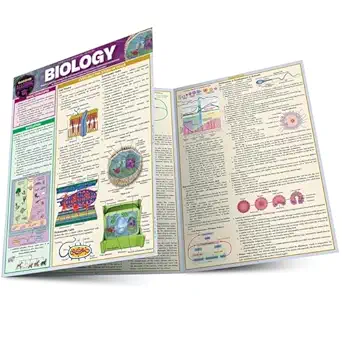
Biology QuickStudy Laminated Reference Guide
- ✔ Subject: Biology
- ✔ Format: Laminated reference guide
- ✔ Content: Concise facts and diagrams
Difficulty: Beginner | Time: 45-90 minutes
What You’ll Need
Tools & Materials:
- A list of the student’s current science topics, assignments, or interests
- Access to a library catalog, bookshop, or sample pages from candidate books
- A notebook or digital document for comparing titles
- The student’s age or school grade and approximate reading level
Knowledge:
- Basic familiarity with the student’s current learning goals
- Ability to read a contents page, sample entry, publication date, and source notes
Set aside 45-90 minutes. If selecting books for a class or group, note the youngest readers and the range of reading abilities. Decide whether you need books for broad browsing, a specific assignment, or a reference shelf; these purposes call for different kinds of books.
Usborne Science Encyclopedia: An In-depth Guide for Young Scientists
For students who want one reference to open up several areas of science, Usborne Science Encyclopedia is the most versatile choice in this group. Its coverage ranges across subjects and concepts including gravity, flight, genes, and DNA, so it works better as a starting point for questions than either the anatomy-specific atlas or the biology-only QuickStudy guide. More than 180 video clips and a curated list of 1,000 recommended websites also give readers ways to continue exploring beyond the printed pages. That added media is useful when a concept is easier to grasp through motion or further examples, though it also means this is not simply a compact, self-contained quick-reference sheet.The tradeoff is density. A wide-ranging encyclopedia can help a curious student connect ideas, but the volume of information may overwhelm readers who prefer short explanations or are looking for a single answer quickly. Compared with the Pocket Atlas, it is less specialized for anatomy; compared with QuickStudy, it is less streamlined for last-minute biology review. We would choose it for independent exploration and broad science learning, not as a substitute for a structured course text or a narrowly targeted revision aid.
Pros:
- Covers a broad range of important science topics
- Includes more than 180 video clips
- Provides a curated list of 1,000 recommended websites
- Encourages exploration beyond the printed reference
Cons:
- The volume of information may overwhelm some readers
- Less focused for anatomy or quick biology revision than the other picks
Best for: Curious young students who want broad science coverage and are likely to follow video and online-resource links.
Not ideal for: Readers who need a very concise review sheet, an anatomy-first reference, or a tightly structured course textbook.
Bottom line: We recommend it as the strongest all-purpose choice when a young student values wide coverage and multimedia exploration over compactness.
“We recommend it as the strongest all-purpose choice when a young student values wide coverage and multimedia exploration over compactness.”
The Pocket Atlas of Human Anatomy
When a student’s questions center on body structures and how they relate to function, The Pocket Atlas of Human Anatomy is more directly useful than the broad Usborne encyclopedia. Its detailed, full-color illustrations make it the most visual and specialized option here, while the compact size suits study sessions away from a desk. The subject matter is relevant across medicine, physical therapy, sports, and bodywork, so it can support learners from several health-related disciplines rather than only one course.Its focus is also its limit. This atlas does not provide the wide range of science topics found in Usborne, and its coverage is less suited to general science questions than the encyclopedia. It is also not a replacement for a larger, comprehensive anatomy atlas: the depth is limited, and small type may be difficult for some readers. Unlike QuickStudy, it is not a concise biology facts guide, and it has no accompanying digital version or interactive features. We would pick it when portability and anatomy illustrations matter most, but skip it if a student needs extensive explanations or prefers to study from a screen.
Pros:
- Compact format is easy to carry to study sessions
- Full-color illustrations clarify anatomical structures
- Relevant to several health and movement disciplines
- Durable cover is designed for frequent handling
Cons:
- Less depth than a larger comprehensive anatomy atlas
- Small font may be challenging for some readers
- No accompanying digital version or interactive features
Best for: Students in anatomy-related courses or health, movement, and bodywork fields who want an illustrated reference they can carry.
Not ideal for: Learners seeking a general science overview, a comprehensive anatomy textbook, larger print, or digital interactive study tools.
Bottom line: We favor this atlas over the other picks when anatomy is the clear priority and portability matters more than comprehensive depth.
“We favor this atlas over the other picks when anatomy is the clear priority and portability matters more than comprehensive depth.”
Biology QuickStudy Laminated Reference Guide
Biology QuickStudy Laminated Reference Guide is the most focused and streamlined pick for students who already have biology lessons or a textbook and want a compact reminder close at hand. Its concise facts and diagrams are designed for quick review, while the laminated pages resist wear from repeated use in a backpack or during study sessions. Compared with the Pocket Atlas, it is less about detailed human anatomy and more about brief biology reference material; compared with Usborne, it gives up broad exploration and multimedia in favor of a faster, more portable format.That efficiency comes with a clear ceiling: this is a review aid, not a deep teaching resource. Students encountering a topic for the first time may need fuller explanations, examples, or a textbook to understand the underlying ideas. Its biology-only scope also makes it a poor fit for someone seeking a general science reference. We would choose it for repeated, quick checks and on-the-go revision, especially when durability matters; for conceptual learning, Usborne offers more room to explore, and for anatomical detail, the atlas is the better match.
Pros:
- Laminated pages resist wear and tear
- Concise facts and diagrams support quick review
- Portable format fits in a backpack or pocket
- Useful as a companion to fuller course materials
Cons:
- Limited depth compared with full textbooks
- Biology-only scope is narrower than the Usborne encyclopedia
- Brief content may not explain unfamiliar concepts adequately
Best for: Students who already study biology and want a durable, portable guide for brief review and quick reference.
Not ideal for: Beginners needing detailed explanations, students looking for broad science coverage, or learners who need a full biology textbook.
Bottom line: We recommend it as a durable biology review companion, not as a student’s main source for learning the subject.
“We recommend it as a durable biology review companion, not as a student’s main source for learning the subject.”
As an Amazon Associate we earn from qualifying purchases.
Before You Start
Do not choose a book based on its cover, title, or age label alone. Science books can vary in reading difficulty, depth, and accuracy even when they cover the same topic. For current or changing subjects—such as space missions, climate data, medicine, and technology—check when the information was published and whether the book points to reliable sources. A book can still be useful if it is older, but confirm that its changing facts have not become outdated.
Decide how the student will use the resource. A student seeking quick facts may benefit from an encyclopedia or illustrated guide. A student completing a report may need a topic-specific book with a glossary, index, and sources. For medical, safety, or other high-stakes questions, use books as learning aids rather than as a substitute for advice from a qualified professional.
Step-by-Step Instructions
Step 1: Define the student’s purpose
Write down what the student needs the books to do. Include the science topics, likely assignments, and whether the student needs quick fact-checking, deeper explanations, research sources, or material for relaxed reading. Add any interests that could help sustain attention, such as animals, weather, engineering, or astronomy. If you are choosing for a class, list the units the books should support.
Turn that list into two or three selection priorities. For example: “clear explanations of ecosystems,” “readable for a 10-year-old,” and “includes diagrams and a glossary.” Keep the priorities specific enough to compare titles.
Tip: Separate required curriculum topics from personal interests. A book can support both, but an attractive subject book may not cover the material needed for an assignment.
Check: You have a short written list of topics, intended uses, and two or three priorities.
Step 2: Set the reading and access requirements
Record the student’s age or grade, reading comfort, and any access needs. Consider whether the student benefits from larger print, audio, concise sections, high-contrast diagrams, or a digital version that supports text enlargement. Ask the student to read a short sample page when possible. Judge whether the student can follow the explanation without frequent adult help, not just whether the vocabulary looks familiar.
Choose a practical format. Print books may be easier to browse and annotate; digital references can be searchable and portable. Check whether a digital title requires an account, subscription, or compatible device before relying on it.
Tip: A grade label is only a starting point. Science vocabulary, sentence length, and the amount of background knowledge can make a book feel easier or harder than its stated age range suggests.
Check: You know which reading level and formats are workable for the student.
Step 3: Find candidate titles
Search a library catalog, school or public librarian’s recommendations, reputable educational publishers, or a bookshop. Search by subject and purpose, such as “beginner astronomy reference” or “student human biology encyclopedia.” Note the title, author or editor, publisher, publication year, format, and where you can inspect or borrow it.
Collect a manageable set of three to six candidates. Include different types when useful: a broad science encyclopedia, a focused subject reference, and a book that explains scientific methods or concepts. Check whether the book is available in a language and format the student can use.
Tip: Use library copies or sample pages before buying. Catalog descriptions can tell you what a book covers, but they do not show how clearly it explains the subject.
Check: You have three to six plausible titles with enough publication and availability details to review.
Step 4: Check coverage and structure
Open the contents page and index, then check whether the student’s priority topics are actually covered. Look for useful navigation features: clear headings, an index, a glossary, captions, cross-references, and a contents page that reflects the book’s organization. For assignment use, check whether the student can trace a topic to a relevant section without reading the entire book.
Read one section on a familiar topic and one on a new topic. Notice whether the explanations build ideas in a sensible order, define new terms, and connect text to diagrams. Check that images have labels or captions that explain what they show rather than serving as decoration.
Tip: A large page count does not guarantee useful coverage. A shorter book with a strong index and well-chosen explanations may serve a student better than a bulky volume that is difficult to search.
Check: The book covers the required subjects and gives the student a practical way to find and understand entries.
Step 5: Review accuracy and source quality
Check the author’s qualifications or the editorial team’s science background when this information is available. Look for references, further-reading lists, image credits, or links to established scientific organizations and educational sources. Check the publisher and publication date, especially for subjects whose facts change quickly.
Compare one or two important claims with a current, reliable source, such as a national science agency, university, museum, or peer-reviewed reference intended for the public. Check whether the book distinguishes evidence from speculation and avoids presenting scientific questions as settled when they are still under study. For a classroom resource, ask a teacher or librarian to review titles that will support graded research.
Tip: Do not reject every older book automatically. Foundational ideas may remain useful, while figures, discoveries, recommendations, or technology details may need a newer source.
Check: You can identify who produced the book, when it was published, and where its key information can be checked.
Step 6: Compare usability and value
Score each candidate against your written priorities. Use a simple scale such as one to five for reading fit, topic coverage, navigation, accuracy signals, visual clarity, and format. Add the price or borrowing availability, but do not let price outweigh a serious mismatch in reading level or reliability.
Compare what each book adds. A general encyclopedia may give breadth, while a focused book may explain one topic in greater depth. Avoid buying several books that repeat the same basic material unless the student needs multiple copies or different reading levels. For digital resources, try the search function and confirm that diagrams, citations, and pages display correctly on the student’s device.
Tip: Ask the student to choose between the strongest two options after reviewing samples. A book the student wants to open is more likely to be used regularly.
Check: Your comparison identifies one or more books that meet the main priorities without unnecessary duplication.
Step 7: Select, borrow, and introduce the books
Choose the best-fit title or small set, then borrow or purchase it. For a student who is new to independent reference use, start with one broad reference and one book on a topic of interest rather than building a large collection at once. Confirm loan terms, return dates, digital access limits, and any classroom restrictions before depending on a borrowed resource for a project.
Show the student how to use the contents page, index, glossary, captions, and source notes. Try a short practice task: find an answer to a simple question, explain it in the student’s own words, and locate the page or source that supports it. For research assignments, remind the student to record source details while working rather than trying to reconstruct them later.
Tip: Do not write in a borrowed book. Use removable notes or a separate notebook, and follow the library’s rules for marking pages.
Check: The student can find a relevant section, explain a fact in their own words, and identify where the information came from.
Common Mistakes to Avoid
- Choosing a title only because it has an appealing cover, many photographs, or a popular subject. — Check a sample explanation, contents page, index, and source information against the student’s needs before deciding.
- Assuming the age range printed on the book matches the student’s reading ability. — Have the student read a representative page and check vocabulary, sentence complexity, and the amount of background knowledge required.
- Using an old reference for facts that change quickly. — Check the publication date and verify current figures or claims against a reliable, up-to-date source.
- Buying several overlapping books before finding out whether the student uses them. — Borrow or sample first, then add titles to fill a clear gap in topic coverage, reading level, or format.
Troubleshooting
Problem: The student finds the book confusing even though it is labeled for their age.
Solution: Try a simpler sample or a book with shorter sections, defined vocabulary, and more explanatory diagrams. Ask the student to point out where the explanation stops making sense; compare the reading level rather than relying on the label.
Problem: The book mentions the assignment topic but does not provide enough detail.
Solution: Check a subject-specific reference or a more advanced student resource. Use the broad book for orientation, then find a source that covers the topic in depth and provides traceable references.
Problem: The student cannot find an answer efficiently.
Solution: Show them how to use the index, glossary, headings, and cross-references. If those tools are missing or difficult to use, choose a reference designed for lookup or use a searchable digital edition.
Problem: A digital book will not open or its illustrations are hard to read.
Solution: Check device and app compatibility, sign-in status, and whether the loan or subscription is active. Try a larger screen or accessible display settings; use a print edition if diagrams remain unclear.
What Success Looks Like
You have selected a science reference book or small set that matches the student’s purpose, reading ability, and access needs. The chosen resource covers the intended topics, offers usable navigation features, presents information with credible authorship or editorial oversight, and has a publication date suitable for its subject. The student can locate a relevant entry, understand its main explanation, and trace the information to a page or cited source. You can explain why each selected title is useful and what, if anything, should be checked in a newer source.
Next Steps
Ask the student to use the book for one short question or assignment before adding more titles. Afterward, check which sections were useful and whether the reading level, index, and format worked in practice. Add another book only to fill a specific gap. For changing subjects, verify current facts when the student uses the reference. Return library books on time, keep purchase receipts or digital access details, and ask a teacher or librarian for help when the assignment requires a particular source type or citation style.
Frequently Asked Questions
Should I choose a science encyclopedia or a book about one subject?
Choose an encyclopedia when the student needs broad coverage or quick background on many topics. Choose a subject-specific reference when the student needs detailed explanations for a unit, report, or strong personal interest. Many students benefit from starting with a broad source and adding a focused book when a topic needs more depth.
How can I tell whether a science book is reliable?
Check the author’s or editor’s background, publisher, publication date, references, image credits, and suggested sources. Compare a few important claims with current material from a recognized science agency, university, or museum. If the book is for a graded project, confirm that it meets the teacher’s source requirements.
Are older science reference books still useful?
They can be useful for stable concepts, historical background, and foundational explanations. Check newer sources for facts that may change, including population counts, medical guidance, scientific discoveries, technology, and current measurements.
How many reference books does a student need?
Start with one or two books that serve distinct purposes, such as a broad reference and a focused title on an area of interest. Borrow additional books as assignments arise. Add to a home or classroom collection when a clear coverage, reading-level, or format need appears.
What should I do if the book does not have a bibliography?
Look for author or editor details, image credits, publisher information, and suggested further reading. For a research assignment that requires traceable evidence, choose another source with references or use the book for background and confirm its claims through a source that provides citations.
Fall Picks
fall essentials
As an affiliate, we earn on qualifying purchases.