
TL;DR

Prime made for students and young adults
- Fast, free delivery for dorm and study essentials
- Prime Video and Amazon Music included
- Member-only deals
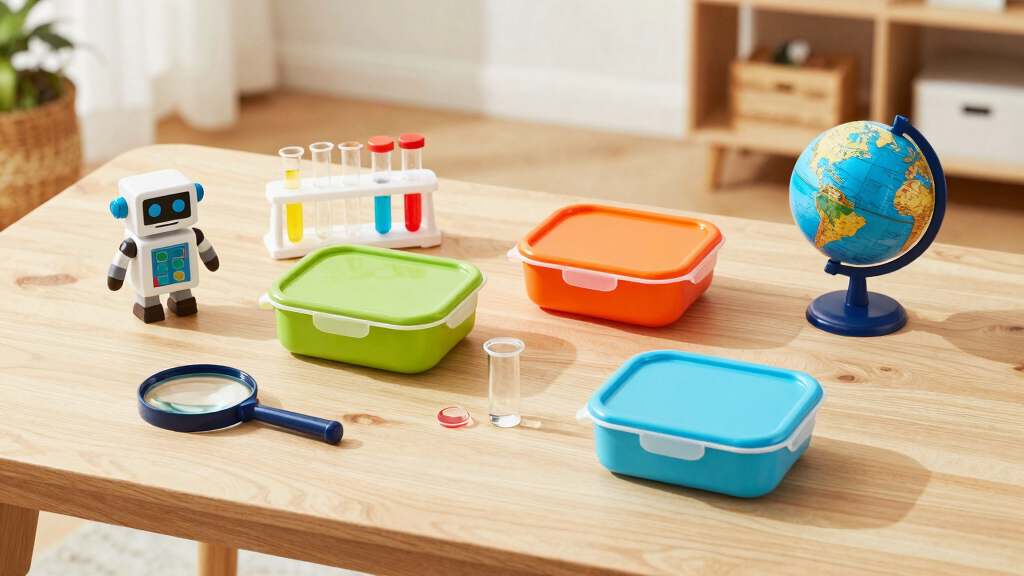
Educational science kits are powerful tools that make science fun, safe, and accessible. Recent trends include tech integration, eco-friendly materials, and inclusive designs, helping kids explore STEM in engaging ways.
Choose age-appropriate kits with clear safety standards to keep learning safe and fun.
Match your child’s interests with themed kits to maximize engagement and curiosity.
Look for modern features like AR, eco-friendly materials, and inclusive designs to enhance the experience.
Use hands-on activities to turn science from an abstract idea into a memorable adventure.
Create routines and family projects around science kits to foster long-term interest in STEM.
What Makes a Science Kit Truly Safe and Worth Your Money?
Safety is the foundation of any good science kit. Reputable kits use non-toxic, child-safe materials. Think of colorful liquids that won’t stain or harm, and sturdy components that won’t break into sharp edges.
For example, the National Geographic Crystal Growing Kit uses safe chemicals and comes with clear instructions to avoid mishaps. Always check if the kit explicitly states CE certification or similar safety standards.
High-quality kits also include step-by-step guides designed to prevent accidents, making learning safe and fun. They foster confidence — so kids can explore without worry.
As an affiliate, we earn on qualifying purchases.
How to Pick the Perfect Science Kit for Your Kid’s Age and Interests
Choosing the right kit depends on age, curiosity, and learning goals. For preschoolers, simple experiments like color mixing or magnet play work best. Older kids can handle more complex projects like robotics or chemical reactions.
Here’s a quick guide:
| Age Range | Best Themes | Sample Kits |
|---|---|---|
| 3-5 years | Basic chemistry, colors, magnets | Colorful slime, magnet puzzles |
| 6-8 years | Biology, simple physics, earth science | Bug habitats, crystal growing |
| 9+ years | Chemistry, engineering, robotics | Robotics kits, volcano experiments |
Matching the kit theme with your child’s current passions—whether space, animals, or gadgets—does more than just align with interests; it deeply influences motivation. When children see their favorite topics reflected in experiments, they find learning more meaningful and engaging. This relevance fosters sustained curiosity, helping children develop a genuine love for science that can translate into future educational and career pursuits. Furthermore, tailoring kits to interests allows for a personalized learning experience, which has been shown to improve retention and enthusiasm for STEM subjects over generic approaches.
STEM science experiment kits for children
As an affiliate, we earn on qualifying purchases.
As an affiliate, we earn on qualifying purchases.
What Are the Latest Trends in Educational Science Kits?
Modern kits are blending science with technology. Many now incorporate AR apps or QR codes that bring experiments to life on your phone or tablet. Imagine scanning a code and watching a 3D model of the solar system spin around your living room.
Eco-friendly materials are gaining ground. Think biodegradable plastics, recycled packaging, and experiments that teach environmental stewardship—these choices not only reduce waste but also instill eco-conscious values in children from an early age. The integration of sustainability into kits reflects a growing recognition that science education should also promote responsibility towards the planet, fostering a generation of environmentally aware thinkers.
STEM focus dominates, with kits designed to challenge kids’ engineering skills, teach coding, or build robots. Subscription models deliver new adventures every month, keeping curiosity alive and providing continuous learning opportunities. These subscriptions also help balance the breadth of topics children are exposed to, enabling them to discover new passions over time.
Inclusivity matters too. Companies are designing kits with tactile components and simplified instructions, making science accessible to children with disabilities. This trend recognizes that equitable access to STEM education is essential for cultivating a diverse future workforce. By removing barriers—whether sensory, cognitive, or physical—these innovations ensure that all children can participate, learn, and develop confidence in their abilities. This inclusive approach not only broadens participation but also enriches the scientific community by fostering diverse perspectives and ideas.
kids science kits with eco-friendly materials
As an affiliate, we earn on qualifying purchases.
As an affiliate, we earn on qualifying purchases.
What Are the Top 5 Features to Look for in a Science Kit?
- Age-appropriate complexity: Ensuring the experiments match your child’s skills helps prevent frustration and promotes confidence. Overly simple kits can bore children, while overly complex ones can discourage them. The right balance fosters curiosity and perseverance.
- Safety materials: Non-toxic, durable, and child-proof components protect children from harm, but also teach them the importance of safety in scientific work. Using high-quality materials shows respect for the child’s well-being and encourages responsible exploration.
- Engaging themes: Themes like space, dinosaurs, chemistry, or robotics tap into children’s natural interests. When experiments align with what excites them, children are more likely to stay engaged and develop a sustained interest in STEM fields.
- Clear instructions: Step-by-step guides with visuals or videos reduce confusion and ensure proper understanding. Well-designed instructions empower children to work independently, fostering problem-solving skills and confidence.
- Curriculum alignment: Kits that support school learning or homework reinforce concepts learned in class, providing practical context. This alignment helps children see the relevance of science in everyday life and promotes a cohesive learning experience.
interactive science kits with AR for kids
As an affiliate, we earn on qualifying purchases.
As an affiliate, we earn on qualifying purchases.
Real-World Example: Turning Science Into a Family Tradition
Imagine a weekend afternoon where you and your child build a mini volcano using baking soda and vinegar, as a neighbor’s kids watch in fascination. That simple activity not only teaches about chemical reactions but also creates memories. When kids see their parents involved, science transforms from a subject into a shared adventure.
Another example: a family subscribes to a monthly STEM box. Over months, they explore robotics, astronomy, and environmental science, turning the kitchen table into a mini lab. These experiences spark curiosity that lasts a lifetime and demonstrate how shared exploration can turn learning into a cherished family ritual. Such routines foster not only scientific understanding but also family bonding, creating a supportive environment where curiosity is encouraged and celebrated.
How to Make Science Kits Work Better for Your Child
- Start with their interests—space, animals, or gadgets.
- Create a dedicated ‘science corner’ to encourage exploration.
- Watch online tutorials together to deepen understanding.
- Discuss what they learned and relate it to real life.
- Rotate different kits to keep the excitement fresh.
For example, if your kid loves planets, a space-themed kit with a model rocket or planetary map can turn science into a quest. Regularly engaging with their experiments helps cement concepts and builds confidence. Additionally, integrating science activities into daily routines—like cooking, gardening, or stargazing—can extend learning beyond the kits and help children see science as a natural part of their world. This holistic approach encourages curiosity, critical thinking, and a lifelong love of discovery.
Frequently Asked Questions
Are science kits safe for young children?
Yes, reputable kits are designed with non-toxic, child-safe materials and include clear safety instructions. Always check for safety certifications and supervise younger children during experiments.
How do I pick the best science kit for my kid’s age and interests?
Consider their age, passions, and whether they prefer chemistry, biology, or engineering. Matching the theme with their curiosity makes experiments more engaging and meaningful.
Can science kits support school learning?
Absolutely. Many kits reinforce classroom concepts and make abstract ideas tangible. They’re perfect as supplementary tools or fun projects for after school.
Are eco-friendly science kits available?
Yes, an increasing number of companies now produce kits with biodegradable or recycled materials. They also include experiments that teach environmental awareness.
What themes are most popular for science kits?
Common themes include space exploration, dinosaurs, chemistry experiments, biology (like microscopy), and engineering challenges — all designed to spark curiosity.
Conclusion
Educational science kits do more than teach—they ignite a spark that can last a lifetime. When you pick the right kit and get involved, science becomes a shared journey, not just a school subject.
Imagine the day your kid proudly explains a concept they learned, eyes shining with curiosity. That’s the real magic — turning exploration into a lifelong love of discovery.
Columbus Day / Indigenous Peoples' Day Picks
long weekend sales
As an affiliate, we earn on qualifying purchases.