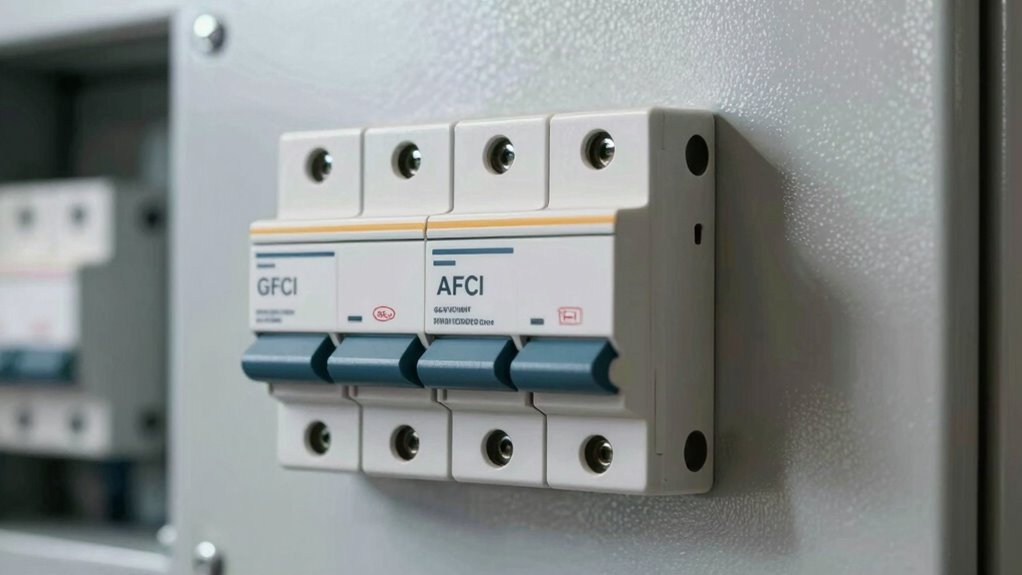

GFCI and AFCI devices are safety tools that protect your home from electrical hazards. GFCIs detect ground faults, which can cause shocks, and trip quickly to cut power, especially in moisture-prone areas like bathrooms. AFCIs identify arc faults that can start fires and shut off power immediately. Understanding how these devices work and where to install them can help keep your family safe. Keep exploring to learn how to recognize and maintain them effectively.
Key Takeaways
- GFCIs prevent electric shocks by detecting small current leaks to ground and shutting off power quickly.
- AFCIs protect against electrical fires by detecting dangerous arc faults in wiring.
- GFCIs are usually installed in moisture-prone areas like bathrooms, while AFCIs are used in bedrooms and living spaces.
- GFCIs feature test and reset buttons; AFCIs often have indicator lights or switches for status.
- Both devices are essential safety tools that help prevent shocks and fires, complying with electrical safety standards.
What Are GFCI and AFCI Devices?
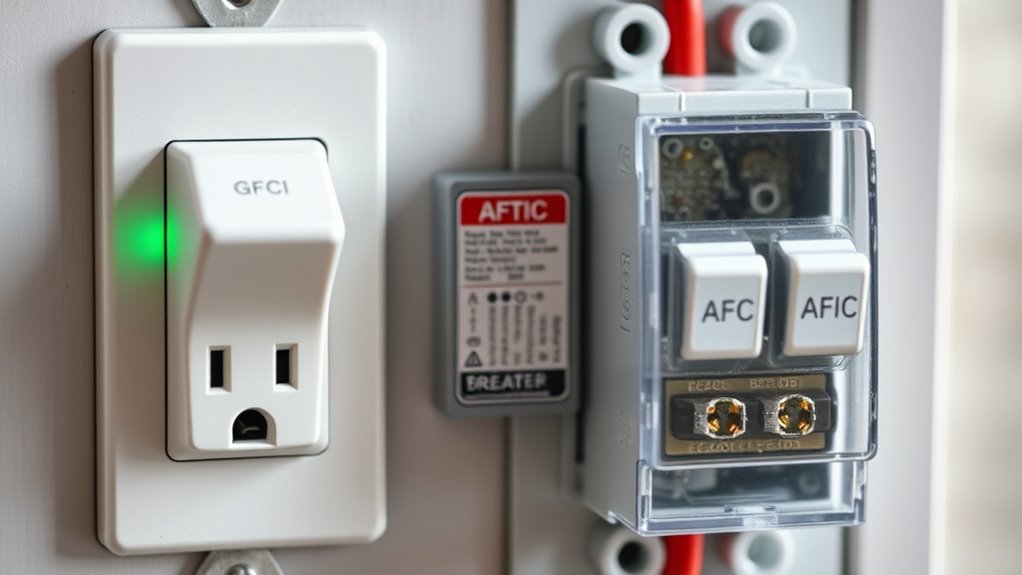
Have you ever wondered how electrical safety devices protect you from shocks and fires? GFCI (Ground Fault Circuit Interrupter) and AFCI (Arc Fault Circuit Interrupter) devices are vital for safety. GFCIs detect imbalances in current caused by grounding techniques that may expose you to shocks and shut off power instantly. AFCIs identify arc faults that could spark fires by monitoring electrical activity for irregularities. Both devices must meet strict electrical codes to guarantee proper protection. GFCIs are typically installed in areas with high moisture, like bathrooms, while AFCIs are used in bedrooms and living spaces to prevent fires caused by faulty wiring or damaged cords. Together, these devices provide thorough safety, reducing risks and helping keep your home safe. Understanding the thermal behavior of electrical components can further enhance safety measures and proper device installation.
How Do GFCI Outlets Protect Against Electric Shocks
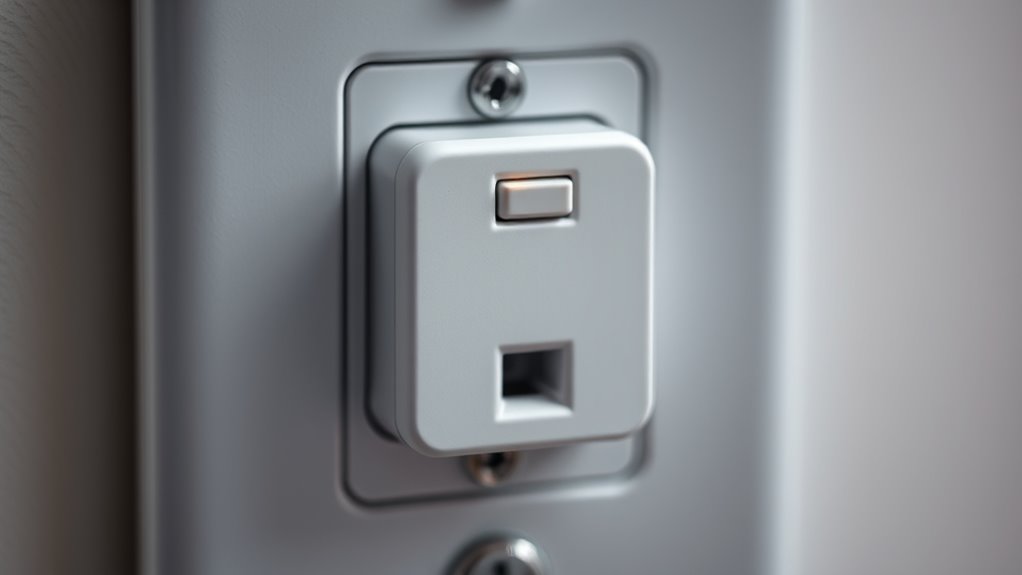
When you plug in a GFCI outlet, it constantly monitors the current flowing through the circuit. If it detects an imbalance, it trips almost instantly to prevent a shock. This quick response is what keeps you safe from harmful electric shocks. Proper maintenance of GFCI outlets ensures they function correctly over time.
Detects Current Imbalance
GFCI outlets protect against electric shocks by continuously monitoring the flow of current through the circuit. If there’s a grounding issue or a difference in current between the hot and neutral wires, the GFCI detects an imbalance. This imbalance often indicates that electricity is leaking somewhere, possibly through a person’s body, creating a shock hazard. Voltage fluctuations can also cause slight changes in current, but the GFCI is sensitive enough to identify even small discrepancies. When it detects this imbalance, it quickly shuts off power to prevent injury. This real-time monitoring helps guarantee your safety by catching potential shocks before they happen, especially in areas with increased risk like bathrooms or kitchens where grounding issues are more common. Additionally, understanding electrical safety practices can further reduce the risk of shocks and other hazards.
Trips Quickly for Safety
Because of their quick response time, GFCI outlets can shut off power within a fraction of a second if they detect an imbalance, substantially reducing your risk of electric shock. When a ground fault occurs—such as current leaking through a damaged wire or a person—you might not notice it, but the GFCI senses this imbalance and trips immediately. Similarly, if an arc fault develops, which can create sparks and heat, the GFCI detects the abnormal current flow and cuts power quickly. This rapid response prevents dangerous situations, protecting you from electric shocks and reducing the risk of fires caused by faulty wiring or damaged outlets. Their ability to trip swiftly is essential for your safety, especially in areas prone to moisture or wear. High sensitivity of GFCI outlets ensures they respond quickly even to minor faults, further enhancing safety.
Prevents Electric Shock
GFCI outlets protect you from electric shocks by quickly detecting dangerous electrical imbalances. When you touch a live wire, a ground fault occurs, causing electricity to flow where it shouldn’t, like through your body. The GFCI senses this imbalance within milliseconds and shuts off power, preventing a shock. This rapid response helps avoid serious injury or electrocution. Additionally, GFCIs can detect arc faults—small sparks caused by damaged wiring—that could ignite a fire and also pose shock risks. By monitoring the electrical current constantly, these outlets act as a safeguard against both ground faults and arc faults. European cloud innovation and energy-efficient technology are helping to improve the safety and reliability of modern electrical systems. This ensures that if something goes wrong, you’re protected from dangerous shocks, giving you peace of mind in areas prone to moisture or accidental contact.
How Do AFCI Breakers Help Prevent Fires

AFCI breakers detect arc faults early, catching dangerous sparks before they cause problems. When they sense an arcing pattern, they shut off the power to prevent a fire from starting. This quick response helps keep your home safe from electrical fires. Gold IRA markets also emphasize the importance of reliable electrical systems to protect investments and ensure safety.
Detects Arc Faults Early
Since arc faults can ignite fires unexpectedly, AFCI breakers are designed to detect these dangerous sparks early. They use advanced arc fault detection technology to monitor the wiring for signs of arcing, such as irregular current patterns. When an arc fault is detected, the breaker trips immediately, cutting off power and preventing a potential fire. This early detection is vital for electrical safety awareness, helping you identify problems before they escalate. AFCIs are especially effective at catching arcing caused by damaged wires, loose connections, or faulty appliances. By recognizing these hazards promptly, AFCI breakers give you peace of mind and protect your home from fire risks associated with hidden electrical faults. Their quick response saves lives and property. Understanding electrical safety and proper maintenance can further reduce the risk of electrical fires in your home.
Interrupts Power Safely
When an arc fault is detected, AFCI breakers act quickly to shut off power, preventing a potential fire from starting. They use advanced sensing to identify dangerous arcing patterns, interrupting the circuit safely. Different circuit breaker types, such as combination AFCIs, enhance protection by detecting various fault types. Proper grounding techniques ensure that faults are directed safely away, reducing fire risk. AFCIs are designed to trip faster than standard breakers, minimizing damage. The table below summarizes how AFCI breakers help prevent fires:
| Feature | Benefit |
|---|---|
| Rapid arc detection | Stops fires before they ignite |
| Grounding techniques | Redirects fault current safely |
| Multiple circuit breaker types | Offers versatile protection |
| Safe power interruption | Prevents damage and ensures safety |
Additionally, understanding the different circuit breaker types can help you select the best protection for your home.
What Are the Main Differences Between GFCI and AFCI
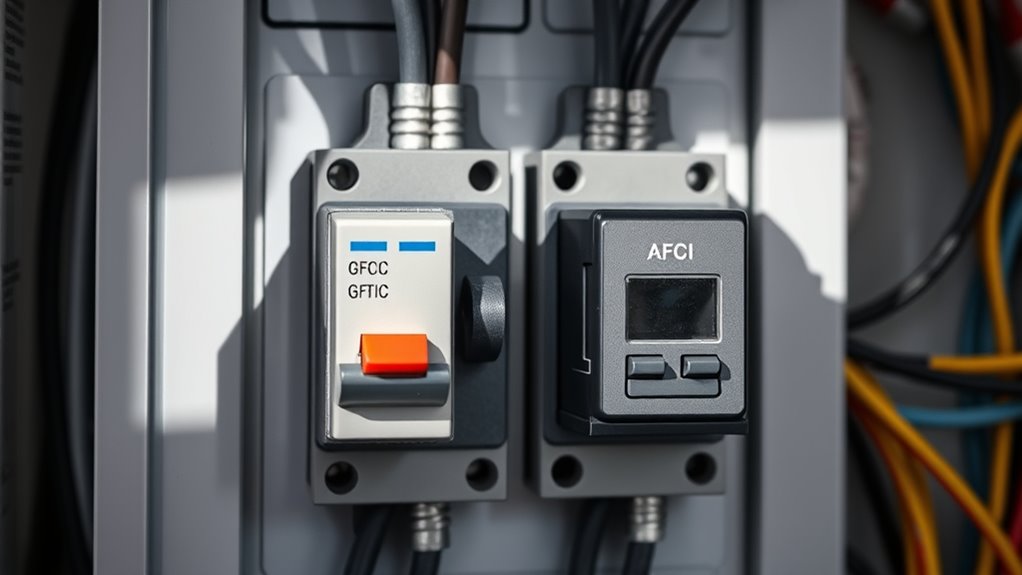
GFCI and AFCI devices serve different safety purposes in electrical systems, and understanding their main differences is essential for proper installation and protection. Historically, GFCIs were developed to prevent electrical shocks by detecting ground faults, while AFCIs evolved to reduce fire hazards caused by arc faults. Their regulatory standards reflect these distinct roles. GFCIs monitor for current leaks to ground, quickly shutting off power if imbalance occurs, making them ideal for areas exposed to moisture like bathrooms and kitchens. AFCIs detect arcing conditions that could ignite fires, so they are installed in bedrooms and living spaces. Although both enhance safety, they protect against different risks and are designed to meet separate electrical codes. Knowing these differences helps ensure you select the right device for each application. Understanding safety standards is key to proper electrical system protection.
Where Should You Use GFCI and AFCI Devices in Your Home

Knowing where to install GFCI and AFCI devices can considerably improve your home’s safety. During a home renovation, it is crucial to follow the electrical code, which specifies where these devices are required. GFCIs should be installed in areas with higher moisture, like bathrooms, kitchens, laundry rooms, and outdoor outlets, to prevent shocks. AFCIs are necessary in bedrooms, living rooms, and other living spaces to reduce fire risks caused by electrical faults. Proper placement not only meets code requirements but also safeguards your family. Additionally, understanding electrical safety standards helps ensure the correct use of GFCI and AFCI devices. Check local regulations and consult a professional if you’re unsure. Installing GFCI and AFCI devices in the right locations ensures your home is safer and compliant with current electrical standards.
How Can You Recognize GFCI and AFCI Devices

Ever wonder how to identify GFCI and AFCI devices quickly? First, look for the distinctive test and reset buttons on GFCI outlets—they’re usually located on the face of the device. AFCI circuit breakers may have a small LED indicator or a switch that shows their status. When performing safety tips, always turn off power before inspecting or handling device installation. GFCI outlets are commonly found in bathrooms, kitchens, and garages, while AFCI breakers are installed in your electrical panel. Recognizing these devices is essential for safety, so check for labels or markings indicating GFCI or AFCI protection. Proper identification helps ensure you’re taking the correct safety measures to prevent electrical hazards in your home.
Common Myths About GFCI and AFCI Safety Devices
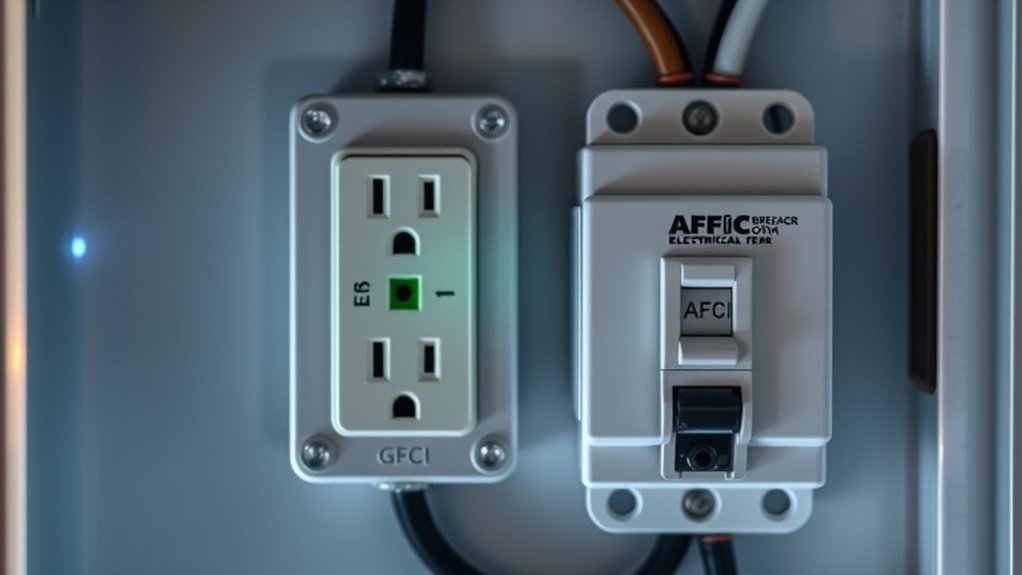
Many people have misconceptions about how GFCI and AFCI devices work and what they protect against. These myth misconceptions can lead to unnecessary safety concerns or improper use. For example, some believe GFCIs prevent all electrical shocks, but they mainly protect against ground faults causing shocks. Others think AFCIs prevent every fire, but they mainly detect arc faults that could cause some fires. Some assume these devices are difficult to test or maintain, which isn’t true. Ultimately, a common myth is that GFCI and AFCI devices are only for new homes, but they’re recommended for many existing installations too. Understanding the facts helps you avoid safety concerns based on myths misconceptions and ensures proper protection in your home.
Why Regular Testing and Inspection Matter for GFCI and AFCI
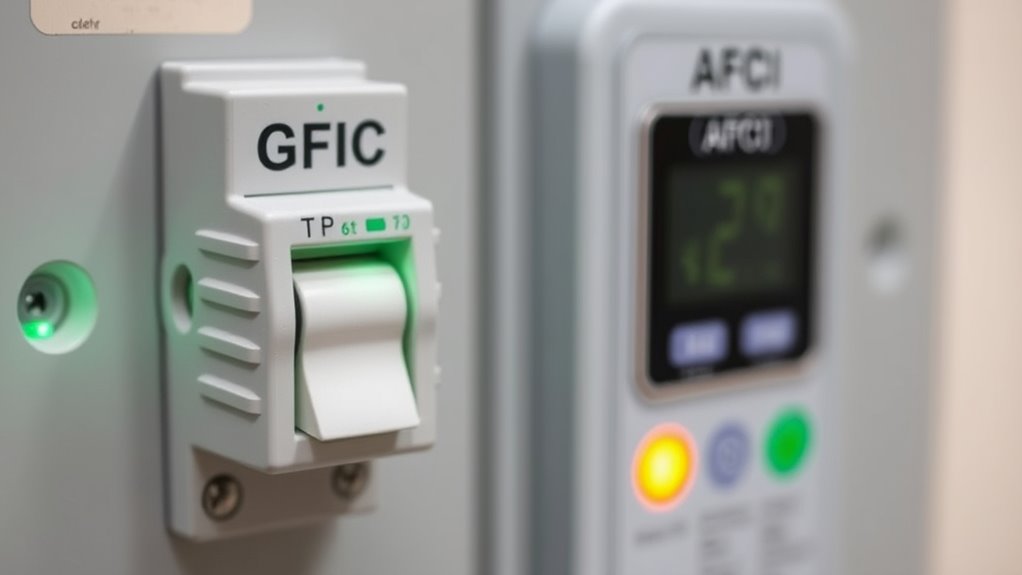
Regular testing and inspection of GFCI and AFCI devices are essential because these safety devices can develop faults over time that compromise their ability to protect you. Performing proper testing procedures ensures they function correctly, preventing electrical shocks or fires. The inspection importance lies in catching issues early, such as worn components or wiring problems, before they cause harm. Regular testing involves pressing the test button and confirming the device trips as expected, while inspections check for signs of damage or corrosion. Skipping these steps can leave you unaware of potential malfunctions, reducing safety. By staying diligent with testing and inspection, you maintain the reliability of your GFCI and AFCI devices, ensuring they continue to provide essential protection whenever you need it most.
Frequently Asked Questions
Are GFCI and AFCI Devices Interchangeable or Do They Serve Different Purposes?
GFCI and AFCI devices aren’t interchangeable because they serve different purposes. GFCIs protect you from electric shock by shutting off power when they detect ground faults, while AFCIs prevent fires caused by arcing faults. Their differences in functionality mean you need both types installed in appropriate areas. Relying on one device won’t provide the same safety benefits; understanding these differences helps make certain your home is properly protected.
How Often Should GFCI and AFCI Devices Be Tested for Safety?
You should test your GFCI and AFCI devices monthly to guarantee safety assurance. Regular testing is simple: press the test button and confirm that the device trips, then reset it. This routine helps catch potential problems early, preventing electrical hazards. Consistent testing keeps your home safe and ensures your devices function correctly when you need them most, giving you peace of mind.
Can GFCI or AFCI Devices Be Installed in Outdoor or Damp Locations?
Think of your home’s safety as a fragile garden. Yes, GFCI and AFCI devices can be installed in outdoor installations and damp locations, but only if they’re specifically rated for those environments. These devices are like protective shields, guarding against moisture and electrical faults. Make certain they’re labeled for outdoor or damp location suitability, so your garden—and your home—stays safe and secure, rain or shine.
What Are the Potential Signs Indicating a GFCI or AFCI Device Needs Replacement?
You should consider replacing your GFCI or AFCI if you notice persistent tripping issues or signs of moisture damage. Frequent trips may indicate a faulty device or wiring problem, while moisture damage can compromise safety and cause malfunctions. Also, if the device doesn’t reset properly or shows signs of physical wear, it’s time to replace it to ensure continued protection. Regular testing helps catch issues early.
Are There Any Recent Technological Advancements in GFCI and AFCI Safety Devices?
Recent advancements in GFCI and AFCI safety devices include smart integration and wireless monitoring. You can now connect these devices to your home network, enabling real-time alerts and remote diagnostics via smartphone apps. These innovations improve safety, allowing you to detect issues instantly and prevent potential hazards. As technology progresses, expect even more seamless, automated safety features that make maintaining electrical safety easier and more reliable.
Conclusion
Understanding GFCI and AFCI devices is like having a safety net woven into your home’s electrical system. They protect you from shocks and fires, acting as silent guardians you might not see but definitely feel. Regular testing keeps this safety net strong, catching any tears before accidents happen. Think of these devices as your home’s quiet protectors—always working, always watching—so you can enjoy peace of mind, knowing your home is truly safe.