
When you use different metals together, especially in moist or salty environments, galvanic corrosion can quickly cause rust on your fasteners. This process happens because dissimilar metals create an electrical current that accelerates corrosion on the more reactive metal. To avoid this trap, you need to choose compatible fasteners and add protective barriers. Keep your fasteners protected, and you’ll find out more about how to prevent this hidden threat from causing damage over time.
Key Takeaways
- Metal fasteners made from incompatible metals can trigger galvanic corrosion when in contact with other metals and moisture.
- Using dissimilar metals without proper insulation creates a galvanic cell, accelerating rust and degradation.
- Protective coatings, insulation barriers, and selecting similar metals help prevent galvanic corrosion of fasteners.
- Regular inspections identify early signs of rust or pitting caused by galvanic activity at fastener sites.
- Choosing corrosion-resistant fasteners like stainless steel or galvanized steel reduces the risk of rust in moist environments.
How Galvanic Corrosion Happens

Galvanic corrosion occurs when two different metals come into electrical contact in the presence of an electrolyte, such as water or moisture. This initiates an electrochemical process where one metal becomes the anode and corrodes, while the other acts as the cathode. The metal pairing creates a voltage difference, causing electrons to flow between the metals through the electrolyte. As a result, the more reactive metal, often the less noble one, loses material and rusts faster. This process is accelerated by factors like moisture, salt, and temperature. Understanding how these metals interact is key to preventing galvanic corrosion, especially when choosing fasteners or assembling metal components in environments prone to moisture. Proper material selection can help avoid this damaging electrochemical process. Additionally, using non-reactive fasteners can significantly reduce the likelihood of galvanic corrosion in vulnerable settings.
Which Metal Pairs Speed Up Rust
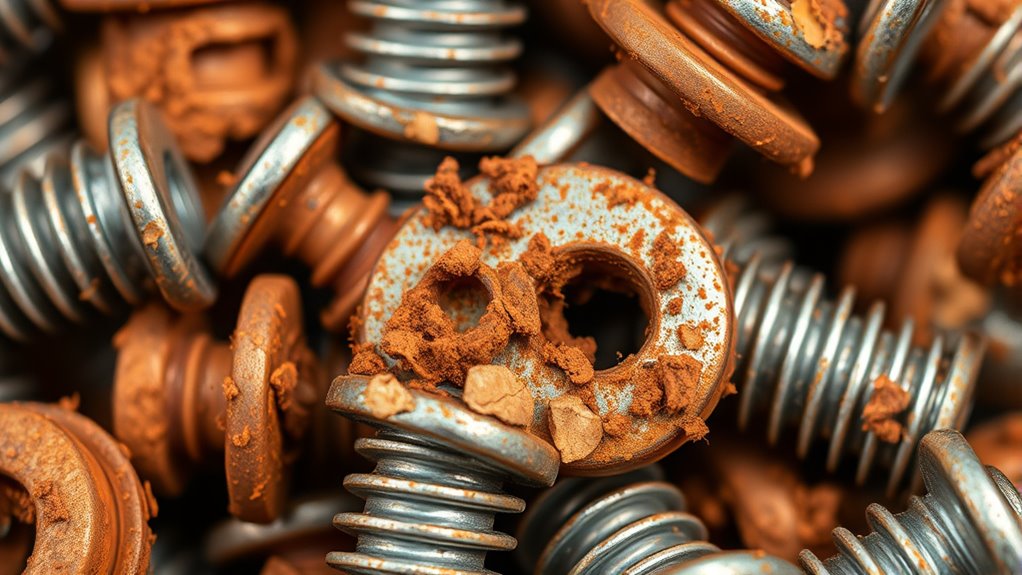
Certain metal combinations accelerate rusting because their differing reactivity creates a strong electrochemical reaction. When you use incompatible metal pairings, like steel fasteners with aluminum or copper, the more reactive metal acts as an anode, corroding faster. This metal pairing triggers corrosion acceleration, as electrons flow from the less noble to the more noble metal. For example, zinc and steel or copper and steel can cause rapid rust formation due to galvanic activity. The severity depends on factors like moisture and contact area. Recognizing which metal pairings promote galvanic corrosion helps you prevent rust. Avoid combining highly reactive metals with less reactive ones in humid environments to minimize corrosion acceleration and extend the lifespan of your fasteners. Additionally, understanding metal reactivity can aid in selecting appropriate fastener materials for different environments.
How to Spot Signs of Galvanic Corrosion

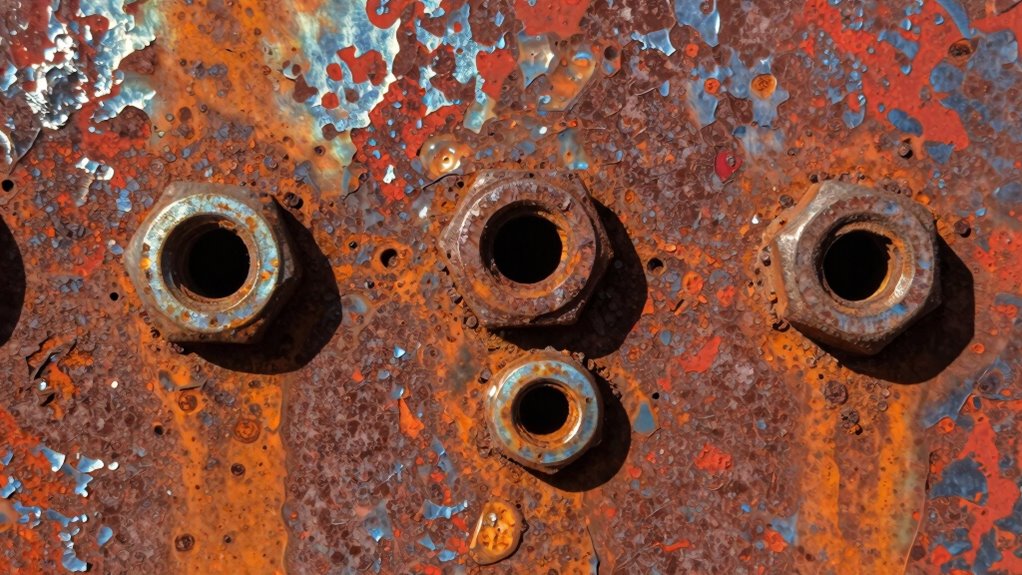
Recognizing the signs of galvanic corrosion early can save your metal components from extensive damage. Start with a thorough visual inspection, looking for corrosion indicators like discoloration, pitting, or flaking on the fasteners and surrounding metal surfaces. These symptoms often appear where different metals meet or where moisture tends to collect. Rust-colored stains or a bluish-green tint can also signal galvanic activity. Pay close attention to areas with tight spaces or poor drainage, as moisture accumulates there. Any uneven corrosion or surface damage should raise concern. Regularly inspecting your metal assemblies allows you to detect these corrosion indicators before they worsen, helping you address issues promptly and prevent costly repairs or replacements. Additionally, understanding metal compatibility can help you choose materials less prone to galvanic corrosion, thereby extending the life of your metal structures.
How to Prevent Galvanic Corrosion

Are you looking for effective ways to prevent galvanic corrosion from damaging your metal components? One of the best methods is applying protective coatings, such as paint or sealants, to create a barrier that prevents contact between different metals. Insulation barriers, like rubber or plastic washers, also help by physically separating dissimilar metals, reducing the chance of electrochemical reactions. Regular maintenance and inspection can catch early signs of corrosion before it worsens. Additionally, choosing metals with similar electrochemical properties minimizes potential differences that cause galvanic corrosion. Proper thermal behavior management, including controlling temperature variations, can further reduce corrosion risks. By combining protective coatings with insulation barriers, you effectively isolate the metals and protect your fasteners from moisture and electrolytes, ensuring longevity and durability of your metal assemblies.
Choosing Fasteners for Moist Environments
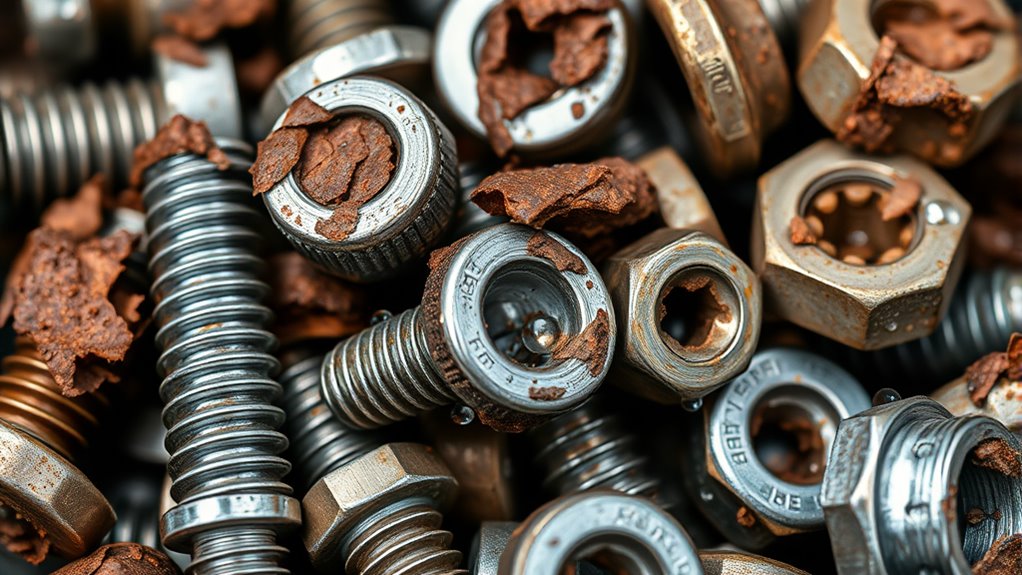
When selecting fasteners for moist environments, it’s vital to choose materials that resist corrosion and maintain strength over time. Your best bet involves understanding coating techniques and fastener material selection. Stainless steel, aluminum, and galvanized steel are popular options due to their corrosion resistance. Applying protective coatings like zinc, epoxy, or ceramic enhances durability further. Here’s a quick comparison:
| Material | Coating Techniques | Suitability for Moist Environments |
|---|---|---|
| Stainless Steel | No coating needed | Excellent |
| Galvanized Steel | Zinc coating | Good |
| Aluminum | Anodizing | Moderate |
| Brass | Protective lacquer | Limited |
| Copper | Patina formation | Suitable |
Choosing the right fastener depends on your environment and specific application needs. Understanding corrosion resistance is essential to making an informed choice.
Frequently Asked Questions
Can Galvanic Corrosion Occur Indoors or Only Outdoors?
Galvanic corrosion can occur indoors just as easily as outdoors if you have different metals in contact and moisture present. Indoor environments with high humidity, leaks, or condensation create the perfect conditions. To prevent this, you should focus on corrosion prevention by using compatible metals, applying protective coatings, and controlling moisture levels. Being aware of these factors helps you avoid costly damage and prolong the lifespan of your fasteners and structures.
Are There Specific Coatings That Prevent Galvanic Corrosion?
Did you know that proper coatings can reduce galvanic corrosion by up to 80%? Yes, specific coatings like epoxy or zinc-rich primers are highly effective because they improve coating effectiveness and act as corrosion inhibitors. These coatings create a barrier, preventing metal contact and moisture buildup. Selecting the right coating guarantees your fasteners resist galvanic corrosion, whether indoors or outdoors, keeping your projects durable and corrosion-free longer.
How Long Does It Typically Take for Galvanic Corrosion to Develop?
Galvanic corrosion can develop within days to years, depending on factors like metal compatibility and environmental conditions. You might notice it faster in wet or salty environments, where the corrosion timeline shortens. To prevent this, verify compatible metals are used and consider protective coatings. Regular inspections help catch early signs, allowing you to address issues before significant damage occurs. The key is understanding how your specific metals interact over time.
Does Temperature Affect the Rate of Galvanic Corrosion?
Yes, temperature influence plays a significant role in galvanic corrosion. When temperatures rise, the corrosion process accelerates because higher heat increases electrical conductivity and reaction rates. This means you’re more likely to see faster deterioration of metal fasteners in warmer environments. To prevent corrosion acceleration, it’s essential to take into account temperature conditions and use appropriate protective measures, especially in hot or fluctuating temperature settings.
Can Galvanic Corrosion Weaken Fasteners Over Time Without Visible Damage?
Did you know that galvanic corrosion can cause 80% of fastener failures without visible signs? Yes, it can weaken fasteners over time, leading to hidden weakening and unseen deterioration. This corrosion process gradually breaks down the metal, making fasteners less reliable without showing any outward damage. So, even if your fasteners look fine, they could be compromised, risking your project’s safety and integrity.
Conclusion
Think of your metal connections as a trustful friendship—when different metals meet, sparks fly, and rust creeps in like a silent betrayer. By choosing compatible fasteners and caring for your materials, you keep that bond strong and rust-free. Remember, preventing galvanic corrosion is like nurturing a garden—regular attention and the right choices guard against hidden threats. Keep your metals united in harmony, and they’ll stand the test of time, shining bright through every storm.