
Fasteners can fail even with good materials because external factors like corrosion, environmental conditions, and improper installation weaken them over time. Vibration, temperature changes, and chemical exposure accelerate wear, while uneven load distribution causes stress and cracks. If you don’t follow proper torque and installation practices, you risk loosening or damage. To learn more about how these issues develop and how to prevent them, keep exploring these important factors.
Key Takeaways
- External environmental factors like moisture and chemicals can cause corrosion despite using good materials.
- Improper installation, such as over-tightening or misalignment, leads to stress and cracks.
- Uneven load distribution causes stress concentrations, increasing the risk of fatigue and failure.
- External influences like vibration and temperature fluctuations accelerate material degradation.
- Lack of regular inspection and maintenance allows early signs of wear to go unnoticed until failure occurs.
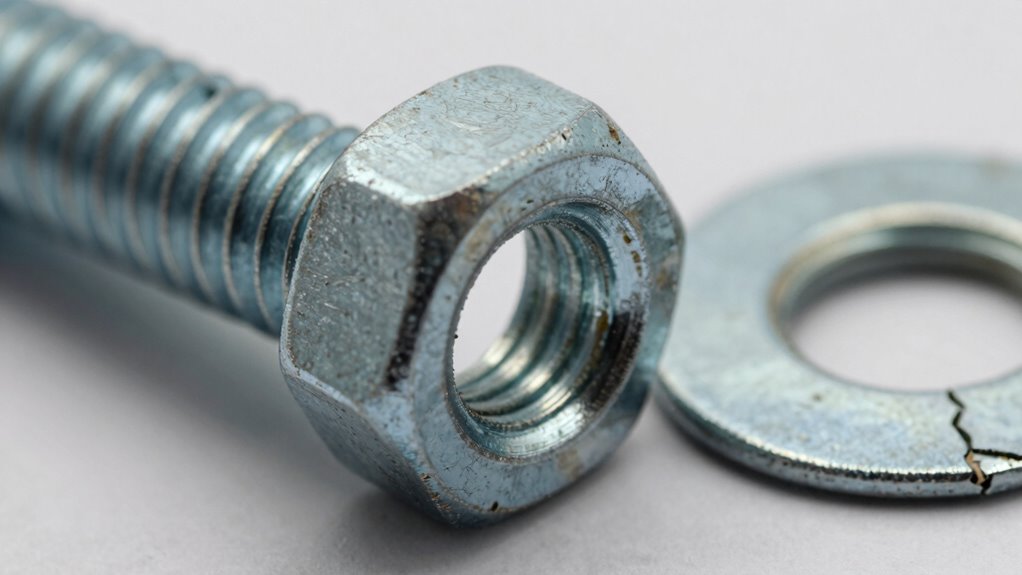
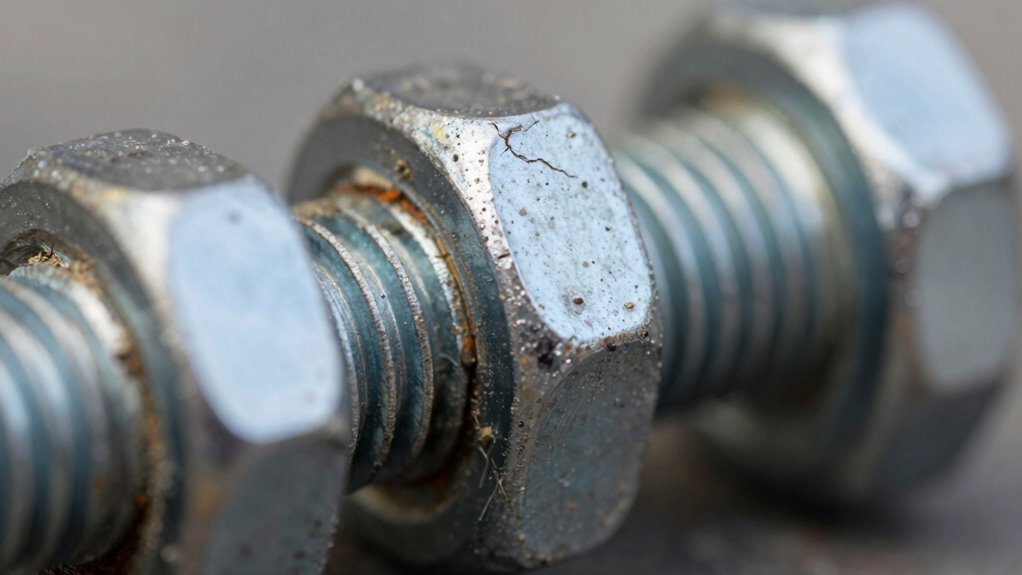
Even when fasteners are made from high-quality materials, they can still fail unexpectedly. You might assume that choosing the best metal or alloy guarantees durability, but other factors can undermine their performance. One common reason for failure is corrosion, even in fasteners designed for corrosion resistance. Exposure to moisture, chemicals, or harsh environments can compromise the protective coatings or alloys, leading to rust and weakening over time. This degradation doesn’t always happen immediately; it can develop gradually, causing you to overlook early signs of trouble until failure occurs. To prevent this, it’s essential to select fasteners with proven corrosion resistance tailored to the specific conditions of your application. Proper maintenance, coatings, and environmental controls also play critical roles in extending their lifespan.
Another key factor often overlooked is load distribution. When you tighten a fastener, you may focus solely on achieving the correct torque, but if the load isn’t evenly distributed, it can cause uneven stress concentrations. This uneven load sharing puts excessive strain on certain points of the fastener, increasing the likelihood of fatigue, cracking, or sudden breakage. Poor load distribution can be caused by several issues, including misalignment, uneven surfaces, or using incompatible fasteners. Ensuring proper fit and surface preparation helps promote even load transfer, reducing stress concentrations. You should also consider the type of fastener and its design, making sure it’s suitable for the load demands of your project. When load distribution is optimized, it spreads forces evenly across the fastener and the joint, greatly reducing the risk of failure. Recognizing the importance of material durability and how it interacts with environmental influences can further improve fastener longevity.
Beyond material quality, improper installation can be a silent culprit. Over-tightening or under-tightening can alter stress levels, possibly leading to cracks or loosening over time. Using the right tools and following manufacturer specifications ensures consistent torque application, maintaining the integrity of the fastener and the joint. Additionally, environmental factors like vibration, temperature fluctuations, and chemical exposure can all accelerate wear and tear, even on fasteners made from resilient materials. Regular inspections and proactive replacement of worn or damaged fasteners help catch potential issues early before they escalate into catastrophic failures. Recognizing the importance of proper installation techniques and how they influence fastener performance can save you from costly repairs. It’s also crucial to understand that environmental influences can significantly accelerate fastener deterioration even when other conditions are optimal. Being aware of external conditions and how they interact with fastener materials can further enhance their durability. Understanding that fasteners are vulnerable not just because of their material but also because of how they’re used and maintained can save you from costly failures. Proper material selection, attention to load distribution, correct installation, and regular upkeep are your best defenses against unexpected fastener failure—no matter how good the initial materials seem. Considering environmental factors in your maintenance plan can further enhance the durability of your fasteners over time.

Mellewell #8 x 1/2" Pan Head Self Tapping Screw, Pan Head Sheet Metal Screws Wood Screws, Black Finish Stainless Steel 304 (18-8), 100 Pack
Type: #8 Pan Head Self Tapping Screws.
As an affiliate, we earn on qualifying purchases.
As an affiliate, we earn on qualifying purchases.
Frequently Asked Questions
How Can Proper Installation Prevent Fastener Failure?
Proper installation prevents fastener failure by ensuring adequate thread engagement and torque optimization. When you carefully engage the threads, you create a strong grip that resists loosening or breaking. Applying the right amount of torque prevents over-tightening, which can damage the fastener or material. By focusing on these steps, you maintain the integrity of the connection, reducing the risk of failure despite the materials being in perfect condition.
What Environmental Factors Contribute to Fastener Deterioration?
You might think fasteners last forever, but environmental factors like moisture, salt, and temperature fluctuations accelerate corrosion mechanisms, leading to deterioration. Environmental degradation weakens metal integrity over time, especially in harsh conditions like coastal or industrial settings. These factors cause rust, pitting, and cracking, undermining fastener strength. To prevent failure, choose corrosion-resistant materials and apply protective coatings, ensuring your fasteners withstand the damaging effects of their environment.
Are There Specific Fastener Types More Prone to Failure?
Certain fastener types are more prone to failure based on material compatibility and fastener design. For example, softer metals or mismatched materials can lead to corrosion or fatigue. Threaded fasteners with inadequate design may loosen or break under stress. You should choose fasteners that match your materials and guarantee proper design for your application. Proper selection and installation reduce failure risks, even in perfect materials, ensuring longevity and safety.
How Does Load Distribution Affect Fastener Longevity?
Load distribution greatly affects fastener longevity by minimizing stress concentration. When load balancing is effective, stress spreads evenly across the fastener, reducing the risk of localized failure. Conversely, uneven load distribution causes high stress points, accelerating wear and potential failure. To guarantee durability, you should design fastening systems that promote even load sharing, regularly inspect for uneven tension, and use appropriate fasteners suited for your application’s load requirements.
Can Corrosion-Resistant Coatings Extend Fastener Lifespan?
They say, “Prevention is better than cure,” and corrosion-resistant coatings do extend fastener lifespan. They improve coating durability and protect against environmental damage. However, their effectiveness depends on material compatibility; using the right coating for your fastener material is essential. While coatings can substantially enhance longevity, neglecting proper application or choosing incompatible options may limit their protective benefits. Always select coatings suited for your specific environment and fastener material.
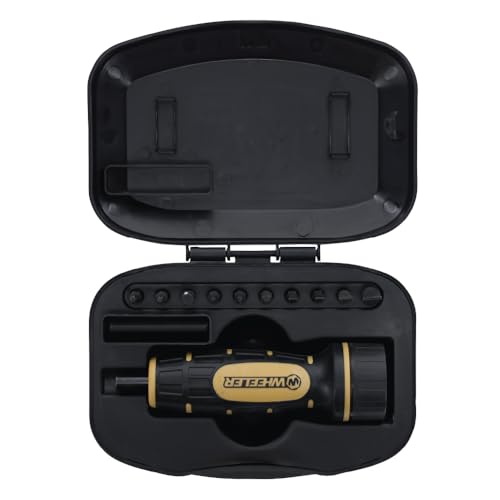
Wheeler Manual Firearms Accurizing Torque Wrench with Inch/Pounds Measurement, Bits and Storage Case for Scope Mounting, Gunsmithing and Maintenance
ACCURACY: +/- 2 inch/pounds up to 40 inch/pounds; 40 – 65 is +/- 5%. The FAT wrench measures…
As an affiliate, we earn on qualifying purchases.
As an affiliate, we earn on qualifying purchases.
Conclusion
Remember, even in the strongest materials, fasteners can fail if overlooked. Like a chain is only as strong as its weakest link, your entire project depends on proper fastening. Don’t assume good materials guarantee success—attention to detail and correct installation matter just as much. So, stay vigilant, because in the world of fasteners, neglect can turn a sturdy structure into a fragile illusion. After all, strength is only as reliable as its weakest point.
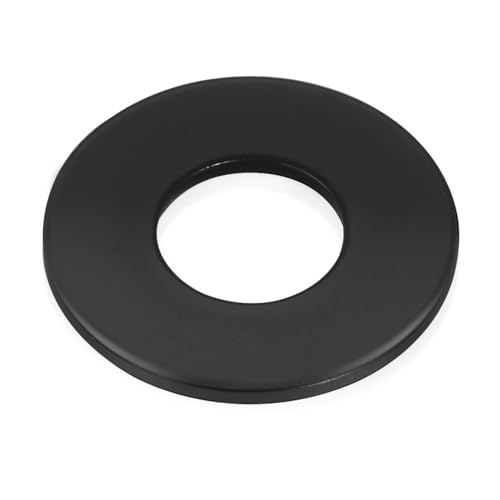
100 PCS 1/4" Black Flat Washer, 3/4" Outer Diameter, 304 Stainless Steel Metal Washer for Screws and Bolts
Specification: 1/4" Flat Washer, 100 PCS. Outside Diameter: 3/4", Inside Diameter: 1/4", Thickness: 0.051".
As an affiliate, we earn on qualifying purchases.
As an affiliate, we earn on qualifying purchases.
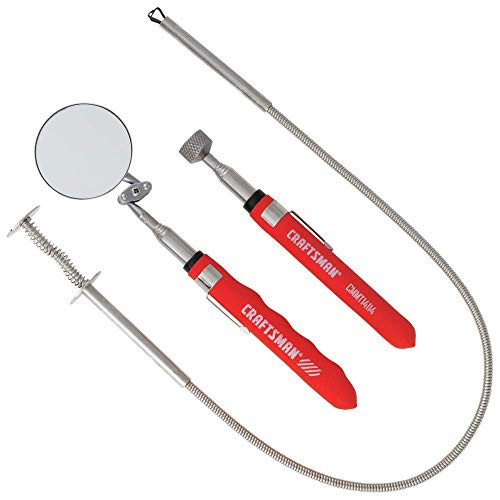
CRAFTSMAN 3 Piece Automotive Mechanic Magnetic Pickup Tool Kit (CMMT98276)
Versatility: 3 pc kit provides the tools needed to find and retrieve small objects from hard to reach…
As an affiliate, we earn on qualifying purchases.
As an affiliate, we earn on qualifying purchases.