When storing emergency water, choosing the right container material is key to keeping it safe and clean. Opt for food-grade plastics like HDPE that are durable, resistant to chemicals, and opaque to block sunlight. Avoid recycled or non-food-grade plastics that can leach harmful substances. Regularly clean and inspect your containers, label them with storage dates, and replace the water every 6 to 12 months. Keep these tips in mind to guarantee your water stays safe—more details follow.
Listen free for 30 days with Audible
Thousands of audiobooks and originals — cancel anytime.
As an affiliate, we earn on qualifying purchases.
Key Takeaways
- Use food-grade plastics like HDPE to prevent harmful chemical leaching into stored water.
- Choose opaque or dark-colored containers to inhibit algae growth and maintain water quality.
- Avoid recycled or non-food-grade plastics that may contain contaminants or degrade over time.
- Ensure containers are durable, resistant to cracking, and suitable for long-term water storage.
- Regularly inspect, clean, and replace containers to prevent bacteria, mold, and deterioration.
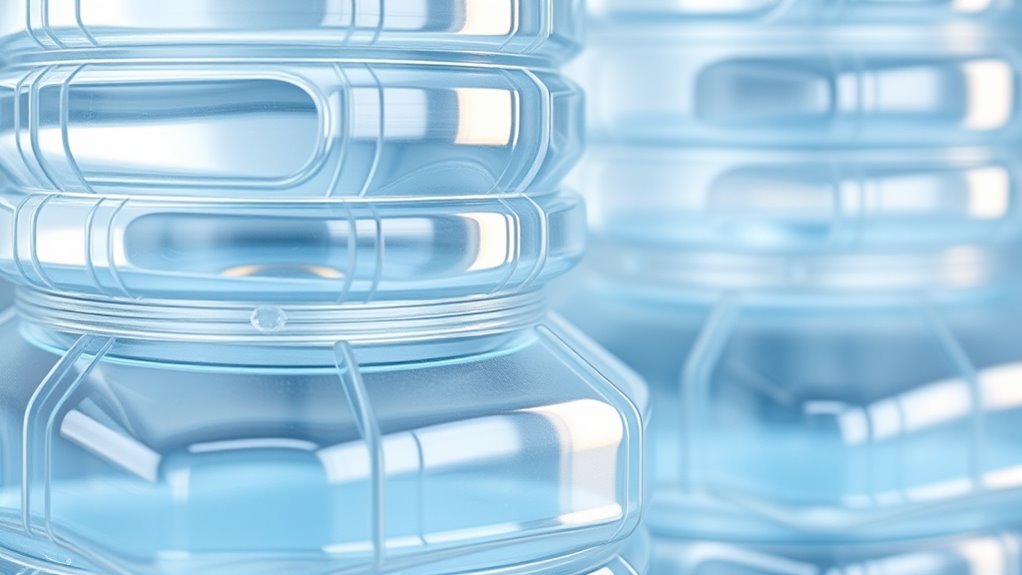
Having a reliable supply of emergency water is essential for guaranteeing your safety during unexpected crises. You never know when you might face a situation where clean drinking water becomes scarce, whether it’s due to natural disasters, infrastructure failures, or other emergencies. To make sure your stored water remains safe and usable, understanding the importance of container material and proper maintenance is crucial. The right container material can prevent contamination, preserve water quality, and extend the shelf life of your stored water. Equally important is regular container maintenance, which ensures that your water stays fresh and free from harmful bacteria or mold.
Ensuring water safety with proper containers and maintenance is vital for emergency preparedness.
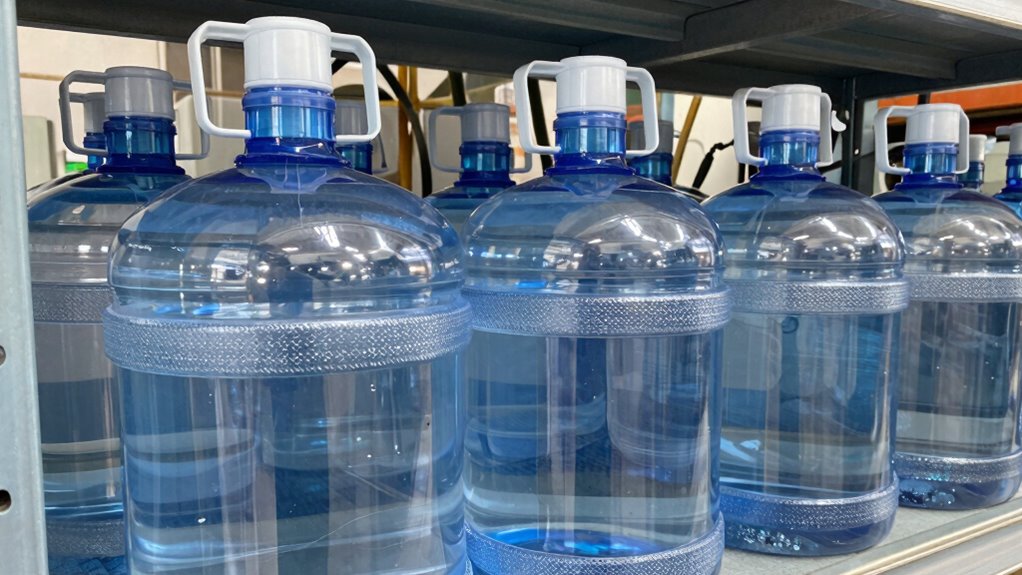
When selecting containers for emergency water storage, prioritize those made from food-grade plastics like HDPE (high-density polyethylene). These materials are safe, durable, and resistant to chemicals that could leach into your water. Avoid containers made from materials that can degrade over time or contain harmful substances, such as certain recycled plastics or non-food-grade plastics. The material’s inert qualities help prevent contamination and make water purification easier when you need to access your stored supply. Because water can sit stagnant for long periods, choosing containers that are opaque or dark-colored also helps prevent algae growth by blocking sunlight.
Container maintenance plays a vital role in keeping your emergency water safe to drink. Regularly inspect your containers for cracks, leaks, or signs of deterioration. Clean them thoroughly with soap and water at least once every six months, and consider sanitizing them with a solution of water and unscented household bleach—about one teaspoon of bleach per quart of water—before refilling. Proper cleaning eliminates bacteria, mold, and other contaminants that could compromise your water supply. Always ensure that the containers are completely dry before sealing them to prevent mold growth during storage. Additionally, understanding how container material impacts water safety can help you make informed choices for long-term storage. Always check that caps or lids are secure and airtight. This prevents dirt, insects, and other pollutants from contaminating your stored water. Label your containers with the date of storage so you can rotate your supply and replace water every six to twelve months, depending on storage conditions. Proper container maintenance ensures that your water remains potable and reduces the risk of illness during emergencies.
food grade HDPE water storage containers
As an affiliate, we earn on qualifying purchases.
As an affiliate, we earn on qualifying purchases.
Frequently Asked Questions
How Long Can Stored Water Remain Safe to Drink?
Stored water can stay safe to drink for about six months if you regularly refresh it. To guarantee safety, you should use proper water purification methods before storage, especially if the water isn’t from a trusted source. Choose a durable container that’s made from food-grade material, as it protects the water from contamination and maintains its quality over time. Regularly inspect and clean the container for best results.
Are Biodegradable Containers Suitable for Emergency Water Storage?
Think of biodegradable containers as leaves in a stream — they break down quickly, which isn’t ideal for emergency water storage. These eco-friendly packaging options, like biodegradable plastics, aren’t suitable because they may degrade and contaminate your water over time. For safety and durability, stick with sturdy, non-biodegradable materials like high-density polyethylene. This guarantees your stored water remains safe and accessible when you need it most.
How Does Container Material Affect Water Taste and Odor?
Your container material directly impacts water taste and odor by influencing water purity. For example, plastic containers may impart a slight chemical taste if not BPA-free, while metal ones can alter water’s flavor due to metal ions. Glass containers typically preserve water’s natural taste better. Choosing the right container material guarantees your stored water remains fresh, pure, and free from unwanted odors, making it more pleasant and safe to use during emergencies.
Can I Reuse Old Water Bottles for Emergency Storage?
You can reuse old water bottles for emergency storage, but beware—recycling concerns and container durability are serious issues. Over time, plastic degrades, risking leaks or contamination that could turn your lifesaver into a danger. While reusing might seem eco-friendly, it’s often a gamble. For safety, invest in durable, food-grade containers designed for multiple uses, ensuring your emergency stash remains safe, reliable, and ready when you need it most.
What Are the Environmental Impacts of Different Storage Container Materials?
Choosing storage containers impacts the environment through recycling benefits and chemical leaching. Plastic bottles, often made from PET, are recyclable but may leach chemicals over time, affecting water quality. Glass containers are eco-friendly, reusable, and don’t leach chemicals, minimizing environmental harm. Metal options, like stainless steel, are durable and recyclable but may require energy-intensive production. Your choices influence waste reduction and chemical safety, so opt for materials that support recycling and reduce chemical risks.
opaque plastic water storage bottles
As an affiliate, we earn on qualifying purchases.
As an affiliate, we earn on qualifying purchases.
Conclusion
When choosing your emergency water storage, remember that the container material truly matters—just like a trusty goblet in a medieval feast, it protects your water from contamination. Opt for food-grade plastics or stainless steel to guarantee safety and freshness. Don’t let your preparedness be as misguided as a knight without his armor. By selecting the right container, you safeguard your health and stay ready for any unexpected siege on your supplies.
long-term water storage containers
As an affiliate, we earn on qualifying purchases.
As an affiliate, we earn on qualifying purchases.
water storage container cleaning supplies
As an affiliate, we earn on qualifying purchases.
As an affiliate, we earn on qualifying purchases.
Fall yard work Picks
leaf blowers
As an affiliate, we earn on qualifying purchases.