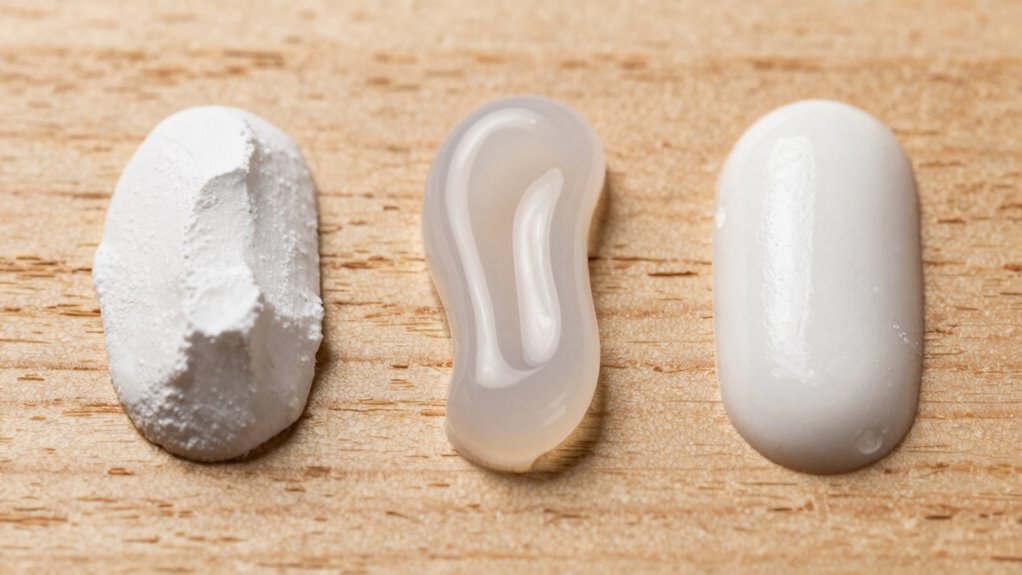

Acrylic caulk is easy to work with, great for interior projects, and takes paint well. Silicone caulk offers superior durability, flexibility, and weather resistance, making it ideal for areas exposed to moisture like bathrooms and outdoors. Hybrid caulk combines the best features of both, providing good adhesion, flexibility, and color options for versatile use. To choose the right type for your project, consider environmental conditions and surface needs—more details can help you make the best choice.
Key Takeaways
- Acrylic caulk is easy to work with, paintable, and ideal for indoor projects but less durable in moisture-prone areas.
- Silicone caulk offers superior flexibility, weather resistance, and durability, making it perfect for bathrooms and exteriors.
- Hybrid caulk combines features of both, providing versatility, good adhesion, and resistance to cracking for indoor and outdoor use.
- Color matching and environmental impact are important considerations; acrylic easily matches paint, while silicone has limited colors.
- Choosing the right caulk depends on project specifics, surface conditions, and environmental factors like moisture and temperature changes.
Learn What Acrylic Caulk Is and When to Use It
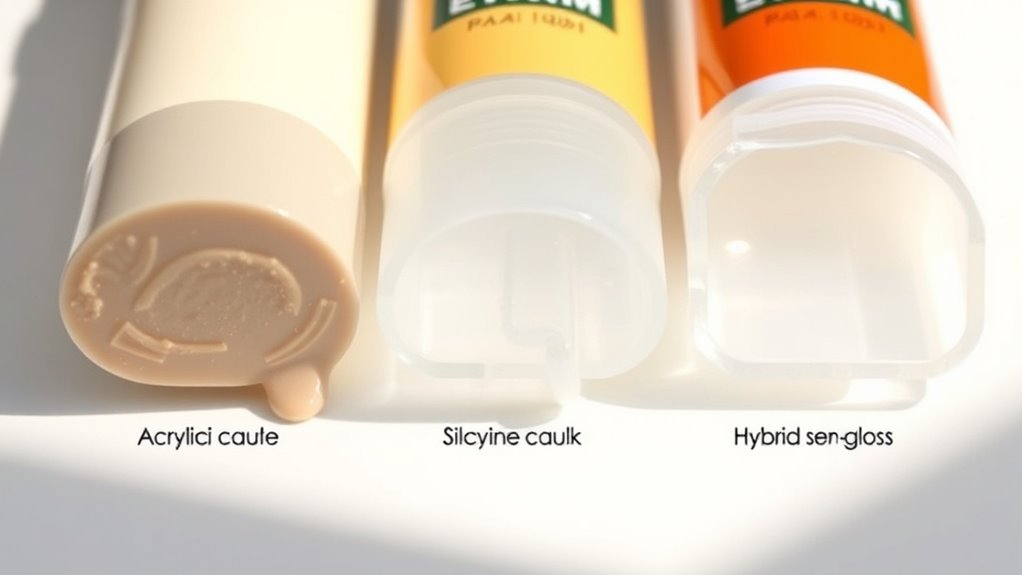
Acrylic caulk is a popular choice for sealing gaps and cracks around your home because it’s easy to work with and clean up. It offers good paint flexibility, making it ideal for surfaces that require painting afterward without cracking or peeling. When considering cost, acrylic caulk is generally affordable, making it a budget-friendly option for many projects. Its ease of application allows you to smooth it out quickly, reducing application time. While it may not be as durable as silicone in certain conditions, acrylic caulk is perfect for indoor projects like baseboards, trim, and window frames. Keep in mind that if you need a flexible, paint-ready sealant that won’t break the bank, acrylic caulk is a reliable choice for many household repairs. For optimal performance and safety, understanding ventilation considerations can help you choose the best sealant for your environment.
Discover Silicone Caulk’s Strengths and Application Tips
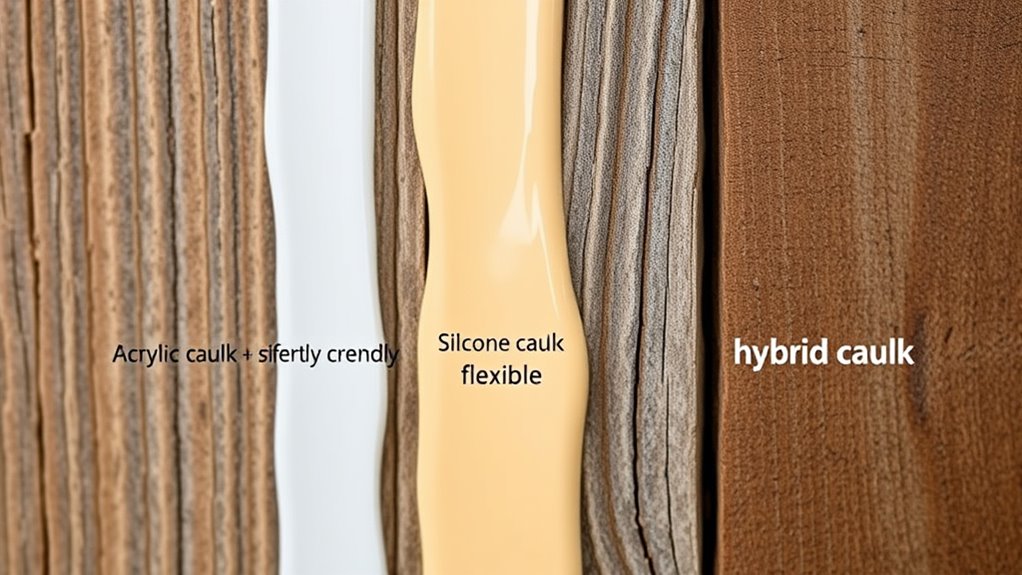
Silicone caulk stands out for its exceptional durability and flexibility, making it ideal for sealing areas exposed to moisture, temperature changes, or movement. Its superior weather resistance ensures it maintains a seal even in harsh conditions, making it perfect for bathrooms, kitchens, and exterior projects. When applying silicone caulk, use clean, dry surfaces and cut the nozzle at a 45-degree angle for precise control. Keep the area moist during application to smooth the bead easily, and avoid overworking the caulk once applied. Silicone’s flexibility allows it to expand and contract with temperature fluctuations without cracking. Proper application techniques are crucial for long-lasting results, so take your time to ensure a smooth, even seal that withstands the elements and daily wear. Additionally, understanding the cleaning and maintenance of silicone caulk can help prolong its effectiveness and appearance over time.
See How Hybrid Caulk Combines the Best of Both Worlds
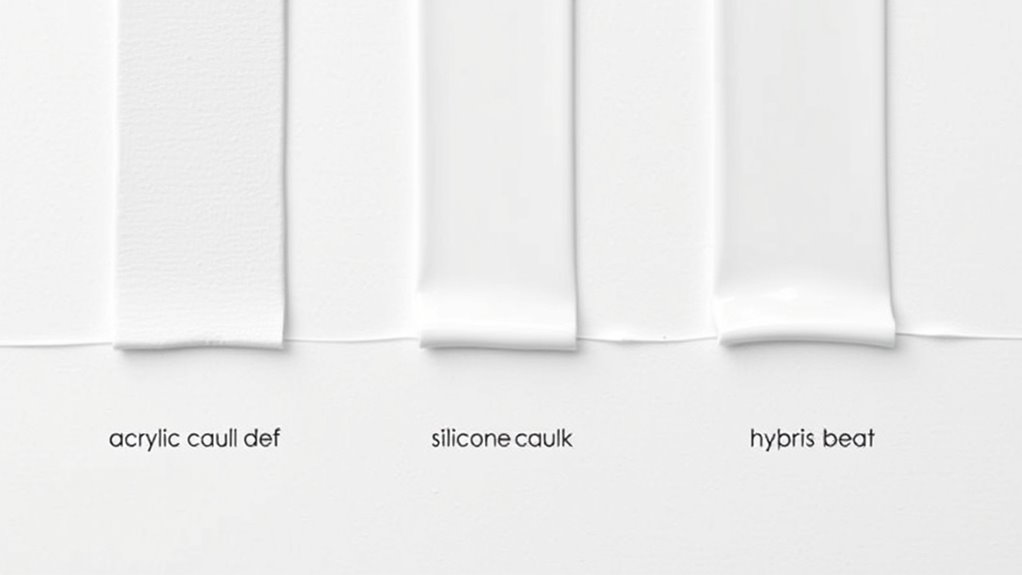
Hybrid caulk combines the best features of both latex and silicone, offering a versatile sealing solution that performs well in a variety of conditions. Its application versatility means you can use it for interior and exterior projects, handling gaps, cracks, and joints with ease. Hybrid caulk adheres well to different surfaces, resists cracking, and remains flexible over time. Plus, it’s available in a broad range of color options, making it easy to match or complement your decor. This flexibility simplifies your project, reducing the need for multiple types of caulk. Whether you’re sealing around windows, doors, or trim, hybrid caulk provides a reliable, long-lasting finish. Its combination of attributes makes it a go-to choice for many DIYers and professionals alike. Due to its durability and flexibility, hybrid caulk is increasingly favored in sustainable construction practices.
Compare Caulk Types to Find the Best Fit for Your Project
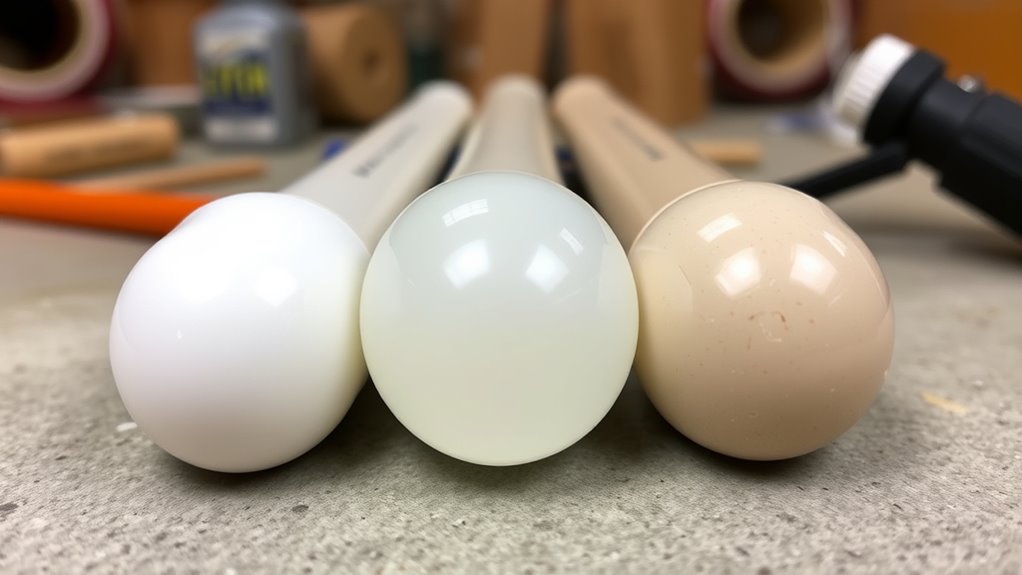
Choosing the right caulk depends on your specific project needs and the conditions you’ll face. When comparing caulk types, consider color matching to guarantee a seamless appearance, especially on visible surfaces. Acrylic caulk often offers better color match options and paints easily, making it ideal for interior projects. Silicone caulk excels in waterproofing and flexibility, suitable for areas exposed to moisture but may be limited in color matching. Hybrid caulk combines benefits of both, providing good color options and durability. Additionally, think about environmental impact—some caulks contain fewer volatile organic compounds (VOCs), making them more eco-friendly. Piercing care and hygiene practices can be applied to ensure proper application and longevity of the caulk. By weighing these factors, you can select a caulk that not only fits your aesthetic preferences but also aligns with your sustainability goals.
Pick the Perfect Caulk: Tips for Your Next Home Repair
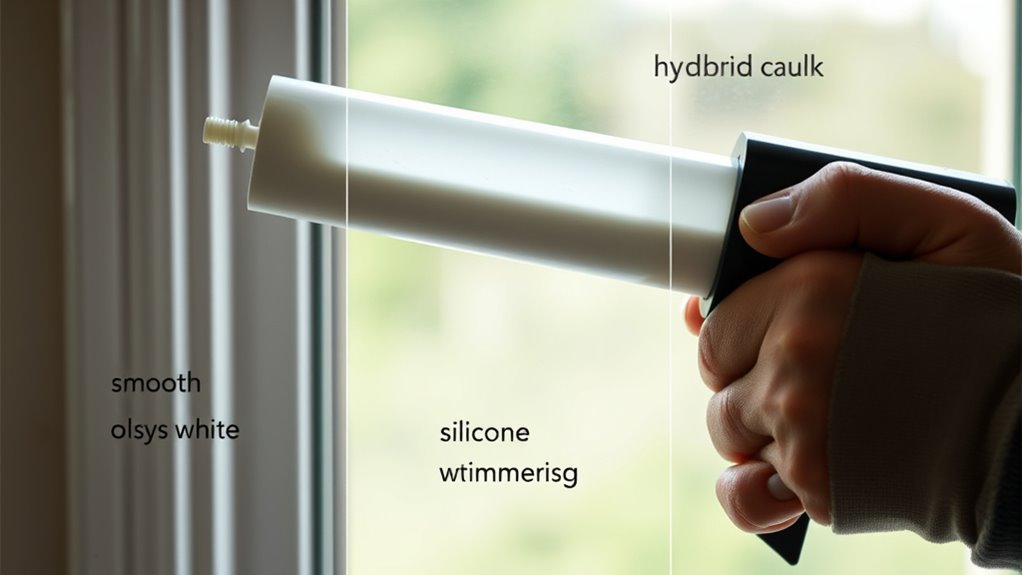
When selecting caulk for your home repair, it’s essential to take into account the specific requirements of the project and the environment it’ll be in. Consider color matching to ensure the caulk blends seamlessly with your surfaces, especially in visible areas. If you’re working in an eco-conscious space, evaluate the environmental impact of different caulk types; some have lower VOC emissions and are more sustainable. For outdoor projects, choose weather-resistant caulk to withstand temperature fluctuations and moisture. Inside, opt for a product that’s easy to apply and clean up. Balancing your aesthetic preferences with environmental considerations will help you pick the best caulk for your needs, ensuring durability, appearance, and eco-friendliness in your home repair. Additionally, understanding caulk flexibility can help you select a product that accommodates surface movement without cracking over time.
Frequently Asked Questions
Which Caulk Type Is Most Eco-Friendly and Environmentally Safe?
You should choose acrylic caulk if you’re seeking the most eco-friendly and environmentally safe option. Acrylic caulk uses eco friendly materials and contains fewer harmful chemicals, making it safer for both the environment and your health. It typically has environmentally safe ingredients, is low in VOCs, and can be easily cleaned with water. While silicone and hybrid caulks have their benefits, acrylic stands out as the greener choice for eco-conscious projects.
How Do Storage and Shelf Life Differ Among Acrylic, Silicone, and Hybrid Caulks?
You’ll find that acrylic caulk typically offers a longer storage duration and better shelf stability, often lasting up to 2 years if unopened. Silicone caulk usually has a shorter shelf life, around 1 to 2 years, due to its chemical properties. Hybrid caulks fall somewhere in between, with moderate storage duration and shelf stability. Always keep unopened tubes in a cool, dry place to maximize longevity, and reseal promptly after use.
Can Hybrid Caulk Be Painted Over Easily Like Acrylic or Silicone?
Imagine you’ve applied hybrid caulk around your bathroom sink, and now you want to paint over it. Yes, hybrid caulk can be painted easily, similar to acrylic. It offers good surface adhesion and paint compatibility, making it a versatile choice for projects needing a paintable sealant. Just make certain the caulk is fully cured before painting for best results, and use a compatible paint to achieve a smooth finish.
Are There Specific Brands That Excel in Each Caulk Category?
You’ll find that certain brands excel in each caulk category based on reputation and price. For acrylic, brands like DAP and GE offer reliable, affordable options with good paintability. Silicone brands like Dow Corning and GE Silicone are known for durability, though they can be pricier. Hybrid caulks from brands like Sashco often balance flexibility and ease of use. Comparing prices and reviews helps you choose the best brand for your project.
How Do Temperature and Weather Conditions Affect the Curing Process?
Weather conditions are the canvas on which your caulk’s durability is painted. Temperature fluctuations can cause it to crack or peel, while humidity and rain interfere with proper curing. If it’s too cold, the caulk may not set correctly; too hot, and it dries too fast, compromising adhesion. To guarantee a lasting seal, apply caulk in moderate weather, avoiding extreme temperature swings and wet conditions.
Conclusion
Now that you understand acrylic, silicone, and hybrid caulks, you can choose with confidence. Whether you’re sealing gaps, preventing leaks, or finishing a project, select the caulk that suits your needs. Consider the material, flexibility, and environment to make the best choice. Remember, the right caulk guarantees durability, enhances appearance, and simplifies your task. With this knowledge, you’re ready to tackle your next home repair confidently, efficiently, and successfully.