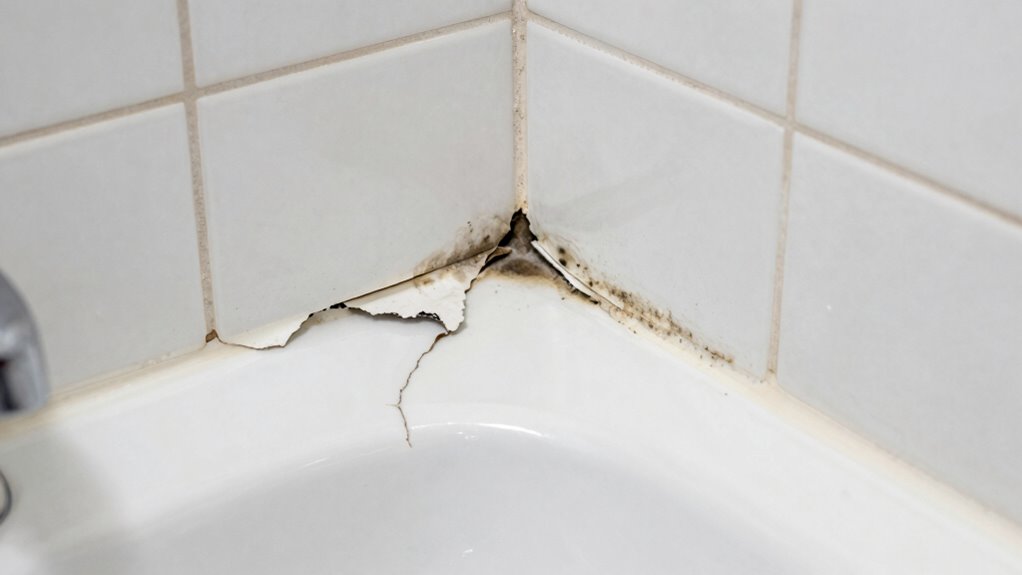

Caulk around tubs and sinks fails mainly because constant exposure to moisture, temperature changes, and harsh cleaning chemicals weaken its adhesion and flexibility over time. As the caulk deteriorates, tiny gaps and cracks form, allowing water to seep in and cause damage. Ignoring these signs accelerates breakdown and raises the risk of mold growth and water damage. If you want to discover how to keep your seals intact, there’s more to learn below.

Prime made for students and young adults
- Fast, free delivery for dorm and study essentials
- Prime Video and Amazon Music included
- Member-only deals
Key Takeaways
- Constant exposure to water and moisture causes caulk to weaken and lose adhesion over time.
- Temperature fluctuations lead to expansion and contraction, cracking the caulk seal.
- Use of harsh cleaning chemicals can break down the caulk’s material and reduce its effectiveness.
- Poor surface preparation before application results in weak bonding and early failure.
- Aging caulk naturally loses flexibility, causing cracks and gaps that allow water intrusion.
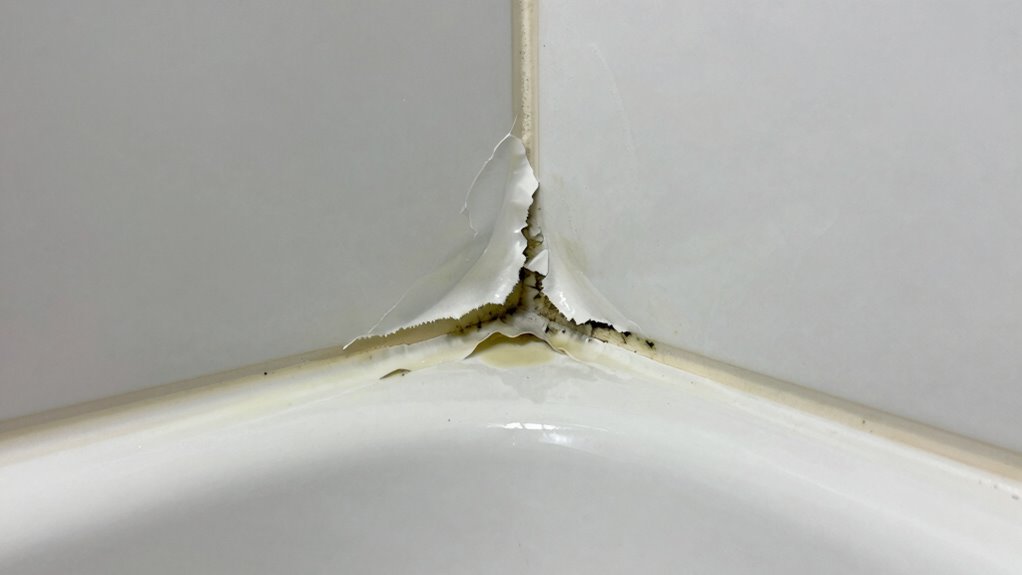
Caulk around tubs and sinks often fails over time, leading to water leaks, mold growth, and damage to your fixtures and walls. When the caulk begins to deteriorate, tiny gaps form, allowing water to seep into places it shouldn’t. This persistent moisture creates an ideal environment for bathroom mold to thrive. If you notice black, green, or brown spots around your tub or sink, it’s likely due to mold developing in the hidden crevices where water accumulates. Not only does this pose health risks, but it also compromises the integrity of your walls and cabinetry.
Worn caulk causes leaks, mold, and damage; inspect and replace to protect your bathroom’s health and structure.
Water damage is another common consequence of failing caulk. When water leaks through compromised seams, it can seep into the drywall, wooden framing, or flooring beneath your fixtures. Over time, this can cause wood to rot, paint to peel, and drywall to weaken. The longer water damage persists unnoticed, the more extensive and costly repairs become. It’s imperative to address caulking issues promptly to prevent these costly damages and maintain a safe, hygienic bathroom environment.
You might be tempted to ignore small cracks or gaps in your caulk, but doing so only accelerates the deterioration process. As caulk ages, it loses its flexibility and adhesion, especially when exposed to constant moisture, temperature fluctuations, and cleaning chemicals. This breakdown leaves your bathroom vulnerable to ongoing water intrusion. Regular inspection helps you catch signs of failure early, like peeling or crumbling caulk, which should be replaced immediately to maintain a watertight seal. Proper caulking techniques and using quality products can significantly extend the lifespan of your sealant.
Applying new caulk isn’t difficult, but it requires proper preparation. Before resealing, you need to thoroughly clean the area to remove soap scum, mold, and old caulk residue. This ensures the new seal adheres properly and lasts longer. Using high-quality, mold-resistant caulk can also help prevent mold growth and extend the lifespan of your sealant. Remember, a good seal is vital to keep water out and protect your bathroom from eventual water damage and mold problems. Additionally, selecting mold-resistant caulk can further enhance the durability of your bathroom seals.
Ultimately, understanding why caulk fails helps you stay proactive. Regular maintenance, timely replacements, and quality materials are your best defense against persistent bathroom mold and water damage. When you stay vigilant, you preserve both the appearance and structural integrity of your bathroom, saving yourself time and money in the long run. Additionally, choosing proper sealing techniques can greatly improve the longevity of your caulk and minimize future issues.
mold resistant caulk for bathrooms
As an affiliate, we earn on qualifying purchases.
As an affiliate, we earn on qualifying purchases.
Frequently Asked Questions
How Often Should I Reapply Caulk Around My Tub or Sink?
You should reapply caulk around your tub or sink every 1 to 2 years for ideal sealing. Regular maintenance tips include inspecting for cracks or mold and cleaning the area thoroughly before resealing. Use proper caulking techniques, like smoothing the bead evenly and removing old caulk carefully, to guarantee durability. This routine helps prevent water damage and keeps your fixtures looking fresh and clean.
What Types of Caulk Are Best for Bathrooms?
Think of bathroom caulk like a suit—choose the right fabric, and it lasts. For bathrooms, silicone-based caulk is best because it’s waterproof, flexible, and mold-resistant. Pick a caulk color that matches your fixtures for a seamless look, and opt for a smooth texture to make application easier and prevent cracks. This combo keeps your tub or sink sealed tight, even with daily humidity and movement.
Can I Use Regular Household Silicone for Bathroom Sealing?
You can use regular household silicone for bathroom sealing, but it’s not always the best choice. Silicone compatibility with bathroom surfaces and water resistance are key factors. Commercial bathroom caulk, often labeled as mold and mildew resistant, offers better durability. Silicone alternatives like acrylic latex caulk with silicone or hybrid products can also work well, providing easier cleanup and good flexibility. Always check the product label to make certain it’s suitable for bathroom use.
How Do I Remove Old, Stubborn Caulk Effectively?
To remove stubborn caulk effectively, start by using caulk removal tools like a razor scraper or a caulk removal knife to loosen it. Apply a caulk remover gel if needed. Once loosened, use a utility knife to cut along the edges. Follow surface preparation techniques by cleaning the area thoroughly with rubbing alcohol or vinegar to remove residue, ensuring a smooth surface for new caulk. Patience makes the process easier and more effective.
Is Mold-Resistant Caulk More Durable Long-Term?
Like a knight with armor, mold-resistant caulk offers better protection, making it more durable long-term. It’s specially formulated to resist mold growth, which helps prevent deterioration caused by moisture and mildew. While it may cost a bit more, its enhanced caulk longevity means you won’t need to reapply as often. Investing in mold-resistant caulk keeps your bathroom looking fresh, and saves you time and effort down the line.
silicone caulk for tubs and sinks
As an affiliate, we earn on qualifying purchases.
As an affiliate, we earn on qualifying purchases.
Conclusion
Understanding why caulk fails around tubs and sinks helps you prevent future headaches. Think of caulk as the silent guardian of your bathroom’s waterproofing—when it fails, water sneaks in, causing damage. By choosing the right caulk, applying it properly, and maintaining it, you’re not just fixing a gap; you’re sealing your space against the silent invasion of moisture. So, stay vigilant—your bathroom’s health depends on it, and a little care now wards off big problems later.
caulk removal tools for bathroom
As an affiliate, we earn on qualifying purchases.
As an affiliate, we earn on qualifying purchases.
As an affiliate, we earn on qualifying purchases.
Fall Picks
fall essentials
As an affiliate, we earn on qualifying purchases.