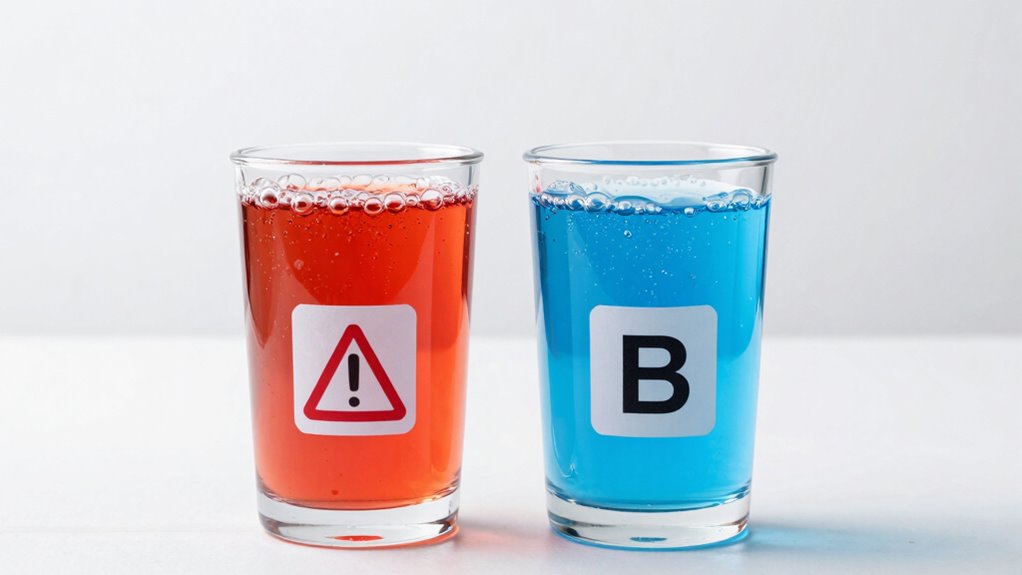
Understanding whether a cleaning product is acidic or alkaline helps you choose the right solution and avoid damage. Acidic cleaners (pH below 7) are best for mineral deposits and rust, while alkaline cleaners (pH above 7) work well on grease and organic grime. Using the wrong type can be ineffective or harm surfaces. If you’re curious about how to identify and use these solutions properly, discover more about pH levels and indicator dyes below.
Key Takeaways
- pH indicates whether a cleaning product is acidic (pH below 7) or alkaline (pH above 7).
- Acid cleaners remove mineral deposits and rust, while alkaline cleaners target grease and organic residues.
- pH indicator dyes visually show a cleaner’s acidity or alkalinity, simplifying proper product selection.
- Using the correct pH cleaner prevents surface damage and ensures effective cleaning.
- Understanding pH helps avoid ineffective or harmful chemical reactions during cleaning.
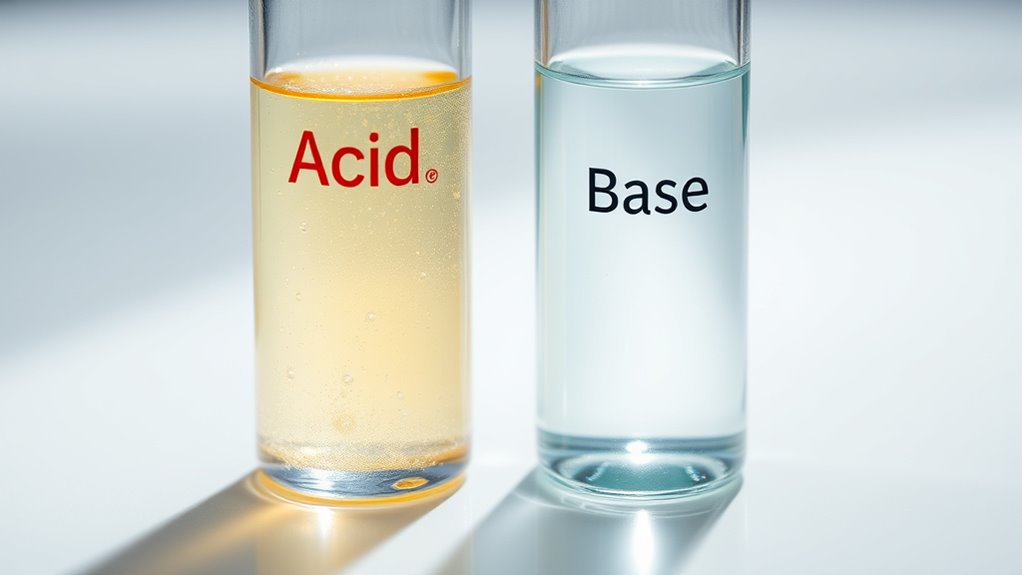
Understanding the pH level in cleaning products is essential because it determines how effectively they clean and how safe they are for different surfaces. The pH scale, which ranges from 0 to 14, helps you identify whether a product is alkaline (basic) or acidic. Alkaline versus acidic cleaners are used for different tasks, and knowing the difference ensures you choose the right one for your cleaning needs. Alkaline cleaners typically have a pH above 7, often between 8 and 14, and are excellent for breaking down grease, oils, and organic residues. Acidic cleaners, with a pH below 7, are better suited for removing mineral deposits, rust stains, and hard water buildup. Understanding this distinction helps prevent damage to surfaces and guarantees effective cleaning.
You can tell whether a cleaning product is alkaline or acidic by looking at its label or pH value. But sometimes, it’s useful to see a visual indication, which is where pH indicator dyes come into play. These dyes change color depending on the pH level of the solution, offering a quick and easy way to assess a cleaner’s acidity or alkalinity. For example, a common pH indicator dye might turn red in acidic solutions, green in neutral, and purple in alkaline solutions. This color-coding system makes it simple for you to gauge whether a product is suitable for a particular surface or stain. Using pH indicator dyes can help you make safer choices, especially when you’re dealing with delicate surfaces like glass, marble, or wood, which can be damaged by overly acidic or alkaline cleaners. Understanding pH levels is also crucial for avoiding chemical reactions that could produce harmful fumes or residues.
Understanding the differences between alkaline versus acidic cleaning products and how to use pH indicator dyes can help you avoid common cleaning mishaps. For instance, using an alkaline cleaner on a rust stain might be ineffective, while applying an acidic cleaner on a greasy stove might not cut through the grime properly. Knowing the pH helps you select the right product for the task, which saves time, money, and effort. It also enhances safety since some cleaning agents can cause skin irritation or surface damage if misapplied.
Frequently Asked Questions
How Does pH Affect the Safety of Cleaning Products?
You should know that pH safety influences how safe a cleaning product is to use and handle. If the pH is too high or too low, it can cause skin or eye irritation. Additionally, pH affects product stability; a balanced pH ensures the cleaner remains effective over time without degrading. Always verify the pH level to ensure you’re using a safe, stable product that won’t harm you or your surfaces.
Can pH Levels Change Over Time in Stored Cleaning Solutions?
Think of your cleaning solutions as delicate melodies that can change tune over time. Yes, pH levels can shift if storage conditions aren’t ideal, affecting pH stability. Exposure to heat, light, or air can cause these changes, making the solution more or less effective. To keep your products performing at their best, store them in cool, dark, and sealed containers, preserving their original pH and ensuring safe, reliable cleaning.
Are pH Indicators Reliable for Testing Cleaning Product Acidity or Alkalinity?
pH indicators are generally reliable for testing cleaning product acidity or alkalinity if you use them correctly. However, their accuracy depends on proper indicator quality and correct interpretation of the indicator color. You should follow the instructions carefully and compare the color change to a reference chart. Keep in mind that slight variations in color can occur, so always double-check the indicator color interpretation for the most accurate pH reading.
Do pH Levels Impact the Environmental Safety of Cleaning Agents?
Yes, pH levels impact the environmental safety of cleaning agents. Higher or lower pH can affect biodegradability considerations, making some products more eco-friendly than others. You should use pH adjustment methods to guarantee cleaning agents stay within safe ranges, minimizing harm to ecosystems. Proper pH management helps reduce pollution, supports biodegradation, and ensures your cleaning practices are environmentally responsible.
How Do pH Levels Influence the Effectiveness of Cleaning Products on Different Stains?
You’ll find that pH levels considerably influence a cleaning product’s effectiveness on different stains. Acidic cleaners excel at removing mineral deposits and rust, while alkaline ones are better for greasy or protein-based stains. Your choice depends on the stain type and product formulation. By selecting a product with the right pH, you optimize stain removal and guarantee efficient cleaning, making your efforts more effective and tailored to specific cleaning needs.
Conclusion
Understanding pH in cleaning products helps you choose the right solution for each task. Did you know that around 70% of household cleaning accidents involve improper product selection? By recognizing whether a cleaner is acidic or basic, you can clean more effectively and safely. Next time, check the pH label to match it with your cleaning needs. Being informed guarantees you get the best results while protecting your surfaces and health.