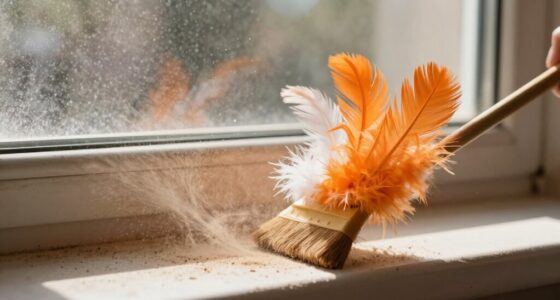
To maximize your cleaning efficiency, you should dust before vacuuming. Dusting first loosens dirt and allergens from surfaces, preventing them from resettling on floors during vacuuming. This order improves indoor air quality and guarantees a more thorough clean. When you vacuum after dusting, you pick up loose debris and dust more effectively. Following this sequence creates a fresher, healthier home—keep going to discover more tips to perfect your routine.
Key Takeaways
- Dusting should be done before vacuuming to prevent dust from resettling onto cleaned surfaces.
- Dusting loosens debris, making vacuuming more effective and reducing airborne dust.
- Vacuuming first removes loose dirt, but dusting afterward ensures surfaces stay dust-free longer.
- Proper order improves indoor air quality by minimizing airborne allergens and dust particles.
- Establishing a routine of dusting before vacuuming leads to more efficient and thorough cleaning.
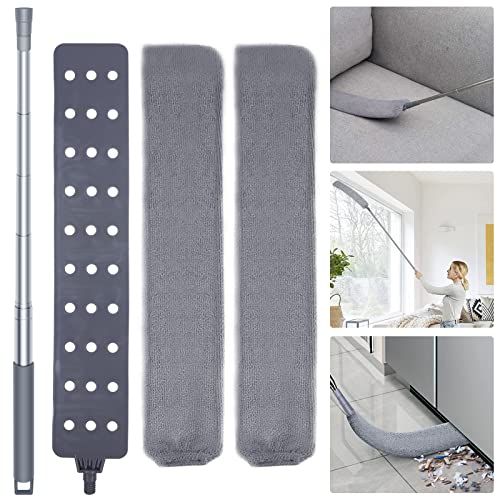
Retractable Gap Dust Cleaner Cleaning Tools with 2 Microfiber Dusting Cloths Long Handle 60inches Washable and Retractable Duster Brush for Cleaning Under Appliances Furniture Couch Fridge
- Electrostatically Charged Dusting: Attracts dust and hair easily with split fiber tech
- Adjustable Telescoping Handle: Extends from 31 to 61 inches for versatile cleaning
- Lightweight and Durable: Made with sturdy stainless steel and microfiber for easy use
As an affiliate, we earn on qualifying purchases.
As an affiliate, we earn on qualifying purchases.
Should You Vacuum or Dust First? Here’s What Works
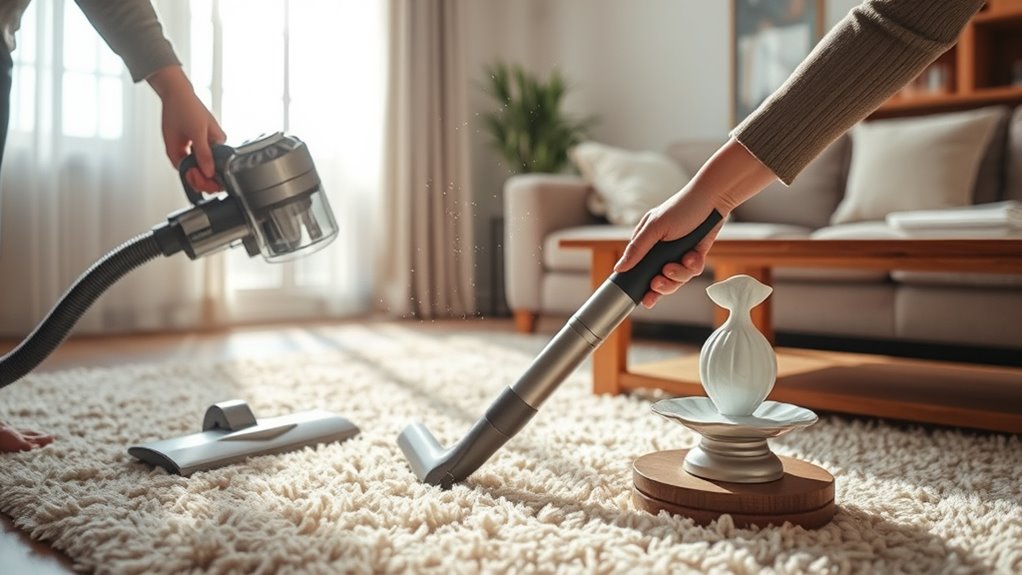
Deciding whether to vacuum or dust first depends on your cleaning goals, but generally, it’s best to start with dusting. Dusting first improves dusting accuracy because you’ll loosen dirt and debris from surfaces, preventing it from resettling onto floors. When you dust before vacuuming, you allow dust particles to settle onto the floor, making vacuuming more effective. This approach also enhances vacuuming efficiency, as you won’t be spreading dust around the room. Plus, it reduces the need for multiple passes over the same area. By tackling dusting first, you ensure a cleaner, more thorough job, and you save time by avoiding the need to re-clean areas. Overall, starting with dusting sets the stage for a more efficient and effective cleaning session. Creating organized routines can help maintain the benefits of this cleaning order over time.

Shark Upright Vacuum Cleaner | Navigator Lift-Away Deluxe | Pet Hair, Carpet & Hard Floor Cleaning | Upholstery & Crevice Tool | HEPA Filter | Swivel Steering | Large Dust Cup Capacity | Blue | NV360
- Powerful Multi-Surface Suction: Cleans carpets and hard floors effectively
- Lift-Away for Above-Floor Cleaning: Detachable pod for stairs and furniture
- Pet Hair Removal: Specialized tools for pet hair cleanup
As an affiliate, we earn on qualifying purchases.
As an affiliate, we earn on qualifying purchases.
Why Vacuuming First Gets Your Home Cleaner
Vacuuming first removes loose dirt, dust, and debris from floors and carpets, preventing them from settling back onto surfaces when you dust later. This step markedly reduces airborne particles that can resettle on furniture or countertops. It also lifts dirt embedded deep in carpet fibers, making dusting more effective. By clearing debris first, you guarantee that dusting doesn’t just move dirt around but actually removes it from your home. Proper sequencing improves overall cleanliness and minimizes the need for repeated cleaning. Additionally, understanding cleaning sequence can optimize your efforts and lead to better results. Here’s a quick comparison:
| Aspect | Benefit |
|---|---|
| Airborne particles | Reduces dust that circulates after cleaning |
| Carpet fibers | Loosens dirt for easier removal during vacuuming |
| Surface resettling | Prevents dirt from settling back after dusting |
| Cleaning efficiency | Saves time by targeting loose dirt first |
| Overall cleanliness | Achieves a deeper, more thorough clean |

USANOOKS Microfiber Cleaning Cloth Grey – 12 Pcs (12.5"x12.5") – High Performance – 1200 Washes, Ultra Absorbent Microfiber Towel Weave Grime & Liquid for Streak-Free Mirror Shine – Car Washing Cloth
- High Absorbency Microfiber Weave: Locks in 8-10x its weight in liquids
- Durable 2.5mm Thick Design: Resists lint, scratches, and shedding
- Long-Lasting Reusability: Over 1200 washes for extended use
As an affiliate, we earn on qualifying purchases.
As an affiliate, we earn on qualifying purchases.
How Dust Resettles After You Vacuum
After you finish vacuuming, dust and dirt don’t stay gone for long. Dust particles that become airborne during vacuuming can settle back onto surfaces through the resettling process. As you vacuum, some particles are lifted into the air, but many fall back onto furniture, floors, or other surfaces nearby. This resettling happens quickly, often within minutes, especially if surfaces aren’t dusted afterward. Factors like airflow, surface type, and static electricity influence how fast dust particles settle. If you don’t clean surfaces soon after vacuuming, dust can accumulate again, undoing some of your effort. To keep dust levels low, it’s best to dust immediately after vacuuming, capturing those particles before they resettle or become airborne again. Proper maintenance schedules can help reduce dust buildup over time, making your cleaning routine more effective.

MOOKA Air Purifiers for Home Large Room up to 1076ft², H13 True HEPA Air Filter Cleaner, Odor Eliminator, Remove Smoke Dust Pollen Pet Dander, Night Light, B-D02L White
- Large Coverage Area: Covers up to 1076 ft² with 6 air changes/hr
- High-Efficiency Filtration: Captures pet hair, dander, smoke, odors, dust
- True HEPA Filter: Removes airborne particles as small as 0.3 microns
As an affiliate, we earn on qualifying purchases.
As an affiliate, we earn on qualifying purchases.
Dust and Indoor Air Quality: What’s the Connection?
Have you ever wondered how dust impacts the air you breathe indoors? Dust contains tiny particles like pollen, pet dander, and mold spores that can worsen allergies and respiratory issues. When dust accumulates, it often settles on surfaces, but some particles become airborne, reducing indoor air quality. Proper HVAC maintenance helps filter out these particles, improving allergen control. Think of dust swirling around your home as:
- Fine particles floating near your face
- Dust settling into your lungs with every breath
- Allergens triggering sneezing or asthma
- Dirty filters spreading dust through vents
- Surfaces reintroducing dust into the air when disturbed
Keeping dust levels low is key to cleaner indoor air, and vacuuming combined with dusting ensures these particles stay contained, not re-circulated. Regular cleaning prevents airborne dust buildup, which is crucial for maintaining a healthier environment for you.
Benefits of Vacuuming First for a Fresher Home
Starting your cleaning routine with a thorough vacuuming session sets the stage for a fresher, healthier home. Vacuuming first helps improve air quality by removing dust, pet dander, and allergens from carpet fibers and upholstery. This prevents these particles from resettling onto surfaces when you dust later. By tackling debris early, you reduce airborne allergens that can trigger allergies or respiratory issues. This step also enhances allergen control, creating a cleaner environment overall. Plus, vacuuming loosens dirt, making dusting more effective when you do it afterward. As a result, your home feels fresher, and the air you breathe is cleaner. Prioritizing vacuuming at the start streamlines your cleaning process while delivering a noticeable boost in indoor air quality. Proper cleaning order can significantly impact overall cleanliness and health benefits.
Tips for Dusting Effectively After Vacuuming
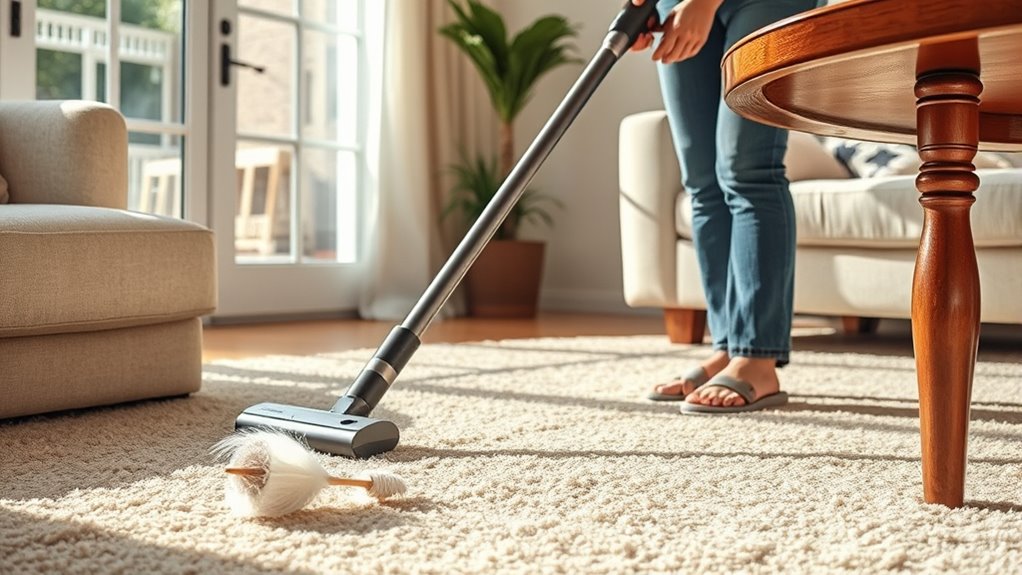
To dust effectively after vacuuming, it’s important to use the right tools and techniques to maximize cleanliness. Start by selecting a clean microfiber cloth, which traps dust better than regular fabrics. Use an air purifier nearby to improve air quality while dusting. Begin at the highest points, like ceiling fans and shelves, to prevent dust from settling onto cleaned areas. Lightly dampen your microfiber cloth for stubborn spots, ensuring dust doesn’t scatter into the air. Always dust in a gentle, circular motion to lift dust without dispersing it. Regularly change or wash your microfiber cloth to maintain its effectiveness. Keep the air purifier running during and after dusting to capture any airborne particles, resulting in a cleaner, healthier environment. Additionally, adjusting your color temperature settings on your projector can improve visual clarity and reduce eye strain during cleaning or setup activities.
When Is Dusting First the Better Choice?
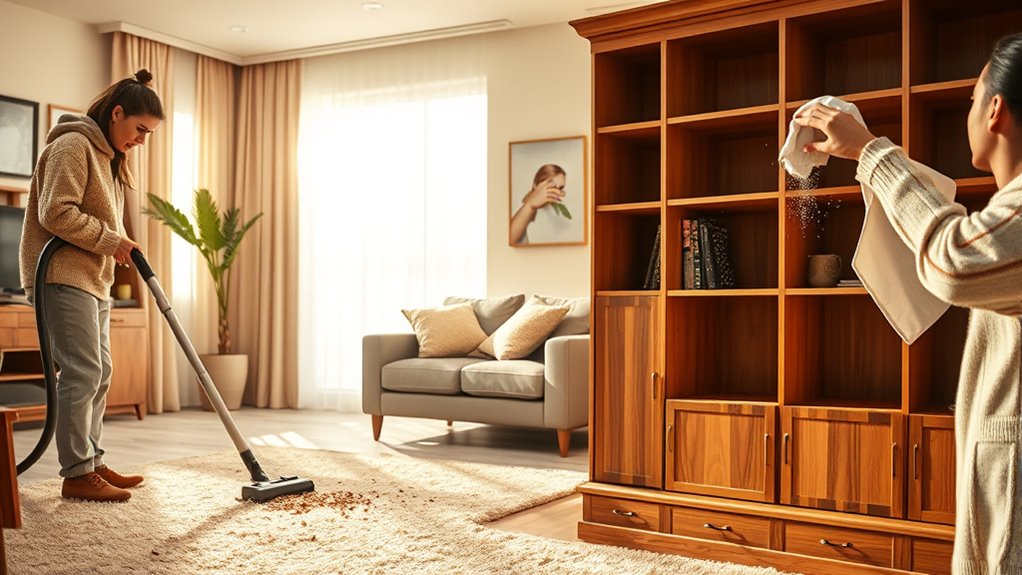
Are there times when dusting should come before vacuuming? Yes, especially when you want to maximize air purification and allergen control. If you dust first, you remove surface dust and allergens from furniture, shelves, and other surfaces, preventing them from settling onto the floor later. This way, when you vacuum afterward, you pick up the loosened debris more efficiently, reducing airborne allergens. Dusting first also helps create a cleaner environment, which can be especially beneficial if you or someone in your household suffers from allergies or respiratory issues. By prioritizing dusting, you ensure that dust and allergens are contained and removed more effectively, leading to better air quality and a healthier living space. Incorporating proper cleaning order can enhance overall air purification and indoor air quality.
Tools and Techniques for Faster Vacuuming and Dusting
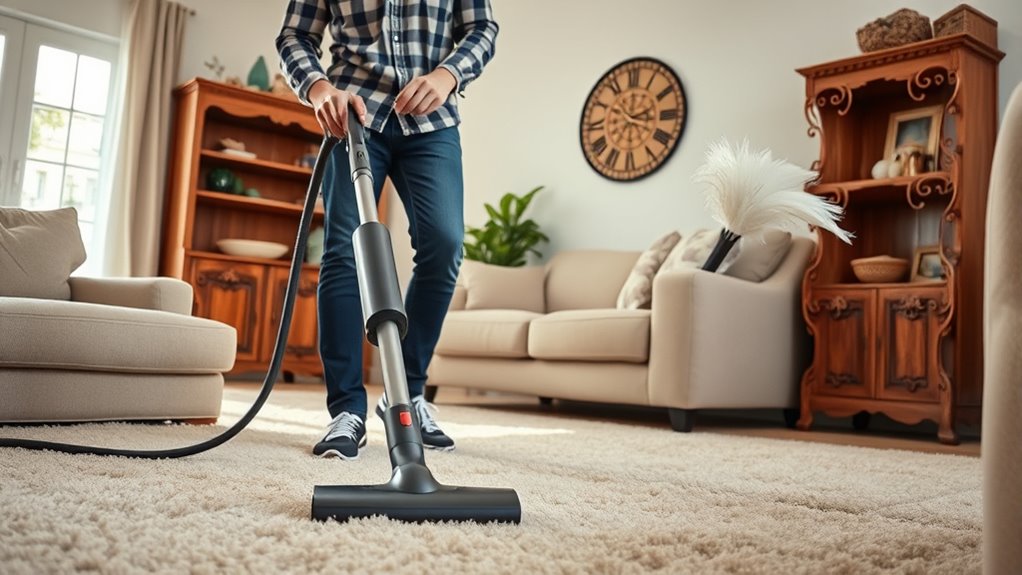
Using the right tools can make your cleaning faster and more efficient. Invest in lightweight vacuums and extendable dusters to reach tricky spots easily. Employing quick techniques like pre-treating surfaces and setting timers can also save you valuable time. Incorporating Free Floating principles can help you maintain a natural and clutter-free environment, making cleaning easier and more effective.
Efficient Cleaning Tools
Equipping yourself with the right tools can considerably speed up your vacuuming and dusting routines. Consider using robot vacuums to handle daily floor cleaning effortlessly, freeing you for other tasks. Handheld dusters are perfect for quick, targeted dust removal on surfaces like shelves, blinds, and electronics. To make your cleaning more efficient, keep these tools handy:
- Extendable dusters for reaching high ceilings and corners
- Microfiber cloths for trapping dust without spreading it
- Crevice tools for tight spaces and edges
- HEPA-filter vacuum attachments for allergy-friendly cleaning
- Compact, cordless handheld vacuums for quick clean-ups
Using energy-efficient tools can further reduce your cleaning time while supporting sustainable practices. With these tools, you minimize effort and maximize coverage, making your cleaning faster and more effective.
Time-Saving Techniques
Maximizing your cleaning efficiency involves adopting time-saving techniques alongside the right tools. Establishing a consistent cleaning schedule helps you stay organized and reduces the need for lengthy sessions. Use multi-purpose tools, like vacuum cleaners with adjustable settings and dusters with extendable handles, to cover more ground quickly. Incorporate eco-friendly products that work effectively, so you don’t waste time redoing tasks or using multiple cleaners. For example, choose natural cleaning solutions that cut through dirt and dust efficiently. Keep supplies within reach to avoid unnecessary trips. By combining smart scheduling with versatile tools and eco-friendly products, you minimize effort and maximize results, making your cleaning routine faster and more sustainable. Additionally, understanding the importance of auditory processing skills can help in training routines that enhance focus and efficiency during cleaning tasks.
How to Build a Cleaning Routine That Really Works
Creating an effective cleaning routine starts with understanding your specific needs and setting realistic goals. To build a routine that sticks, establish consistent cleaning schedules and focus on habit formation. Visualize your routine as a series of clear steps:
Establish consistent schedules and clear steps to make cleaning habits easy and effective.
- Setting aside a dedicated time each day or week
- Breaking tasks into manageable chunks
- Using checklists to track progress
- Prioritizing high-traffic areas
- Celebrating small victories to reinforce habits
Imagine the satisfaction of knowing exactly when and what you’ll clean, reducing stress and decision fatigue. Stick to your schedule, adjust as needed, and stay consistent. Over time, these habits become second nature, making cleaning less of a chore and more part of your daily rhythm.
Frequently Asked Questions
How Often Should I Vacuum and Dust in My Home?
You should vacuum your home at least twice a week and dust once a week to maintain a clean environment. Regular cleaning helps prevent dust accumulation, which can trigger allergies and respiratory issues. If you have pets or allergies, consider increasing the frequency. Consistent cleaning not only keeps surfaces looking fresh but also improves indoor air quality, making your space healthier and more comfortable for everyone.
What Are the Best Tools for Efficient Vacuuming and Dusting?
You should choose a robot vacuum for quick, hands-free cleaning, especially on carpets and hard floors, while microfiber cloths are perfect for dusting delicate surfaces and electronics. Use the robot vacuum first to remove debris, then grab microfiber cloths to wipe down surfaces without spreading dust. These tools make your cleaning more efficient, saving you time and effort while keeping your home spotless and dust-free.
Can Vacuuming Damage Delicate Surfaces or Furniture?
Vacuuming can potentially harm delicate surfaces or furniture if you’re not careful. To prevent issues, use attachments designed for delicate surface care and set your vacuum to a gentle setting. Always test on a small, hidden area first. This ensures furniture protection and prevents scratches or dents. Proper technique and equipment help you clean effectively without risking harm to sensitive surfaces.
How Do Allergies Influence Vacuuming and Dusting Routines?
Allergies considerably impact your vacuuming and dusting routines by emphasizing airborne allergen control and allergy symptom reduction. You should vacuum frequently with a HEPA filter to trap airborne allergens effectively. Dust surfaces regularly with a damp cloth to prevent stirring up dust and allergens into the air. This proactive approach minimizes allergy symptoms, helping you breathe easier and creating a healthier environment in your home.
Are There Eco-Friendly Cleaning Products for Vacuuming and Dusting?
Yes, you can find eco-friendly cleaning products like biodegradable cleaners for vacuuming and reusable dusters for dusting. These products help reduce waste and chemical runoff, making your cleaning routine safer for the environment. You just need to choose biodegradable cleaners that break down naturally and reusable dusters made from sustainable materials. Using these, you’ll clean effectively while supporting eco-conscious practices and minimizing your ecological footprint.
Conclusion
Think of your cleaning routine as tending a garden—you need to clear the weeds first so fresh, clean air can flourish. Vacuuming first removes the heavy debris, setting the stage for dusting to catch the finer particles. When you get the order right, your home breathes easier and stays cleaner longer. Stick to this rhythm, and you’ll create a home that’s as fresh and vibrant as a well-tended garden in full bloom.