
TL;DR

Prime made for students and young adults
- Fast, free delivery for dorm and study essentials
- Prime Video and Amazon Music included
- Member-only deals
A 2015 study revealed that snail teeth are stronger than spider silk, challenging previous beliefs about the strongest natural materials. This discovery could influence biomaterials research and applications.
Research published in 2015 confirmed that snail teeth are biologically the strongest natural material, surpassing spider silk in durability. This discovery challenges previous assumptions and has implications for biomaterials science, highlighting the remarkable strength of certain mollusk tissues.
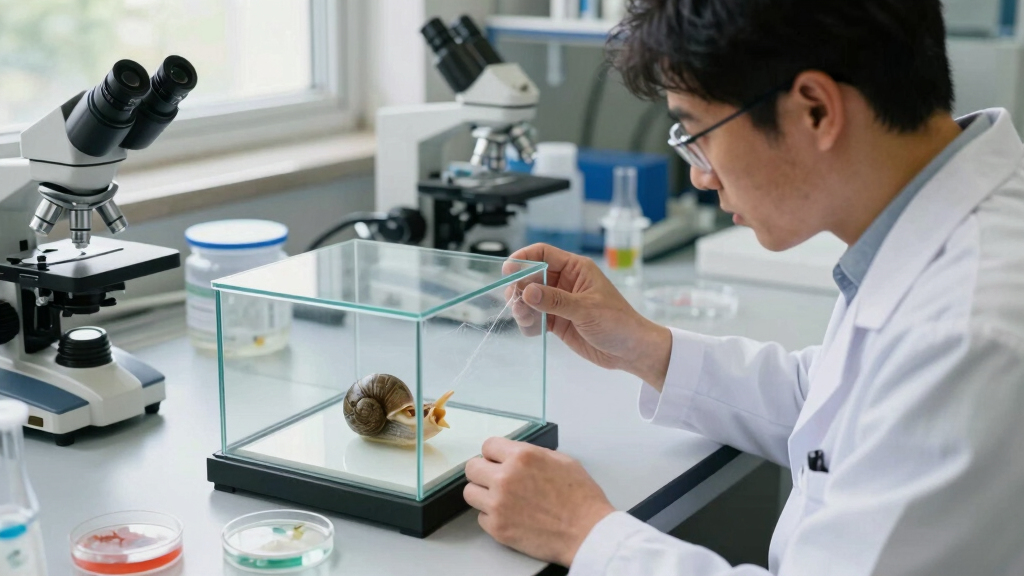
The study, conducted by a team of biologists and materials scientists, analyzed the composition and mechanical properties of snail radula teeth. They found that these structures, used by snails to scrape food, are composed of a mineralized tissue that exhibits exceptional hardness and toughness. According to the researchers, the strength of snail teeth exceeds that of spider silk, which was previously considered one of the strongest natural fibers.
Specifically, the team measured the tensile strength and resistance to wear of snail teeth, noting their ability to withstand repeated mechanical stress without damage. The findings, published in a scientific journal in 2015, suggest that the mineralized tissues in snail teeth could inspire the design of new, durable biomaterials for industrial and medical applications.
Implications for Biomaterials and Material Science
This discovery is significant because it redefines the hierarchy of natural materials based on strength. Understanding how snail teeth achieve such durability could lead to innovations in developing synthetic materials with similar properties. Potential applications include creating more resilient medical implants, cutting tools, and wear-resistant surfaces. It also opens new avenues for research into mollusk biology and biomineralization processes.
durable biomaterials for medical implants
As an affiliate, we earn on qualifying purchases.
As an affiliate, we earn on qualifying purchases.
Previous Beliefs About Natural Material Strength
Before this 2015 study, spider silk was widely regarded as the strongest natural fiber due to its combination of strength, elasticity, and lightweight properties. It was extensively studied for potential use in textiles, medical devices, and engineering. The new findings about snail teeth challenge this view, highlighting the diversity of biological materials and their potential for technological innovation.
The research builds on prior work examining biomineralization—the process by which organisms produce mineralized tissues—showing that mollusks have evolved highly specialized structures for mechanical resilience.
“Our findings demonstrate that snail teeth are not only biologically remarkable but also surpass spider silk in strength, opening new possibilities for biomimetic materials.”
— Lead researcher Dr. Maria Lopez
As an affiliate, we earn on qualifying purchases.
Unanswered Questions About Snail Tooth Strength
While the 2015 study confirmed the exceptional strength of snail teeth, it remains unclear how widely this property varies among different snail species or how it can be effectively replicated in synthetic materials. Further research is needed to understand the biological mechanisms behind this strength and its potential scalability for industrial use.
strong natural material research books
As an affiliate, we earn on qualifying purchases.
As an affiliate, we earn on qualifying purchases.
Future Research Directions and Material Development
Scientists are expected to investigate the specific mineralization processes in snail teeth to better understand how their durability is achieved. Additionally, researchers aim to explore biomimetic approaches to replicate these properties in synthetic composites, potentially leading to new durable materials for various applications. Further studies will also assess the variability of this trait among mollusk species and its potential for commercial development.
As an affiliate, we earn on qualifying purchases.
Key Questions
How do snail teeth compare to spider silk in strength?
According to the 2015 study, snail teeth exhibit greater tensile strength and durability than spider silk, making them the strongest known natural material at that time.
Why is this discovery important for material science?
It challenges previous assumptions about the hierarchy of natural materials and provides new insights into designing durable, biomimetic materials for industrial and medical use.
Can snail teeth be used directly in manufacturing?
Currently, the focus is on understanding the biological mechanisms to inspire synthetic materials; direct use of snail teeth is impractical due to biological constraints.
Are all snail species capable of producing such strong teeth?
This remains unclear, as the study focused on specific species; further research is needed to determine how widespread this trait is among mollusks.
What are the next steps in this research area?
Scientists plan to investigate the mineralization process in snail teeth and develop biomimetic materials inspired by their structure and composition.
Source: hn
Halloween Picks
halloween
As an affiliate, we earn on qualifying purchases.