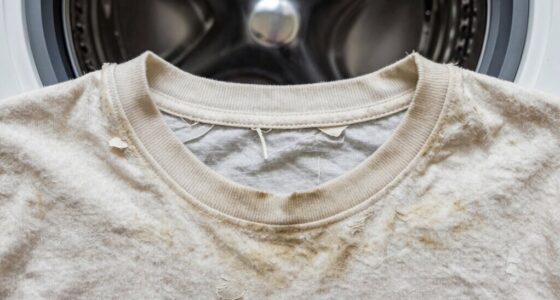

Many believe hot water is necessary to sanitize clothes, but this is a myth. Modern detergents with enzymes and bacteria-fighting agents work just as well at lower temperatures, saving energy and preventing fabric damage. High heat can fade colors, shrink fabrics, and waste resources, yet most germs are killed at much lower temperatures. If you want to discover how to wash effectively without wasting energy, keep exploring the facts behind this common misconception.

Prime made for students and young adults
- Fast, free delivery for dorm and study essentials
- Prime Video and Amazon Music included
- Member-only deals
Key Takeaways
- Many believe high temperatures are necessary for cleanliness, but modern detergents effectively clean clothes at lower temperatures.
- High heat can damage fabrics, cause fading, and shrink clothes, making cooler washes preferable for fabric care.
- Bacteria and germs can be killed at lower temperatures (as low as 60°C or 140°F) with proper detergents, debunking the need for hot water.
- Using high heat is often unnecessary and environmentally harmful, as lower temperatures save energy and extend clothing lifespan.
- Proper laundry techniques and effective detergents make cooler washes just as clean, if not cleaner, than high-temperature cycles.
Many people believe that washing clothes at high temperatures is the only way to guarantee cleanliness and kill germs. This common misconception leads many to crank up the heat, thinking it’s the most effective method. However, modern laundry science shows that high temperatures aren’t always necessary, and in some cases, they can even be damaging to your clothes. You might be surprised to learn that lower temperatures can clean just as well, especially when combined with the right laundry products.
Fabric softeners play a significant role in achieving fresh, clean-smelling clothes without relying on hot water. They help reduce static, soften fibers, and make garments more comfortable to wear. But beyond that, fabric softeners can also aid in stain removal. When used properly, they can loosen dirt and grime, making it easier for detergents to do their job. In fact, some fabric softeners contain ingredients that help break down stains, especially when paired with appropriate washing cycles. This means you don’t need to expose your clothes to high heat to remove stubborn stains, which can sometimes set them in or damage delicate fabrics.
The myth that only high temperatures guarantee cleanliness is simply not true. Cold or warm water, in combination with effective detergents and fabric softeners, can eliminate most germs and dirt. Many modern detergents are formulated to work at lower temperatures, containing enzymes and bacteria-fighting agents that activate in cooler water. This not only conserves energy but also extends the life of your clothes. High heat can weaken fibers, fade colors, and cause shrinking, making your laundry routine less sustainable over time. Additionally, understanding biodiversity and the importance of sustainable practices can help reduce environmental impact even in daily chores like laundry. Using energy-efficient laundry practices**** can further promote eco-friendly habits and conserve resources.
If you’re concerned about germs, know that many bacteria are killed at temperatures as low as 60°C (140°F), which is much lower than what most people think. Plus, using fabric softeners can enhance the overall cleaning process by reducing static and aiding in stain removal, making your clothes look and feel better. So, you don’t need to rely on hot water to get your laundry thoroughly clean. In fact, choosing the right detergent formulations designed for lower temperatures can be more effective than using high heat. Understanding the science behind temperature and germ kill rates can help you make better choices for both hygiene and fabric care. Additionally, proper laundry techniques and understanding fabric care guidelines can further improve cleaning results and extend garment longevity.
In the end, understanding that laundry isn’t about temperature alone helps you save energy, protect your clothes, and achieve just as effective results. The laundry temperature myth is one that’s often believed but rarely true. Next time, try washing at lower temperatures with quality detergents and fabric softeners—you might find that your clothes come out just as clean, if not cleaner, and with less wear and tear.
energy-efficient laundry detergent
As an affiliate, we earn on qualifying purchases.
As an affiliate, we earn on qualifying purchases.
Frequently Asked Questions
Does Water Temperature Affect Laundry Detergent Effectiveness?
Water temperature does affect laundry detergent effectiveness because of detergent chemistry and temperature stability. Hot water enhances stain removal and activates certain enzymes in detergents, making them more effective. Cold water, on the other hand, preserves detergent stability, especially for delicate fabrics and energy savings. You should choose water temperature based on your detergent’s formulation and the type of stains or fabrics you’re washing to optimize cleaning results.
Are There Specific Fabrics That Shouldn’t Be Washed Hot?
You might be surprised, but some fabrics, like delicate silk or wool, shouldn’t be washed hot because it can damage their fibers. For fabric safety and ideal stain removal, always check labels. Hot water can cause shrinking, fading, or weakening of these materials, making your clothes less durable. When in doubt, use warm or cold water to protect your garments while still effectively cleaning them.
How Does Temperature Influence Laundry Drying Time?
Higher temperatures in laundry can speed up drying time, but they also increase the risk of fabric shrinkage and color fading. If you use hot water, your clothes might dry faster, but delicate fabrics or vibrant colors could suffer damage. To preserve your garments, opt for lower temperatures when possible, and consider air drying or using a low heat setting. This approach balances efficiency with fabric care.
Can Cold Water Kill Bacteria Effectively?
Cold water fights bacteria, but it’s like a knight facing a dragon—sometimes it’s enough, sometimes not. Bacterial resistance and water mineral content can make cold water less effective, especially against stubborn germs. So, if you’re worried about bacteria, washing with warm or hot water is your best weapon. Cold water alone often isn’t enough to kill all bacteria, especially in hard water with high mineral content.
Is Energy Consumption Higher With Hot Water Washes?
Yes, energy consumption is higher with hot water washes because heating water requires more energy. By choosing cold or warm water, you can achieve significant energy savings, which also promotes water conservation. This way, you reduce your utility bills and lessen your environmental impact. Switching to lower temperatures when possible helps you save energy and supports water conservation efforts, making laundry more eco-friendly and cost-effective.
fabric softener for stain removal
As an affiliate, we earn on qualifying purchases.
As an affiliate, we earn on qualifying purchases.
Conclusion
Don’t be like Icarus, soaring too close to the sun with misconceptions about laundry temperatures. Remember, the myth that hotter is always cleaner isn’t a tale you need to believe. Instead, trust the wisdom of modern laundry science—using the right temperature for each load. With this knowledge, you’ll keep your clothes fresh and vibrant, avoiding the fall from the heights of cleanliness. So, fly wisely in your laundry journey, and let the myth melt away.
As an affiliate, we earn on qualifying purchases.
bacteria-killing laundry products
As an affiliate, we earn on qualifying purchases.
As an affiliate, we earn on qualifying purchases.
Fall Picks
fall essentials
As an affiliate, we earn on qualifying purchases.