
Contact time is the critical step many overlook when disinfecting. It’s the period the surface must stay wet with cleaner to effectively kill germs and viruses. Rushing or skipping this step can leave microbes alive, increasing infection risks. To guarantee proper disinfection, follow manufacturer’s instructions carefully and use timers to track the required duration. Ignoring contact time compromises cleaning results—continue exploring to learn how to master this essential detail for safer spaces.
Key Takeaways
- Proper contact time ensures disinfectants effectively destroy germs, preventing survival and reducing infection risks.
- Rushing or skipping the recommended dwell time leaves microbes alive, compromising disinfection effectiveness.
- Using timers or clocks helps maintain the necessary contact duration for maximum germ neutralization.
- Manufacturer instructions specify required contact time; neglecting it diminishes disinfectant performance.
- Even surface coverage and adherence to contact time are critical for preventing microbial transmission and ensuring safety.

Express Water RO5DX Reverse Osmosis Filtration NSF Certified 5 Stage RO System with Faucet and Tank – Under Sink Water Plus 4 Filters – 50 GPD, 14 x 17 x 5, White
Reverse Osmosis Water Filter: Experience what water should taste like with the Express Water reverse osmosis water filtration...
As an affiliate, we earn on qualifying purchases.
What Is Contact Time and Why Does It Matter?
Understanding contact time is essential because it determines how effectively a disinfectant kills germs. When disinfectants are applied, surface pathogens need sufficient time to be destroyed. If you don’t allow the proper contact time, harmful microbes can survive, increasing infection risks. This makes adherence to your cleaning schedules critical. By ensuring disinfectants stay on surfaces for the recommended duration, you give them the best chance to work. Skipping or rushing this step can leave behind germs, compromising hygiene. Whether in healthcare, food service, or home cleaning, knowing how long disinfectants need to sit is indispensable. Proper contact time guarantees that your cleaning efforts effectively reduce pathogens, keeping your environment safer and healthier. Additionally, using high-quality disinfectants with appropriate projector technology can improve overall sanitation effectiveness.

iSpring RCC7P-AK, 6-Stage Reverse Osmosis System Under Sink Alkaline Water Filter and Pump, RO Drinking Water Filtration System, Patented Top-Mounted Faucet Design for Easy Installation
BOOSTER PUMP FOR MAXIMUM PERFORMANCE - The durable electric booster pump ensures consistent high efficiency, providing reliable RO...
As an affiliate, we earn on qualifying purchases.
How Contact Time Impacts Disinfectant Effectiveness
The amount of contact time a disinfectant has with a surface directly influences how well it kills germs. Longer contact allows the disinfectant to break down surface residues and engage in necessary chemical reactions to neutralize bacteria and viruses. Insufficient contact time can leave residues intact, reducing disinfectant effectiveness. Different surfaces may require varying contact durations to ensure proper disinfection. For example, porous surfaces may trap more residues, needing more time for chemical reactions to occur fully. To maximize effectiveness, follow manufacturer instructions precisely, and avoid wiping or rinsing too soon. Remember, adequate contact time ensures the disinfectant interacts thoroughly with surface residues, completing the chemical reactions needed for proper sanitization. Proper disinfectant application methods are essential to achieve optimal results and prevent the spread of germs.

SimPure T1-400UV Tankless Reverse Osmosis System with UV, NSF/ANSI 58 Certified, Under Sink RO Water Filter System 400 GPD, 8 Stage Filtration Near 0 TDS, Built-in Pump, BPA Free, 1.5:1 Pure to Drain
SGS CERTIFIED and TESTED: Against the NSF/ANSI 58 Standard. The SimPure ROULP-3012-400-T1 has been verified and tested by...
As an affiliate, we earn on qualifying purchases.
Common Mistakes That Shortchange Contact Time
One common mistake is rushing through the application process, which can leave surfaces insufficiently disinfected. Ignoring manufacturer guidelines also leads to inadequate contact time, reducing effectiveness. To guarantee proper disinfection, follow the instructions carefully and give the disinfectant enough time to work. Additionally, ensuring proper filtration helps maintain the effectiveness of disinfectants by preventing contaminants that could compromise surface cleanliness.
Rushing Through Application
Many people rush through disinfectant application, believing a quick spray is enough to sanitize surfaces. This quick application often leads to rushed cleaning, where contact time is sacrificed for speed. You might think that a brief wipe or spray is sufficient, but disinfectants require a specific duration to work effectively. When you rush, you miss the critical step of allowing the disinfectant to sit and activate. Shortchanging contact time means pathogens aren’t fully neutralized, increasing the risk of infection. Instead, take your time applying disinfectant thoroughly and follow the recommended contact time. Properly spaced, deliberate application ensures that the disinfectant can do its job, providing real protection rather than a false sense of cleanliness. Remember, haste undermines effectiveness. Additionally, understanding navigation and mapping can help you apply disinfectants more efficiently around complex surfaces, ensuring thorough coverage.
Ignoring Manufacturer Guidelines
Ignoring manufacturer guidelines is a common mistake that shortchanges contact time and reduces disinfectant effectiveness. Manufacturers provide warnings about proper use and chemical safety, which you shouldn’t overlook. Failing to follow these instructions can leave germs behind and pose health risks. Always read labels carefully, respecting recommended dwell times and dilution ratios. Here’s a quick reminder:
| Manufacturer Warnings | Chemical Safety Tips |
|---|---|
| Follow contact time | Wear protective gear |
| Use proper dilution | Store chemicals safely |
| Avoid mixing products | Dispose of responsibly |
| Keep out of reach | Ventilate well |
| Check expiration date | Handle spills carefully |
Adhering to guidelines guarantees thorough disinfection and protects your health. Ignoring them compromises your safety and the disinfectant’s power. Proper disinfectant use ensures maximum effectiveness and safety for everyone involved.
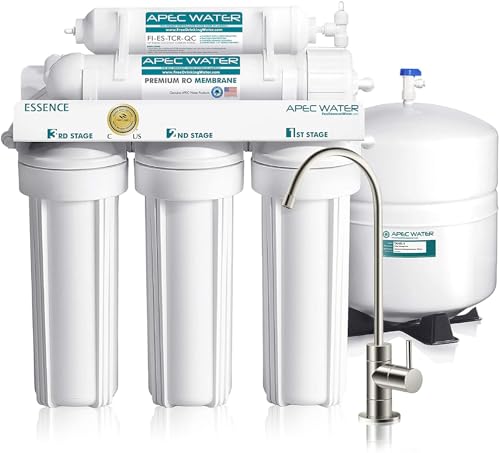
APEC Water 5-Stage Under Sink Reverse Osmosis Water Filter System, ROES-50 Essence Series, WQA Certified, 50 GPD, Reduces 99.99% of Contaminants, Home Water Filtration, DIY Install
APEC ROES-50 - Offers reliable reverse osmosis water filtration for 50 gallons per day, removing up to 99.99%...
As an affiliate, we earn on qualifying purchases.
How to Follow Disinfectant Instructions Correctly
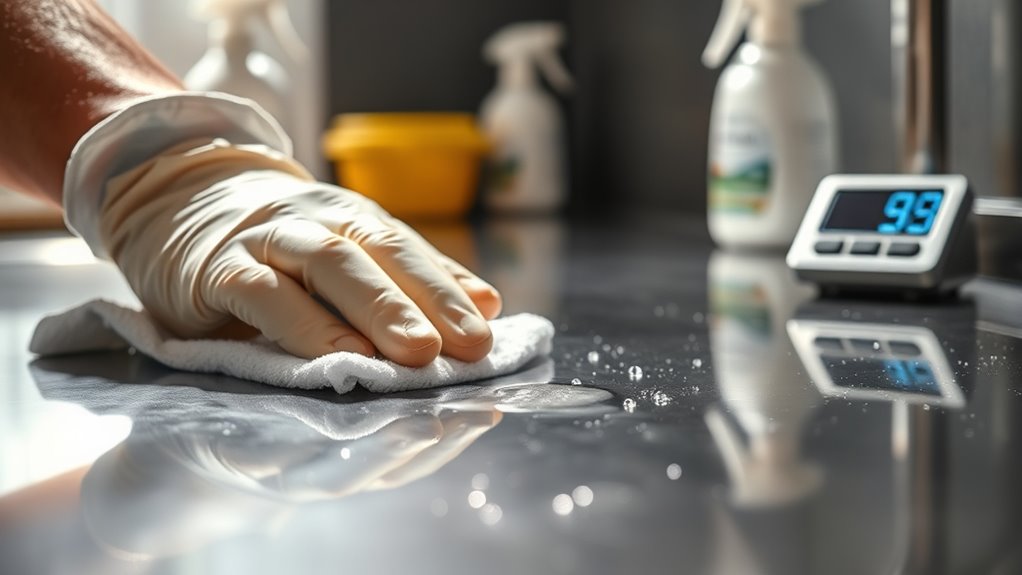
To guarantee disinfectants work effectively, you need to follow the instructions on the label carefully. Proper application ensures you target surface contamination and maximize chemical efficacy. First, check the recommended contact time—this is vital for disinfectants to kill germs properly. Measure the correct amount of product and apply it evenly across surfaces. Avoid wiping or rinsing too soon, as this can reduce effectiveness. Make sure the surface remains visibly wet for the entire contact time; this ensures the disinfectant penetrates and neutralizes pathogens. Also, pay attention to any specific instructions about ventilation or surface compatibility. Additionally, considering Free Floating environments can influence how disinfectants interact with surfaces and germs. By following these steps precisely, you help ensure the disinfectant performs as intended, providing a safer environment and reducing the risk of germs surviving due to improper use.
Risks of Ignoring Contact Time in Cleaning
Failing to adhere to the recommended contact time can substantially compromise the effectiveness of disinfectants. When you skip or shorten this step, bacteria and viruses might survive, increasing infection risks. Ignoring proper contact time can also damage surface durability over time, especially if disinfectants are left on too long or too short. Chemical stability plays a vital role; improper contact may cause disinfectants to break down or become less effective. Additionally, understanding the importance of proper disinfection techniques helps ensure surfaces are thoroughly sanitized without unintended consequences.
Tips to Ensure Proper Contact Time Every Time
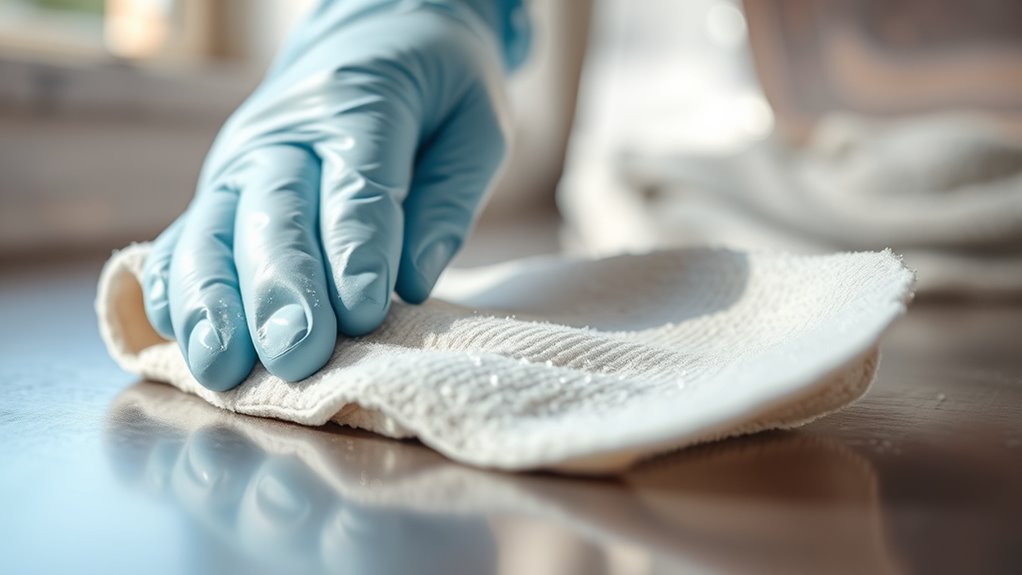
Ensuring disinfectants stay on surfaces for the right amount of time is key to effective sanitation. To improve surface adhesion, apply the disinfectant evenly, avoiding puddles or streaks that can reduce contact. Make sure the surface is clean and dry beforehand, as dirt or moisture can impede chemical stability. Use a timer or clock to track the contact time precisely, so you don’t accidentally wipe or rinse too early. Choose disinfectants with proven chemical stability; some formulas maintain effectiveness longer on surfaces. Follow the manufacturer’s instructions carefully, and avoid diluting solutions improperly. Proper application techniques and attentiveness to these details help guarantee the disinfectant adheres properly, maximizing contact time and ensuring thorough germ elimination. Additionally, understanding the contact time recommended by the disinfectant manufacturer can help you optimize sanitation protocols for maximum effectiveness.
Why Contact Time Is Key to Infection Prevention
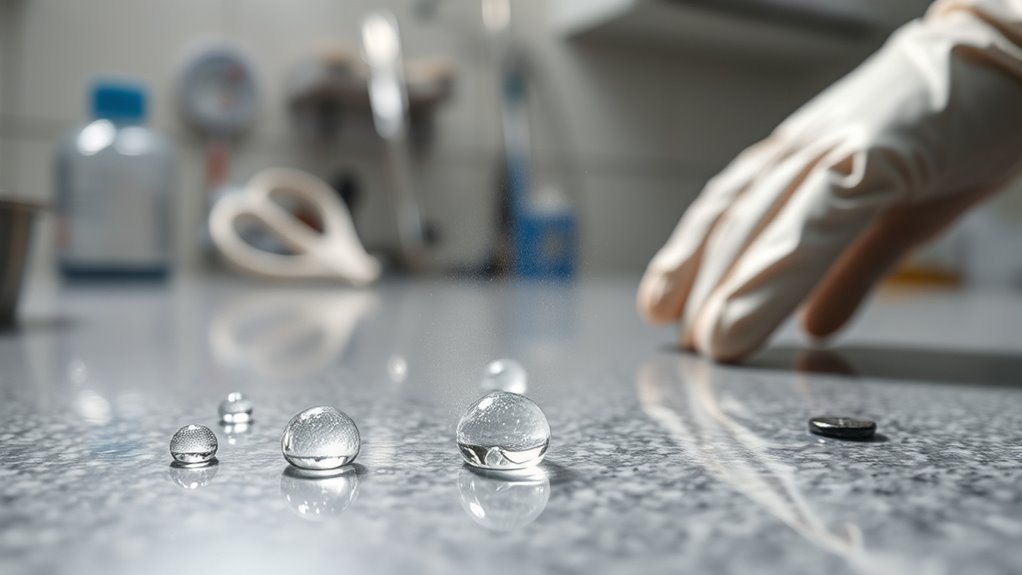
Contact time is essential because it directly determines whether disinfectants can effectively kill germs and prevent infections. If you don’t allow enough time, surface contamination remains, increasing the risk of spreading bacteria and viruses. Proper contact time ensures disinfectants break down germ cell walls and deactivate pathogens, making surfaces safe. Hand hygiene is equally important; clean hands reduce the transfer of germs to surfaces and your face. When disinfecting, you might think a quick wipe is enough, but without sufficient contact time, germs can survive. This can lead to infection outbreaks in settings like healthcare facilities or homes. Using the right disinfectant products and following manufacturer instructions helps maximize effectiveness. By following the recommended contact time, you maximize disinfectant effectiveness, prevent the spread of harmful microbes, and support overall infection prevention efforts.
Frequently Asked Questions
How Do Different Surfaces Affect Required Contact Time?
Different surfaces impact required contact time because surface texture and material compatibility matter. Smooth surfaces like glass or metal typically need less contact time, while textured or porous surfaces like wood or fabric may require longer. You should always check disinfectant labels for guidance, guaranteeing the product is compatible with the material. Proper contact time ensures effective disinfection, so don’t rush—adjust your approach based on the surface you’re cleaning.
Can Temperature or Humidity Change Disinfectant Contact Time?
Temperature fluctuations and humidity variability can definitely disrupt disinfectant contact time. When temperatures rise or fall unexpectedly, chemical reactions speed up or slow down, altering how long disinfectants need to stay active. High humidity can dilute or diminish disinfectant potency, requiring longer contact times for effective disinfection. You should monitor environmental conditions closely, ensuring consistent temperature and humidity levels for maximum disinfectant efficiency and safety.
Is Contact Time the Same for All Types of Disinfectants?
No, contact time isn’t the same for all disinfectants. Different disinfectants require varying contact times to guarantee maximum disinfectant effectiveness, which is essential for following proper cleaning protocols. You need to check the manufacturer’s instructions because factors like surface type and environmental conditions can influence how long disinfectants need to stay wet. By adhering to these guidelines, you ensure thorough disinfection and prevent the spread of germs effectively.
What Are Signs That Contact Time Was Not Properly Maintained?
Your disinfecting efforts could be as ineffective as trying to stop a tsunami if contact time isn’t maintained properly. Signs include persistent disinfectant residue, which indicates it wasn’t left long enough, or damage from surface incompatibility, like discoloration or pitting. You might also notice surfaces still harboring germs, revealing that the contact time was overlooked. Always follow manufacturer guidelines to guarantee thorough disinfection and prevent these issues.
How Often Should Contact Time Be Re-Evaluated in a Facility?
You should re-evaluate disinfectant frequency and cleaning protocols at least quarterly, or whenever there’s a change in use, staff, or regulations. Regular reviews help guarantee contact time is maintained properly, preventing contamination. Keep an eye on infection trends and feedback from staff or clients, as these can signal when adjustments are needed. Consistent re-evaluation keeps your facility safe and compliant with best practices.
Conclusion
Remember, paying attention to contact time is your secret weapon against germs, much like a knight guarding a castle. Skipping or rushing through it leaves you vulnerable, risking more than just a slap on the wrist. Follow instructions precisely, and don’t let the disinfectant’s magic fade before it has a chance to work. In this modern age, even the tiniest detail can be the difference between safety and exposure—so give contact time the respect it deserves.