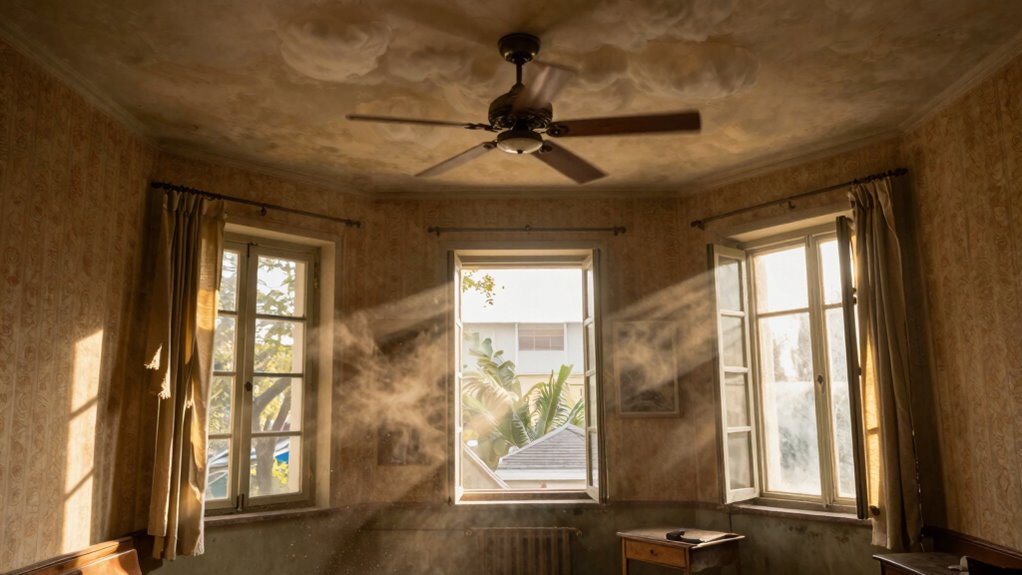

Airing out your house can seem like a good idea, but it often fails because external pollutants like pollen, smog, or humidity can enter your space, making air quality worse. Indoor sources like cooking fumes, pet dander, and mold also stay trapped despite opening windows. Weather conditions or outdoor pollution can neutralize any benefits. To truly improve air quality, you need to address both indoor sources and external factors—there’s more to contemplate if you want better air.

Prime made for students and young adults
- Fast, free delivery for dorm and study essentials
- Prime Video and Amazon Music included
- Member-only deals
Key Takeaways
- External pollutants like smog, pollen, or mold spores can infiltrate indoors, negating fresh air benefits.
- Indoor pollution sources such as cooking fumes or mold remain unaddressed despite airing out.
- Weather conditions like high humidity or rain can make outdoor air unsuitable and promote mold growth inside.
- Relying solely on window opening may not ensure proper airflow or remove indoor contaminants effectively.
- Combining ventilation with source control and mechanical systems is necessary for genuine indoor air quality improvement.

Airing out the house is often recommended to reduce indoor odors and improve air quality, but sometimes, it just doesn’t work as planned. You open the windows, turn on fans, and wait for the fresh air to sweep through, expecting your home’s indoor air quality to instantly improve. However, despite your efforts, stale smells linger, and the air still feels stuffy. That’s because ventilation techniques aren’t always enough if other factors are at play.
Indoor air quality depends on more than just bringing in outside air. If your home has sources of pollution inside—like cooking fumes, tobacco smoke, pet dander, or mold spores—simply opening windows won’t eliminate those contaminants. Instead, you might end up exchanging indoor air with outdoor air that’s just as polluted or even worse, especially in urban or industrial areas. In such cases, natural ventilation can inadvertently introduce pollutants, making your airing-out attempt futile.
Opening windows alone may spread indoor pollutants if outdoor air is also contaminated.
Another reason airing out sometimes fails is that the outdoor air isn’t as clean as you think. During certain seasons or weather conditions, pollutants like pollen, smog, or humidity levels spike, making outdoor air unsuitable for ventilation. Opening windows during high pollen seasons can worsen allergies, while humid air can promote mold growth inside your home. So, even if you’re trying to improve your indoor air quality, you might be doing more harm than you realize. Additionally, understanding the importance of indoor air pollutants can help you identify the real issues behind stale or contaminated air.
Your ventilation techniques also matter. Relying solely on quick window openings or basic fans may not be enough to circulate fresh air effectively. For thorough air exchange, you need to think about the direction of airflow, the placement of vents, and the use of mechanical ventilation systems like exhaust fans or air purifiers. These tools can help remove indoor pollutants more efficiently than natural ventilation alone. If you skip these steps, you might just be circulating stale air instead of replacing it with clean, fresh air. Proper ventilation strategies are essential for achieving better indoor air quality. Additionally, understanding the role of air circulation can help optimize your efforts.
Sometimes, the failure of airing out your house isn’t about the method itself but about the environment outside or the sources inside your home. Without addressing lingering indoor pollutants directly—like cleaning mold or reducing chemical use—simply opening windows won’t resolve the problem. Instead, you need a combination of good ventilation techniques and active management of indoor sources to truly improve your indoor air quality. Recognizing the importance of indoor air quality management can make a significant difference. Otherwise, your efforts to freshen up your home will fall short, leaving you frustrated with stale, contaminated air lingering despite your best intentions.
air purifiers for indoor air quality
As an affiliate, we earn on qualifying purchases.
As an affiliate, we earn on qualifying purchases.
Frequently Asked Questions
How Long Should I Air Out My House for Optimal Results?
You should air out your house for about 15-30 minutes daily to improve indoor air quality. Good air circulation helps remove indoor pollutants and excess moisture, especially if you have indoor plants that benefit from fresh air. Make sure to open windows on opposite sides to create cross-ventilation. Regularly airing out your space keeps it fresh, reduces odors, and supports a healthier environment for both you and your indoor plants.
Does Outdoor Pollution Affect the Effectiveness of Airing Out?
Yes, outdoor pollution can sabotage your efforts. As you open windows, external pollution seeps inside, mingling with indoor air quality and diluting the fresh air you’re trying to create. You might imagine a invisible storm swirling in, undoing all your hard work. To truly refresh your space, check outdoor air quality first. If pollution levels are high, delay airing out or use air purifiers to keep harmful particles out.
Can Airing Out Eliminate All Types of Household Odors?
Airing out your house can help reduce many odors, but it might not eliminate all types. Chemical odors from cleaning products or paints often linger unless you ventilate thoroughly or use odor absorbers. Pet smells, especially deep-seated ones, may persist despite airing out, requiring cleaning or specialized treatments. So, while airing out helps, combining it with cleaning methods offers better results for removing persistent household odors.
What Are the Best Times of Day to Air Out a House?
In the early morning or late evening, when outdoor air is cooler and less polluted, you should air out your house. Imagine your indoor plants soaking up fresh air, while air purifiers work quietly in the background. These times help eliminate lingering odors and improve air quality without overwhelming your space with heat or pollen. Combining natural ventilation with indoor greenery creates a revitalizing, healthy environment for you.
Are There Alternative Methods to Airing Out for Freshening a Home?
Yes, you can use indoor plants and air purifiers to freshen your home. Indoor plants naturally filter toxins and improve air quality, while air purifiers with HEPA filters remove dust, allergens, and odors. These methods work continuously, unlike airing out, which may not always eliminate persistent smells or pollutants. Incorporating plants like snake plants or peace lilies, along with a good air purifier, creates a healthier, fresher environment indoors.
mechanical ventilation systems for home
As an affiliate, we earn on qualifying purchases.
As an affiliate, we earn on qualifying purchases.
Conclusion
Just like opening windows on a sunny day doesn’t always clear out every cloud, airing out your house isn’t foolproof. I once tried to freshen my home after a rainy week, only to find the dampness lingered. Sometimes, fresh air needs a little help—like running the exhaust fan or deep cleaning. Remember, even the clearest sky can hide a stubborn storm. So, don’t rely on airing out alone; it’s just one part of the solution.
As an affiliate, we earn on qualifying purchases.
As an affiliate, we earn on qualifying purchases.
Fall Picks
fall essentials
As an affiliate, we earn on qualifying purchases.