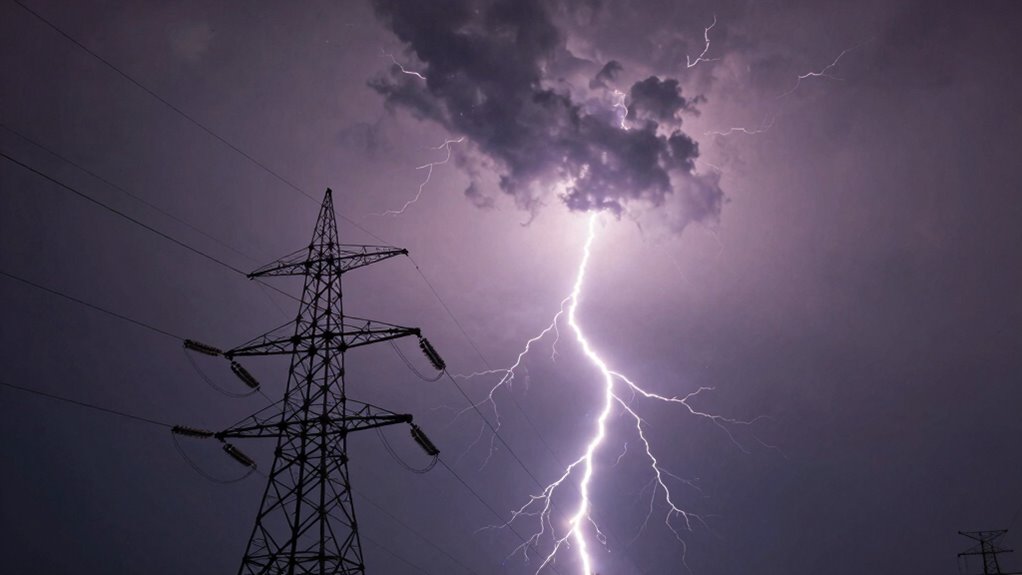
Surge protectors and lightning protection systems can’t prevent every electrical damage. Surge protectors depend on proper grounding and can’t stop a direct lightning strike; they only protect against voltage spikes. Lightning systems may intercept strikes, but they don’t guarantee total safety, especially with powerful or poorly maintained setups. To truly safeguard your electronics, you need to understand these limits and take additional precautions. If you want to know more about what these devices can and can’t do, keep exploring.
Key Takeaways
- Surge protectors rely on proper grounding and cannot prevent damage from a direct lightning strike.
- Lightning protection systems cannot guarantee complete safety from all lightning strikes.
- Surge devices only mitigate transient voltage spikes; they do not prevent the occurrence of lightning.
- Neither surge protectors nor lightning rods can fully eliminate the risk of damage from a powerful lightning strike.
- Proper installation and maintenance are essential; otherwise, these devices may fail to provide effective protection.
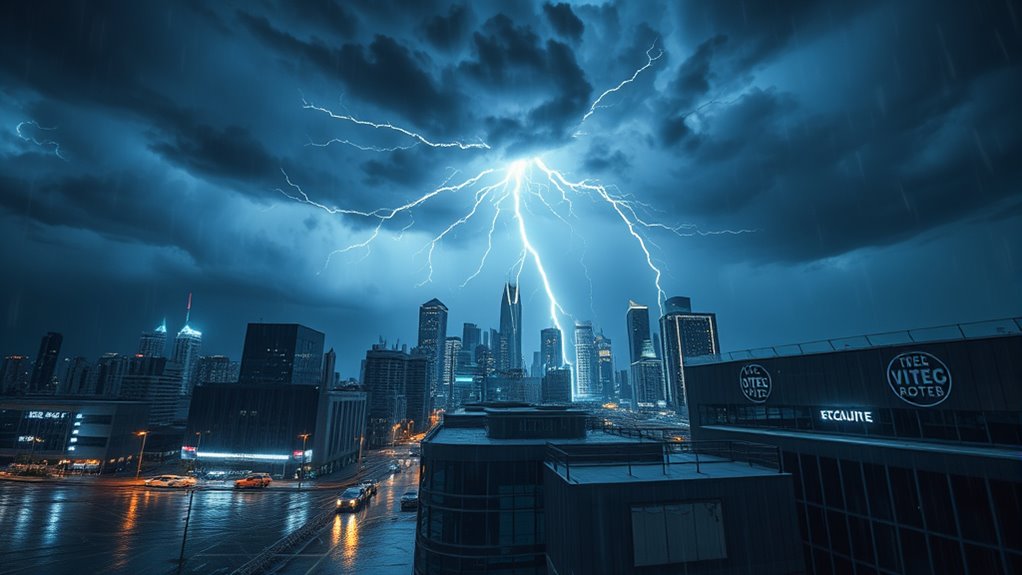
When it comes to safeguarding your electronics, understanding the difference between surge protection and lightning protection is vital. Surge protection devices (SPDs) are designed to shield your devices from transient voltage spikes, often caused by electrical disturbances within the power grid or switching operations. Lightning protection, on the other hand, involves measures to prevent direct strikes or minimize their impact if they occur nearby. While both protect your electronics, they serve different roles and have limitations. Recognizing what they cannot do helps you set realistic expectations and implement thorough safety strategies.
Surge protection devices work by diverting excess voltage away from your devices, but they rely heavily on proper grounding techniques. If the grounding system isn’t correctly installed, the surge protector can’t effectively channel the excess voltage safely into the ground. Poor grounding can lead to ineffective surge suppression or even damage to your devices. This makes installation considerations vital—ensuring your surge protectors are connected to a grounded outlet and that your home’s grounding system is up to code. Without proper grounding, surge protectors are considerably less effective, and you might falsely believe your electronics are protected when they’re still vulnerable to electrical surges.
Proper grounding is essential for effective surge protection and avoiding false security.
Lightning protection, however, involves more than just installing surge protectors. It includes physical barriers like lightning rods, grounding systems, and grounding techniques designed to intercept a lightning strike and direct it safely into the earth. Even with these measures, lightning protection cannot guarantee complete safety. A direct hit can still cause damage if the lightning rod or grounding system isn’t properly maintained or if a strike is exceptionally powerful. Additionally, installation considerations such as the placement of lightning rods and ensuring continuous, low-resistance grounding paths are critical. If these components aren’t correctly installed or maintained, your protection system can fail, leaving your electronics exposed.
Both surge protectors and lightning protection systems have their limits. They cannot prevent a lightning strike from happening; they only help manage the aftermath. Surge protectors can’t protect against a direct lightning strike—only physical barriers or lightning rods can do that, and even then, there’s no absolute guarantee. Likewise, lightning protection systems cannot safeguard every part of your home or property from every strike. They reduce risk but don’t eliminate it entirely. You should consider additional measures, like unplugging sensitive electronics during storms or investing in whole-house surge protection, to enhance your defenses. Proper system maintenance and awareness of their limitations are essential to ensure your safety and the longevity of your electronic devices.
surge protector with proper grounding
As an affiliate, we earn on qualifying purchases.
As an affiliate, we earn on qualifying purchases.
Frequently Asked Questions
Can Surge Protectors Prevent All Types of Power Surges?
Surge protectors can’t prevent all types of power surges due to their limitations. They are effective against many common surges, but lightning strikes or severe electrical faults might bypass their defenses. You should understand surge protector limitations and realize lightning protection effectiveness varies; no device can guarantee complete safety. To better safeguard your electronics, combine surge protectors with other safety measures, like proper grounding and dedicated lightning protection systems.
Are Lightning Protection Devices Effective Indoors?
Like the shield of Achilles, indoor lightning protection devices can help, but they’re not invincible. They’re effective when properly installed with indoor grounding and equipment shielding, reducing the risk of damage from a lightning strike. However, no device guarantees complete safety. You should still unplug sensitive electronics during storms and ensure your grounding system is up to code. Remember, preparedness combined with proper protection is your best defense.
Do Surge Protectors Work With All Electronic Devices?
Surge protectors do work with most electronic devices, but their effectiveness depends on electronic compatibility and device limitations. You should check if your devices are compatible with surge protection, especially sensitive electronics like computers or audio equipment. Keep in mind that surge protectors can’t prevent all damage from power surges or lightning strikes, so it’s crucial to use them correctly and understand their limitations to safeguard your devices effectively.
How Often Should I Replace a Surge Protection Device?
You should replace your surge protection device every 3 to 5 years because its device lifespan diminishes over time, even if it hasn’t experienced a surge. Many assume it lasts forever, but wear and tear from surges and daily use reduce effectiveness. Regular replacement ensures your electronics stay protected, avoiding damage when a powerful surge strikes. Keep an eye on the manufacturer’s guidelines for ideal replacement frequency, and don’t wait until it’s too late.
Can Lightning Strikes Cause Damage Without Power Surges?
Lightning strikes can cause damage without power surges, primarily through electromagnetic interference and grounding issues. You might not see a surge but still experience voltage fluctuations or electromagnetic pulses that disrupt or damage sensitive electronics. Proper grounding helps, but if your system isn’t well-grounded, lightning can induce currents that harm devices. So, even without visible surges, lightning can strike damage your equipment through these unseen but destructive effects.
lightning protection system for home
As an affiliate, we earn on qualifying purchases.
As an affiliate, we earn on qualifying purchases.
Conclusion
Remember, even the strongest shields can’t guarantee safety from nature’s fury, much like Icarus flying too close to the sun. Surge and lightning protection devices play essential roles, but they aren’t foolproof. Stay vigilant, unplug sensitive electronics during storms, and respect the power of nature. No device can fully tame the sky’s wrath, so take precautions beyond technology—because, in the end, awareness is your best defense against the unpredictable dance of lightning and surges.
surge protector for electronics
As an affiliate, we earn on qualifying purchases.
As an affiliate, we earn on qualifying purchases.
lightning rod and grounding kit
As an affiliate, we earn on qualifying purchases.
As an affiliate, we earn on qualifying purchases.