When your humidifier makes your indoor space feel damp or moldy, it’s a sign that moisture levels are too high and comfort has turned into condensation. Excess humidity can cause water on windows and walls, leading to mold and structural damage. To keep your environment healthy, monitor humidity levels with a hygrometer and adjust your humidifier accordingly. Keep an eye on these signs, and if you’re curious about controlling moisture better, there’s more to learn.
Key Takeaways
- Excess mist from humidifiers can increase indoor humidity beyond optimal levels, leading to condensation on surfaces.
- Monitoring humidity with a hygrometer helps prevent over-humidification and condensation issues.
- Proper placement of humidifiers away from walls and windows reduces the risk of moisture buildup.
- Maintaining indoor humidity between 30-50% minimizes condensation and mold growth.
- Regular cleaning and gradual adjustments of humidifier settings prevent excess moisture and condensation.
How Can You Spot Excess Humidity and Condensation?

Excess humidity and condensation often manifest in visible ways that are easy to spot. You might notice water pooling on windows, walls, or ceilings, which indicates high moisture levels. Over time, this persistent dampness can lead to mold growth, especially in poorly ventilated areas. Mold not only damages surfaces but also acts as a major allergy trigger, causing respiratory issues, sneezing, and congestion. You may also see paint peeling or warped materials, signs that moisture is seeping into surfaces. If your home feels consistently damp or smells musty, it’s a clear sign that humidity is too high. Addressing these indicators promptly helps prevent mold development and reduces allergy triggers, keeping your environment healthier and more comfortable. Understanding projector technology can also help you create a more optimal home cinema environment by controlling lighting and glare.
How Do Humidifiers Add Moisture to Your Home?

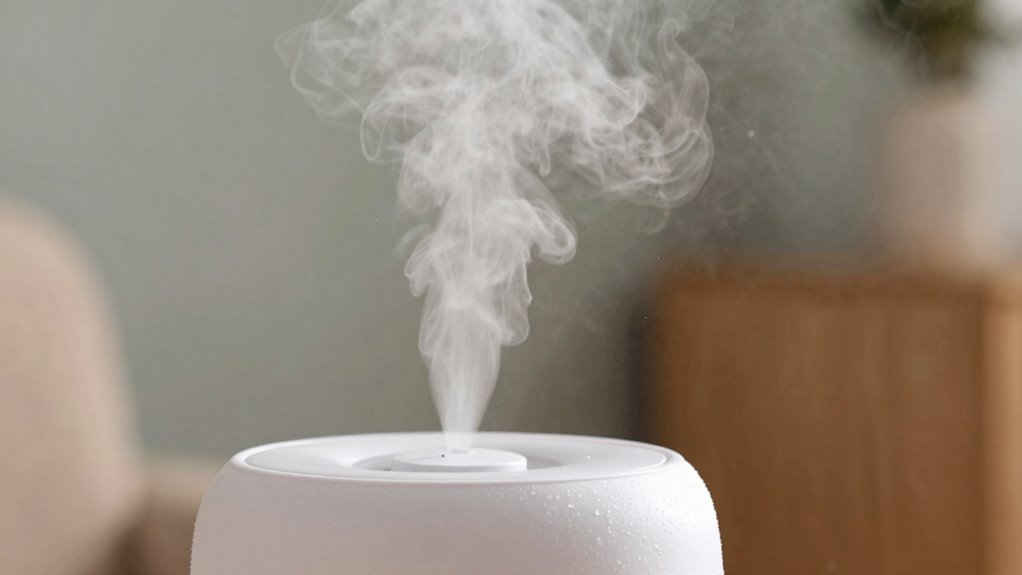
Have you ever wondered how humidifiers effectively add moisture to the air? They work by releasing water vapor into your home, increasing humidity levels and improving air quality. Most humidifiers heat water to produce warm mist or use ultrasonic vibrations to generate cool mist. This added moisture helps create a more comfortable environment, especially in dry seasons. Additionally, humidifiers are designed to be energy-efficient, using minimal power while maintaining ideal humidity levels. Properly humidified air can reduce respiratory irritation and prevent dry skin. To guarantee efficiency, you should regularly clean your device and set the humidity to a comfortable, healthy level. This way, your humidifier promotes better air quality without wasting energy or risking over-humidification. Regular maintenance is essential for humidifier performance and to prevent mold growth.
What Causes Over-Humidification and Condensation?

When your home has too much moisture, it can lead to over-humidification and condensation issues. Poor ventilation design often makes it worse by trapping humid air inside. Understanding these causes helps you prevent unwanted moisture buildup. Additionally, cookie management plays a role in how effectively your home maintains optimal humidity levels by allowing you to customize your comfort preferences.
Excess Moisture Levels
Over-humidification occurs when a humidifier releases more moisture into the air than your space can absorb, leading to increased humidity levels. When humidity rises too high, it negatively affects air quality, making the environment uncomfortable and promoting mold growth. Excess moisture can settle on surfaces, walls, and windows, creating a breeding ground for mold and mildew. This not only damages your home but also impacts your health, especially if you suffer from allergies or respiratory issues. To prevent over-humidification, monitor humidity levels and avoid setting your humidifier too high. Proper maintenance and regular cleaning help reduce excess moisture and mold risk. Keeping humidity in check ensures a healthier, more comfortable environment without the dangers associated with excess moisture. Controlling humidity levels is essential for maintaining a safe and healthy home environment.
Poor Ventilation Design
Poor ventilation design often causes over-humidification and condensation in your home. When ventilation isn’t properly planned, moisture from humidifiers or everyday activities builds up because airflow isn’t sufficient to remove excess moisture. Poor ventilation design hampers moisture control, trapping humidity indoors and creating ideal conditions for condensation on windows, walls, and ceilings. Without proper airflow, humid air lingers, raising indoor humidity levels beyond healthy limits. This excess moisture can lead to mold growth and damage your home’s structure. To prevent these issues, ensure your ventilation system promotes good air exchange and moisture control. Properly designed ventilation helps balance indoor humidity, reducing the risk of condensation and maintaining a healthier, more comfortable living environment. Effective ventilation is essential for managing indoor humidity levels and preventing condensation buildup.
Why Is Too Much Moisture a Problem? Risks to Watch For

Excess moisture from a humidifier can create serious health and home risks if left unchecked. Too much humidity can worsen air quality, making it harder to breathe and increasing allergy symptoms. It also promotes mold growth, which can damage your home and cause respiratory issues.
Be alert for these risks:
- Mold and mildew development on walls and furniture
- Increased dust mites and allergens
- Peeling paint or warped wood
- Musty odors indicating mold presence
- Respiratory irritation or asthma flare-ups
Maintaining proper humidity levels helps prevent these problems and supports mold prevention. Regular monitoring ensures your indoor environment stays healthy and comfortable, avoiding the dangers of excessive moisture.
Where and How Should You Place Your Humidifier?

To guarantee your humidifier effectively adds moisture without causing problems, it’s essential to place it in the right spot. Proper humidifier placement ensures even distribution and helps prevent condensation buildup. Position your humidifier on a raised, flat surface, at least a couple of feet above the floor, and away from walls or furniture to promote airflow. Keep it out of bedrooms or living areas where direct contact with people is common, to avoid excess moisture exposure. Avoid placing it near windows or heat sources, as this can cause uneven humidity levels. By placing your humidifier thoughtfully, you reduce the risk of condensation issues and ensure your space remains comfortable and well-humidified. Proper placement is key to balancing moisture without creating excess condensation. Additionally, understanding air quality factors can help optimize humidifier use and maintain a healthier indoor environment.
How Do You Keep Track of Indoor Humidity Levels?

To keep your indoor humidity levels in check, you’ll need a reliable way to monitor them. Using a hygrometer makes it easy to see if your space is too dry or too humid. Make a habit of checking it regularly to maintain a comfortable environment. Incorporating consistent storytelling about your home’s comfort can also reinforce awareness of environmental changes and encourage proactive adjustments.
Use a Hygrometer
Keeping track of your indoor humidity levels is easy with a hygrometer. This device measures humidity accurately, helping you prevent excessive condensation. When choosing one, look for models with humidity sensors that provide precise readings. Regular calibration techniques ensure your hygrometer stays accurate over time; you can do this by placing it in a sealed container with a saturated salt solution or using a commercial calibration kit. To get the most out of your hygrometer, consider these tips:
- Check readings daily for consistency
- Keep the device away from direct sunlight or vents
- Clean the sensor regularly to prevent dust buildup
- Replace batteries as needed for accurate operation
- Adjust calibration settings if available, following manufacturer instructions
Using a hygrometer helps you maintain ideal humidity, avoiding excess moisture that leads to condensation and mold. Additionally, monitoring indoor humidity can enhance your experience at best restaurants with live music, creating a comfortable environment that complements the ambiance.
Monitor Regularly
Regularly monitoring your indoor humidity levels guarantees you stay aware of changing conditions and can make timely adjustments. Tracking humidity helps maintain ideal air quality and prevents issues like mold or condensation. Use a reliable hygrometer to check levels daily, especially in rooms where humidity fluctuates. Keep an eye on the readings, aiming for 30-50%, depending on your comfort and air quality needs. If levels climb too high, increase ventilation or reduce humidifier use. Conversely, if they’re too low, consider adding moisture. Consistent monitoring allows you to fine-tune humidity control, preventing excessive moisture that leads to condensation and potential damage. Staying proactive with humidity levels ensures a healthier, more comfortable environment and preserves your home’s air quality.
What Are the Best Tips to Adjust Your Humidifier Settings?

Adjusting your humidifier settings properly is essential for maintaining a comfortable and healthy indoor environment. To achieve ideal humidity control, regularly check your device calibration and fine-tune settings accordingly. Here are some tips to help you get it right:
Proper humidifier adjustment ensures a healthy, comfortable indoor environment. Regular calibration and careful setting tweaks are key.
- Use a reliable hygrometer to monitor indoor humidity levels accurately.
- Start with the manufacturer’s recommended settings and adjust gradually.
- Keep humidity levels between 30-50% to prevent condensation issues.
- Clean and maintain your humidifier regularly to ensure proper operation.
- Avoid over-humidifying, which can lead to excess condensation and mold growth.
- Understanding indoor humidity can help you better manage moisture levels and prevent issues like condensation.
When Should You Call a Professional About Moisture Issues?

You should consider calling a professional about moisture issues when you notice persistent condensation, mold growth, or a musty odor that doesn’t improve with basic troubleshooting. Poor humidifier maintenance can lead to excess moisture and poor moisture control, increasing the risk of damage and health problems. If adjusting your humidifier settings or cleaning it regularly doesn’t resolve these issues, it’s time to seek expert help. Professionals can assess your home’s humidity levels, identify underlying problems, and recommend effective solutions. They can also ensure your moisture control systems are functioning properly. Addressing moisture issues early prevents long-term damage and mold growth, keeping your indoor environment safe and comfortable. Don’t ignore signs of moisture-related trouble—call in a professional when in doubt.
Frequently Asked Questions
Can High Humidity Cause Mold Growth in My Home?
Yes, high humidity can cause mold growth in your home. To prevent mold, you need effective humidity control by keeping levels between 30-50%. Use a dehumidifier or ventilation to reduce excess moisture, especially in damp areas like bathrooms and basements. Regularly monitor humidity levels and clean humidifiers to avoid mold spores spreading. Proper mold prevention keeps your home healthier and more comfortable.
How Does Outdoor Weather Influence Indoor Humidity Levels?
Outdoor weather directly influences your indoor humidity levels through seasonal fluctuations and outdoor air quality. When it’s humid outside, more moisture enters your home, raising indoor humidity. Conversely, dry weather lowers it. Poor outdoor air quality can also introduce pollutants that affect your home’s air balance. To maintain comfort and prevent issues like condensation, monitor outdoor conditions and adjust your humidification or ventilation strategies accordingly.
Are There Specific Rooms More Prone to Condensation Issues?
You’ll find bathrooms and basements more prone to condensation issues because of higher moisture levels. Bathrooms, with frequent showers, often experience bathroom condensation, leading to damp walls and mirrors. Basements tend to have basement moisture problems due to poor ventilation and cooler temperatures. To prevent these issues, use exhaust fans, improve ventilation, and consider dehumidifiers. Staying vigilant helps you keep these rooms dry and avoid excess humidity that causes condensation.
What Are the Health Risks Associated With Excess Indoor Moisture?
You might think indoor moisture isn’t harmful, but excess humidity can harm your health. It worsens indoor air quality by promoting mold, dust mites, and bacteria growth, leading to allergies or respiratory issues. Proper humidity control helps prevent these risks, ensuring a healthier environment. Ignoring moisture levels can cause long-term health problems, so monitor your indoor air quality and keep humidity in check to protect yourself and your family.
How Often Should I Clean or Replace My Humidifier?
You should clean your humidifier at least once a week to prevent mold and bacteria buildup. Follow the manufacturer’s guidelines for humidifier maintenance and replace parts as needed. Typically, a humidifier replacement schedule involves swapping out units every 6 to 12 months, depending on usage and wear. Regular cleaning and timely replacement guarantee peak performance, reduce health risks, and keep your indoor air comfortable and safe.
Conclusion
Remember, balance is key—too little moisture leaves you dry, too much causes condensation. Keep an eye on your indoor humidity levels and adjust your humidifier wisely. If you notice persistent condensation or mold, don’t hesitate to call a professional. As the saying goes, “A stitch in time saves nine.” Stay vigilant, maintain proper humidity, and enjoy a comfortable, healthy home all year round.