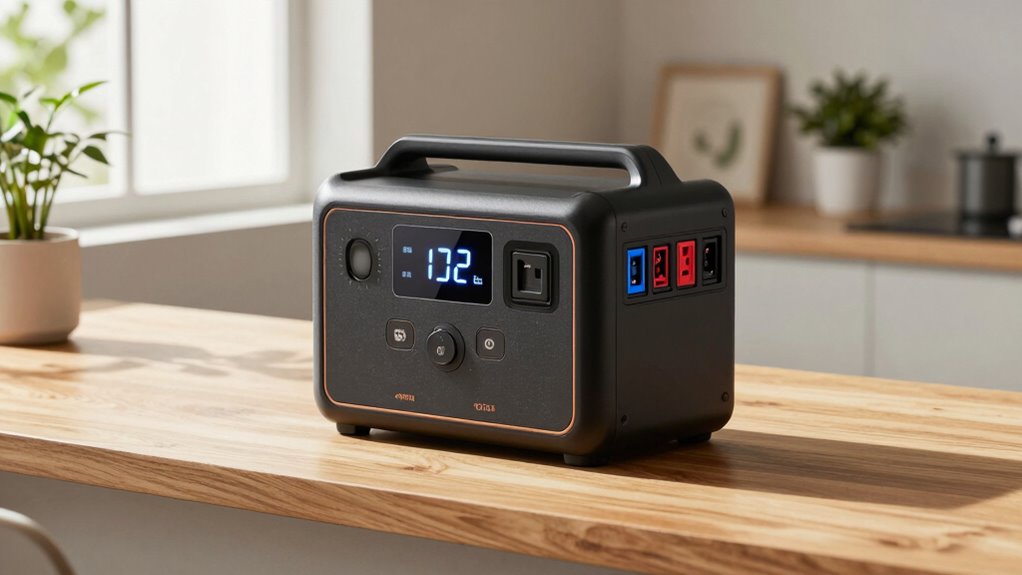

When choosing a portable power station for your home, it’s important to understand that watts (W) show its power output capacity at any moment, while watt-hours (Wh) indicate how much energy it can store and deliver over time. Higher Wh means longer usage, and W determines if the station can power demanding devices. Knowing the difference helps you select the right size for your needs; stay tuned to learn more about making the best choice.

Get school and study supplies delivered free — and shop member deals
- Fast, free delivery on millions of items
- Access to Prime Big Deal Days deals on October 6–7
- Prime Video, Amazon Music and more included
Key Takeaways
- Watts (W) measure the station’s instantaneous power output capacity at any moment.
- Watt-hours (Wh) indicate the total energy stored, determining how long devices can run.
- Higher Wh means longer device operation; higher W handles more demanding appliances.
- For home use, balance W and Wh based on power needs and desired runtime.
- Solar recharging efficiency depends on station’s compatibility with panel wattage and energy requirements.
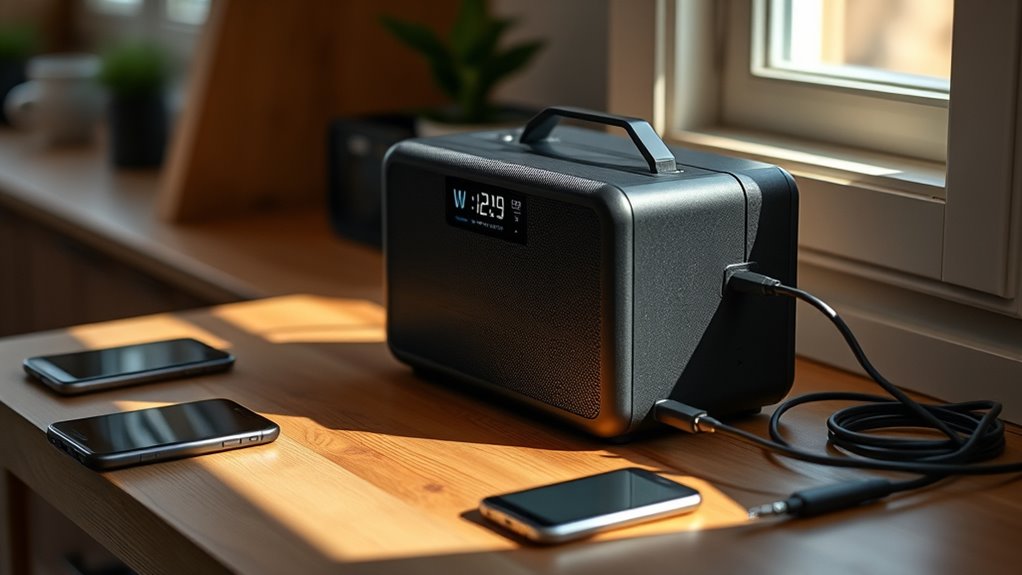
Have you ever been caught without power when you needed it most? It’s a frustrating experience, especially during storms or outages when reliable energy is essential. That’s where portable power stations come into play, offering a versatile solution for home use. When choosing one, understanding the difference between watt (W) and watt-hour (Wh) is fundamental, as it directly impacts how well the device will meet your needs. Wattage (W) tells you the power output capacity — how much energy the station can supply at any given moment — while watt-hours (Wh) indicate the total energy stored or available over time. Think of watts as the flow rate of power, and watt-hours as the size of the fuel tank. For example, a station with a high wattage can power more demanding devices like refrigerators or power tools, but the watt-hour rating determines how long it can keep them running before needing a recharge.
If you plan to use your portable station for longer periods or to power multiple devices, paying attention to watt-hours is essential. A higher Wh means more stored energy, translating to longer run times. This becomes especially important when considering the station’s solar compatibility. Many modern stations can recharge via solar panels, making them ideal for off-grid or emergency situations. When evaluating solar compatibility, ensure the station can handle the wattage of your solar panels and that it supports efficient recharging. Some models are optimized for faster solar input, which means less downtime waiting for your station to recharge during sunny days. Furthermore, think about your battery lifespan. A longer-lasting battery preserves your investment over time, maintaining capacity through many recharge cycles. Some portable power stations feature advanced battery chemistries that extend their lifespan, ensuring you get reliable performance year after year.
In essence, understanding these specifications helps you choose a station that aligns with your power needs and lifestyle. If you only need to run small devices for short periods, a lower watt-hour capacity might suffice. But if you want to keep larger appliances running for hours or days, look for a model with a higher Wh rating combined with good solar compatibility. Keep in mind that proper maintenance and avoiding deep discharges can prolong your battery’s lifespan, ensuring your station remains dependable when you need it most. By knowing the distinction between W and Wh, considering solar recharging options, and prioritizing battery health, you’ll be better equipped to select a portable power station that truly meets your home power needs. Additionally, selecting a station with a high contrast ratio can improve your device’s display visibility in various lighting conditions.
portable power station with high watt-hour capacity
As an affiliate, we earn on qualifying purchases.
As an affiliate, we earn on qualifying purchases.
Frequently Asked Questions
Can Portable Power Stations Be Used While Charging?
Yes, you can use portable power stations while charging, but it depends on their charging efficiency and power management features. Many models allow simultaneous charging and device use, but some might experience reduced output or longer charging times. To optimize performance, verify your power station supports pass-through charging and check the manufacturer’s guidelines. This way, you can keep your devices powered without interrupting the charging process.
What Is the Typical Lifespan of a Portable Power Station?
You can expect a portable power station’s lifespan to be around 3 to 5 years, depending on usage and maintenance. Battery degradation over time reduces capacity, but many models offer warranty coverage that protects against early failure. To maximize lifespan, avoid deep discharges and store it properly. Regularly check the warranty terms, and consider professional servicing if you notice performance drops, ensuring you get the most out of your investment.
Are Portable Power Stations Safe for Outdoor Camping?
You’ll find portable power stations are generally safe for outdoor camping, especially when you consider their battery capacity and weight considerations. An average station with a 500Wh capacity can power small devices for hours, making it practical and reliable. Just make certain you handle it properly, avoid exposing it to extreme weather, and choose a lightweight model for easy transport. Proper use keeps your outdoor adventures safe and energy-efficient.
How Do Temperature Extremes Affect Performance?
Temperature extremes can impact your power station’s performance by reducing thermal efficiency and compromising temperature stability. When it’s too hot or cold, the internal components may struggle to operate effectively, leading to decreased battery life or power output. To guarantee reliable performance, keep your station in a temperature-controlled environment when possible, and avoid exposing it to extreme conditions. Proper storage helps maintain its efficiency and prolongs its lifespan.
Can Portable Power Stations Charge Multiple Devices Simultaneously?
Yes, you can charge multiple devices simultaneously with a portable power station. Check its solar panel compatibility to optimize recharging and consider the battery capacity comparison to guarantee it meets your power needs. Many models feature multiple USB ports, AC outlets, and 12V DC outputs, allowing you to run smartphones, tablets, laptops, and small appliances at once. Just keep an eye on the station’s total wattage limit to prevent overloads.
solar compatible portable power station
As an affiliate, we earn on qualifying purchases.
As an affiliate, we earn on qualifying purchases.
Conclusion
Just like Icarus once soared toward the sun, you now have the power to stay connected and prepared, no matter where life takes you. Understanding watt-hours and watts helps you choose the right portable power station for your needs. Whether you’re chasing adventures or guarding your home, these stations are your modern-day wings. So, harness this knowledge wisely—because with the right energy source, you’re always ready to rise above any challenge.
portable power station for home backup
As an affiliate, we earn on qualifying purchases.
As an affiliate, we earn on qualifying purchases.
high wattage portable power station for appliances
As an affiliate, we earn on qualifying purchases.
As an affiliate, we earn on qualifying purchases.
Halloween Picks
halloween
As an affiliate, we earn on qualifying purchases.