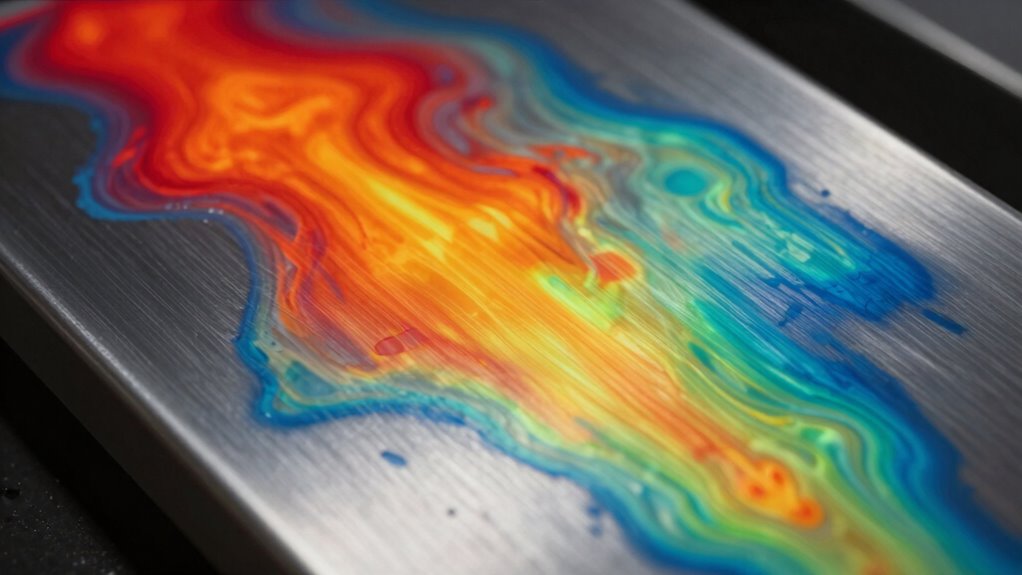

To quickly expose weak spots, use a heat map that highlights problem areas with intuitive color coding—warm colors like red or orange show high activity or concern, while cooler shades indicate less relevance. Focus on clear, uncluttered visuals that guide your eye to critical zones. Incorporate interactivity for deeper insights. Want to discover how this simple trick can provide even sharper insights? Keep exploring to reveal more effective strategies.
Key Takeaways
- Use color gradients to quickly identify high-activity or problem areas in the heat map.
- Focus on cooler colors to reveal less relevant zones needing improvement.
- Incorporate interactive elements for real-time updates on weak spots.
- Prioritize critical metrics aligned with goals for more targeted insights.
- Keep the design simple and clutter-free to enhance clarity and rapid detection.
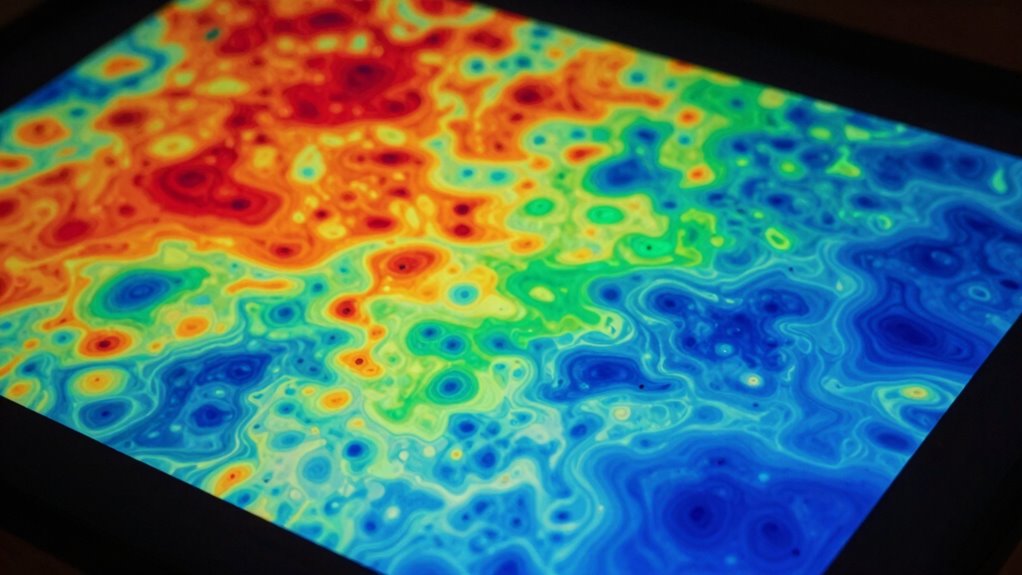
Ever wondered how to quickly identify the most important areas in your data? If you’re dealing with large datasets or complex information, it can feel overwhelming to pinpoint where your attention should go. That’s where a simple heat map trick can make all the difference. Heat maps are a powerful tool in data visualization, allowing you to see patterns and weak spots at a glance. When integrated into your user interface, they offer an intuitive way to highlight critical zones without wading through endless numbers or static charts. The key is to leverage color intensity, where warmer colors like red and orange reveal areas of high activity or concern, while cooler colors like blue or green indicate calmer or less relevant zones. This visual approach enables you to recognize problem spots quickly, saving you time and mental effort. Incorporating visual data analysis techniques like heat maps can significantly enhance your ability to make informed decisions efficiently. To maximize their effectiveness, consider how data clarity can be improved through thoughtful design choices. Understanding the regional culture of your audience can also help in designing more effective visualizations that resonate locally. The trick lies in customizing your heat map to focus on the metrics that matter most to your goals. For example, if you’re analyzing website traffic, a heat map can show which pages or sections attract the most clicks or engagement. If you’re tracking sales data, it can highlight regions or products that underperform. When you design your user interface, make sure the heat map is easily accessible and visually clear. Use a smooth gradient to represent data intensity and avoid clutter, so the most critical areas stand out prominently. This immediate visual feedback helps you prioritize your next steps without sifting through detailed reports or raw data. Additionally, employing best practices in data visualization can ensure your heat maps communicate insights accurately and effectively. Incorporating interactive elements into your heat maps can further improve user engagement and understanding.
heat map data visualization tool
As an affiliate, we earn on qualifying purchases.
As an affiliate, we earn on qualifying purchases.
Frequently Asked Questions
Can This Heat Map Trick Be Used on Any Type of Data?
Yes, this heat map trick can be used on various types of data. It enhances data visualization, allowing you to quickly identify patterns and anomalies across different datasets. Whether you’re analyzing sales, website traffic, or sensor data, applying this heat map approach helps you spot weak spots and trends efficiently. Its versatility makes it a valuable tool for pattern recognition, regardless of the data type you’re working with.
What Tools or Software Are Needed to Implement This Trick?
To implement this trick, you need visualization tools like Tableau or Python libraries such as Seaborn and Matplotlib. But beware — before diving in, proper data preprocessing is essential to guarantee accuracy. These tools help you quickly identify weak spots, but the secret lies in preparing your data correctly. Once you master the right software and preprocessing techniques, you’ll reveal insights that were previously hidden. The power is in your hands.
How Accurate Are the Weak Spot Detections Using This Method?
The detection accuracy using this heat map trick is generally high, but it can vary depending on the quality of the data and the setup. You might encounter false positives, which can lead to overestimating weak spots. To improve accuracy, make certain your data is clean and your thresholds are well-calibrated. Regular testing and adjustments help balance detection accuracy with minimizing false positives, giving you more reliable insights.
Is Prior Technical Knowledge Required to Use This Heat Map Trick?
You don’t need much technical expertise to use this heat map trick; it’s designed to be user-friendly. However, having some data familiarity helps you interpret the results more accurately. While basic understanding of heat maps is enough to get started, understanding your data’s context allows you to identify weak spots more effectively. Overall, it’s accessible for beginners but benefits from a bit of technical knowledge to maximize insights.
How Can I Improve the Precision of the Heat Map Results?
To improve the precision of your heat map results, focus on refining your data visualization techniques and ensuring your data is accurate and well-structured. Use clear color gradients to highlight subtle variations, and incorporate pattern recognition algorithms to identify consistent weak spots. Regularly update your data sets to reflect current conditions, and experiment with different scales to enhance detail. This approach helps you detect issues more precisely and make targeted improvements.
As an affiliate, we earn on qualifying purchases.
Conclusion
By using this heat map trick, you’re fundamentally shining a spotlight on your weak spots, turning them from shadows into clear targets. Think of it as wielding a flashlight in a dark room—you’ll spot problem areas instantly and know exactly where to focus your efforts. With this simple tool, you’re not just guessing anymore; you’re illuminating the path to stronger, smarter decisions. Embrace the heat map and watch your weaknesses melt away like ice under the sun.
As an affiliate, we earn on qualifying purchases.
As an affiliate, we earn on qualifying purchases.