Dew point explains why condensation sometimes appears out of nowhere. It’s the temperature at which air becomes saturated with moisture, causing water droplets to form. Changes in humidity, temperature fluctuations, and air pressure all influence dew point and can make condensation seem random. When these conditions align, water appears on surfaces unexpectedly. If you want to understand how to predict these occurrences and better manage moisture, keep exploring further.
Key Takeaways
- Random condensation occurs when slight temperature drops or humidity spikes cause surfaces to reach dew point unexpectedly.
- Fluctuations in humidity and air pressure can suddenly lower dew points, triggering unpredictable dew formation.
- Surface temperature variations, influenced by drafts or insulation gaps, can cause moisture to condense unpredictably.
- Natural environmental changes, like cloud cover or wind, can alter moisture levels and lead to random dew formation.
- Short-term weather shifts and daily humidity fluctuations make dew appearance seem sporadic and unpredictable.
What Is Dew Point and Why Does It Matter?
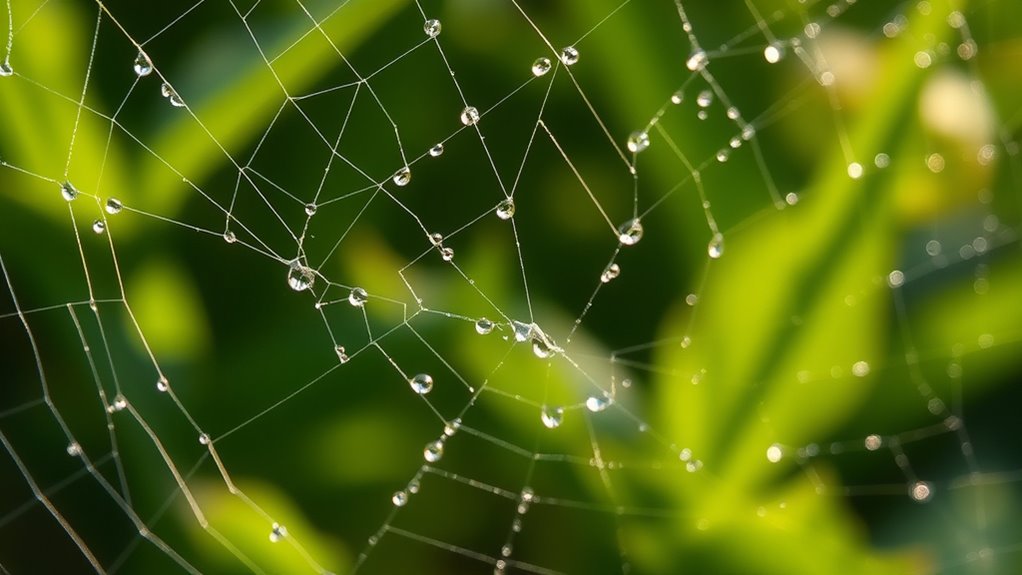
Have you ever wondered why sometimes the air feels damp or why dew forms on the ground? That’s where the dew point comes in. The dew point is the temperature at which air becomes saturated, meaning it can’t hold any more moisture. When the air cools to this point, condensation occurs, turning water vapor into tiny droplets—like dew on grass. Knowing the dew point helps you understand humidity levels and predict when moisture will appear. If the dew point is close to the current temperature, it indicates high humidity, making the air feel moist. Conversely, a low dew point means dry air. Recognizing this helps you anticipate weather changes and manage comfort, especially during early mornings or in humid climates. Additionally, understanding the dew point is important in home environment control, as it influences indoor humidity and comfort levels.
How Temperature Influences Dew Point and Condensation
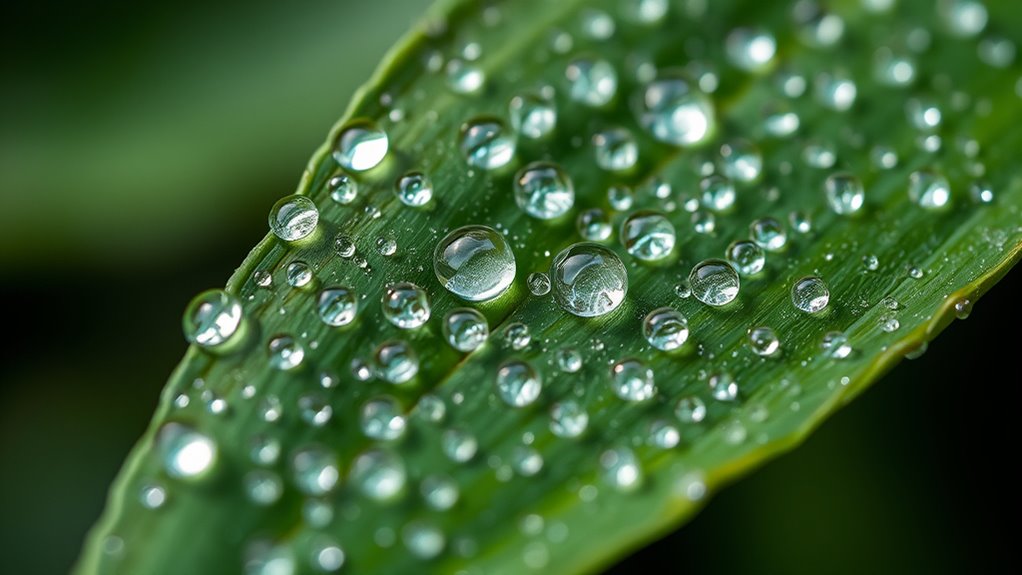
Your temperature directly affects the dew point and the likelihood of condensation. As it drops, the air can’t hold as much moisture, making dew or fog more likely to form. Understanding these factors helps you predict when and where condensation will occur. Additionally, luxury fashion emphasizes the importance of choosing high-quality materials that respond well to temperature changes, ensuring your garments maintain their appearance and functionality in varying climates.
Temperature and Dew Point
Ever wonder how temperature affects dew point and condensation? When the air warms up, it can hold more moisture, raising the dew point and making condensation less likely. Conversely, cooling the air lowers the dew point, increasing the chance of moisture forming on surfaces. Maintaining thermal comfort often involves controlling temperature to manage dew point levels, preventing unwanted moisture buildup. If you keep indoor temperatures steady, you create an environment where dew point stays below the surface temperature, reducing condensation. Temperature changes directly influence how much moisture the air can hold and where dew forms. By understanding this relationship, you can better manage moisture control in your space, avoiding dampness and potential mold growth caused by fluctuating temperatures and dew point issues. Temperature regulation plays a crucial role in sustainable and secure environmental management.
Condensation Formation Factors
Temperature plays a crucial role in how and when condensation forms because it directly affects the dew point. As air cools, it reaches its dew point, causing moisture on surfaces or in the air to condense. Surface moisture, such as dew or fog, appears more readily when temperatures drop close to or below the dew point. Additionally, atmospheric pressure influences condensation by affecting air density and moisture capacity; lower pressure allows air to hold more moisture, making condensation less likely at a given temperature. Conversely, higher pressure compresses the air, reducing its capacity to hold moisture and increasing the chances of condensation. Together, temperature, surface moisture, and atmospheric pressure determine when and where condensation will occur, explaining those seemingly “random” spots of dew or fog. Moreover, filter maintenance and environmental conditions can also impact the formation and visibility of condensation.
How Humidity Leads to Dew Formation

Humidity plays an essential role in the formation of dew because it determines how much moisture is present in the air. When humidity levels are high, the air is saturated with moisture, making it easier for dew to form when temperatures drop. This is because evaporative cooling causes surfaces to lose heat rapidly, lowering their temperature to the dew point. As surfaces cool, the moisture in the air condenses into tiny water droplets. Controlling humidity helps prevent unwanted dew formation indoors, especially in environments where excess moisture can cause problems. When humidity is kept in check, surfaces stay above the dew point, reducing condensation. Additionally, understanding how celestial bodies influence personal traits can provide insights into natural phenomena. So, understanding how humidity influences moisture levels and temperature helps you manage dew formation effectively, whether you want to encourage or prevent it.
Why Dew Point Changes Throughout the Day and Year

Dew point varies throughout the day and year because atmospheric conditions are constantly changing. During the day, humidity fluctuations caused by sunlight and temperature shifts can raise or lower the dew point. As the sun heats the air, the dew point often drops, making condensation less likely. Conversely, cooler evenings can increase humidity, raising the dew point and encouraging dew formation. Seasonal variations also influence dew point; in summer, higher temperatures often lead to higher dew points, while winter months tend to have lower dew points due to colder air. These changes reflect the dynamic nature of the atmosphere, impacting when and how dew appears. Recognizing these fluctuations helps you understand why dew point isn’t static and varies throughout the year. Additionally, vetted – Floating on Water can affect dew formation by changing local humidity levels and temperature conditions.
Dew Point vs. Ambient Temperature — What’s the Difference?
You should understand that dew point and ambient temperature are different measurements, even though they often relate. The dew point stays relatively stable and indicates humidity levels, while ambient temperature can fluctuate more throughout the day. Recognizing the difference helps you better interpret weather conditions and how humidity impacts comfort. Understanding dew point can help you predict when condensation will occur and how humidity affects daily weather patterns.
Temperature Comparison Matters
Have you ever wondered why the dew point matters more than just knowing the temperature outside? The key lies in understanding how dew point relates to temperature contrast and humidity fluctuations. When the ambient temperature drops to the dew point, condensation occurs, regardless of the current air temperature. This difference helps you predict when moisture will form. Consider the table below, which shows how temperature contrast impacts condensation:
| Condition | Likelihood of Dew Formation |
|---|---|
| High humidity + low temp | Very likely |
| Low humidity + high temp | Unlikely |
| Large temperature swing | Increased humidity fluctuations |
| Small temperature swing | Stable conditions |
| Temperature below dew point | Condensation possible |
Dew Point Stability
Understanding dew point stability involves comparing it directly to ambient temperature, revealing how consistent or variable moisture conditions are. When dew point remains steady despite changes in temperature, humidity fluctuations are minimal, indicating stable moisture levels. Conversely, high dew point variability shows that moisture content fluctuates, affecting condensation risks. If the dew point stays close to the ambient temperature, condensation is more likely to occur unpredictably. Factors like weather systems or indoor humidity control influence dew point stability. Recognizing these patterns helps you anticipate when condensation might form. Monitoring humidity levels is essential for assessing dew point stability and preventing unexpected condensation.
- Constant dew points suggest stable humidity, reducing condensation surprises
- Fluctuating dew points indicate changing moisture levels
- Temperature swings can exaggerate dew point variability
- Indoor environments with controlled humidity tend to have more stable dew points
Where Do You Usually See Condensation?
Condensation often appears in places where warm, moist air comes into contact with cooler surfaces. You’ll notice it on windows, mirrors, and metal or glass containers, especially during colder months or in humid environments. When humidity levels are high, the air holds more moisture, increasing the likelihood of condensation forming if surface temperatures are low enough. Surfaces like windows or walls that are cooler than the surrounding air can cause moisture to settle and turn into water droplets. You might also see condensation on pipes, bathroom tiles, or even car windshields. Basically, anytime warm, moist air touches a surface that’s below its dew point, condensation will occur, making these spots the most common places for it to appear. Proper ventilation and dehumidification can help reduce vapor buildup and minimize condensation issues.
Why Does Condensation Seem to Happen “Randomly”?
Sometimes, condensation appears without an obvious reason because environmental conditions change unexpectedly. Small shifts in humidity levels or air pressure can cause moisture to condense suddenly. These changes might be subtle but have a big impact on when and where condensation occurs. For example, a slight drop in air pressure can lower the dew point, making it easier for moisture to condense. Similarly, fluctuations in humidity levels influence the amount of water vapor in the air, causing condensation to seem “random.” You might notice this happening more often in environments with unstable conditions. Factors like temperature swings or drafts can also trigger these sudden changes, making it seem like condensation appears out of nowhere.
- Variations in humidity levels
- Sudden air pressure drops
- Temperature fluctuations
- Drafts or airflow changes
Real-Life Examples of Dew Point in Action

Real-life situations often showcase how dew point influences daily experiences. For example, on humid mornings, you might notice dew forming on grass or car windows, which happens when the dew point rises close to the ambient temperature. Plant transpiration plays a role here, releasing moisture into the air, increasing local humidity and making dew more likely. Atmospheric pressure also affects dew formation; lower pressure can allow air to hold more moisture, raising the dew point and leading to condensation. In agriculture, understanding dew point helps farmers anticipate dew formation, which impacts crop health and disease risk. Additionally, cloud formation is directly influenced by dew point, as it determines when water vapor condenses into visible clouds. Recognizing these examples helps you see how dew point isn’t just a weather concept but a factor shaping natural and human activities every day.
How Can You Predict When Dew Will Form?

Have you ever wondered how to predict when dew will form? It mainly depends on humidity levels and temperature fluctuations. When humidity is high and temperatures drop overnight, dew is more likely to appear. To anticipate dew formation, consider these factors:
High humidity and dropping temperatures overnight increase the likelihood of dew formation.
- Monitor evening and early morning temperature drops
- Observe relative humidity levels (above 80% increases dew chances)
- Track weather forecasts for clear, calm nights
- Recognize seasonal patterns where temperature fluctuations are minimal
Frequently Asked Questions
Can Dew Point Be Different in Various Locations at the Same Time?
Yes, dew point can differ across various locations at the same time due to humidity variation and local temperature differences. When humidity levels are higher and temperatures are cooler, the dew point rises, causing more condensation. Conversely, warmer areas with lower humidity have a lower dew point. So, even nearby places can have different dew points because of these factors, influencing when and where condensation appears.
How Does Altitude Affect Dew Point and Condensation?
When it comes to altitude effects, you’ll find that higher elevations often have lower temperatures, which can change dew point and condensation dynamics. As you go up, the air becomes thinner and cooler, making dew form easier despite lower humidity. This “ups and downs” means condensation can happen unexpectedly at different altitudes, showing how elevation influences dew point and leading to more frequent dew or fog in mountainous areas.
Is Dew Formation More Common Indoors or Outdoors?
Dew formation is more common outdoors because humidity levels and temperature fluctuations happen more frequently, creating ideal conditions for condensation. Indoors, controlled temperature and humidity usually prevent dew from forming. When outdoor air cools overnight or humidity rises, dew appears on surfaces like grass or car windows. You’ll notice dew more outdoors, especially during early mornings or after rain, because these natural factors promote condensation more often than indoor environments.
Can Dew Point Be Used to Predict Weather Changes?
Yes, dew point can definitely be used to predict weather changes. By tracking dew point forecasting and humidity monitoring, you get a clearer picture of upcoming conditions. When dew point rises, expect warmer, wetter weather; when it drops, cooler, drier days are likely. This simple, steady strategy helps you stay savvy about shifting weather patterns, turning the science of dew point into a reliable forecast tool.
How Does Climate Change Impact Dew Point Patterns?
Climate change affects dew point patterns because it influences temperature trends and the climate influence. As global temperatures rise, you’ll notice higher dew points, meaning more moisture in the air. This can lead to increased condensation and humidity. You might also see more unpredictable or extreme weather patterns, as changing climate influences alter the usual dew point behavior, making it harder to predict when condensation will occur.
Conclusion
Understanding dew point helps you see the hidden dance between temperature and humidity. It’s like a secret language nature whispers—sometimes clear, sometimes mysterious. By grasping these concepts, you gain insight into those fleeting moments when condensation appears “randomly,” reminding us that even in chaos, there’s a delicate order. So next time dew forms unexpectedly, remember—it’s nature’s gentle reminder that even the most unpredictable moments follow a silent, unseen rhythm.