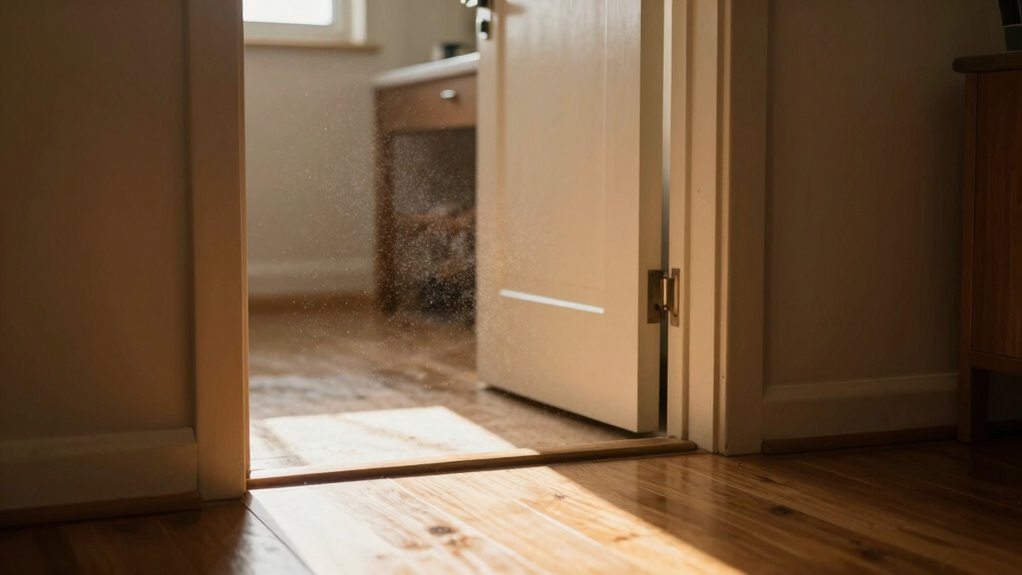

Closing doors can greatly worsen indoor air quality because they trap pollutants like dust, pet dander, and fumes inside, causing them to build up over time. It also blocks fresh air from entering and stale air from exiting, leading to stuffy and polluted environments. This stagnation increases health risks, especially for sensitive individuals. If you keep doors closed, you might be surprised at how much worse it can get—and there’s more to think about below.

Prime made for students and young adults
- Fast, free delivery for dorm and study essentials
- Prime Video and Amazon Music included
- Member-only deals
Key Takeaways
- Closed doors restrict airflow, trapping indoor pollutants and causing higher concentrations of dust, fumes, and allergens.
- They limit fresh air entry and stale air exit, leading to stagnant air and poor indoor air quality.
- Pollutants can migrate through gaps or shared ventilation, but closed doors slow this process, increasing pollutant buildup.
- Proper ventilation patterns are essential; closed doors can hinder airflow, making pollution persist longer.
- Managing airflow with fans or vents helps mitigate the negative impact of closed doors on air quality.
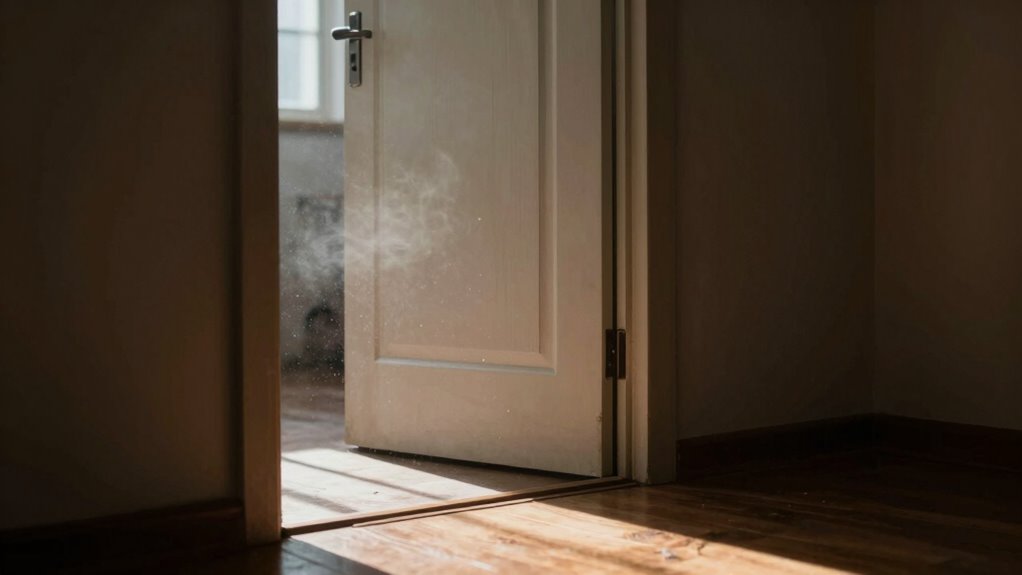
When you close a door, it’s easy to assume the air quality in that room remains unaffected, but in reality, it can change considerably. Doors create barriers that influence how air moves between spaces, which directly impacts ventilation patterns. These patterns determine how fresh air enters and stale air exits a room. When a door is shut, it restricts airflow, trapping indoor pollution inside. Over time, pollutants like dust, pet dander, and chemical fumes accumulate, leading to poorer air quality. Because of this, closed doors can cause indoor pollution to reach higher concentrations than you might expect.
Closed doors can trap indoor pollutants, leading to higher concentrations and poorer air quality over time.
The way air circulates inside a space depends heavily on the door’s position. An open door allows air to flow freely, promoting better ventilation and diluting indoor pollutants. Conversely, a closed door limits this exchange, creating pockets where pollutants can settle and build up. This stagnation can make the air feel stuffy and increase the likelihood of respiratory issues, especially if someone in the household has allergies or asthma. You might not notice the difference immediately, but over time, the quality of the air inside can decline significantly. Proper ventilation is essential for maintaining healthy indoor air quality, especially when doors are frequently closed. Additionally, airflow patterns can be influenced by other factors like ceiling fans or vents, which can help mitigate the effects of closed doors. Proper airflow management can therefore help prevent these issues and ensure better air quality.
Indoor pollution doesn’t just stay confined to one room when doors are shut. It can migrate through shared ventilation systems or seep through small gaps and cracks, but the rate and extent of this transfer depend on the overall ventilation patterns. When doors are closed, the pathways for fresh air to replace contaminated indoor air are cut off, causing pollutants to linger longer. This can be especially problematic in rooms that aren’t well-ventilated or lack air purification systems, making the air quality worse than in open-concept spaces. Proper ventilation patterns are essential for maintaining healthy indoor air quality, especially when doors are frequently closed. Understanding these ventilation dynamics can help you make better decisions about airflow management in your home.
air purifiers for indoor air quality
As an affiliate, we earn on qualifying purchases.
As an affiliate, we earn on qualifying purchases.
Frequently Asked Questions
How Quickly Does Air Quality Deteriorate With Closed Doors?
When you keep doors closed, air quality can start deteriorating within hours. Limited air circulation traps pollutants, humidity, and odors inside, leading to odor buildup and stale air. Without fresh air exchange, harmful particles and allergens accumulate quickly, making the environment less healthy and more uncomfortable. To maintain good air quality, open doors periodically or use ventilation to promote air circulation and prevent rapid deterioration.
Do Different Types of Doors Affect Air Quality Differently?
Yes, different door types impact air quality differently. For example, doors made of solid wood or metal with poor insulation can trap pollutants and reduce airflow, worsening air quality. Insulated doors help maintain better air circulation by sealing gaps, while poorly insulated or hollow doors may allow more pollutants to stagnate. Choosing doors with proper insulation and quality materials can considerably improve indoor air quality and reduce indoor pollution buildup.
Can Open Doors Improve Air Quality More Effectively Than Ventilation?
Did you know that opening doors can increase air exchange by up to 50%? Yes, open doors improve air quality more effectively than ventilation alone by enhancing air circulation and odor control. When you open doors, stale air escapes and fresh air flows in, reducing pollutants and odors faster. This simple action promotes healthier indoor environments and keeps air cleaner, especially in areas prone to moisture or pollutants.
How Does Room Size Influence Air Quality When Doors Are Closed?
Room size considerably affects air quality when doors are closed because larger rooms can trap pollutants, reducing air circulation. Smaller rooms allow for better ventilation efficiency, helping fresh air circulate more effectively and dilute contaminants. When doors are closed, the limited air exchange in bigger spaces hampers overall air quality, so you might notice more stale air and higher pollutant levels. Ensuring proper ventilation is essential, especially in larger rooms.
Do Air Purifiers Work Better With Doors Open or Closed?
Air purifiers work better with doors closed because door insulation traps airborne particles, allowing air filtration to be more effective. When doors are open, contaminants disperse into other rooms, reducing efficiency. Keep doors shut to maximize air purifier performance, creating a cleaner, healthier space. The suspense lies in discovering how a simple change—just closing the door—can dramatically improve air quality through better filtration and insulation.
As an affiliate, we earn on qualifying purchases.
Conclusion
So, don’t dismiss the impact of closed doors on air quality. It might seem minor, but it actually traps pollutants and affects fresh air flow more than you realize. Sure, it’s easy to think, “It’s just a door,” but those small changes add up, especially if someone’s sensitive to allergens or pollution. Next time, open a door or two—you’ll breathe easier knowing you’re actively improving your environment. Little steps make a big difference!
door gap seals for better airflow
As an affiliate, we earn on qualifying purchases.
As an affiliate, we earn on qualifying purchases.
As an affiliate, we earn on qualifying purchases.
Fall Picks
fall essentials
As an affiliate, we earn on qualifying purchases.