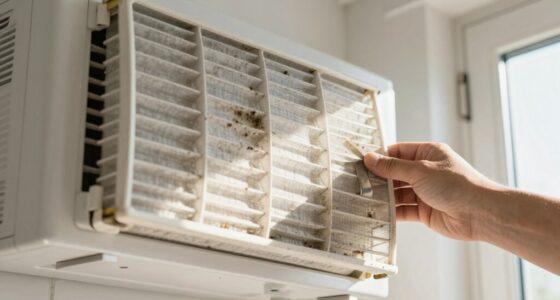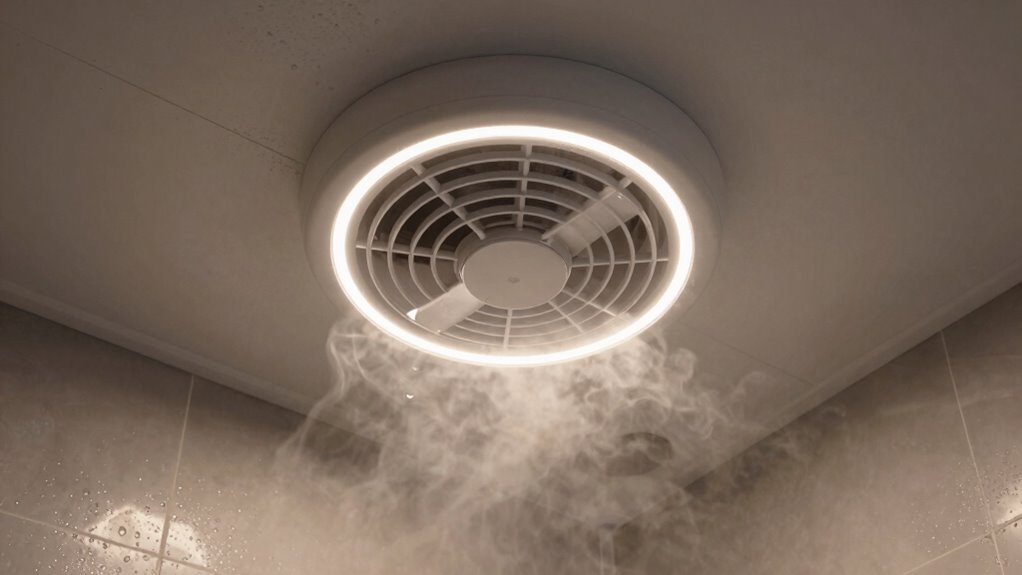

If your bathroom fan isn’t ventilating properly, steam can linger longer, leaving your space humid and prone to mold. Poor airflow usually results from dust, obstructions, or improperly installed ductwork that blocks moist air from escaping. When airflow is restricted, moisture and odors stay trapped, making your bathroom uncomfortable. To fix this, identify blockages and consider upgrading if your fan is outdated. Keep going to find out how you can improve your ventilation system more effectively.
Key Takeaways
- Poor airflow causes steam to stay longer by not efficiently removing moist air from the bathroom.
- Blockages or debris in the fan or ductwork hinder proper venting, leading to lingering steam.
- Inadequate fan power or improper installation reduces moisture removal effectiveness.
- Kinks, obstructions, or poorly routed ducts restrict airflow, causing humidity to persist.
- An aging or undersized fan may lack sufficient capacity to clear steam quickly.
How Does Your Bathroom Fan Ventilate and Why Is Airflow Important?
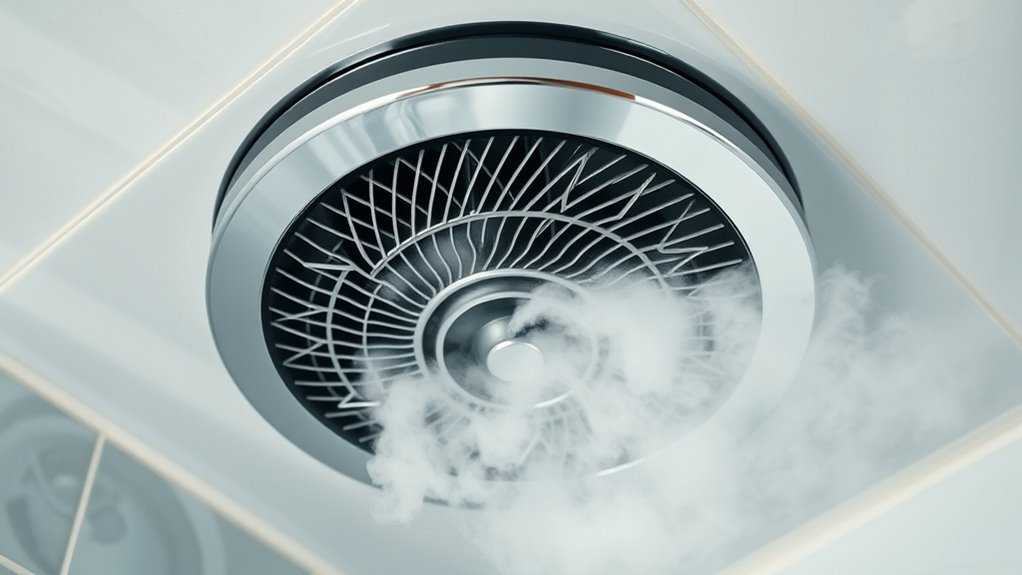
Your bathroom fan ventilates by drawing moist, stale air out of the space and exhausting it outside or into a ventilation system. The effectiveness of this process depends on proper airflow dynamics, which control how efficiently air moves through the fan and ductwork. Good airflow ensures moisture, odors, and pollutants are quickly removed, preventing mold and damage. Ventilation effectiveness relies on factors like fan power, duct size, and the presence of obstructions that can hinder airflow. When airflow is optimized, the fan creates a steady circulation that maintains air quality and comfort. Understanding how your fan manages airflow helps you recognize its role in removing humidity and why maintaining proper ventilation is essential for a healthy bathroom environment. Additionally, integrating smart ventilation controls can optimize airflow based on humidity levels and occupancy, enhancing overall efficiency.
What Causes Poor Bathroom Fan Airflow?
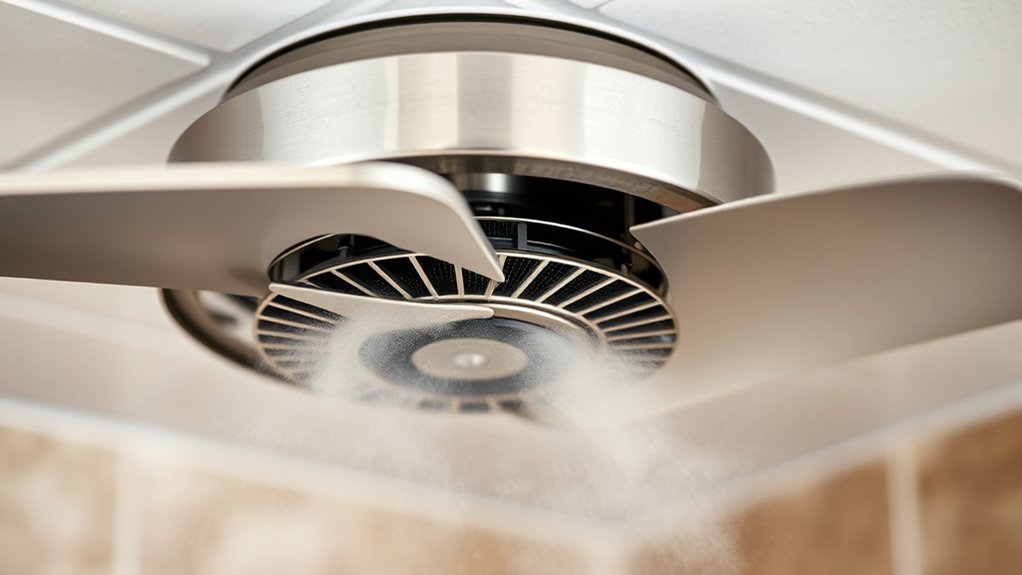
Poor airflow in your bathroom fan often results from blockages or restrictions within the system. These airflow issues can considerably reduce the exhaust fan’s efficiency. Common causes include:
Blocked vents and debris reduce bathroom fan airflow, decreasing efficiency and humidity control. Regular cleaning helps maintain optimal ventilation.
- Dust and debris buildup in the fan or vent duct, limiting airflow.
- Obstructions or kinks in the ductwork blocking proper exhaust.
- A clogged or dirty exhaust fan grille preventing air movement.
- Improper vent installation, like long or poorly routed ducts that hinder airflow.
- Accumulation of silly tantrums or pets that may interfere with vent components, reducing efficiency.
Any of these issues can cause your exhaust fan to underperform, leading to lingering steam and humidity. Regular inspection and cleaning of vents, ducts, and the fan itself can help guarantee optimal airflow. Addressing these causes restores proper ventilation and reduces moisture problems.
Why Does Inadequate Airflow Make Steam Linger?
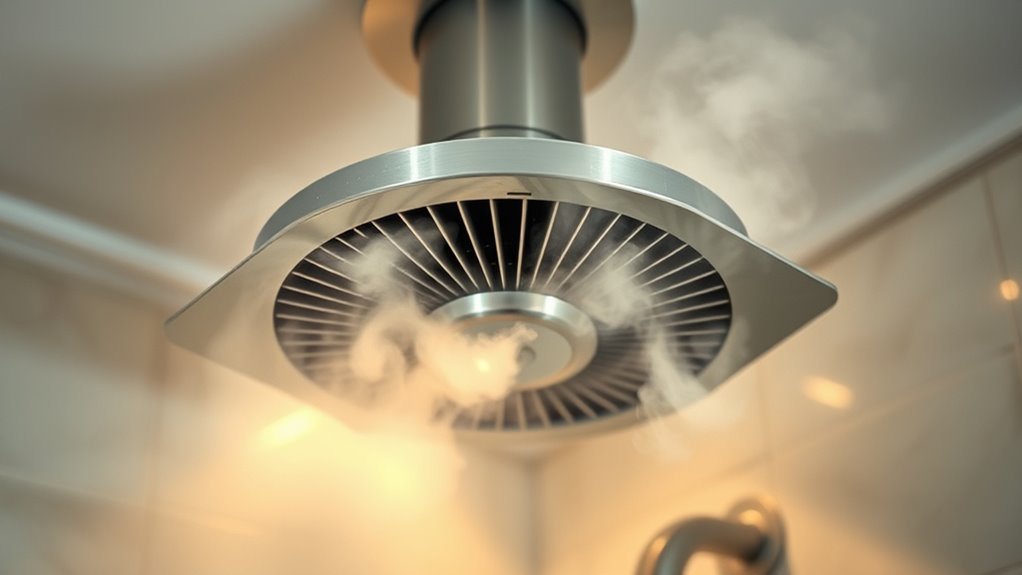
When airflow in your bathroom fan is insufficient, steam doesn’t get expelled quickly, causing it to linger longer in the room. This inadequate airflow leads to humidity buildup, which makes the bathroom feel damp and uncomfortable. As moisture stays in the air, it promotes mold growth and creates a persistent, musty odor that’s hard to remove. Without proper airflow, the fan can’t carry away excess moisture and odors effectively, so they remain trapped inside. This means your bathroom stays humid longer, and fresh air doesn’t circulate enough to clear out lingering steam and smells. Poor airflow fundamentally stalls the ventilation process, making it harder for humidity and odors to dissipate naturally. Improving airflow ensures steam exits faster, reducing humidity buildup and aiding odor removal. Additionally, airflow efficiency plays a critical role in maintaining overall air quality and preventing long-term moisture issues.
How Can You Troubleshoot and Improve Your Bathroom Fan’s Airflow?
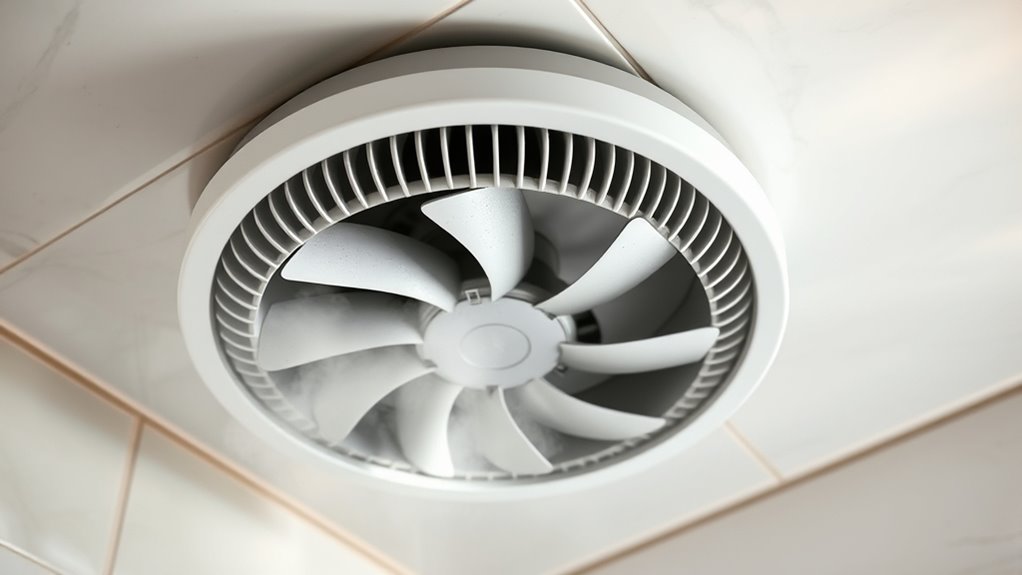
Troubleshooting and improving your bathroom fan’s airflow begins with inspecting the fan and vent system for obstructions. First, check the fan motor to guarantee it’s running smoothly; a weak or noisy motor may reduce airflow. Second, examine the ventilation ducts for blockages or buildup of debris, which can restrict airflow. Third, clean or replace the fan’s grille to prevent dust from impeding operation. Fourth, verify that the ductwork is properly connected and not kinked or crushed, as this hampers ventilation. Additionally, ensure that the fan components and airflow pathways are free of any restrictions or damage that could impede proper ventilation. If these steps don’t resolve airflow issues, consider upgrading the fan or consulting a professional. Regular maintenance keeps airflow ideal, preventing lingering steam and improving bathroom comfort.
When Should You Upgrade or Replace Your Bathroom Fan?
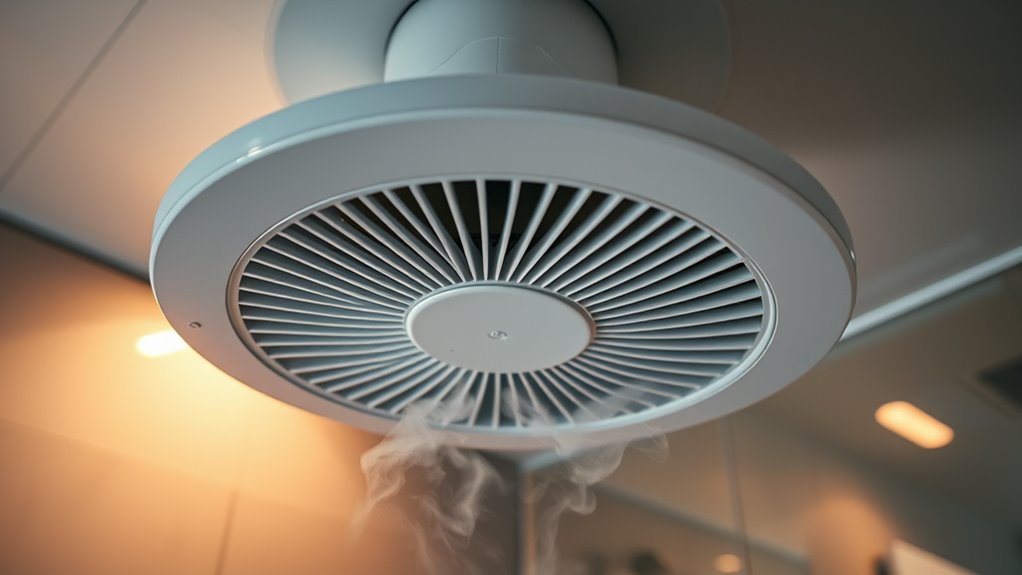
Knowing the right time to upgrade or replace your bathroom fan can ensure excellent ventilation and prevent ongoing issues. If your fan no longer meets ventilation standards or struggles to clear steam effectively, it’s time to consider a replacement. Pay attention to fan specifications—if your current model is underpowered or outdated, it may not keep up with moisture levels. Unusual noises, persistent odors, or visible damage are clear signs you should upgrade. Additionally, if your fan is over a decade old, newer models often feature improved airflow and energy efficiency. Upgrading ensures better humidity control, reduces mold risk, and maintains air quality. Regularly evaluating your fan’s performance helps you determine the right time to replace it for ideal bathroom ventilation. StyleGuru.org
Frequently Asked Questions
Can Humidity Levels Affect Bathroom Fan Efficiency?
Yes, humidity levels can affect your bathroom fan’s efficiency. When humidity is high, moisture buildup makes it harder for the fan to vent moist air effectively. Proper humidity control helps your fan work better by reducing excess moisture, preventing lingering steam, and improving airflow. Keep your bathroom well-ventilated and consider using a dehumidifier if humidity remains high, ensuring your fan operates at peak performance and minimizes moisture buildup.
How Long Should a Bathroom Fan Run After Showering?
Your bathroom fan should run at least 20-30 minutes after showering to fully clear the steam. Skipping proper ventilation maintenance can make your fan feel like it’s working overtime, creating excessive fan noise and reducing efficiency. Keep it on long enough to prevent lingering moisture, which can cause mold. If the fan seems noisy or ineffective, it’s time to check for blockages or consider upgrading for better airflow.
Are There Specific Fan Models Better at Removing Steam?
Yes, some fan models are better at removing steam. Look for fans that meet ventilation standards like high CFM ratings, which guarantee efficient airflow. Choose a model with quiet operation to avoid excessive fan noise, especially if you’re sensitive to sound. Installing a powerful yet quiet fan helps keep steam from lingering, improving air quality and preventing mold. Always select a model suited to your bathroom size for ideal performance.
What Are Signs of a Failing Bathroom Exhaust System?
Did you know that 60% of exhaust fans fail in the first five years? Signs of a failing bathroom exhaust system include strange noises, reduced airflow, or persistent humidity. If you notice these issues, it’s time for ventilation maintenance and airflow troubleshooting. Poor performance often points to clogged vents or worn-out motors. Addressing these problems promptly keeps your bathroom fresh and prevents mold or structural damage.
How Does Bathroom Size Influence Fan Selection and Airflow Needs?
Your bathroom size directly impacts your choice of fan capacity. Larger bathrooms require more powerful fans to effectively remove steam and moisture, preventing lingering humidity. Measure your bathroom’s square footage and select a fan with appropriate CFM (cubic feet per minute) ratings. A fan that’s too small won’t keep the air fresh, while a properly sized one guarantees efficient airflow, reducing steam lingering and improving overall ventilation.
Conclusion
A well-ventilated bathroom keeps steam at bay, leaving you with a fresh, comfortable space. But when airflow falters, lingering moisture can cause frustration and damage. It’s a stark reminder that something as simple as a faulty fan can transform a relaxing shower into a damp, stuffy ordeal. Don’t let poor ventilation steal your comfort—take action now. Your bathroom deserves better, and so do you.