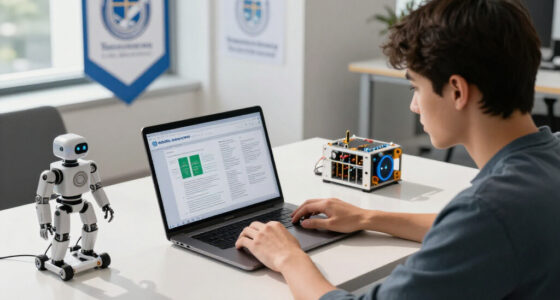

📊 Full opportunity report: World Model Readiness: Are You Ready for AI That Acts? on ThorstenMeyerAI.com — validation score, market gap, and execution plan.
TL;DR
A new diagnostic tool evaluates whether organizations are prepared for AI systems that predict and act, marking a shift from traditional language models to environment-aware models. Major research efforts signal this transition, but readiness remains uncertain.
New diagnostic tools are emerging to evaluate whether organizations are prepared for the next phase of AI — systems that can predict and act within real environments, not just generate language or summaries.
This shift from models that describe to models that predict and act is gaining momentum, with major industry players investing heavily in world model research, signaling a potential paradigm change in AI deployment and capabilities.
Over the past three years, AI research has focused on large language models (LLMs) that excel at writing, summarizing, and explaining, but the current trend is moving toward world models — AI systems that internalize an environment’s dynamics to predict future states and facilitate decision-making. Companies like Meta, Google DeepMind, Nvidia, and Waymo have launched significant projects aimed at developing and deploying such models, with some generating photorealistic 3D worlds or robotic simulations.
Despite this momentum, world model systems are still in early stages, requiring vast data, computational resources, and sophisticated supervision. Experts warn that current models face limitations, particularly in real-world physical reasoning and bridging the gap between simulation and messy, unpredictable environments.
A new diagnostic tool has been introduced to assess organizational readiness for adopting these systems, focusing on data availability, process representation, oversight capabilities, and understanding failure modes. This tool aims to help organizations identify gaps before committing to full deployment, rather than pushing for immediate, wholesale adoption.
World Model Readiness — are you ready for AI that acts?
LLMs describe. World models predict and act. The next AI shift isn’t “have we adopted a chatbot” — it’s whether you’d know what to do with a model that anticipates consequences.
Independent commentary, produced with AI assistance under human editorial oversight. The views are the author’s own and may change. World Model Readiness is an early, positioning-stage diagnostic — an assessment framework, not a prediction, guarantee, or technical advice; its conclusions depend on the framework’s assumptions. “World models” are an emerging, rapidly-evolving area of AI; statements about the field reflect publicly reported developments as of mid-2026 and may quickly date. References to companies, labs, and products describe public reporting and imply no affiliation, endorsement, or verification. Product, model, and company names are trademarks of their respective owners.
Implications of Transition to Predictive, Action-Oriented AI
This shift matters because AI systems capable of predicting and acting could fundamentally change how organizations operate, automate tasks, and make decisions. While current AI primarily offers suggestions or content generation, world models enable proactive behavior, which introduces new risks, requirements, and opportunities for control and oversight.
Understanding and assessing readiness now can prevent costly mistakes, ensure safe deployment, and position organizations to leverage these advanced capabilities effectively. It also highlights the need for new standards in data collection, process modeling, and system supervision to safely transition into this new AI era.

MOTOPOWER MP69033 Car OBD2 Scanner Code Reader Engine Fault Scanner CAN Diagnostic Scan Tool for All OBD II Protocol Cars Since 1996, Yellow
- Multi-Function Diagnostic Tool: Reads and erases engine codes, views freeze frame, and more
- Wide Vehicle Compatibility: Supports 9 protocols for cars since 1996, including US, EU, Asian
- Multilingual Support: Available in English, German, Dutch, Spanish, French, Italian
As an affiliate, we earn on qualifying purchases.
As an affiliate, we earn on qualifying purchases.
Major Industry Moves Toward Environment-Aware AI Systems
Since late 2024, industry leaders and research labs have announced significant efforts toward building world models. Yann LeCun’s startup, AMI Labs, raised substantial funding to develop these models, while Google DeepMind’s Genie 3 demonstrated real-time generation of interactive 3D worlds. Meta released V-JEPA 2, targeting robotics, and other players like Nvidia and Waymo are exploring related systems.
This collective push signifies a consensus that the next frontier in AI is moving beyond language prediction toward environment understanding and action, with many experts viewing this as a potential end to the dominance of traditional LLMs in practical applications.
Nevertheless, the technology remains nascent, with current models showing limitations in physical reasoning, generalization, and real-world calibration, underscoring the importance of readiness assessments.
“The move from describe to act changes what organizations need to be ready for, because action without prediction is dangerous.”
— Thorsten Meyer, AI researcher

AI Engineering: Building Applications with Foundation Models
As an affiliate, we earn on qualifying purchases.
As an affiliate, we earn on qualifying purchases.
Current Limitations and Challenges of World Models
Despite rapid investment and promising demonstrations, world models still face significant hurdles, including the ‘reality gap’—the discrepancy between simulated environments and complex real-world scenarios. Their physical reasoning abilities and generalization remain limited, and the calibration between models and messy environments is not yet reliable.
It is also unclear how quickly these systems can be safely integrated into operational settings, or how organizations can develop effective oversight mechanisms to prevent harmful errors.
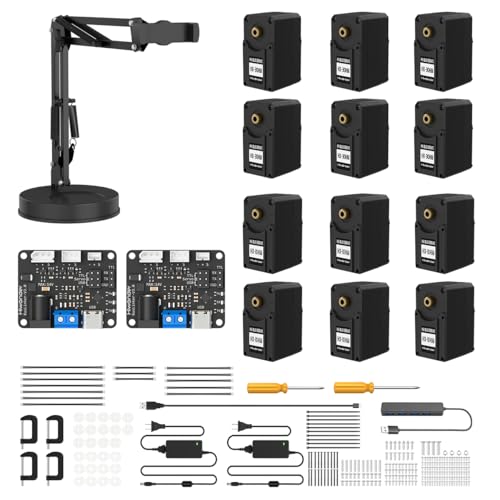
AI Robotic Arm Kit Hiwonder SO-ARM101 Compatible with LeRobot Open-Source Project Embodied Imitation Learning Robot Arm 12 High-Torque Bus Servos & Tutorials(DIY Kit, NO 3D Printed Part, Unassembled)
- Imitation Learning Platform: Compatible with open-source Lerobot framework
- Dual-Camera System: Includes gripper and external cameras for precision
- High-Torque Bus Servos: 12 magnetic feedback servos for smooth motion
As an affiliate, we earn on qualifying purchases.
As an affiliate, we earn on qualifying purchases.
Next Steps for Industry and Researchers in AI Readiness
Research efforts will continue refining world models, with a focus on improving physical reasoning, reducing the reality gap, and establishing safety standards. Concurrently, organizations are encouraged to use readiness diagnostics to evaluate their data, processes, and supervision capabilities.
Regulators and standards bodies may also begin developing guidelines for safe deployment of environment-aware AI systems, as industry momentum suggests this transition is imminent.
Expect further announcements of pilot projects, safety benchmarks, and possibly regulatory discussions in the coming months as the field moves toward practical, large-scale adoption.

Hands-On Simulation Modeling with Python: Develop simulation models for improved efficiency and precision in the decision-making process, 2nd Edition
As an affiliate, we earn on qualifying purchases.
As an affiliate, we earn on qualifying purchases.
Key Questions
What exactly is a world model in AI?
A world model is an AI system that internally represents how an environment works, enabling it to predict future states and make decisions based on those predictions, rather than just generating language or responses.
Why is organizational readiness important now?
Because deploying world models involves new data, supervision, and safety considerations, assessing readiness helps organizations identify gaps and avoid costly mistakes or unsafe deployments.
What are the main challenges in developing effective world models?
Major challenges include bridging the ‘reality gap’ between simulation and real-world environments, improving physical reasoning, managing large data and compute requirements, and establishing reliable oversight mechanisms.
How soon might organizations start using these systems at scale?
While research advances are rapid, widespread, safe deployment at scale is still likely a few years away, depending on how quickly technical limitations are addressed and standards are established.
Will this shift replace current language models?
Not immediately. World models are expected to complement existing models, gradually enabling more autonomous and environment-aware AI, but language models will still play a role for tasks suited to description and communication.
Source: ThorstenMeyerAI.com