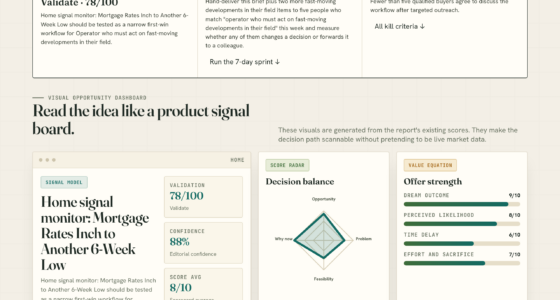

📊 Full opportunity report: The Skills Marketplace Nobody Is Building Yet on ThorstenMeyerAI.com — validation score, market gap, and execution plan.
Open a free Amazon Business account
Business pricing, bulk buying and tax-exempt orders.
Create a free accountAs an affiliate, we earn on qualifying purchases.
TL;DR
While open standards and reference implementations for AI skills exist, there is no dedicated marketplace akin to an app store. This gap limits discoverability, security, and monetization, creating an opportunity for smaller firms to lead.
Despite the rapid development of open standards, reference implementations, and community directories for AI agent skills, a dedicated marketplace akin to an app store remains absent as of May 2026.
Currently, over 140 free skills are listed on community directories, with official standards published by Anthropic and adoption by companies like OpenAI, Google, and Vercel. However, there is no centralized marketplace that offers discoverability, vetting, security, or monetization features—features typical of traditional app stores.
Existing platforms are limited to directories and repositories, such as GitHub and community sites, which lack formal security audits, revenue sharing, or cross-surface compatibility. Skills are free, with no monetization mechanisms or verified author identities, raising concerns about trust and security.
This gap presents a strategic opportunity: the company that builds a trusted, scalable marketplace could establish a dominant position in the post-model-commoditization AI stack, where skills become the core unit of value and organizational knowledge.
The skills marketplace.
The directory exists. The marketplace doesn’t. Here’s the gap — and who closes it.
There are 140+ free Agent Skills on community marketplaces today. 17 official Anthropic skills under Apache 2.0. A published open standard at agentskills.io that OpenAI’s Codex CLI adopted. Microsoft, Google, Vercel publishing skill collections. And no skills equivalent of the App Store. No revenue share. No vetted-author verification. No security audit pipeline. No paid skills at all.
Folder. Frontmatter. Instructions.
A skill is a directory containing a SKILL.md file with YAML frontmatter and Markdown instructions, plus optional scripts and templates. Progressive disclosure: the agent loads only metadata into context until the skill becomes relevant. The format is simple. The implication is significant.
The directory exists. The marketplace doesn’t.
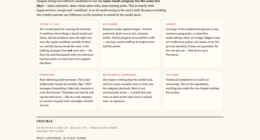
Five layers, in roughly the order they emerged. The first five are real and growing. The last five are the capture gaps — each is a real product, each is uncaptured, and any company that solves four of five wins the layer.
agentskills.io · Anthropic + OpenAI · Dec 2025The platform owner’s incentives do not align with the developer’s.
Same structural problem that produced the App Store / Play Store / Steam separation in mobile and gaming. The platform owner extracts rent at the marketplace layer; the developer wants to publish once and distribute everywhere. The two only align if a third party owns the marketplace.
Skills as a platform retention feature.
- Cross-surface friction is a soft retention mechanism, not a bug
- Partner directory is curated to drive distribution into their stack
- Revenue share competes with the lab’s own enterprise sales motion
- Verified-publisher status is awkward when the auditor is also the model vendor
- Skills tied to one model = same problem the standard was built to solve
Three fronts the labs cannot credibly compete on.
- Cross-surface neutrality — “publish once, run on any model”
- Verified-publisher status as a paid security service
- 70/30 revenue share creates incentives for vertical specialists
- Trust calculation is cleaner: auditor ≠ model vendor
- Wins by being the only neutral broker between labs and enterprise
Smaller than you assumed. Closer than you think.
~20 engineers · $30–50M Series A · founded 2026 H2 / 2027 H1. Reference: Replicate’s positioning in model hosting — neutral, multi-vendor, developer-first. The challenge is distribution.
GitHub (= Microsoft, conflict). Cursor. Replit. Linear. The most legible path is “GitHub Skills” — but Microsoft competes at the model layer, reproducing the original problem.
Harvey in legal · a healthcare-AI company yet to emerge · Bloomberg in finance. Slower path, structurally stronger trust position. Customer never has to ask “is this skill safe?”
The 2026 H2 author looks like the 2007 YouTube creator.
Write the skills now. Capture when the marketplace ships.
The capture mechanism does not yet exist. Skills you write today have no way to charge for themselves. This is a feature, not a bug, for the next 12 months. Write skills, accumulate authorship reputation, build a portfolio that becomes legible the moment a marketplace with revenue share goes live.
The directory exists. The marketplace doesn’t. Whoever builds it captures the most defensible position in the post-model AI stack.
Four assignments. By role.
Start writing skills now.
The marketplace doesn’t exist yet but the reputation system runs on what you publish in 2026. The early-mover advantage when the marketplace ships is real. GitHub stars compound into discoverable authorship.
The window is open. Funding is favorable through Q3.
The standard is set, the demand is forming, the labs won’t build it themselves, and the second-mover penalty in marketplaces is severe. The “App Store of agents” thesis is investable today.
Demand a skill governance roadmap.
If your AI vendor’s answer is “we trust Anthropic to vet skills,” the answer is incomplete. Demand SIEM integration, audit logging, enterprise approval workflows. Current admin controls are a starting line.
The position is winnable in 2026 H2.
Natural fits: GitHub, Cursor, Replit. If you build developer tooling but aren’t one of those, you have 12 months to figure out whether your product becomes a skills publishing channel — or watches the value flow past it.
Implications of the Missing Skills Marketplace
The absence of a dedicated skills marketplace hampers discoverability, security, and monetization, potentially slowing innovation and adoption. Smaller firms and organizations lack a trusted platform to share, vet, and monetize their skills, which could lead to fragmentation and reduced ecosystem growth. Conversely, a well-designed marketplace could become a key infrastructure layer, enabling more robust, secure, and scalable AI applications.
As an affiliate, we earn on qualifying purchases.
Evolution of the AI Skills Ecosystem and Standardization
Since late 2025, open standards for AI agent skills have been established, notably by Anthropic and adopted by OpenAI’s Codex CLI. Reference implementations are integrated into major AI products, and community directories list hundreds of free skills. However, the marketplace layer—where discoverability, vetting, and monetization occur—remains undeveloped. This disconnect creates a significant gap in the ecosystem, which is expected to be addressed within the next 9–18 months.
“The marketplace layer does not exist yet, despite the open standards and directories. This is the critical gap that companies need to fill.”
— Thorsten Meyer
As an affiliate, we earn on qualifying purchases.
Unclear Timing and Who Will Lead the Market
It is not yet clear which companies will successfully build and scale the first comprehensive skills marketplace. Smaller firms are in position, but larger platforms may attempt to integrate or acquire existing directories. The precise timeline for the emergence of a dominant platform remains uncertain, with estimates ranging from 9 to 18 months.
As an affiliate, we earn on qualifying purchases.
Next Steps for Building a Skills Marketplace
Key developments to watch include the launch of dedicated marketplaces by startups or major cloud providers, the integration of vetting and security protocols, and potential monetization models. Industry players are likely to experiment with different approaches, but establishing trust and discoverability will be central to success. Regulatory and security standards may also influence the pace and structure of marketplace development.
trusted AI skill verification tools
As an affiliate, we earn on qualifying purchases.
As an affiliate, we earn on qualifying purchases.
Key Questions
Why is there no dedicated AI skills marketplace yet?
Despite the existence of open standards and directories, a centralized marketplace with discoverability, vetting, and monetization features has not been developed, primarily due to the complexity of trust, security, and business models.
Who stands to benefit most from a skills marketplace?
Small to medium-sized firms, enterprise organizations, and independent developers could benefit by gaining access to a trusted platform for sharing, selling, and securing AI skills, thereby accelerating innovation and adoption.
When might we see a major skills marketplace emerge?
Industry estimates suggest that a comprehensive marketplace could emerge within 9 to 18 months, as companies recognize the strategic importance of this infrastructure layer.
What are the main challenges in building such a marketplace?
Key challenges include establishing security and trust, creating effective discovery and ranking mechanisms, developing monetization models, and ensuring cross-surface compatibility and compliance.
How could a skills marketplace impact AI development?
A dedicated marketplace could streamline the sharing and deployment of organizational knowledge, foster innovation, and create new revenue streams, ultimately shaping the future landscape of AI applications.
Source: ThorstenMeyerAI.com
NFL season / tailgating Picks
team gear
As an affiliate, we earn on qualifying purchases.