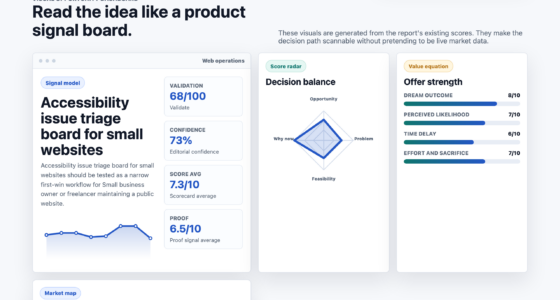

📊 Full opportunity report: The Labor Displacement Data: What Q1-Q2 2026 Actually Shows on ThorstenMeyerAI.com — validation score, market gap, and execution plan.
TL;DR
Early 2026 data shows AI-driven layoffs are significant but focused on entry-level and junior roles, with overall tech employment remaining stable. Displacement patterns suggest structural shifts rather than mass unemployment.
Labor data from the first half of 2026 confirms that AI-driven layoffs are concentrated among specific entry-level and junior cohorts, with overall employment figures remaining stable. This development provides the first empirical evidence supporting claims of structural AI-related displacement, contrasting with earlier predictions of mass unemployment.
In Q1 2026, tech layoffs reached approximately 52,050 according to Challenger Gray & Christmas, the highest since 2023, with estimates from Tom’s Hardware suggesting about 80,000 layoffs across the broader tech industry. Roughly half of these layoffs are attributed to AI restructuring, exemplified by Oracle’s 30,000 cuts and Amazon’s 16,000 layoffs, both tied to AI initiatives. Meta also conducted scaled AI-influenced layoffs in March 2026.
Research from Stanford economist Erik Brynjolfsson shows employment among developers aged 22 to 25 has fallen around 20 percent since late 2022. Software development job postings tracked by Indeed are down 53 percent from the same period, indicating a sustained decline in demand for entry-level and junior roles. Conversely, LinkedIn data reveals AI-related job postings surged 340 percent since 2024, while traditional software engineering postings declined 15 percent, suggesting a shifting role landscape.
Goldman Sachs estimates AI is reducing U.S. employment by approximately 16,000 jobs monthly, a material but not catastrophic impact at the macroeconomic level. The MIT November 2025 study estimates that about 11.7 percent of jobs could already be automated using AI, with the most affected being entry-level, content operations, and customer support roles. Meanwhile, demand for senior AI-adjacent specialists remains strong, with some companies expanding roles in these areas.
Despite these signs of displacement, overall tech employment and long-term headcount growth remain near historical averages, indicating the effects are concentrated rather than widespread. Companies are rebalancing functions—cutting specific roles while hiring for new AI-focused positions, as exemplified by Atlassian’s net reduction of 800 roles through a combination of layoffs and new hires.
Aggregate.
Masks cohort.
Overall unemployment 4.4%. Developers 22-25 employment down 20%. Both numbers are real. Both miss the truth.
Q1 2026 tech layoffs ~52K (Challenger) / ~80K (Tom’s Hardware) · ~50% AI-attributed. Brynjolfsson Stanford: developers 22-25 employment -20% from late-2022 peak. Indeed software dev postings -53%. LinkedIn AI postings +340%. Goldman Sachs: AI reducing US employment ~16K jobs/month. Recent grad unemployment ~6% — rising 2× faster than aggregate since 2022.
Twelve metrics. One pattern.
Aggregate metrics suggest manageable disruption. Cohort metrics show acute structural change. Both are reading real signals; the divergence between them is the analytical core.
Eight cohorts. Two trajectories.
The labor displacement is concentrated rather than mass. New role creation in growing categories partially offsets role elimination in declining categories — but the skill requirements differ fundamentally.
- Junior software developers (22-25)AI coding tools handle work previously assigned to junior engineers. Senior engineers 2-3× more productive.-20% employment from late-2022 peak
- Customer support · content operationsSalesforce 4K cuts as AI handles 50% of queries. Atlassian targeted these functions specifically.-25-40% in deployed AI environments
- Mid-level analysts (finance / consulting)Wall Street ~200K jobs over 3-5 years industry estimate. Analytical pyramid compresses.-15-25% projected through 2027
- Routine physical work · roboticsAmazon Optimus, Foxconn, Walmart sortation pilots. Different timeline, structurally similar.-5-15% in piloted facilities
- Senior cloud / security engineersKORE1 places senior engineers in median 17 days. Complexity ceiling much higher than entry-level.+25-40% compensation premium
- AI engineers · MLOps · AI safetyTrueUp 67K+ openings, +30% in 2026. Prompt engineers, AI architects, ML ops growing 35-110%.+340% LinkedIn AI postings since 2024
- Vertical AI specialistsHealthcare AI, legal AI, finance AI. Domain expertise + AI fluency. Structural integration durable.+25-50% growth in vertical roles
- Trade · physical-presence workElectricians, plumbers, HVAC, healthcare aides. Currently insulated. 5-10y horizon humanoid risk.Stable through 2026-2028
Three scenarios. Three trajectories.
30/50/20 probability allocation. Base case represents trend-extrapolation outcome — bifurcated outcome with manageable aggregate metrics masking severe cohort impact.
- 12-24mo absorptionNew roles absorb displaced workers.
- Reskilling at scaleMicrosoft / Coursera / govt invest.
- Aggregate ~4.5-5%Manageable adjustment.
- Cohort impact moderatesThrough 2028-2029.
- Outcome: Politically manageable. Standard frameworks absorb transition.
- ~50% absorbedOther 50% extended unemployment.
- Recent grad 7-9%Through 2027-2028.
- Aggregate 5-6%Income inequality widens.
- Political response 2027-28UBI, retraining, protections.
- Outcome: Structural adjustment over 5-7 years.
- Agentic acceleratesCapabilities advance 2026-28.
- Aggregate 7-9%Recent grad 10-15%.
- Cohort 50-70% cutsCustomer support, content ops, jr knowledge.
- Strong policy responseLicensing, UBI, worker-share-of-AI.
- Outcome: Multi-year economic adjustment. Slower aggregate growth.
AI labor displacement is real but uneven. Specific cohorts experience severe disruption while aggregate metrics remain near long-run averages. The structural concern is generational — the entry-level compression compromises the talent pipeline that produces senior workers 5-10 years from now.
Four assignments. By role.
Vertical AI integration is most defensible.
Combine domain expertise with AI fluency. Senior cloud / security / data engineering paths offer durable demand. Trade and physical-presence work currently insulated (5-10y horizon). Apply for unemployment benefits regardless of perceived eligibility — 75% non-application rate is leaving money on the table. Geographic flexibility expands options.
The Atlassian template is the durable model.
-1,600 / +800 net -800 with workforce composition reshape. Reframe layoffs as workforce composition rebalancing rather than pure cost cutting. Retain talent with transferable skills wherever possible — institutional knowledge cost is real even if AI handles current functions. Reputational risk of mass layoffs increases as political backlash builds.
Differentiate sectoral exposure.
AI productivity translation is real, validating the hyperscaler capex demand-pull thesis. Vertical AI specialists strong demand. Customer support BPO sector compressing. AI-engineering staffing firms positioned favorably. Labor displacement creates political risk that compresses frontier-lab valuations in adverse scenarios — incorporate into forward-risk models.
Aggregate metrics underestimate cohort severity.
Policy frameworks designed around aggregate unemployment miss entry-level compression and recent graduate patterns. Focus reskilling on cohort-specific transitions rather than generic workforce development. Modernize unemployment insurance — 75% non-application rate is structural failure. UBI experimentation increasingly relevant. AI-productivity-share question becomes politically central through 2027-2028.
Implications of Cohort-Specific Labor Displacement
The data indicates that AI-driven layoffs are primarily affecting entry-level, junior, and content operations roles, leading to significant but localized workforce shifts. While overall employment remains stable, these cohort-specific declines suggest a structural transformation in the labor market, with implications for workers, employers, and policymakers. The pattern of targeted cuts and new role creation underscores the importance of reskilling and strategic workforce planning to navigate this transition.
entry-level laptop for AI learning
As an affiliate, we earn on qualifying purchases.
As an affiliate, we earn on qualifying purchases.
2026 Labor Market Trends and AI Impact Evidence
Since 2022, the AI labor displacement debate has been driven by predictions of mass unemployment, but empirical data from early 2026 shows a more nuanced picture. Tech giants like Meta, Amazon, and Oracle have undertaken significant layoffs, citing AI restructuring. Research from institutions like Stanford and analyses from Goldman Sachs suggest a material but concentrated impact on specific cohorts, with overall employment figures remaining resilient. The pattern of layoffs—such as Atlassian’s mixed cuts and hires—indicates a strategic reallocation rather than a broad collapse.
Previous forecasts have often relied on speculative models; however, recent data from sources including BLS, Indeed, LinkedIn, and academic studies provide concrete evidence of the current state of AI-related labor displacement, emphasizing the importance of distinguishing between aggregate stability and cohort-specific shifts.
“The first half of 2026 confirms that AI-driven layoffs are concentrated among specific job cohorts, with overall employment remaining stable, indicating a structural shift rather than mass displacement.”
— Thorsten Meyer, May 2026
professional noise-canceling headphones
As an affiliate, we earn on qualifying purchases.
As an affiliate, we earn on qualifying purchases.
Unresolved Questions on AI’s Long-Term Workforce Impact
While current data shows targeted displacement, it remains unclear whether these trends will accelerate or stabilize through 2027-2030. The extent of future automation, the pace of role redefinition, and the effectiveness of reskilling efforts are still developing topics. Additionally, the long-term macroeconomic effects of these cohort-specific shifts are not yet fully understood, and the potential for secondary impacts remains uncertain.
ergonomic office chair for developers
As an affiliate, we earn on qualifying purchases.
As an affiliate, we earn on qualifying purchases.
Monitoring Workforce Changes and Policy Responses
Further data collection and analysis are expected through the second half of 2026 and into 2027, focusing on employment trends across different sectors and cohorts. Employers are likely to continue adjusting their workforce strategies, balancing layoffs with new AI-related role creation. Policymakers may consider initiatives to support displaced workers, emphasizing reskilling and social safety nets. Academic and industry research will also continue to refine understanding of AI’s long-term labor market effects.
As an affiliate, we earn on qualifying purchases.
Key Questions
Are AI-driven layoffs likely to cause mass unemployment?
Current data suggests that layoffs are concentrated among specific cohorts, and overall employment remains stable, indicating that mass unemployment is unlikely in the near term.
Which job roles are most affected by AI displacement in 2026?
Entry-level, junior, content operations, and customer support roles are most affected, while senior and specialized AI-adjacent roles are less impacted or expanding.
Is the impact of AI on employment temporary or permanent?
Evidence indicates a structural shift affecting certain cohorts, suggesting some displacement may be long-term, but the overall labor market remains adaptable.
What should workers do to prepare for these changes?
Reskilling in AI-related skills, especially for entry-level and support roles, can help workers adapt to evolving job requirements and mitigate displacement risks.
How are companies responding to AI-related workforce shifts?
Many firms are balancing layoffs with hiring for new AI-centric roles, often through strategic reallocation of functions, as seen in recent examples like Atlassian.
Source: ThorstenMeyerAI.com