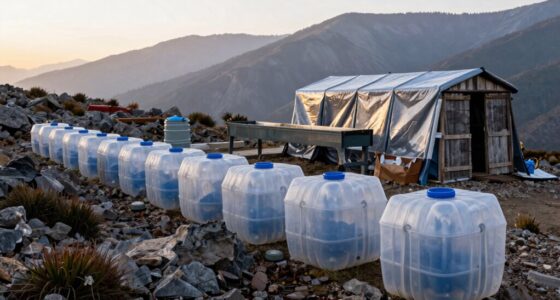

Many people skip creating a thorough emergency water plan that includes not just storing enough water but also testing and maintaining it regularly. They often overlook alternative purification methods or fail to plan for multiple water sources. This forgetfulness can put you at risk during a crisis when safe drinking water is scarce. To stay prepared, it’s crucial to develop a detailed plan and stay proactive—keep exploring to learn how to secure your water supply effectively.

Prime made for students and young adults
- Fast, free delivery for dorm and study essentials
- Prime Video and Amazon Music included
- Member-only deals
Key Takeaways
- Many neglect to regularly test and rotate stored water to ensure safety and freshness.
- People often overlook alternative water sources like rainwater harvesting or graywater reuse.
- Proper water purification methods, such as filtration and chemical treatment, are frequently ignored or underutilized.
- Emergency water plans rarely include detailed storage strategies, like container types and placement.
- Most fail to prepare a comprehensive plan that combines conservation, purification, and multiple supply options.
emergency water storage containers
As an affiliate, we earn on qualifying purchases.
As an affiliate, we earn on qualifying purchases.
Why You Need a Solid Emergency Water Plan

Having a solid emergency water plan is essential because you never know when a disaster or disruption could cut off your access to clean water. Preparing with water filtration methods ensures you can make unsafe water safe to drink, reducing health risks. By implementing water conservation techniques now, you stretch your existing supplies and prolong your accessible water supply during emergencies. This helps you avoid panic and ensures you have enough water for essential needs. A well-thought-out plan also includes knowing where your stored water is and how to filter or purify additional sources if needed. Understanding auditory processing can also improve communication during stressful situations, ensuring you can effectively follow your emergency plan. Without these steps, you risk dehydration or illness. Planning ahead gives you peace of mind and keeps you prepared for unexpected situations.
water purification tablets for emergency
As an affiliate, we earn on qualifying purchases.
As an affiliate, we earn on qualifying purchases.
Common Mistakes in Water Emergency Preparedness
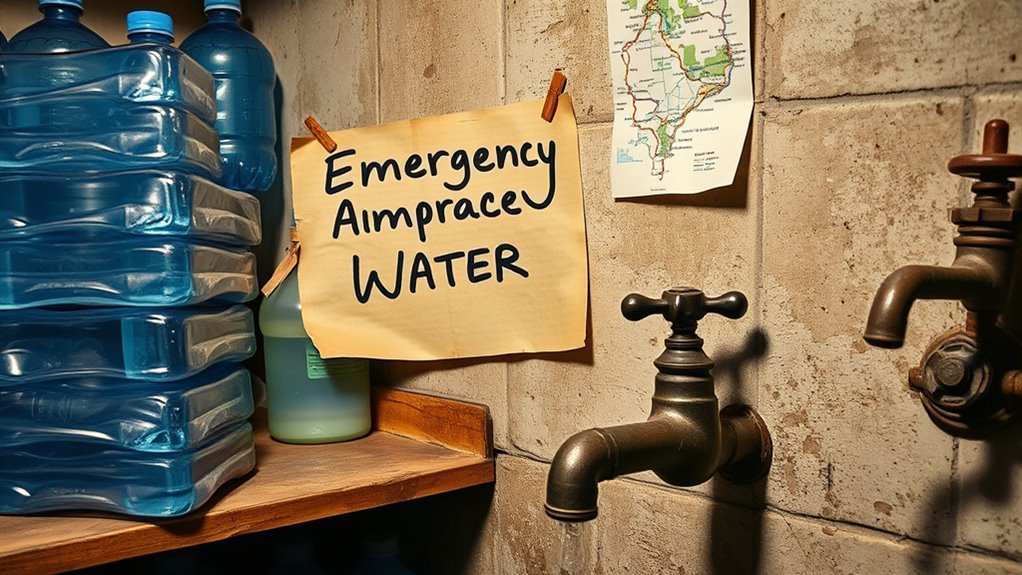
One of the most common mistakes in water emergency preparedness is underestimating how much water you’ll need during a crisis. Many people forget that daily water use can skyrocket during emergencies, especially if you’re trying to maintain urban gardening or practicing water conservation. Overlooking these activities can lead to running out of essential supplies faster than expected. Additionally, some fail to plan for alternative water sources or neglect to store enough clean water upfront. Relying solely on tap water without proper storage or filtration can be risky. To avoid these mistakes, it’s vital to evaluate your water needs carefully, considering your gardening habits and conservation efforts. Understanding your water consumption patterns is crucial for effective planning. Proper planning ensures you won’t be caught unprepared when every drop counts.
As an affiliate, we earn on qualifying purchases.
How Much Water Should You Stockpile?

To establish how much water you need, consider your daily water needs and how many days you want to be prepared for. Keep enough stored for emergency situations and aim for a long-term supply that can sustain you if access to clean water is limited. Planning carefully now ensures you’re ready for any situation that arises. Incorporate best water storage practices to ensure your supplies remain safe and effective over time.
Daily Water Needs
How much water should you stockpile for daily needs during an emergency? Many hydration myths suggest you can survive on less water, but sticking to recommended amounts is safer. Adults typically need about one gallon of water daily for drinking, cooking, and hygiene. This amount may vary based on climate, health, and activity level. To avoid unnecessary waste, practice water conservation by using water-efficient appliances and mindful habits. Remember, underestimating your needs can lead to dehydration, especially if sanitation becomes limited. Stockpiling enough water to meet these daily requirements guarantees you stay healthy and hydrated during a crisis. Proper storage techniques and understanding water quality standards can help ensure your water remains safe to use. Adjust your storage plans accordingly, considering the number of people in your household and potential additional needs, so you’re prepared for the duration of an emergency.
Emergency Storage Quantities
Determining the right amount of water to stockpile is essential for ensuring your safety during an emergency. A good rule of thumb is to store at least one gallon per person per day, covering drinking, cooking, and hygiene needs. Consider how long you might need to be self-sufficient and aim for a minimum of three days, but preferably two weeks or more. Remember, emergency filtration tools can extend your water supply by making questionable sources safe to drink, so include a portable filter in your kit. Practice water conservation to make your stored supply last longer, avoiding unnecessary waste. Regularly check your stockpile and rotate supplies to keep water fresh. Proper planning guarantees you’re prepared to stay hydrated and healthy during a crisis. Incorporating Free Floating water sources into your planning can provide additional resilience in unpredictable situations.
Long-term Supply Goals
After establishing your initial storage needs for a few days, it’s important to plan for longer-term scenarios. To guarantee long-term sustainability, you should aim to stockpile enough water for several weeks or months, depending on your household size and climate. Consider implementing water conservation strategies to extend your supply. Visualize your storage:
| Storage Type | Quantity Needed | Purpose |
|---|---|---|
| Bottled Water | 1 gallon per person/day | Drinking and cooking |
| Stored Tap Water | 14-30 gallons per person | Extended use and cleaning |
| Alternative Sources | Rainwater, wells | Backup supply |
This approach balances immediate needs with sustainable consumption, helping you prepare for prolonged disruptions without waste. Understanding water purification methods can further ensure your stored water remains safe over time.
water filtration system for survival
As an affiliate, we earn on qualifying purchases.
As an affiliate, we earn on qualifying purchases.
Tips for Storing and Preserving Water at Home
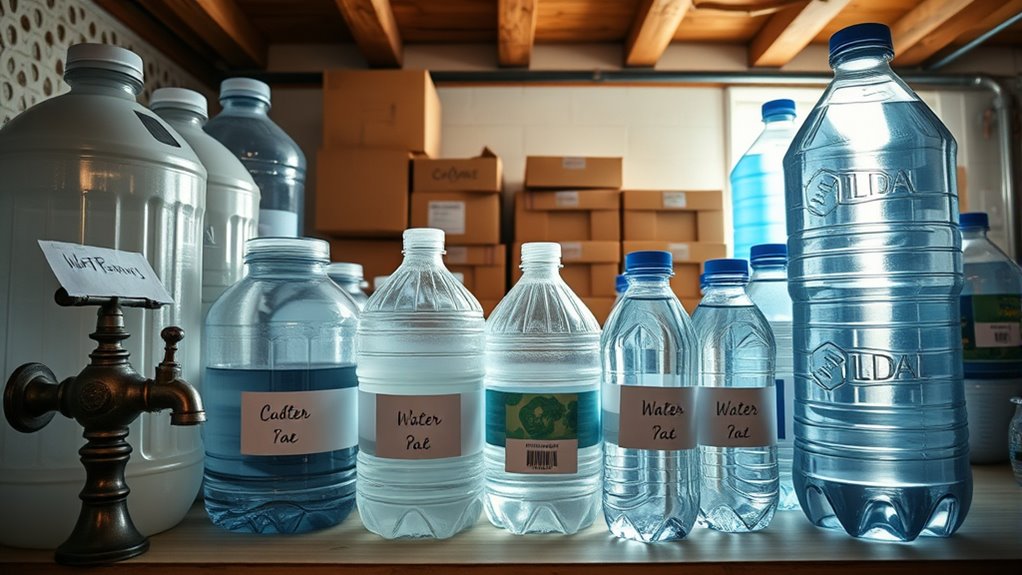
Wondering how to keep your water safe and fresh during an emergency? Start by storing bottled water in a cool, dark place to prevent spoilage. Use food-grade containers if you’re repurposing bottles, and always clean them thoroughly beforehand. To conserve water, avoid unnecessary usage, and consider filling extra containers now for backup. Rotate your supplies every six months to ensure freshness. Label containers with the date of storage, so you know when to replace them. Keep a variety of sizes on hand to suit different needs. Sealing water tightly prevents contamination, and keeping it away from direct sunlight extends its shelf life. Proper storage practices help preserve your water’s quality, making sure you’re prepared when it matters most. Sizing and load‑planning tools from reliable standby generator guides can also help you determine appropriate storage capacity to meet your household needs.
How to Purify Water in a Crisis
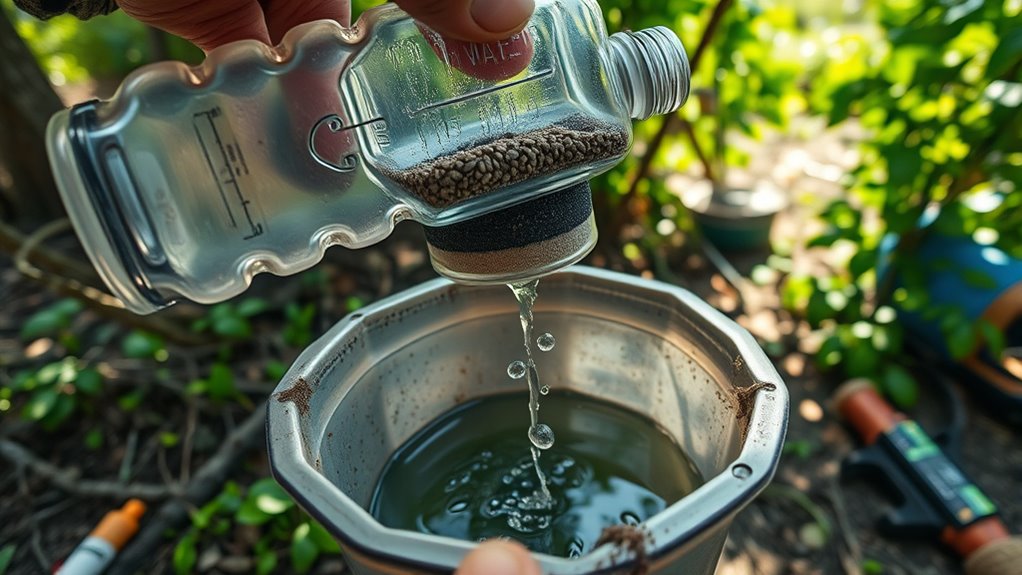
When stored properly, water can last a long time, but in a crisis, you might need to purify questionable sources quickly. Water filtration is an effective way to remove debris, bacteria, and parasites. Use a portable water filter or improvised methods like boiling water for at least one minute to kill pathogens. Chemical purification is another reliable option; adding unscented household bleach (about 8 drops per gallon) and waiting 30 minutes can make water safe to drink. Confirm you follow proper guidelines for chemical purification to avoid health risks. Combining water filtration with chemical treatment offers added safety, especially when water sources are uncertain. Always have backup purification methods ready to ensure your water is safe and clean during emergencies. Understanding ventilation considerations can help prevent health issues related to contaminated or poorly purified water sources.
What to Include in Your Water Emergency Kit
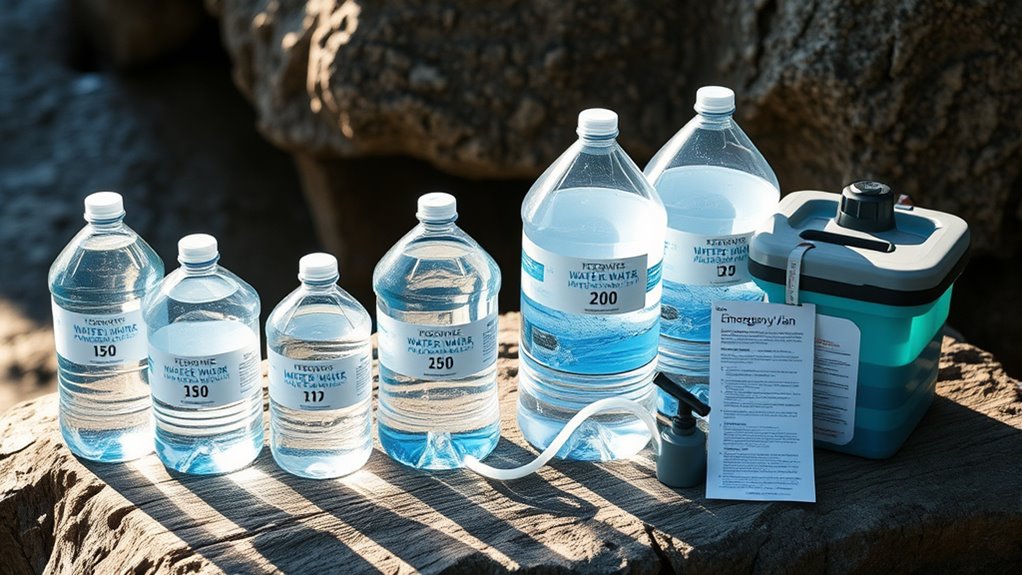
Preparing a thorough water emergency kit guarantees you can access safe drinking water during a crisis. Your kit should include essentials like bottled water, water purification tablets, and a portable filter. Consider water conservation practices to maximize limited supplies. Incorporate versatile filtration methods such as pump filters, gravity filters, and chemical treatments to ensure safe drinking water from various sources. Use the table below to quickly identify what to pack:
| Item | Purpose | Notes |
|---|---|---|
| Bottled water | Immediate hydration | Store enough for several days |
| Water purification tablets | Long-term safety | Easy to use, lightweight |
| Portable filtration device | Reuse and filtration | Choose based on need |
In addition, understanding the importance of European cloud innovation can inspire more sustainable and secure resource management during emergencies.
How to Collect and Reuse Water During Disasters

During a disaster, knowing how to collect rainwater safely can provide a essential water source. You’ll also need to purify the water effectively to make it safe for use, and reusing household water can stretch your supplies further. To ensure the water remains safe, understanding air quality considerations can help you choose the right purification methods and storage options. Let’s explore practical steps to help you do all these things confidently.
Collect Rainwater Safely
Ever thought about how rainwater can become a vital resource in emergencies? Rainwater harvesting is an effective way to gather water while practicing water conservation. To collect rainwater safely, start by choosing clean, food-grade containers and positioning them under gutters or roof catchments. Cover your containers to prevent debris and insects from contaminating the water. Use a first-flush diverter system to discard initial runoff that may carry dirt or contaminants. Regularly inspect and clean your collection setup to avoid algae and mosquito breeding. Remember, collecting rainwater is an easy way to supplement your emergency supply, but always be cautious and guarantee your storage methods are safe. Proper rainwater harvesting helps stretch your water resources when disaster strikes.
Purify Water Effectively
When disaster strikes and clean water becomes scarce, knowing how to effectively purify and reuse water can be lifesaving. Start with water filtration to remove dirt, debris, and larger particles—using a portable filter, cloth, or even a coffee filter. Once filtered, chemical purifiers like iodine tablets or chlorine drops can eliminate bacteria and viruses that filtration alone might miss. Follow the instructions carefully for dosage and contact time to ensure safety. Boiling water is another reliable method, but chemical purifiers provide a quick alternative when boiling isn’t practical. Always prioritize purification before drinking, even if the water looks clear. Properly purifying water ensures it’s safe, helping you stay healthy and hydrated during emergencies.
Reuse Household Water
In a disaster situation where fresh water is limited, you can extend your supply by collecting and reusing household water. Reusing household graywater—water from sinks, showers, and laundry—helps conserve water and reduces waste. To effectively reuse water, set up simple collection systems to capture graywater safely. Be mindful of contaminants to avoid health risks. You can also reuse water for flushing toilets or outdoor watering, but avoid using graywater on edible plants. Proper water conservation techniques ensure you maximize your limited supply. Remember, reusing household water isn’t just about saving water; it’s about making the most of what you have during emergencies. Stay prepared by understanding how to reuse household graywater responsibly and efficiently.
- Install graywater diversion systems for safe reuse
- Use biodegradable soaps to prevent contamination
- Store collected water in clean, covered containers
- Reuse water promptly to prevent bacterial growth
How to Maintain and Test Your Water Supplies
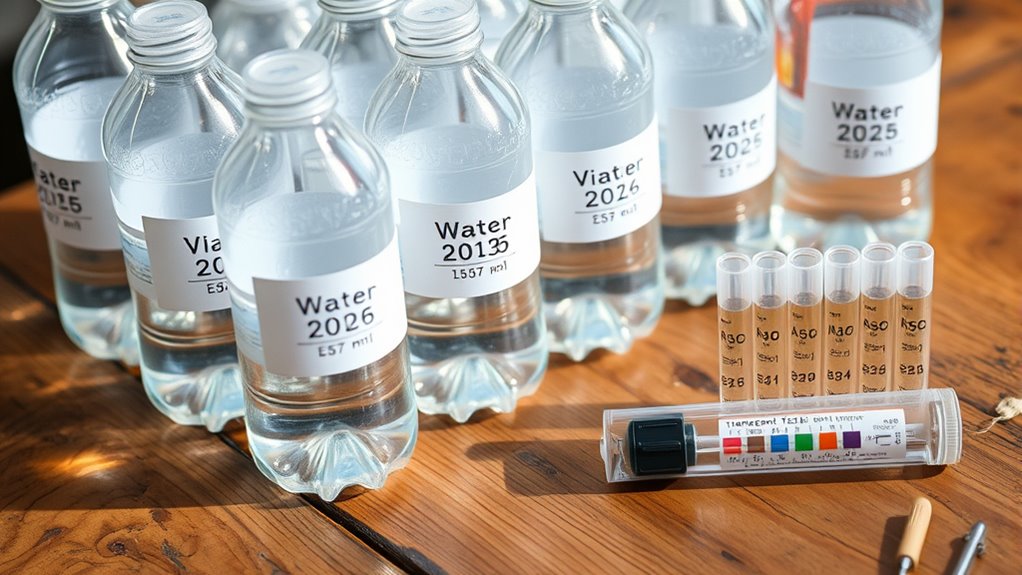
Regularly maintaining and testing your water supplies guarantees their safety and reliability during an emergency. Start by performing water testing to check for contaminants like bacteria, nitrates, and chemicals. Use reliable water testing kits or send samples to a lab for accurate results. Regular water maintenance involves cleaning storage containers, replacing old or damaged bottles, and ensuring lids are secure to prevent contamination. Keep your water storage area clean and dry, and rotate your supplies every six months to prevent stagnation. By consistently testing and maintaining your water, you catch potential issues early, ensuring your supply remains safe to drink when you need it most. Proper upkeep reduces health risks and guarantees peace of mind during any emergency situation.
Simple Ways to Stay Hydrated When Disaster Strikes
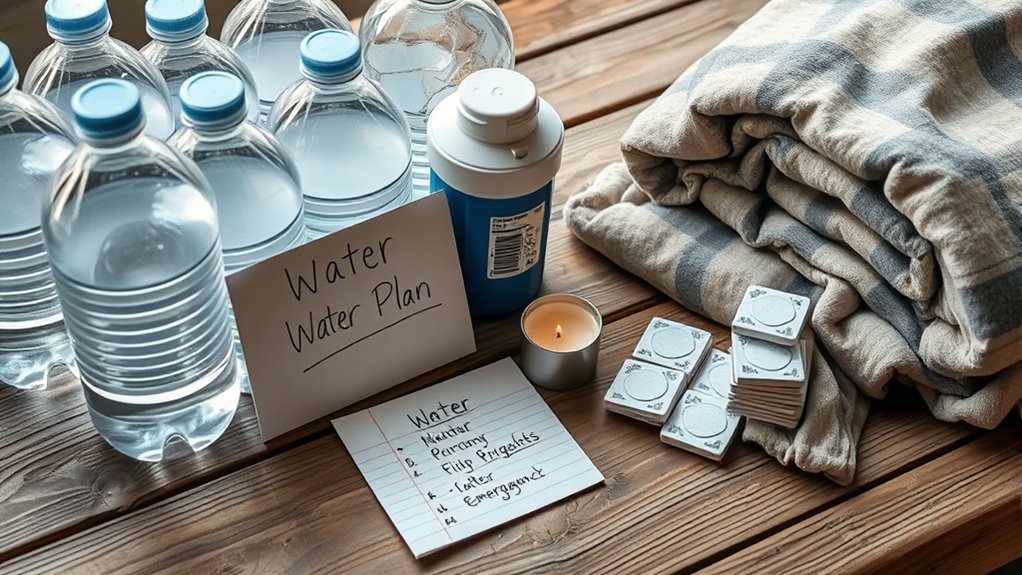
Staying hydrated during a disaster is essential for maintaining your health and energy. When supplies are limited, follow these simple hydration tips to stay refreshed and alert. First, prioritize water conservation by using small sips instead of large gulps to stretch your supply. Second, collect rainwater or use condensation to supplement your water source. Third, avoid dehydrating beverages like caffeine or alcohol, which can dehydrate you further. Finally, keep a reusable water bottle handy and refill it whenever possible. These strategies help you conserve water while ensuring you stay hydrated. Remember, consistent hydration boosts your immunity and keeps your mind clear during stressful situations. Proper hydration is a vital part of your emergency water plan, so make it a priority when disaster strikes.
Frequently Asked Questions
How Often Should I Review and Update My Water Emergency Plan?
You should review and update your water emergency plan annually to make certain it’s current and effective. Regularly conducting emergency drills helps you identify gaps and improve your response. During these reviews, check your water supply, storage, and safety procedures. By staying proactive and consistent, you’ll be better prepared when an emergency strikes, minimizing risks and ensuring you have access to clean water when you need it most.
Are There Specific Containers Recommended for Long-Term Water Storage?
Water container options matter when storing water long-term. You should choose food-grade, BPA-free containers like sturdy plastic bottles, jerry cans, or glass carboys. Always clean containers thoroughly and regularly check for cracks or leaks to guarantee container maintenance. Avoid containers that previously held chemicals or non-food substances. Properly sealed, these containers keep water fresh, safe, and ready for use, making your emergency water plan more reliable and resilient.
Can Household Water Filters Effectively Remove All Contaminants During a Crisis?
Household water filters can effectively remove many contaminants, but their efficacy varies. High-quality filters target bacteria, protozoa, and chemicals, improving contaminant removal. However, no filter eliminates all pollutants, especially in a crisis where water sources may be heavily contaminated. To guarantee safety, choose filters certified for broad contaminant removal, and consider additional purification methods like boiling or chemical disinfection for extensive protection during an emergency.
What Are Signs That Stored Water Has Become Unsafe to Drink?
If your stored water develops a cloudy appearance, foul smell, or strange taste, it’s a sign it may be unsafe to drink. Don’t rely solely on visual cues—perform water testing or contaminant detection to be certain. Bacteria, algae, or chemical changes can make water unsafe even if it looks okay. Always test your stored water regularly, especially after long storage or if conditions change, to guarantee safety before drinking.
How Can I Educate My Family About Water Emergency Preparedness?
You can educate your family about water emergency preparedness by emphasizing water safety and clear family communication. Explain the importance of storing enough clean water, recognizing signs of unsafe water, and practicing emergency drills together. Encourage open discussions about water safety, answer their questions, and involve everyone in creating a plan. This way, your family stays informed, confident, and ready to act quickly during any water emergency.
Conclusion
Without a solid water plan, you risk running out of clean water faster than you can blink—leaving you stranded in a dry, desperate desert of chaos. By prepping now, you’ll have enough water to survive everything from minor mishaps to apocalyptic disasters. Don’t wait until it’s too late—build your emergency water supply today and turn what could be a catastrophe into a manageable challenge. Stay prepared, stay hydrated, and keep disaster at bay!
Halloween Picks
halloween
As an affiliate, we earn on qualifying purchases.