

Audio fatigue happens when you use headphones for too long, causing your ears and brain to become overwhelmed. Loud volumes, poor fit, and isolating sounds make listening more tiring and strain your mental and physical health. Your energy dips because sound affects your mood and alertness, especially with prolonged exposure. To avoid these effects, it’s important to take breaks and manage volume. Keep going, and you’ll discover simple ways to protect yourself from headphone drain.

Prime made for students and young adults
- Fast, free delivery for dorm and study essentials
- Prime Video and Amazon Music included
- Member-only deals
Key Takeaways
- Prolonged headphone use can cause physical discomfort and mental exhaustion, leading to feelings of fatigue.
- High volume levels and noise isolation increase auditory strain, draining energy and causing mental drain.
- Poor ergonomics and extended listening sessions contribute to physical discomfort and overall fatigue.
- Continuous sound exposure affects brain activity, reducing alertness and causing irritability or mood changes.
- Taking regular breaks and managing volume can prevent audio fatigue and preserve mental and physical well-being.
What Is Audio Fatigue and How Common Is It?
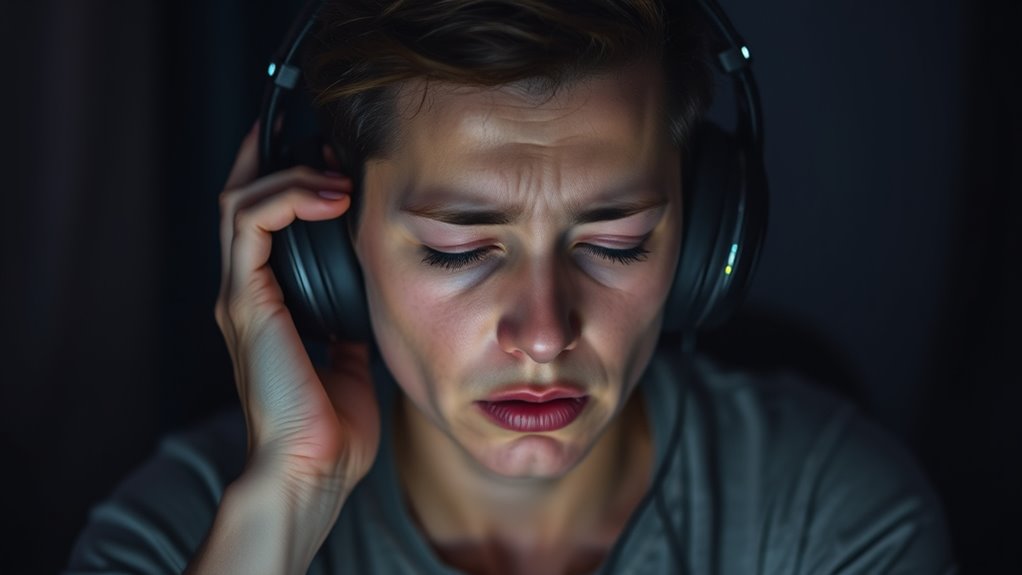
Have you ever felt mentally drained or irritable after spending hours in noisy environments or listening to loud audio? That’s a sign of audio fatigue, a common issue caused by prolonged exposure to sound. It affects your listening comfort, making sounds seem harsher and more tiring. Poor headphone ergonomics can worsen this feeling by causing discomfort or pressure on your ears and head, which adds to fatigue. Many people experience this without realizing it, especially if they use headphones for long periods or in noisy settings. Audio fatigue isn’t rare — it’s a sign your ears and brain need a break. Recognizing its symptoms helps you adjust your listening habits, improve comfort, and prevent longer-term hearing issues. Additionally, high-quality projectors can be used to create a relaxing environment that minimizes auditory stress by reducing the need for loud volume levels, thereby helping to alleviate fatigue.
How Sound Affects Your Brain and Energy Levels

Sound directly influences your brain’s activity and energy levels, often in ways you might not notice. When you perceive certain sounds, your brain stimulation shifts, affecting alertness and fatigue. For example, loud or complex sounds can increase mental engagement, boosting your energy temporarily. Conversely, repetitive or monotonous noises may lead to fatigue, draining your focus and stamina. Your sound perception triggers neural responses that regulate your mood and alertness, impacting how energized you feel. Overexposure to loud or constant noise can overwhelm your brain, causing stress and reducing your overall energy. Understanding how sound affects your brain helps you manage your listening environment better, so you can avoid unnecessary fatigue and maintain ideal mental clarity. Additionally, acoustic properties such as volume and frequency influence how your brain processes sound, further affecting your energy levels.
What Makes Headphones Drain Your Energy?

Wearing headphones for extended periods can drain your energy because they often create intense or isolating sound environments that overload your brain. Poor listening environments, like noisy or echo-filled spaces, make your brain work harder to process sound, leading to fatigue. Additionally, headphone ergonomics play a role; uncomfortable or poorly fitted headphones cause physical strain, which adds to mental exhaustion. Furthermore, prolonged use can lead to hearing fatigue, where your auditory system becomes temporarily overwhelmed and less responsive. Here are four factors that contribute: 1. Excessive volume levels heighten auditory strain. 2. Lack of ambient sound awareness forces your brain to focus intensely. 3. Discomfort from bad ergonomics increases physical fatigue. 4. Isolating sound environments reduce social cues, making listening more effortful. All these elements combine to drain your energy, leaving you mentally drained after headphone use.
How Prolonged Headphone Use Impacts Your Body and Mind

Prolonged headphone use can considerably affect both your body and mind, leading to fatigue and potential health issues. When you listen for extended periods, your muscles may tense up, and poor headphone ergonomics can cause discomfort or even pain around your ears and neck. This strain can contribute to headaches or dizziness, impacting your focus and overall well-being. Additionally, excessive listening can disrupt your mental state, making you feel drained or irritable. Notably, music therapy highlights how sound affects mood and cognition, but overdoing it can backfire. Being mindful of headphone ergonomics and taking regular breaks helps prevent these adverse effects, ensuring your listening experience remains beneficial rather than draining. Understanding style and fit can also improve comfort and reduce fatigue during prolonged use.
Easy Ways to Prevent Audio Fatigue

To prevent audio fatigue, start by taking regular breaks to give your ears a rest. You should also lower the volume and consider using noise-canceling headphones to reduce strain. Making these simple adjustments can keep your listening experience comfortable and safe. Additionally, choosing high-quality air purifiers can improve your overall environment, helping your ears and body recover from prolonged exposure to loud sounds.
Take Regular Breaks
Taking regular breaks is one of the simplest and most effective ways to prevent audio fatigue. Constant headphone use can strain your ear health and impact your listening habits. To keep your ears fresh, try these strategies:
- Remove your headphones every 30 to 60 minutes to give your ears a rest.
- Use breaks to stretch and relax your ears, avoiding prolonged sound exposure.
- Incorporate short, 5-minute pauses during long listening sessions.
- Be mindful of your overall listening time each day, limiting continuous use.
- Recognize the importance of ear health by maintaining healthy listening routines to prevent fatigue and long-term damage.
These habits help protect your ear health and prevent fatigue. Regular breaks also give your mind a chance to reset, so you stay alert and comfortable. Prioritizing breaks supports healthier listening habits and preserves your hearing over time.
Adjust Volume Levels
Have you ever noticed how cranking up the volume can quickly lead to ear fatigue? To prevent this, focus on proper volume calibration. Start by setting your device’s volume to a moderate level, avoiding the maximum. Adjust the sound balance so that audio is clear without needing to turn it up excessively. Pay attention to how your ears feel during use; if you notice discomfort or ringing, lower the volume immediately. Consistently calibrating your headphones helps protect your hearing and reduces fatigue. Remember, louder isn’t always better—finding a comfortable, balanced sound level is key. By keeping volume levels appropriate, you can enjoy your audio longer without draining your ears or risking damage. Incorporating energy-efficient hardware can also help reduce audio processing strain, contributing to a more comfortable listening experience over time.
Use Noise-Canceling Headphones
Using noise-canceling headphones can markedly reduce audio fatigue by blocking out background noise, so you don’t need to turn up the volume as high. They create effective sound masking, making ambient noise less distracting and reducing the strain on your ears. To maximize their benefits:
- Choose high-quality noise-canceling headphones for better sound masking.
- Use them in noisy environments to block out ambient noise.
- Limit your usage time to prevent overexposure and fatigue.
- Combine with volume adjustments to maintain a comfortable listening level.
Additionally, proper ventilation considerations can help maintain a comfortable listening environment and prevent fatigue from prolonged use.
When Should You Seek Help for Headphone Fatigue?

Recognizing when headphone fatigue signals a need for help is essential to prevent it from worsening or causing lasting issues. If you experience persistent headaches, dizziness, or overwhelming fatigue despite taking breaks, it’s time to seek professional help. These symptoms can affect your mental health and overall well-being, indicating that your body isn’t coping well with prolonged headphone use. Don’t ignore ongoing discomfort or mood changes linked to audio fatigue. Consulting a healthcare provider or mental health professional can help identify underlying issues and recommend strategies to manage or reduce symptoms. Addressing headphone fatigue early ensures you protect your mental health and avoid more serious health concerns down the line. If symptoms persist, seeking help is a responsible step toward your well-being. Additionally, understanding audio-related stressors and how they impact your mental state can be beneficial.
Frequently Asked Questions
Can Certain Headphone Types Cause More Fatigue Than Others?
Yes, certain headphone types can cause more fatigue than others. Over-ear headphones with heavy weight put extra pressure on your ear canal, leading to discomfort over time. In-ear models may cause fatigue if they fit tightly, irritating your ear canal. Lightweight headphones reduce strain, but poorly designed ear tips or heavy ear cups increase fatigue. You should choose headphones that balance weight and fit to minimize ear canal pressure and lessen fatigue.
Does Music Genre Influence Audio Fatigue Levels?
Ever notice how certain music genres seem to wear you out faster? Your music preferences and sound quality can definitely influence audio fatigue. Upbeat, bass-heavy genres like EDM or hip-hop often demand more from your ears, making fatigue hit sooner. Conversely, softer genres like acoustic or classical offer gentler sound, helping you enjoy longer listening sessions without feeling drained. So, yes, your choice of music can impact how quickly headphones drain your energy.
Are There Specific Symptoms That Indicate Severe Headphone Fatigue?
If you experience severe headphone fatigue, you might notice symptoms like persistent ear pressure, headaches, dizziness, or ringing in your ears. Pay attention to your listening posture; poor alignment can worsen discomfort. If these symptoms persist or intensify, it’s a sign you should take a break, adjust your headphones, or lower the volume. Ignoring these signs can lead to more serious issues, so listen to your body.
How Does Ambient Noise Affect Headphone-Related Tiredness?
Ever notice how ambient noise amplifies your headphone fatigue? Background noise forces you to increase volume or focus harder, which boosts your distraction levels and mental strain. This constant effort drains your energy more quickly, making you feel exhausted sooner. So, when you use headphones in noisy environments, you might find yourself more tired and less focused. Minimizing background noise can help reduce this fatigue and improve your listening experience.
Can Dietary Choices Impact Susceptibility to Audio Fatigue?
Yes, your dietary choices can impact how susceptible you are to audio fatigue. Nutritional impact and dietary effects influence your overall energy levels and brain function, which can affect your ability to tolerate prolonged headphone use. Eating balanced meals rich in vitamins, antioxidants, and omega-3s helps maintain your alertness and reduces fatigue. Conversely, poor nutrition may increase vulnerability to tiredness, making you more prone to headphone-related exhaustion.
Conclusion
Just like Icarus flew too close to the sun, pushing your limits with headphones can leave you drained. Recognizing audio fatigue is your cue to step back, recharge, and protect your well-being. By listening to your body’s signals, you prevent burnout and keep your energy soaring. Remember, the key lies in balance—so don’t let the siren song of your headphones drown out your need for rest. Your mind and body will thank you.
Halloween Picks
halloween
As an affiliate, we earn on qualifying purchases.