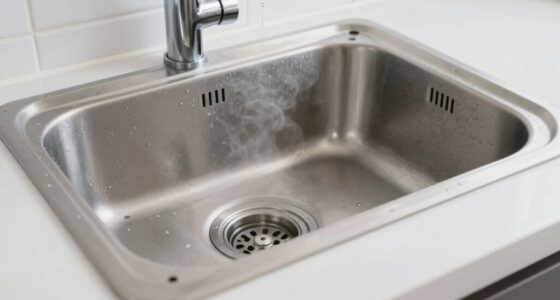
If you notice persistent kitchen sink odors, biofilm buildup could be the culprit. This slimy layer of bacteria and organic debris forms on pipe surfaces, trapping bacteria that decay and produce foul gases, causing the persistent smell. Signs include slow drainage or a slimy film. Regular cleaning with vinegar, baking soda, and hot water can help, but knowing how to detect and prevent biofilm guarantees your sink stays fresh. Keep exploring to learn more about tackling this common issue.
Key Takeaways
- Biofilm forms a slimy bacterial layer on sink surfaces, trapping debris and generating foul odors.
- It develops quickly in moist environments, protecting bacteria from cleaning efforts.
- Persistent odors indicate ongoing biofilm presence, requiring thorough cleaning and maintenance.
- Regular use of natural cleaners like vinegar and baking soda can prevent biofilm buildup.
- Addressing biofilm early helps avoid pipe blockages, reduce health risks, and maintain a hygienic kitchen.
stainless steel sink biofilm remover
As an affiliate, we earn on qualifying purchases.
As an affiliate, we earn on qualifying purchases.
What Is Biofilm and How Does It Build Up in Your Sink
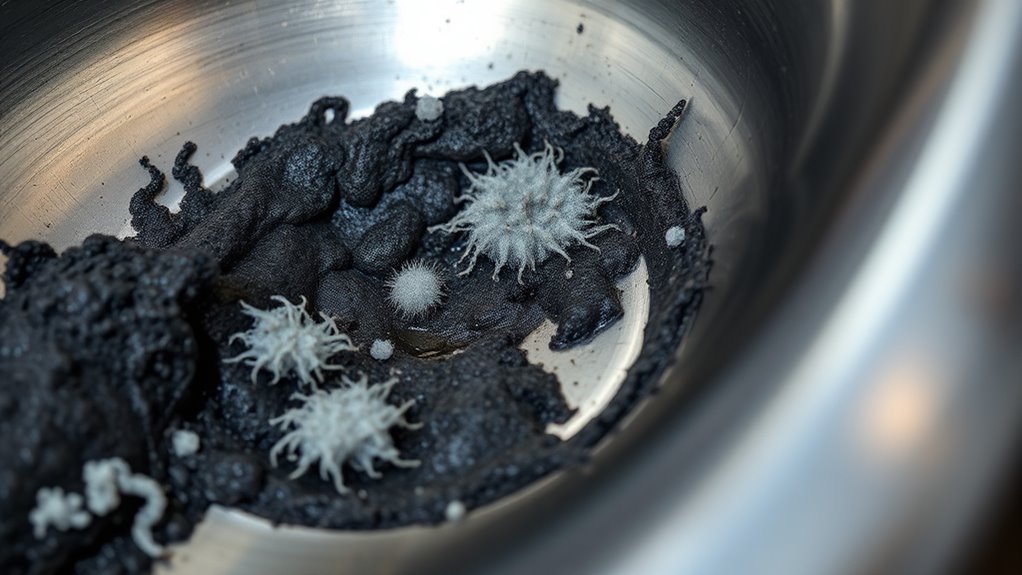
Biofilm is a slimy layer of bacteria and other microorganisms that naturally forms on surfaces like your sink. This process, called biofilm formation, begins when bacteria attach to the sink’s surface and produce a sticky matrix that traps more microbes. Over time, this buildup becomes a persistent, slimy layer that’s difficult to remove. The effects of sink material play a significant role in biofilm development. Porous materials like ceramic or composite sinks tend to harbor more bacteria, making biofilm buildup more likely. Smooth, non-porous surfaces such as stainless steel can slow down biofilm formation, but they don’t eliminate it entirely. Understanding how biofilm builds up helps you recognize why your sink can develop persistent odors and why regular cleaning is essential. Additionally, surface properties influence the rate at which biofilm can form, impacting how quickly odors may develop.
natural drain cleaner vinegar baking soda
As an affiliate, we earn on qualifying purchases.
As an affiliate, we earn on qualifying purchases.
How Biofilm Causes That Persistent Odor

Because biofilm traps bacteria and other microorganisms in your sink, it often produces a persistent, unpleasant odor. This odor originates from the decay of organic material within the biofilm buildup. The microorganisms break down debris, releasing foul-smelling gases that linger. To understand this better:
- Biofilm creates a protective environment for bacteria, making odors harder to eliminate.
- Odor origins are linked to the continuous decomposition of trapped organic matter.
- The persistent smell indicates a steady biofilm presence, requiring thorough cleaning.
- Understanding the role of Free Floating bacteria helps in developing effective cleaning strategies.
The biofilm buildup acts like a hidden reservoir of odor-causing bacteria, making your sink smell bad even after cleaning. Addressing the biofilm directly is key to stopping those stubborn kitchen sink odors.

Plink Fizzy Drain Freshener and Cleaner, Prevents Clogs and Removes Odors in Household Sinks, Lemon Scent, 6-Pack
- Deodorizes Drains: Eliminates foul odors with fizzing tablets
- Fresh Lemon Scent: Leaves a clean lemon fragrance
- Prevents Clogs: Helps prevent drain buildup
As an affiliate, we earn on qualifying purchases.
As an affiliate, we earn on qualifying purchases.
How Can You Tell If Your Sink Has Biofilm
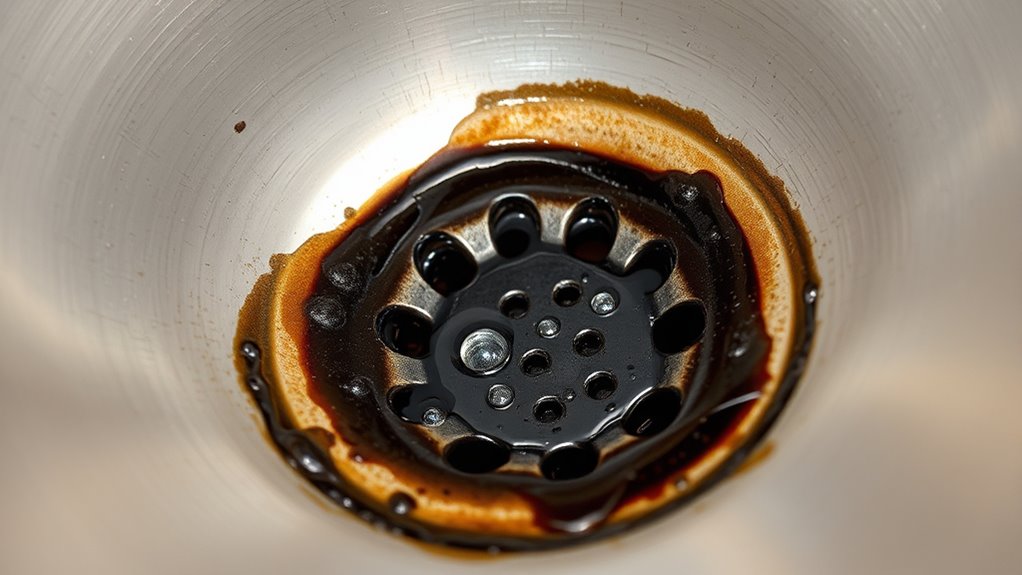
Ever wonder how to tell if your sink is hiding a biofilm? The first step is to observe for signs like persistent odors, slow drainage, or a slimy film. Conducting a plumbing inspection can reveal hidden buildup under the surface. Pay attention to your sink’s material; softer materials like porcelain or acrylic are more prone to biofilm formation than stainless steel. Developing a keen attention to detail can help you spot these issues early.
kitchen sink drain cleaning tools
As an affiliate, we earn on qualifying purchases.
As an affiliate, we earn on qualifying purchases.
Easy Ways to Remove Biofilm and Freshen Your Sink
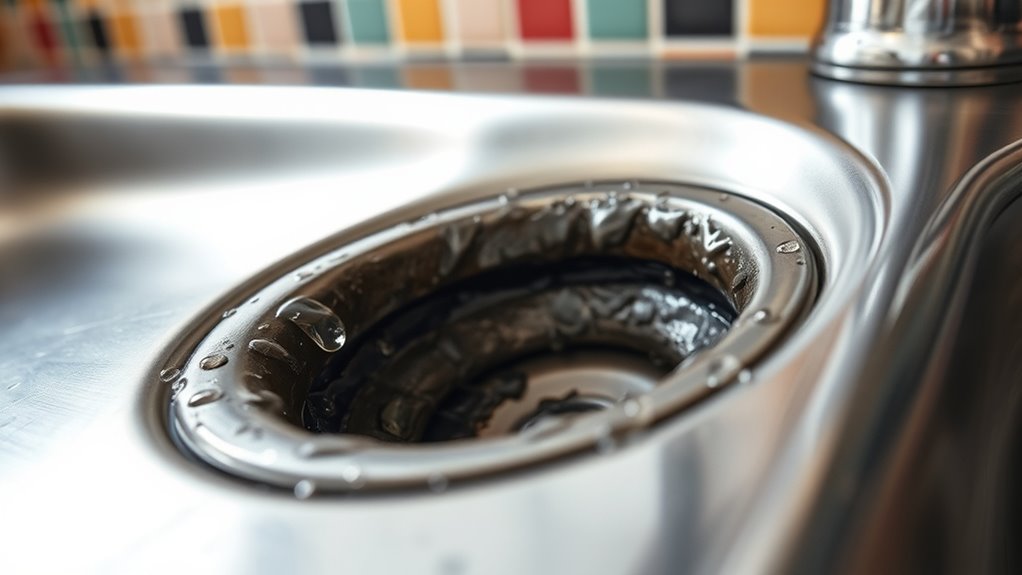
To effectively remove biofilm and freshen your sink, start with simple cleaning solutions that you likely already have at home. These methods can help with biofilm removal and keep your sink smelling fresh. First, pour white vinegar down the drain and let it sit for 15 minutes to break down buildup. Next, scrub with a mixture of baking soda and water to dislodge stubborn biofilm. Finally, rinse thoroughly with hot water to flush away debris. Remember these key steps:
Use vinegar and baking soda to quickly clean and freshen your sink at home.
- Vinegar dissolves grime and kills bacteria.
- Baking soda acts as an abrasive cleaner.
- Hot water flushes out loosened biofilm.
Additionally, understanding how biofilm formation occurs can help you develop more effective cleaning routines to prevent buildup.
Tips to Prevent Biofilm From Growing in Your Kitchen
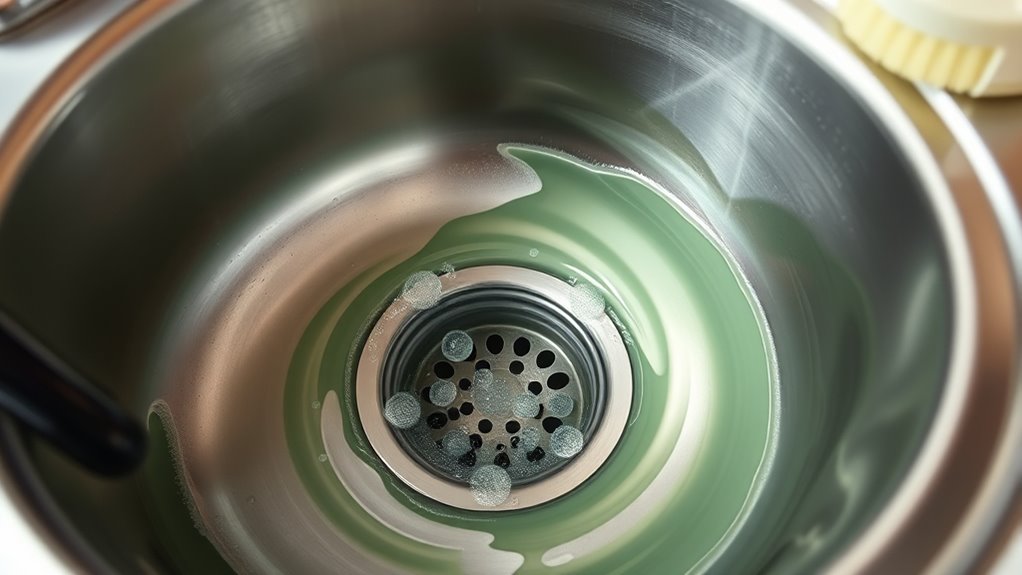
To keep biofilm from forming, you should clean your sink regularly with simple, natural cleaners. Make sure your drains are well-maintained and free of clogs to prevent buildup. Staying on top of these tasks helps keep your kitchen fresh and odor-free. Incorporating regular maintenance of your plumbing system can further reduce the risk of biofilm development.
Regular Sink Cleaning
Regular sink cleaning is essential for preventing biofilm buildup, which can cause persistent odors and health concerns. Establishing consistent cleaning schedules ensures you remove odor sources before they develop into stubborn problems. To keep your sink fresh, consider these tips:
- Clean your sink at least once a week to disrupt biofilm formation.
- Pay special attention to the drain and faucet areas, common odor sources.
- Use appropriate cleaning tools and disinfectants to eliminate bacteria and slime.
- Incorporate proper ventilation to help reduce moisture that encourages biofilm growth.
Sticking to a routine helps you stay ahead of odor-causing biofilms and maintains a hygienic kitchen environment. Regular cleaning not only reduces unpleasant smells but also extends the life of your sink, keeping it looking and smelling fresh.
Use of Natural Cleaners
Switching to natural cleaners can effectively prevent biofilm buildup in your kitchen sink. Natural remedies like baking soda, vinegar, and lemon are powerful, eco-friendly solutions that break down grime without harsh chemicals. Regularly pouring a mixture of vinegar and hot water down your drain helps inhibit bacterial growth and keeps biofilm at bay. You can also create a paste of baking soda and lemon juice to scrub sink surfaces, removing residues where biofilm thrives. These eco-friendly solutions not only reduce chemical exposure but also keep your kitchen environment healthier. By incorporating natural remedies into your cleaning routine, you’ll minimize biofilm formation and odors, maintaining a cleaner, fresher sink. Consistency is key—use these natural cleaners weekly for best results. Additionally, understanding innovative European cloud servers can inspire eco-conscious practices that benefit both your home and the environment.
Proper Drain Maintenance
Maintaining your kitchen drain properly is essential for preventing biofilm growth and lingering odors. A well-kept plumbing system reduces the chances of odor sources and biofilm buildup. To keep your drain clean and odor-free, follow these tips:
- Regularly flush your drain with hot water or a mixture of vinegar and baking soda to break down biofilm and debris.
- Avoid pouring grease or food scraps down the drain, as they nourish biofilm and clog pipes.
- Periodically use enzymatic cleaners designed for drains to target biofilm and maintain a healthy plumbing system.
- Incorporating antimicrobial treatments can further inhibit biofilm formation and keep your drain fresher longer.
These simple steps help prevent biofilm from thriving, minimize odor sources, and keep your kitchen smelling fresh. Proper drain maintenance is your best defense against persistent kitchen sink odors.
When Should You Call a Plumber for Help

You should call a plumber as soon as you notice persistent or foul odors coming from your sink that don’t dissipate with cleaning. These odors could signal a plumbing emergency, especially if they’re accompanied by slow drainage or gurgling sounds. Don’t overlook persistent leaks, as they can lead to water damage and mold growth, worsening the problem. If odors persist despite your efforts, it might indicate a deeper issue like a blocked or damaged pipe or biofilm buildup that’s hard to remove without professional help. Addressing these issues promptly can prevent costly repairs later. Call a plumber when odors stick around, leaks worsen, or if you experience any signs of plumbing failure, to ensure your sink stays clean, safe, and odor-free. Regular maintenance and trusted resources can also help identify underlying issues before they escalate.
Frequently Asked Questions
Can Biofilm in Sinks Cause Health Problems?
Biofilm in sinks can cause health problems because it harbors sink bacteria that may lead to infections or illnesses. When you use your sink, bacteria from the biofilm can come into contact with your skin or food, increasing the risk of contamination. Maintaining good hygiene and regularly cleaning your sink helps reduce biofilm buildup, protecting your biofilm health and preventing potential health issues caused by sink bacteria.
Are There Natural Remedies to Eliminate Biofilm?
Think of biofilm as a stubborn green moss clinging to your sink pipes. You can fight it with natural remedies like pouring boiling water, vinegar, or baking soda down the drain to help with biofilm removal. These simple, eco-friendly solutions act like a gentle broom, sweeping away buildup. Regularly using these methods keeps your sink fresh and minimizes odors without harsh chemicals, making your kitchen healthier and cleaner.
How Often Should I Clean My Sink to Prevent Biofilm?
You should clean your sink at least once a week to prevent biofilm buildup. Regular cleaning disrupts the biofilm formation process, helping maintain hygiene and odor control. Focus on scrubbing the drain and sink surfaces thoroughly, and consider using natural remedies like vinegar or baking soda during cleaning. Consistent cleaning frequency is key to biofilm prevention, keeping your sink fresh and odor-free without much hassle.
Does Hard Water Increase Biofilm Formation?
Think of hard water as a villain in your sink’s story, increasing biofilm growth without you realizing. Poor water quality provides minerals that cling to surfaces, creating the perfect environment for bacteria to thrive. This leads to more stubborn odors and buildup. To combat this, regularly clean your sink and consider installing a water softener. Keeping biofilm growth in check guarantees a fresher, cleaner kitchen environment.
Can Biofilm Build up Occur in Dishwasher Drains?
Yes, biofilm build-up can occur in dishwasher drains. Regular dishwasher maintenance is essential to prevent this. Over time, grease, food particles, and moisture create an ideal environment for biofilm growth. Use effective drain cleaning methods like running vinegar or baking soda cycles, and check for clogs or debris. Proper cleaning helps eliminate biofilm, reduces odors, and keeps your dishwasher running efficiently.
Conclusion
Understanding biofilm helps you fight those stubborn sink odors. While scrubbing and preventative tips can keep it at bay, sometimes the buildup runs deeper than surface cleaning. Ignoring persistent smells might lead to costly repairs or health issues down the line. So, don’t just mask the odor—tackle the biofilm head-on. After all, a fresh, odor-free sink is worth the effort; neglecting it could turn a simple fix into a major headache.