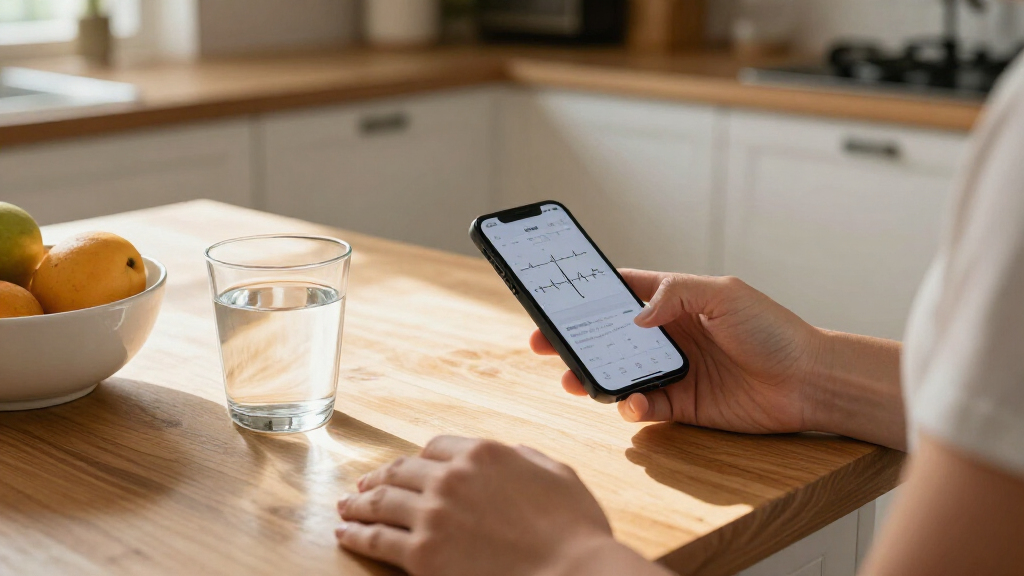

🔍 Read the full analysis: Apple Will Explore Whether AI Can Help With Health Questions on ThorstenMeyerAI.com

Prime made for students and young adults
- Fast, free delivery for dorm and study essentials
- Prime Video and Amazon Music included
- Member-only deals
TL;DR
Apple announced a U.S. research study on Nov. 15 to examine how people use conversational AI for health questions. Up to 200,000 adults with eligible iPhones may participate; Apple says sharing Health app data is optional and study data will not train AI models.
Apple announced the Apple Health AI Usage Study on Nov. 15, a U.S. research project designed to examine how people use conversational AI for health questions, including whether they understand and trust its answers. The study, conducted with clinical AI platform OpenEvidence, is open to as many as 200,000 adults who meet Apple’s eligibility requirements, and is research rather than a new Siri health feature.
Apple describes the project as a virtual study with an associated iPhone app. Participants can ask everyday health questions, explore medical information in plain language and view linked, peer-reviewed clinical citations accompanying responses. The App Store listing identifies possible uses including understanding symptoms or conditions, putting personal Health data in context, preparing for a medical visit, and creating an exercise or meal plan.
The company says it aims to study user trust, response quality, comprehension and everyday health actions. It will also examine whether people can use health AI to prepare for appointments with their doctors. Sharing information from Apple Health, such as resting heart rate, sleep data or lab results, is optional, Apple says. The company also says study data will not be used to train AI models.
Apple says OpenEvidence supplies the answers. It describes the platform as widely used by health professionals and says its responses draw on established medical sources. CNET and MacRumors have reported that OpenEvidence deletes questions and responses within 24 hours; that deletion detail is attributed to those outlets, not stated in Apple’s announcement. Apple warns that the study app is not intended to diagnose or treat conditions or replace advice from medical professionals.
Apple Health AI Usage Study · Nov 15, 2026
How a health question travels through Apple’s study app
From your iPhone to a cited answer and back, as Apple and reporting on its press briefing describe it.
The path of one question (schematic)
Six steps in the study app
- You askType an everyday health question; sharing Health data is optionalApple
- On the iPhoneTools remove details that could identify youas reported by CNET
- Study cloudA contractor’s environment delinks the question from your participant ID and screens it againas reported by CNET
- OpenEvidenceWrites the answer from clinical sources, with linked peer-reviewed citationsApple
- GuardrailCertain concerning questions: a suggestion to follow up with a provider or other resourcesApple; no live monitoring, CNET reports
- You rateRate each answer, plus a baseline survey and monthly surveysas reported by CNET
Source: Apple Newsroom, “Apple launches research study to explore the use of AI for health”, Nov 15, 2026; CNET and MacRumors reporting on Apple’s press briefing, Nov 15–16, 2026. Schematic, not the real app screen.
Graphic: Powered by Thorsten Meyer AI
Measuring How Patients Use Health AI
The study examines how people use chatbots for health information and respond to their answers. A KFF poll published in March 2026 found that 32% of adults nationally said they had used AI chatbots for health information in the prior year. That figure describes reported use during that period; it does not establish whether the advice was accurate or changed medical decisions.
Apple says the research will examine whether people understand AI-generated health explanations, how they assess their reliability and whether the information affects actions such as contacting a clinician or preparing questions for an appointment. Apple has acknowledged that health answers can be incomplete or unclear. The study is not presented as a clinical trial or as a test proving that the AI is safe or effective for diagnosis.
Apple says findings may inform health AI experiences at the company and across the industry. The study’s contribution will depend on its methods, the results it publishes and how clearly those results distinguish participant opinions from clinical outcomes.
Popular right now

Vitamix 5200 Blender with 64 oz Container, Black

Ninja CREAMi Scoop & Swirl 13-in-1 Ice Cream and Soft Serve Maker, NC701

Dyson Airwrap i.d. Multi-Styler
As an affiliate, we earn on qualifying purchases.
A Research Project, Not Siri
Apple’s announcement describes the project as research into how people interact with conversational health AI, rather than an announcement of a new built-in assistant. The study uses a dedicated app and answers from OpenEvidence, which says it has content agreements with medical publishers and organizations including NEJM, JAMA, Nature, NCCN and Cochrane. Apple’s description says answers include citations; citations alone do not establish that every response is complete or appropriate for an individual’s circumstances.
Two statements accompanying the announcement explain the research rationale. Apple’s vice president of Health and Fitness, Sumbul Desai, said a dedicated study was the most thoughtful way to understand how people engage with, comprehend and evaluate health AI in everyday life. UCSF medicine department chair Robert M. Wachter said patients and clinicians are turning to AI, while the tools they use are being built and tested in separate worlds.
According to CNET’s reporting on Apple’s briefing, participants will rate responses and provide feedback, and will be asked to complete surveys, including ones related to preparing for doctor visits. CNET reported that individual participation may last up to 12 months, while TechCrunch reported that Apple aims to run the overall study for more than 12 months. Apple’s announcement did not specify a duration, so the reports may refer to different timelines.
“Conducting a dedicated research study is the most thoughtful way to understand how people engage with, comprehend, and evaluate health AI in everyday life.”
— Sumbul Desai, Apple’s vice president of Health and Fitness
Eligibility, Duration and Data Details
Apple says the study is open to up to 200,000 people aged 21 or older in the United States who have an Apple Intelligence-enabled iPhone, specified in the source material as an iPhone 15 Pro or later, running iOS 26 or later. The available information does not establish how many people have enrolled, when recruitment will close, or whether all eligible applicants will be accepted.
The full study protocol, analysis plan and publication schedule are not specified in the announcement. Apple’s statement that study data will not train AI models does not, by itself, explain every detail of data storage, access, retention or other uses. CNET and MacRumors reported that OpenEvidence deletes question and response data within 24 hours, but readers should distinguish that reported detail from Apple’s own announcement.
It is also unclear how Apple will measure response quality, whether answers will be independently evaluated by clinicians, and how the researchers will separate a participant’s perception of an answer from its medical accuracy. The different reported timelines for individual participation and the overall study have not been reconciled by Apple.
Recruitment and Study Findings
The immediate next step is participation through Apple’s study app for people who meet the stated age, location, device and software requirements. According to reporting by CNET, the app asks users to rate answers and provide feedback, with surveys during the study and additional questions related to preparing for medical appointments. Apple has not provided a public date for results or a detailed account of when findings will be released.
Future reporting can clarify recruitment numbers, the length of the overall project, privacy and retention practices, and how the study assesses the accuracy and usefulness of answers. Until results and methods are available, the announcement establishes Apple’s research questions and stated safeguards, but not whether conversational AI improves health understanding or changes care decisions.
Key Questions
What is Apple’s Health AI Usage Study?
It is a virtual U.S. research study and iPhone app examining how people interact with conversational AI tools for health information, including trust, comprehension and actions taken after receiving answers.
Who can participate?
Apple says it is open to up to 200,000 U.S. residents aged 21 or older with an Apple Intelligence-enabled iPhone—an iPhone 15 Pro or later—running iOS 26 or later.
Will participants have to share Apple Health data?
No. Apple says sharing Health app data, including measures such as resting heart rate, sleep or lab results, is optional.
Can the study app diagnose a medical condition?
Apple says the app is not meant to diagnose or treat a condition or replace advice from medical professionals. Its answers should not be treated as a substitute for care from a clinician.
How long will the study last?
Apple’s announcement did not specify a duration. CNET reported that individual participation may last up to 12 months, while TechCrunch reported that the overall study could run for more than 12 months.
Source: ThorstenMeyerAI.com