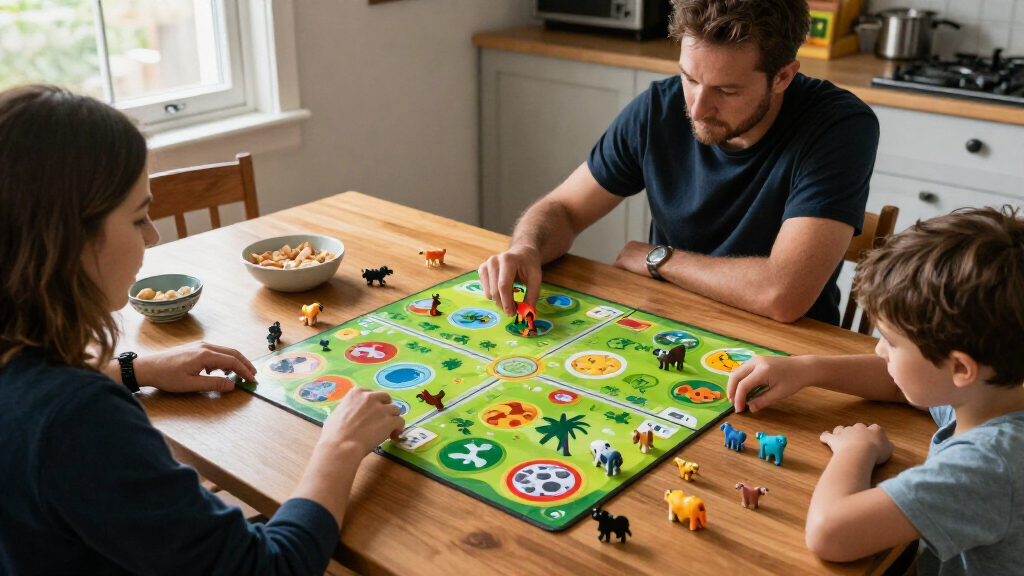
For families who want science woven into game night, biology board games range from easy habitat-building card games to longer strategy games about evolution and genetics. I’d name Ecosystem the best overall pick for its accessible habitat theme, with Cellulose standing out for focused plant-cell learning and Biomos for a lighter nature-themed strategy experience. The main tradeoff is between easy entry and scientific depth: a game that teaches detailed mechanisms may ask younger players to manage more rules, while a simpler game may offer less biology instruction. Themes also vary, from cells and inheritance to ecosystems and extinction, so the best fit depends on what your family wants to learn together. Read on for the full breakdown and a guide to choosing the right level of science and strategy.

Prime made for students and young adults
- Fast, free delivery for dorm and study essentials
- Prime Video and Amazon Music included
- Member-only deals
Key Takeaways
- Ecosystem is the most approachable starting point in this lineup: habitat-building makes ecology tangible without requiring a dedicated lesson before play.
- Cellulose, Cytosis, and Genotype focus on specific biology topics, making them better choices for families who want mechanisms such as cell processes or inheritance at the center of play.
- Biomos and Nature Strategy Board Game suit families seeking nature-themed strategy, while Evolution and Primates put adaptation and species change closer to the heart of decisions.
- Escaping Extinction offers a cooperative direction in a lineup with many competitive strategy options, making shared goals a meaningful factor for families.
- Darwin’s Journey and On the Origin of Species lean into historical exploration and substantial strategy; they are less natural first picks for families prioritizing quick, low-rules play.
| Nature Strategy Board Game |  | Best for Adaptation and Replayability | Players: 1–4 | Recommended age: 10 years and up | Playing time: 45 minutes | VIEW LATEST PRICE | See Our Full Breakdown |
| Spin Master Games Escaping Extinction Cooperative Strategy Board Game | 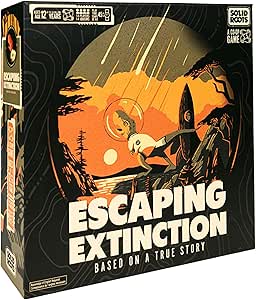 | Best Cooperative Dinosaur Game | Players: 1–4 | Recommended age: 12 years and up | Game type: Cooperative strategy board game | VIEW LATEST PRICE | See Our Full Breakdown |
| Cellulose: A Plant Cell Biology Board Game |  | Best for Older Biology Enthusiasts | Players: 1–5 | Minimum age: 14 years | Playing time: 60–90 minutes | VIEW LATEST PRICE | See Our Full Breakdown |
| Ecosystem: A Family Card Game About Building Habitats |  | Best for Quick, Mixed-Age Family Play | Game type: Card drafting game | Players: 2–6 | Play time: 15–20 minutes | VIEW LATEST PRICE | See Our Full Breakdown |
| Evolution Strategy Board Game |  | Best for Larger Groups and Species-Building Strategy | Players: 2–6 | Recommended age: 12 years and up | Playing time: About 60 minutes | VIEW LATEST PRICE | See Our Full Breakdown |
| On the Origin of Species: Darwin’s Galápagos Board Game |  | Best for Darwin-Themed Discovery | Players: 2–4 | Playing time: 90 minutes | Recommended age: 8 years and up | VIEW LATEST PRICE | See Our Full Breakdown |
| The Awkward Yeti Organ Attack Card Game |  | Best for Lighthearted Anatomy | Players: 2–6 | Recommended age: 8 years and up | Playing time: About 30 minutes | VIEW LATEST PRICE | See Our Full Breakdown |
| Darwin’s Journey Board Game |  | Best for Older Strategy Fans | Players: 1–4 | Estimated playing time: 90 minutes | Recommended age: 14 years and up | VIEW LATEST PRICE | See Our Full Breakdown |
| Ecologies: Hidden Habitats Card Game |  | Best for Food-Web Learning | Players: 1–6 | Playing time: 60–90 minutes | Age range: 8+ with simplified rules; 12+ listed for standard play | VIEW LATEST PRICE | See Our Full Breakdown |
| Biomos Nature Strategy Board Game |  | Best for Quick Family Play | Players: 1–4 | Recommended age: 8 years and up | Estimated playing time: 20 minutes | VIEW LATEST PRICE | See Our Full Breakdown |
| Primates: An Evolutionary Board Game |  | Best for Primate Evolution | Players: 2 to 4 | Play time: 45 to 90 minutes | Recommended age: 14 years and up | VIEW LATEST PRICE | See Our Full Breakdown |
| Cytosis: A Cell Biology Board Game |  | Best for Cell Biology | Players: 2–4 or 10+ | Playing time: 90 minutes | Minimum age: 10 years | VIEW LATEST PRICE | See Our Full Breakdown |
| Genotype: A Mendelian Genetics Board Game |  | Best for Genetics and Solo Play | Players: 1–5 | Playing time: 45–75 minutes | Recommended age: 8 years and up | VIEW LATEST PRICE | See Our Full Breakdown |
| biology board games for familie | Players | Recommended age | Playing time | Included components |
|---|---|---|---|---|
| Nature Strategy Board Game | 1–4 | 10 years and up | 45 minutes | — |
| Spin Master Games Escaping Ext | 1–4 | 12 years and up | — | — |
| Cellulose: A Plant Cell Biolog | 1–5 | — | 60–90 minutes | Cards and additional solo-mode board and deck |
| Ecosystem: A Family Card Game | 2–6 | — | — | — |
| Evolution Strategy Board Game | 2–6 | 12 years and up | About 60 minutes | — |
| On the Origin of Species: Darw | 2–4 | 8 years and up | 90 minutes | — |
| The Awkward Yeti Organ Attack | 2–6 | 8 years and up | About 30 minutes | Cards |
| Darwin’s Journey Board Game | 1–4 | 14 years and up | — | Game board, cards, tokens, tiles, coins, player aids, personal boards, and wooden game pieces |
| Ecologies: Hidden Habitats Car | 1–6 | — | 60–90 minutes | 108 cards, instructional booklet, tuck box |
| Biomos Nature Strategy Board G | 1–4 | 8 years and up | — | 4 planet boards, 30 basic biome cards, 9 giant biome cards, 1 Black Hole card, 60 terrain tokens, 1 cosmic pouch |
| Primates: An Evolutionary Boar | 2 to 4 | 14 years and up | — | 1 gameboard, 4 player mats, 1 rulebook, 1 scorepad, 367 cards, 83 food tokens, 12 meeples, 4 heart tokens, 3 dice, 3 extinct tokens |
| Cytosis: A Cell Biology Board | 2–4 or 10+ | — | 90 minutes | Cytosis: A Cell Biology Game |
| Genotype: A Mendelian Genetics | 1–5 | 8 years and up | 45–75 minutes | Game |
More Details on Our Top Picks
Nature Strategy Board Game
Nature Strategy Board Game makes the most sense for families who want to see adaptation play out through choices, not just read facts about it. Players grow populations, change body size, and add traits to compete for food and handle predators, creating a shared ecosystem that can shift from game to game. Compared with Ecosystem: A Family Card Game About Building Habitats, this is the more involved option, with area control and engine-building in place of quick card drafting. Its solo mode also suits a child or adult who wants to explore the system alone. The tradeoff is a higher age recommendation and a longer session than Ecosystem; the extra ecosystems require optional modules rather than coming in the standard set. Small pieces also call for care around young children.
Pros:- Species traits and population growth connect player decisions to adaptation and competition.
- Changing ecosystem supports varied sessions.
- Solo mode and support for up to four players make it flexible for different group sizes.
- Optional ecosystem modules give interested players a way to expand play.
Cons:- The 45-minute play time and strategic systems may be a lot for younger or casual players.
- Flight, Jurassic, and Arctic Tundra ecosystems require optional modules.
- Small pieces present a choking hazard.
Best for: Families with children aged 10 and up who enjoy strategic choices about adaptation and want solo play as an option.
Not ideal for: Families seeking a short, low-complexity game for younger children, or buyers who expect multiple ecosystem modules in the standard edition.
- Players:1–4
- Recommended age:10 years and up
- Playing time:45 minutes
- Game mechanics:Area control, engine-building, modular deck-building
- Solo play:Included
- Material:Cardboard
- Dimensions:8.74 × 8.74 inches
- Edition:Standard Edition
Our verdict“Choose this for family groups ready for a strategic, replayable look at adaptation, but choose Ecosystem for shorter, more accessible play.”
Spin Master Games Escaping Extinction Cooperative Strategy Board Game
Escaping Extinction puts the family on the same side: players work together as dinosaurs to find rocket parts and escape before the meteor arrives. That shared goal makes it a different kind of biology pick from Evolution Strategy Board Game, where players compete as species in an ecosystem. Here, shifting terrain tiles and Earthquake cards keep the route uncertain, so players must respond together rather than follow a fixed plan. It also supports solo play, which gives one player a way to tackle the escape challenge. The main limitation is the 12-and-up recommendation, which rules it out for many families with younger children. Its mission and meteor timer may also feel stressful to players who prefer open-ended ecology strategy over a race against a deadline.
Pros:- Cooperative goals encourage players to plan and solve problems together.
- Tile-based layouts create a different map each game.
- Earthquake cards can alter the board mid-game, requiring players to adjust their plans.
- Solo play is supported.
Cons:- The recommended age of 12 and up limits its fit for younger family members.
- The meteor deadline and mission objectives may feel pressuring rather than exploratory.
- Its focus is a dinosaur escape scenario, not a broad simulation of biology or ecology.
Best for: Families with teens who prefer cooperative planning and a dinosaur-themed challenge over competing against one another.
Not ideal for: Households with younger children or players who dislike timed objectives and mission-driven play.
- Players:1–4
- Recommended age:12 years and up
- Game type:Cooperative strategy board game
- Terrain tiles:19
- Dinosaur tokens and cards:4 tokens and 4 cards
- Meteor cards:16
- Exploration cards:30
- Rocket parts:5 connectable parts
Our verdict“Pick this for teen-led family groups who want teamwork and a shifting dinosaur escape puzzle, not a relaxed ecosystem-building game.”
Cellulose: A Plant Cell Biology Board Game
Cellulose is the most directly cell-focused choice in this group, using worker placement and resource competition to model processes such as photosynthesis and energy production. That makes it a better fit for older players who want biology represented in the mechanics than Nature Strategy Board Game, which centers on species adapting within an ecosystem. Cactus and Mangrove scenarios add distinct challenges, while the solo mode includes an AI opponent, giving the game options beyond a single group setup. The tradeoff is a 60–90 minute play time and a 14-and-up minimum age, so it is less suited to casual family nights or younger siblings. Limited action spaces and shared supplies can also make turns feel competitive rather than collaborative.
Pros:- Gameplay models plant-cell processes, including photosynthesis and energy production.
- Worker placement and resource management offer several strategic choices.
- Cactus and Mangrove scenarios vary the challenges.
- Solo mode includes an AI opponent and additional components.
Cons:- The 60–90 minute session is longer than Ecosystem and may be hard to fit into a casual family night.
- The 14-and-up age recommendation excludes many younger players.
- Shared resources and limited action spaces can make competition for supplies frustrating.
Best for: Families with teens aged 14 and up who enjoy longer strategy games and want plant-cell processes at the center of play.
Not ideal for: Families with younger children, limited game-night time, or a preference for cooperative play over competing for resources.
- Players:1–5
- Minimum age:14 years
- Playing time:60–90 minutes
- Genre:Educational, strategy
- Language:English
- Scenarios:Cactus and Mangrove
- Solo mode:Includes AI opponent, board, and deck
- Included components:Cards and additional solo-mode board and deck
Our verdict“Choose Cellulose for older family members seeking a substantial plant-cell strategy game, and skip it if you need a short game for mixed ages.”
Ecosystem: A Family Card Game About Building Habitats
Ecosystem: A Family Card Game About Building Habitats is the easiest entry point here for families who want ecology in a short session. Players draft and arrange cards to pair animals with habitats, giving the table a concrete way to discuss biodiversity and where species thrive. At 15–20 minutes and up to six players, it fits a larger family gathering more readily than Cellulose, which asks for a longer session and older players. The tradeoff is a narrower style of play: its strategy stays centered on drafting and arranging cards rather than the population growth and trait-building found in Nature Strategy Board Game. It also starts at two players, so it does not work for solo play or a one-on-one game.
Pros:- Habitat and animal matching introduces ecology and biodiversity through play.
- Short sessions make it easier to fit into a family game night.
- Supports up to six players, more than Nature Strategy Board Game or Cellulose.
- Card drafting offers strategic choices within accessible rules.
Cons:- Requires at least two players and is limited to six.
- Gameplay focuses on drafting and arranging cards rather than simulating biological processes in depth.
- Its shorter format may not satisfy players seeking a longer, more involved strategy game.
Best for: Families with two to six players who want a quick, accessible ecology game that can include younger or less experienced players.
Not ideal for: Solo players, groups of seven or more, or strategy fans looking for deeper biological systems and longer-term development.
- Game type:Card drafting game
- Players:2–6
- Play time:15–20 minutes
- Card types:11
- Themes:Ecology, habitats, biodiversity, sustainability
- Play style:Draft and arrange cards
Our verdict“Choose Ecosystem for a brief, approachable habitat-building game with a larger group, rather than a detailed biology strategy session.”
Evolution Strategy Board Game
Evolution Strategy Board Game suits families who want to shape species around competition for scarce food. Card drafting and species boards let players develop traits in response to predators and a connected ecosystem, so adaptation is the heart of the strategy rather than a brief theme. Compared with Nature Strategy Board Game, it accommodates up to six players instead of four, making it a stronger fit for larger tables; Nature Strategy offers solo play, which Evolution does not. The many possible species combinations support variety, but the same interlocking pressures can be demanding for younger or less experienced players. Its roughly 60-minute session is also a bigger commitment than Ecosystem, and the small tokens require care around young children.
Pros:- Trait drafting gives players meaningful ways to adapt species to food scarcity and predators.
- Supports up to six players, including larger family groups.
- A wide range of species combinations helps vary play.
- Species boards and food tokens make ecosystem competition central to the game.
Cons:- The roughly 60-minute session is substantially longer than Ecosystem.
- Food scarcity and predator threats may frustrate players who prefer a relaxed or cooperative game.
- Small parts present a choking hazard and need care around young children.
Best for: Families with two to six players, including teens, who enjoy competitive drafting and want to build species around changing ecological pressures.
Not ideal for: Families seeking a short, gentle introduction to ecology, solo play, or a game without small pieces and predator pressure.
- Players:2–6
- Recommended age:12 years and up
- Playing time:About 60 minutes
- Game mechanics:Area control, card drafting, engine building
- Trait cards:129
- Species boards:20
- Possible species combinations:Over 12,000
- Dimensions:11.75 × 8.75 inches
- Weight:2 pounds
Our verdict“Choose Evolution for a larger family group ready for competitive species-building strategy; choose Ecosystem for a faster, lighter ecology game.”
On the Origin of Species: Darwin’s Galápagos Board Game
Species discovery and habitat research give this game a clear biology focus, while its Beagle voyage ties those choices to a shared journey. Players choose whether to gather knowledge or place species tiles, so the central tradeoff is between preparing through research and scoring through discovery. Compared with Ecologies: Hidden Habitats, which centers on building food webs across several biomes, this game offers a more focused Galápagos-and-Darwin theme. Its 90-minute playtime allows room for strategic decisions, but asks for a longer family session than the quick turns in Biomos. The age guidance starts at eight, though the strategy and duration may suit older children better. I’d skip it for families seeking a short, light game or a larger group, since it supports only two to four players.
Pros:- Connects species discovery with research and habitat knowledge.
- The Beagle journey gives the game a coherent Darwin-era setting.
- Players choose between gathering knowledge and discovering species, creating meaningful strategic decisions.
Cons:- The 90-minute playtime can be a lot for a family game session.
- The two-to-four-player limit excludes larger groups.
Best for: Families with children around eight and older who want a longer strategy game about Darwin, species, and habitat research.
Not ideal for: Families looking for a quick game, a party-sized player count, or a biology theme centered on human anatomy or cells.
- Players:2–4
- Playing time:90 minutes
- Recommended age:8 years and up
- Language:English
- Brand:Genius Games
- Publisher:Artana Games
- Edition:Standard Edition
Our verdict“Choose this for a focused, longer Darwin-themed strategy game, but pick Biomos for shorter family sessions.”
The Awkward Yeti Organ Attack Card Game
Human anatomy with take-that card play makes Organ Attack the most irreverent option here. Players use afflictions and immunity cards against one another, with the last player holding an organ winning; the biology comes through the body-part theme rather than a detailed ecology or evolution system. Compared with On the Origin of Species, this is much shorter and more accessible for a casual family game, and its support for up to six players suits a bigger table. The tradeoff is that its humor and attacks may appeal less to families who want a cooperative or science-forward experience. The book-style case is handy for storage and travel, but the listed indoor-use design and variable duration make it a less dependable pick for every outing. I’d choose it for playful anatomy, not a lesson-focused game.
Pros:- Uses anatomy and health as the theme for an easy-to-grasp card-game objective.
- Supports two to six players, more than the Darwin-themed board games in this group.
- Book-style case is convenient for shelf storage and packing.
Cons:- Attacking opponents may not suit families who prefer cooperative play.
- The listed duration varies between about 30 and 90 minutes.
- The product is described as designed for indoor use.
Best for: Families with children eight and older who enjoy humorous, competitive card games and want an anatomy theme for up to six players.
Not ideal for: Families seeking a calm, cooperative, or detailed biology game, or those wanting a clearly fixed playtime.
- Players:2–6
- Recommended age:8 years and up
- Playing time:About 30 minutes
- Material:Paper
- Included components:Cards
- Container type:Book-style case
- Dimensions:8 × 6 in
- Educational objective:Learn about human anatomy and health
Our verdict“Pick Organ Attack for a portable, jokey anatomy game with a larger player range, not for a detailed science lesson.”
Darwin’s Journey Board Game
Resource management, adaptation, and scientific discovery make Darwin’s Journey the most involved strategy choice in this set. Players collect species and develop evolutionary theories as they explore 19th-century landscapes, with solo play available when a family game isn’t possible. Compared with On the Origin of Species, it broadens the Darwin-inspired expedition into a more substantial strategic system; compared with Biomos, it takes far longer and asks players to manage more pieces and decisions. That depth is a draw for teens and adults who enjoy planning, but the 14-and-up age guidance and 90-minute session make it a poor fit for younger children seeking a quick family game. The many cards, tokens, tiles, and wooden pieces also mean more setup and organization than a compact card game.
Pros:- Combines resource management and adaptation with species and habitat themes.
- Solo mode supports play when the family group is unavailable.
- A wide range of components supports a fuller strategy experience.
Cons:- The 90-minute playing time is substantially longer than Biomos.
- Its strategic demands and age guidance make it less suitable for younger family members.
- The many components can take time to organize and learn.
Best for: Families with teens aged 14 and up who enjoy longer strategy games and want solo play as an option.
Not ideal for: Families with younger children, limited table time, or little patience for organizing components and learning a complex game.
- Players:1–4
- Estimated playing time:90 minutes
- Recommended age:14 years and up
- Brand:Thundergryph Games
- Genre:Strategy
- Edition:Standard Edition
- Included components:Game board, cards, tokens, tiles, coins, player aids, personal boards, and wooden game pieces
Our verdict“Choose Darwin’s Journey for a long, component-rich biology strategy game with teens, rather than for quick play with younger children.”
Ecologies: Hidden Habitats Card Game
Food webs across seven biomes give Ecologies a more direct ecology focus than the Darwin games, which frame biology through exploration and discovery. Its 108 cards feature 76 organisms, and the standard, simplified, and solo modes make it adaptable for a family with different experience levels. The simplified rules can help younger players join, while standard play is listed for ages 12 and up. Compared with Biomos, which uses quick biome-pattern drafting, Ecologies asks players to build and protect ecosystems through card play and allows up to six participants. That broader educational scope comes with a longer 60–90-minute session and more cards to manage. Families can also combine this deck with another Ecologies deck, though that flexibility may add complexity rather than suit every group.
Pros:- Builds gameplay around food webs and organisms from seven biomes.
- Offers standard, simplified, and solo modes for different groups.
- Supports one to six players and can combine with another Ecologies deck.
- Includes 76 unique organisms across 108 cards.
Cons:- The 60–90-minute duration is longer than Biomos’s approximately 20 minutes.
- The number of cards and gameplay effects may feel busy for some families.
- Standard play is listed for ages 12 and up, despite simplified rules for younger players.
Best for: Families interested in real ecology concepts, especially groups that want simplified rules, solo play, or room for up to six players.
Not ideal for: Families wanting a short, low-complexity game or a standard version suited to younger children without adult help.
- Players:1–6
- Playing time:60–90 minutes
- Age range:8+ with simplified rules; 12+ listed for standard play
- Cards:108
- Unique organisms:76
- Biomes:7
- Game modes:Standard, simplified, single player
- Included components:108 cards, instructional booklet, tuck box
Our verdict“Choose Ecologies for families who want an ecology-centered card game with adaptable rules, and choose Biomos for a faster, simpler session.”
Biomos Nature Strategy Board Game
Fast setup and approximately 20-minute games make Biomos the easiest pick here to bring to a family table on a busy day. Players draft terrain tokens and complete biome patterns, turning nature into a compact strategy puzzle rather than a detailed biology lesson. Compared with Ecologies: Hidden Habitats, Biomos is shorter and less focused on food-web relationships; compared with Darwin’s Journey, it asks for far less time and component management. Its family mode and age guidance of eight and up help it bridge different ages, and solo play offers another way to use it. The tradeoff is a four-player maximum, while families seeking richer species or anatomy content may find the biome patterns too abstract. Small parts also require care around young children.
Pros:- Approximately 20-minute games fit shorter family sessions.
- Five-minute setup makes it easier to get playing than the longer Darwin strategy games.
- Family and solo modes offer alternatives to standard competitive play.
- Terrain drafting and biome patterns provide a strategic nature theme.
Cons:- The one-to-four-player limit does not suit larger groups.
- Its pattern-focused approach offers less direct biology detail than Ecologies.
- Small parts present a choking hazard.
Best for: Families with children eight and older who want a quick, easy-to-set-up nature strategy game with family and solo modes.
Not ideal for: Larger groups, families seeking detailed species or food-web learning, or households where small game pieces are a concern.
- Players:1–4
- Recommended age:8 years and up
- Estimated playing time:20 minutes
- Setup time:5 minutes
- Game modes:Standard, Family, Solo
- Game mechanics:Area control, card drafting
- Included components:4 planet boards, 30 basic biome cards, 9 giant biome cards, 1 Black Hole card, 60 terrain tokens, 1 cosmic pouch
- Item dimensions:8.25 × 5.99 inches
Our verdict“Choose Biomos for quick, accessible nature-themed play, but choose Ecologies when food webs and organism relationships matter more.”
Primates: An Evolutionary Board Game
Primates is the most focused choice here for families who want a game about animal evolution and behavior, rather than the inner workings of a cell. Its phylogenetic-tree board and cards covering more than 100 living and extinct primate species connect foraging and social bonds to ecology, evolution, and paleontology. Compared with Evolution Strategy Board Game, this pick concentrates on primates and adds specific material such as seed dispersal; that focus offers a richer subject lesson but less variety across animal groups. The tradeoff is a higher age recommendation and a 45-to-90-minute playtime, so it is a better fit for teens and patient game-night groups than mixed-age families with young children. The custom insert also helps keep its large card collection organized between sessions.
Pros:- Covers more than 100 living primate species and dozens of extinct species.
- Connects gameplay to ecology, paleontology, and seed dispersal.
- Uses a phylogenetic-tree board and includes more than 70 illustrations of plants and insects.
- Custom insert tray helps organize the 367 cards.
Cons:- The 14-and-up age recommendation limits play with younger children.
- A 45-to-90-minute session may be too long for a casual family game night.
- Its narrow primate focus may appeal less to families seeking biology across multiple subjects.
Best for: Families with teens who want a substantial, primate-focused game that links animal behavior to evolution and ecology.
Not ideal for: Families with younger children or short game-night windows, since the game is recommended for ages 14 and up and can run as long as 90 minutes.
- Players:2 to 4
- Play time:45 to 90 minutes
- Recommended age:14 years and up
- Cards:367
- Included components:1 gameboard, 4 player mats, 1 rulebook, 1 scorepad, 367 cards, 83 food tokens, 12 meeples, 4 heart tokens, 3 dice, 3 extinct tokens
- Dimensions:11.6 x 11.6 x 0.1 inches
- Weight:5.7 pounds
- Brand:Green Butterfly Games
Our verdict“Choose Primates if your family has teens ready for a longer strategy game centered on primate evolution, and skip it if younger children need to join.”
Cytosis: A Cell Biology Board Game
Cytosis makes the cell itself the setting: players use worker placement to gather resources and build enzymes, hormones, and receptors. That gives family members a concrete way to connect strategic choices with cell structures and processes, while the scientist-reviewed booklet can explain the science beyond the turns. Compared with Cellulose: A Plant Cell Biology Board Game, Cytosis focuses on a human cell and its products rather than plant-cell biology, so the better fit depends on which topic your family wants to study. The listed minimum age of 10 years makes it more accessible to younger players than Primates, but the stated 90-minute playtime still calls for a long session. The player information also lists 2–4 or 10+, leaving the range between those counts unclear.
Pros:- Worker-placement gameplay ties resource choices to enzymes, hormones, and receptors.
- Includes a fact-based educational booklet reviewed by scientists.
- Human-cell subject matter offers a distinct alternative to plant-focused Cellulose.
- Designed for family, classroom, and game-night play.
Cons:- The listed player counts specify 2–4 or 10+, with no guidance for groups of five to nine.
- A 90-minute playing time requires a longer family game session.
- Its focus on cell processes may be less appealing to players seeking animal or ecosystem themes.
Best for: Families with children aged 10 or older who want a strategy game about human cell biology and are comfortable setting aside a long session.
Not ideal for: Families who need a clearly specified player count for groups of five to nine, or who prefer games that finish quickly.
- Players:2–4 or 10+
- Playing time:90 minutes
- Minimum age:10 years
- Brand:Genius Games
- Game type:Educational board game
- Included components:Cytosis: A Cell Biology Game
- Model number:GOT1006
- Edition:Cytosis Game
Our verdict“Pick Cytosis for a family ready to spend a long session on human cell biology through worker placement, but check the player-count fit for your group.”
Genotype: A Mendelian Genetics Board Game
Genotype turns Mendel’s pea-plant research into a strategy challenge built around worker placement, dice drafting, and Punnett Square calculations. That makes it a strong choice for families who want to work with heredity concepts rather than explore the broader animal evolution featured in Primates or the human-cell theme of Cytosis. Its solo mode also gives one player a way to engage with the game when a family group is unavailable, and the 12-page booklet adds historical and scientific context. The age recommendation of eight and up is the youngest in this trio, but the strategic decisions may still challenge younger or casual players. At 45 to 75 minutes, it is shorter than Cytosis at its stated 90 minutes, though it remains a substantial session.
Pros:- Uses Punnett Square calculations to connect play with Mendelian genetics.
- Combines worker placement, dice drafting, and strategic dice manipulation.
- Solo mode supports play when a group is not available.
- Includes a 12-page booklet on genetics and Mendel’s research.
Cons:- Strategic decisions may be complex for younger children or casual players.
- A 45-to-75-minute session may not suit families seeking a quick game.
- Its specific focus on Mendelian genetics is narrower than a broad biology or nature game.
Best for: Families with school-age children interested in heredity, plus solo players who want a genetics-themed strategy game.
Not ideal for: Casual groups looking for a simple, fast activity; the dice manipulation and worker-placement strategy can be demanding, and sessions may last 75 minutes.
- Players:1–5
- Playing time:45–75 minutes
- Recommended age:8 years and up
- Material:Cardboard
- Included components:Game
- Edition:Standard Edition
- Manufacturer:Genius Games
- Model number:GOT1011
Our verdict“Choose Genotype for a strategy-minded family or solo player who wants hands-on genetics concepts and can manage a longer session.”
How We Picked
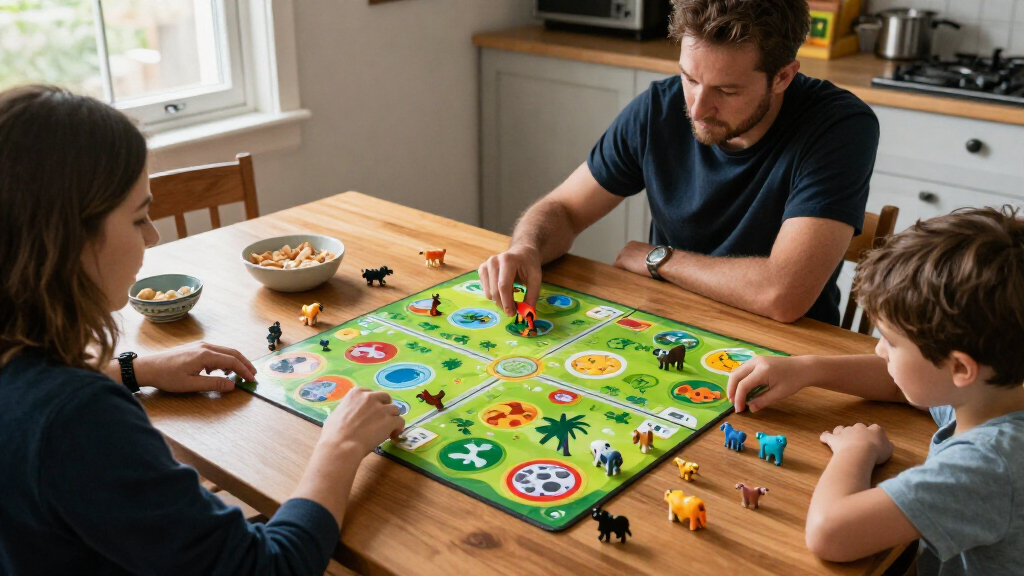
I compared these games by how clearly their biology themes shape play, how accessible the rules appear for mixed-age family groups, and whether the learning comes through decisions rather than relying only on theme. I also weighed the range of topics represented, from cells and genetics to habitats, evolution, and conservation, since families may be looking for very different kinds of science.
The order favors games with a useful balance of family accessibility, engaging decisions, and biological relevance. More specialized or strategy-heavy options rank lower for general family use, even when they may suit a particular interest better. Cooperative play, focused educational content, and lighter rules earn a game a distinct role when those strengths address a clear family need; no single title is the right fit for every age range or play style.
Factors to Consider When Choosing Biology Board Games For Families
Before choosing, decide what you want the game to do at your table: introduce biology, reinforce a topic already being studied, or simply give nature-minded players a shared strategy challenge. These broader questions can help prevent a common mismatch—buying a scientifically detailed game when the family wanted a quick game, or choosing a light theme when players hoped to learn specific concepts.
Choose a Biology Topic Your Family Will Return To
“Biology” covers very different ideas, and a familiar interest often matters more than the broadest science theme. A child fascinated by animals may connect more readily with habitats, evolution, or primates than with cell structures; a student studying heredity may get more from a genetics-focused game. Think about whether players enjoy building systems, discovering how organisms work, or discussing conservation choices. A game tied to current curiosity can prompt questions after the session, while a topic that feels like extra homework may get little repeat play. Avoid choosing by the word “educational” alone: identify the concept you actually want the game to put in front of your family.
Match Rules and Strategy to the Youngest Regular Player
Age recommendations can help, but they do not capture differences in reading confidence, patience, or experience with strategy games. For a mixed-age group, check how much text players must interpret, how many decisions they must track, and whether an adult needs to explain concepts while also managing the game. A lighter game can keep younger players involved even if older siblings understand the biology quickly; a heavier game may reward a group that enjoys planning and learning rules together. A frequent mistake is choosing for the most enthusiastic or experienced player rather than the person most likely to feel left behind. If the group’s abilities vary widely, favor clear turns and shared discussion over intricate systems.
Decide Whether Learning or Game Flow Comes First
Some families want accurate, topic-specific content to anchor play; others want science to add flavor to a game that would still be enjoyable as a family activity. Those goals are related, but not identical. Look for whether players repeatedly use the biology concept to make choices, or whether the theme mainly names cards and pieces. A detailed subject can support follow-up learning, but it may ask players to spend more attention on rules and terminology. If the game is mainly for casual gatherings, prioritize a clear play loop and conversation; if it supports a school topic, check that the subject matter is focused enough to match what the learner wants to explore.
Pick Cooperative or Competitive Play Deliberately
Competition changes how a family experiences the same science theme. Competitive games can make choices feel consequential and suit players who enjoy comparing strategies, but they may frustrate a child who takes losing personally or struggles to keep pace. Cooperative play gives the group a common problem to solve and can make it easier for adults to discuss choices without coaching one player against another. Neither format is automatically better for learning; the right choice depends on whether your family enjoys shared planning or individual goals. Consider the group’s usual game-night mood, not just the subject on the box, and remember that a cooperative title may be the better fit for siblings who are still building confidence.
Think About Session Length and Repeat-Play Variety
A game that fits your available evening is more likely to reach the table than one that needs a long uninterrupted session. Check the publisher’s play-time guidance and think about setup, rules explanation, and cleanup as part of the commitment. A shorter game can work well as a regular family ritual, while a longer strategy game may be a better choice for weekends or dedicated game nights. Also ask whether repeated plays change through different cards, goals, or strategic paths; replay variety matters when a family plans to return to the game often. Do not pay for complexity or breadth your group will rarely use, but do look for enough variation if the topic is likely to become a recurring interest.
Choose the Right Kind of Educational Depth
Biology games can teach vocabulary, show relationships between organisms, or model processes such as inheritance and cellular activity. Those forms of learning are not interchangeable. A broad ecosystem game may be better for seeing how species fit together, while a focused game can give a more detailed look at one scientific area. Families sometimes expect one game to deliver both a smooth casual experience and a complete science lesson; that is an unrealistic standard for most tabletop games. If accuracy and depth are a priority, plan to use the game as a starting point for discussion or reading rather than as the sole source of instruction. When the main goal is relaxed play, choose depth that adds interest without overwhelming the table.
Frequently Asked Questions
Which biology board game is a good first choice for a family new to science games?
I would start with a game whose central activity is easy to explain, such as building habitats, rather than one that asks the family to learn specialized biology terms before play. A clear turn structure helps younger players participate while adults can bring up science ideas naturally. If your family already enjoys heavier strategy games, a more detailed title may still work as a first science game. The best test is whether players can understand why their choices matter without needing a lesson between turns. Pick for your group’s gaming experience as much as its interest in biology.
Are biology board games useful for homeschooling or classroom learning?
They can support discussion and make relationships between biological ideas more concrete, but they should not be treated as a full curriculum on their own. A topic-specific game may complement a unit on cells, genetics, or evolution, while an ecology game can prompt conversations about habitats and species. Before using one for instruction, check whether its concepts match the learner’s level and the subject being taught. Plan to pause for questions or connect the game to a reading or activity if factual depth matters. For a classroom, also check whether the player count and session length fit the group.
Should I choose a cooperative biology game or a competitive one for siblings?
Choose cooperative play if your siblings enjoy solving shared problems or if competition tends to create tension. A common goal gives adults more room to support discussion without making one child feel singled out. Competitive play can suit siblings who like independent plans and can handle winning and losing comfortably. The science topic alone does not determine which format will work; family dynamics matter just as much. If you are unsure, consider how the children respond to competition in other games before choosing.
How can I tell whether a game teaches biology or only uses a science theme?
Look at what players do on their turns and ask whether the biology idea changes their choices. If they make decisions about habitats, traits, cell functions, or inheritance, the subject is more closely tied to play than if biology appears mainly in names and artwork. Read the rules or a sample turn when available, since product summaries may not show how much the theme affects strategy. Also distinguish between a game that introduces useful concepts and one designed for detailed instruction. For family game night, a lighter scientific connection may be enough; for study support, look for a focused topic and plan follow-up discussion.
Is a more complex biology game always better for older children?
No. Older children may enjoy more strategic choices, but complexity is only useful when it matches their interest and the family’s time for learning rules. A simpler game can still prompt strong scientific conversations, especially when the topic connects with something a child already cares about. A heavier title may be a better fit for a group that enjoys planning, reading, and replaying games, but it can reduce participation if players are mainly looking for a relaxed activity. Consider how much challenge the family wants, rather than assuming age alone calls for the most demanding option.
Conclusion
For most families, I’d begin with Ecosystem as the best overall choice because it connects biology to accessible habitat-building. Biomos is a sensible value-minded pick for groups who want nature-themed strategy without making a specific biology lesson the whole point, while Darwin’s Journey is the best premium-style choice for experienced players who want a more involved historical strategy experience. For beginners, start with Ecosystem or Biomos rather than a rules-heavy specialist game. Choose Cellulose for plant-cell learning, Cytosis for cell biology, Genotype for genetics, or Escaping Extinction if your family prefers cooperative conservation play. Match the topic and difficulty to the people at your table, and the right game will be the one your family wants to play again.