🔍 Read the full analysis: 15 AI Content Creation Tools That Will Transform 2026 on ThorstenMeyerAI.com
Open a free Amazon Business account
Business pricing, bulk buying and tax-exempt orders.
Create a free accountAs an affiliate, we earn on qualifying purchases.
TL;DR
A new wave of AI content creation tools is emerging for 2026, offering advanced features across text, video, and multimedia. These tools promise to significantly streamline content production for diverse users, from hobbyists to enterprises.
In 2026, the landscape of AI content creation is expanding rapidly, with at least 15 new tools set to redefine how digital content is produced. These include options highlighted in the original analysis. These tools, ranging from advanced text generators to sophisticated video editors, are designed to meet the needs of creators, marketers, and enterprises. Their emergence signals a significant shift toward automation and high-quality output, making content creation faster, more scalable, and increasingly accessible.
Many of these tools focus on balancing ease of use with high-quality results, aiming to serve both beginners and experienced content producers. For example, Essential AI Tools To Transform Your Business In 2026 offers insights into such solutions. Notably, video-focused AI platforms are gaining prominence, offering features tailored for social media, viral content, and multimedia projects. Pricing models vary widely, from free or low-cost options for hobbyists to premium subscriptions for large-scale enterprises. To explore the latest in AI content automation, see 2026’S Most Effective AI Tools For Content Automation. Versatility is a key factor; many tools now support multiple content formats—text, images, video, and audio—reducing the need for multiple subscriptions. Integration with existing workflows is also improving, with compatibility for popular social media platforms, content management systems, and editing software.
Industry experts emphasize that these developments are driven by advances in natural language processing, computer vision, and automation, which enable more natural-sounding text, realistic visuals, and seamless multimedia editing. However, some concerns remain about the limits of AI customization and the quality of output without human oversight. As new tools launch or update, users are advised to evaluate their specific needs carefully, balancing cost, complexity, and output quality.
The 15 picks
- 1
 Claude AI for Content Creation: How to Use Artificial Intelligence to Create…View on Amazon →
 - 2
 Canva for Business & AI Tools – From Zero to Professional Visual AssetsView on Amazon →
 - 3
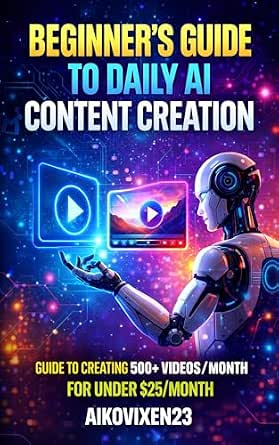 AI Content Creation for Beginners: How to Create 500+ AI Videos for TikTok, I…View on Amazon →
 - 4
 500 AI Video Generation Prompts: Create Viral Videos for YouTube, Instagram,…View on Amazon →
 - 5
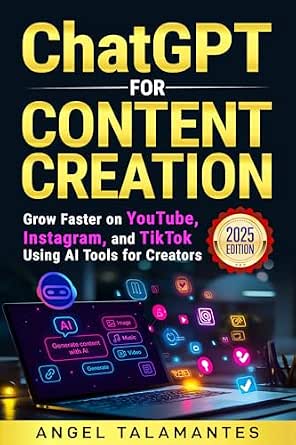 ChatGPT for Content Creation: A Practical Guide to Growing on YouTube, Instag…View on Amazon →
 - 6
 AI Prompts for Content Creation: 500 Proven Prompts to Create Blogs, Books, V…View on Amazon →
 - 7
 Successful AI Product Creation: A 9-Step FrameworkView on Amazon →
 - 8
 Claude AI for Small Business Owners: Practical Guide to Using AI for Marketin…View on Amazon →
 - 9
 The AI Toolkit for Content Creators: 10x Your Output, Grow Your Audience, and…View on Amazon →
 - 10
 AI Business Starter Kit – 50 Powerful AI Prompts for EntrepreneursView on Amazon →
 - 11
 AI for Content Creation: The Ultimate GuideView on Amazon →
 - 12
 1000 AI Tools Directory 2026: The Ultimate Guide to AI Tools for Business, Pr…View on Amazon →
 - 13
 AI for Creators: Using Artificial Intelligence for Writing, Images, Video, an…View on Amazon →
 - 14
 CapCut Pro 2026 Handbook: A Step-by-Step Guide to Editing, Effects, Transitio…View on Amazon →
 - 15
 AI Content Creation for Beginners 2026: How to Use ChatGPT, Canva, Video Tool…View on Amazon →
Why 2026’s AI Content Tools Matter for Creators
The advent of these 15 AI content creation tools in 2026 holds the potential to democratize high-quality content production, reducing barriers for small creators and large organizations alike. They can significantly cut production time, lower costs, and enable rapid experimentation with new formats and styles. For marketers and brands, this means faster campaign turnaround and more personalized, engaging content at scale. However, the rise of automation also raises questions about content originality, copyright, and the future role of human creators in the content ecosystem. Overall, these tools could reshape digital marketing, social media, and publishing industries, making AI-driven content a norm rather than an exception.
Evolution of AI Content Tools Leading into 2026
Over the past few years, AI content creation has evolved from simple text generators to sophisticated multimedia platforms. Early tools focused on basic automation, but recent advances in machine learning, especially in natural language understanding and computer vision, have enabled near-human quality outputs. Companies like OpenAI, Google, and emerging startups have released models and platforms that support diverse content types, with many integrating seamlessly into existing workflows. The trend toward multi-format versatility and user-friendly interfaces has accelerated, driven by demand from creators and enterprises seeking efficiency and scalability. The 2026 batch of tools builds on this momentum, incorporating more automation, customization, and integration features.
“The tools launching in 2026 are set to redefine the standards of content quality and ease of creation, making high-level multimedia production accessible to all.”
— Thorsten Meyer, AI Content Expert
Unanswered Questions About 2026’s AI Content Tools
While many tools are announced or expected to launch, details about their long-term reliability, customization depth, and output authenticity remain uncertain. It is not yet clear how well these tools will handle complex or nuanced content, or how they will address issues of copyright and originality. Additionally, the extent to which AI-generated content will be accepted by audiences and platforms is still evolving. Regulatory and ethical considerations around AI content are also emerging, and their impact on these tools is unknown at this stage.
Upcoming Developments and Next Steps for AI Content Platforms
In the coming months, expect further launches, updates, and integrations of these 15 tools. Industry analysts predict that user feedback and real-world testing will shape future iterations, emphasizing customization, output quality, and workflow compatibility. Companies will likely refine features based on early adopter experiences, and regulatory discussions around AI content will influence platform capabilities and policies. For users, the focus should be on evaluating tools through demos and trials to identify the best fit for their needs.
Key Questions
Can these AI tools replace human content creators entirely?
While these tools significantly automate parts of content creation, most experts agree that human oversight remains essential for ensuring tone, accuracy, and originality. AI can assist and accelerate production, but full replacement is unlikely in the near future.
Are AI content tools suitable for small businesses and individual creators?
Yes, many of the upcoming tools are designed with accessibility in mind, offering user-friendly interfaces and affordable pricing. They can help small creators produce professional-quality content efficiently.
What are the main limitations of these AI content creation tools in 2026?
Current limitations include challenges with complex or nuanced content, potential copyright issues, and the need for human editing to ensure authenticity and brand consistency. AI-generated content may still lack the emotional depth or originality of human-created work.
How might AI content tools impact content marketing strategies?
AI tools enable faster turnaround, personalized content at scale, and new creative possibilities. Marketers can experiment more freely with formats and channels, but must also consider ethical and audience acceptance factors.
Will these tools be regulated or face legal restrictions?
Regulatory discussions are ongoing globally regarding AI-generated content, focusing on transparency, copyright, and ethical use. Future restrictions could influence tool features and deployment.
Source: ThorstenMeyerAI.com
NFL season / tailgating Picks
team gear
As an affiliate, we earn on qualifying purchases.