
🔍 Read the full analysis: Inside The Creative Process Of AI-Enhanced SVG Carving: 'The Runestone Field' on ThorstenMeyerAI.com

Prime made for students and young adults
- Fast, free delivery for dorm and study essentials
- Prime Video and Amazon Music included
- Member-only deals
TL;DR
Thorsten Meyer’s latest project, ‘The Runestone Field’, uses AI-enhanced SVG carving animation to transform traditional runic art into dynamic, immersive storytelling. This development highlights innovative intersections of technology and craftsmanship.
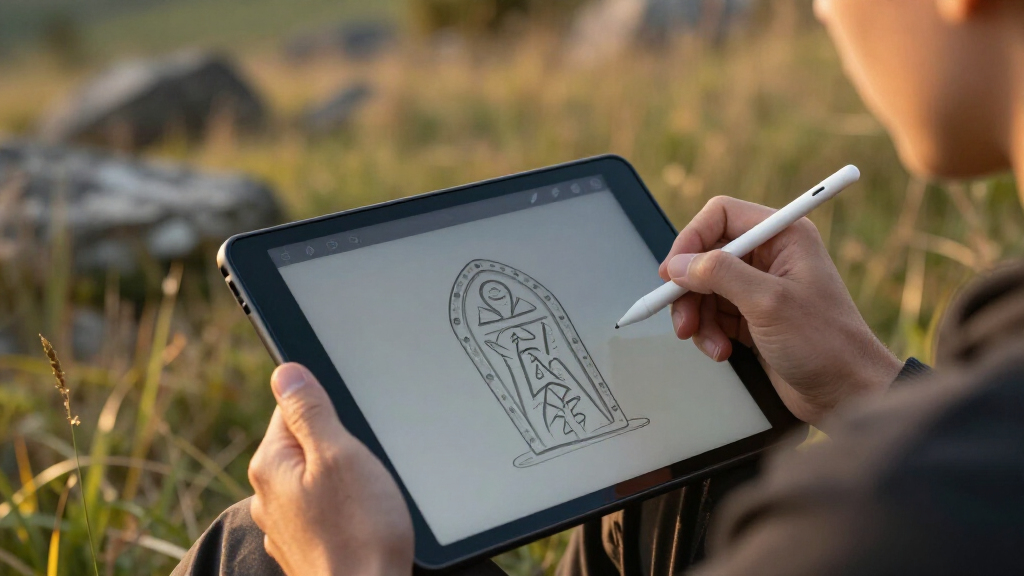
Thorsten Meyer’s latest project, ‘The Runestone Field’, employs AI-enhanced SVG carving animation to transform static runic carvings into immersive, animated narratives. This innovative approach bridges ancient storytelling with modern technology, showcasing how automation can elevate visual design and storytelling.
The project involves creating detailed SVG animations that simulate the carving process of ancient runestones, making the carvings appear as if they are being dynamically inscribed in real-time. Meyer’s team used precise SVG techniques combined with AI-driven automation to generate fluid, natural-looking animations that reveal every intricate detail of the runic symbols.
According to Meyer, this process not only highlights the artistry behind traditional runic carvings but also demonstrates how digital tools can enhance storytelling by making static historical art come alive. The project was developed through a step-by-step process that involved designing the initial SVG templates, training AI models to automate carving effects, and refining the animation flow to ensure visual coherence and artistic authenticity.
Developers faced challenges in balancing automation with craftsmanship, ensuring that the AI-generated carvings maintained historical accuracy while achieving fluid animation. The result is a piece that invites viewers to explore the stones as if they are speaking anew, with each runestone revealing its story through animated inscribing.
Inside the Creative Process of AI-Enhanced SVG Carving: ‘The Runestone Field’
Thorsten Meyer’s latest project transforms static runic carvings into immersive, animated narratives — using AI-driven SVG animation that makes each runestone appear as if it is being inscribed in real time.
By bridging ancient storytelling traditions with modern automation, the project demonstrates how digital tools can make historical art come alive, stone by stone, stroke by stroke.
“This project demonstrates how automation can elevate storytelling by bringing ancient carvings to life through precise, fluid animations.”
— Thorsten MeyerWhy AI-Enhanced SVG Carving Matters in Digital Art
This project exemplifies how AI can revolutionize digital art by automating complex visual processes traditionally done by hand, enabling artists to produce highly detailed, animated storytelling pieces at scale. It pushes the boundaries of visual design for historical and cultural narratives by making static artifacts interactive.
Immersive Experiences
Deeper understanding and appreciation of ancient art forms through animations that reveal every intricate detail of the runic symbols.
Craft Meets Automation
New tools blend craftsmanship with automation, opening pathways for innovative storytelling and educational content.
Tradition, Reimagined
A promising future where technology and tradition merge seamlessly in digital art and cultural preservation.
The Creative Process, Step by Step
Meyer’s team developed the piece through a structured pipeline: designing initial SVG templates, training AI models to automate carving effects, and refining animation flow to ensure visual coherence and artistic authenticity.
SVG Templates
Detailed vector templates of runic symbols, mapped stroke by stroke.
AI Training
Models learn authentic inscription techniques from traditional carvings.
Carving Automation
AI generates fluid, natural-looking carving animations at scale.
Refinement
Animation flow tuned for coherence, historical accuracy, and artistry.
Immersion
Each runestone reveals its story — the stones speak anew.
From Chisel to Algorithm
Runic carvings have been part of Northern European history for centuries — durable artifacts conveying stories, memorials, and cultural beliefs. Prior digital storytelling used static images or limited animations; AI-driven SVG carving introduces a new level of realism and interactivity.
| Approach | Real-Time Inscribing | Historical Accuracy | Scalability | Interactivity |
|---|---|---|---|---|
| Static Imagery | ✗ None | ✓ High | ~ Limited | ✗ None |
| Basic Animation | ~ Partial | ~ Moderate | ~ Limited | ✗ Minimal |
| AI-Enhanced SVG Carving | ✓ Full | ✓ High | ✓ AI-Driven | ✓ Emerging |
Where the Effort Went
Balancing automation with craftsmanship was the central challenge — ensuring AI-generated carvings maintained historical accuracy while achieving fluid, convincing animation.
Future Developments & Broader Applications
Meyer’s team plans to refine AI algorithms for speed and accuracy, aiming at broader digital heritage applications — including interactive features that let viewers create their own animated runestones, sound integration, and multi-layered narratives.
Faster Algorithms
Improved automation speed and accuracy for digital heritage projects at scale.
Viewer-Created Stones
Tools allowing audiences to customize and animate their own runestone inscriptions.
Multi-Layered Narratives
Upcoming releases may integrate sound and layered animations to deepen engagement.
What Remains Unanswered
How widely the SVG carving method transfers beyond this project remains to be seen.
AI model scalability and real-time user interaction details are still under development.
Long-term artistic integrity when automating traditional crafts needs further study.
Frequently Asked
How does AI enhance SVG carving animation?
AI automates the intricate process of simulating stone carving, producing smooth, natural animations that mimic real inscription techniques — saving time and increasing detail accuracy.
Can this technique be used for other historical carvings?
Yes. The underlying methods are adaptable to various forms of carved art, provided appropriate SVG templates and AI models are developed for each style.
What are the main challenges?
Maintaining historical authenticity, balancing automation with artistic control, and ensuring the animations are fluid and visually convincing.
Will it be accessible to artists and educators?
While still in development, the goal is user-friendly tools for digital art, cultural preservation, and educational projects.
What is the significance for digital storytelling?
It demonstrates how combining AI and SVG techniques can produce immersive, animated narratives that deepen engagement with historical art forms.
Where can I learn more?
Source: ThorstenMeyerAI.com — full project details and announcements.
Why AI-Enhanced SVG Carving Matters in Digital Art
This project exemplifies how AI can revolutionize digital art by automating complex visual processes traditionally done by hand, enabling artists to produce highly detailed, animated storytelling pieces at scale. It pushes the boundaries of what is possible in visual design, especially for historical or cultural narratives, by making static artifacts interactive and engaging.
For viewers, this means more immersive experiences that deepen understanding and appreciation of ancient art forms. For creators, it offers new tools to blend craftsmanship with automation, opening pathways for innovative storytelling and educational content. Overall, ‘The Runestone Field’ showcases a promising future where technology and tradition merge seamlessly in digital art.
As an affiliate, we earn on qualifying purchases.
Historical and Technological Background of Runic Carvings
Runic carvings have been a part of Northern European history for centuries, serving as both artistic expressions and communicative symbols. Traditionally, artisans meticulously carved runes into stone, creating durable artifacts that conveyed stories, memorials, and cultural beliefs.
In recent years, digital art has sought to reinterpret these ancient symbols through new mediums. AI and SVG technologies have emerged as tools to simulate and animate these carvings, allowing for dynamic visualizations that were previously impossible with static stonework. Meyer’s project builds on this trend, combining historical reverence with cutting-edge automation techniques to produce animated representations of runic inscriptions.
Prior efforts in digital storytelling have used static images or limited animations, but the integration of AI-driven SVG carving introduces a new level of realism and interactivity, making the carvings appear as if they are being inscribed in real-time.
“This project demonstrates how automation can elevate storytelling by bringing ancient carvings to life through precise, fluid animations.”
— Thorsten Meyer
As an affiliate, we earn on qualifying purchases.
Unanswered Questions About the Technique and Impact
It is not yet clear how widely applicable this SVG carving method will be beyond this specific project or how it might influence future digital storytelling practices. Details about the scalability of the AI models or the potential for real-time user interaction remain under development.
Further information is needed on the long-term preservation of artistic integrity when automating traditional crafts and how this technology might be integrated into educational or cultural preservation efforts.
As an affiliate, we earn on qualifying purchases.
Future Developments and Broader Applications of AI Carving
Thorsten Meyer’s team plans to refine the AI algorithms to improve automation speed and accuracy, aiming for broader application in digital heritage projects. They also intend to explore interactive features that allow viewers to customize or create their own animated runestones.
Additionally, upcoming releases may include more complex narratives, integrating sound or multi-layered animations, to enhance storytelling depth. The project’s success could inspire similar approaches for other historical art forms or cultural symbols, expanding the role of AI in digital art and education.
As an affiliate, we earn on qualifying purchases.
Key Questions
How does AI enhance SVG carving animation?
AI automates the intricate process of simulating stone carving, producing smooth, natural animations that mimic real inscription techniques, saving time and increasing detail accuracy.
Can this technique be used for other historical carvings?
Yes, the underlying methods are adaptable to various forms of carved art, provided that appropriate SVG templates and AI models are developed for each style.
What are the main challenges in creating AI-enhanced SVG carvings?
Key challenges include maintaining historical authenticity, balancing automation with artistic control, and ensuring the animations are fluid and visually convincing.
Will this technology be accessible to artists and educators?
While still in development, the goal is to create user-friendly tools that enable broader adoption in digital art, cultural preservation, and educational projects.
What is the significance of ‘The Runestone Field’ for digital storytelling?
It demonstrates how combining AI and SVG techniques can produce immersive, animated narratives that deepen engagement with historical art forms.
Source: ThorstenMeyerAI.com
Halloween Picks
halloween
As an affiliate, we earn on qualifying purchases.