📊 Full opportunity report: Find Local Stories With An App That Narrates Your Walk on IdeaNavigator AI — validation score, market gap, and execution plan.

Prime made for students and young adults
- Fast, free delivery for dorm and study essentials
- Prime Video and Amazon Music included
- Member-only deals
TL;DR
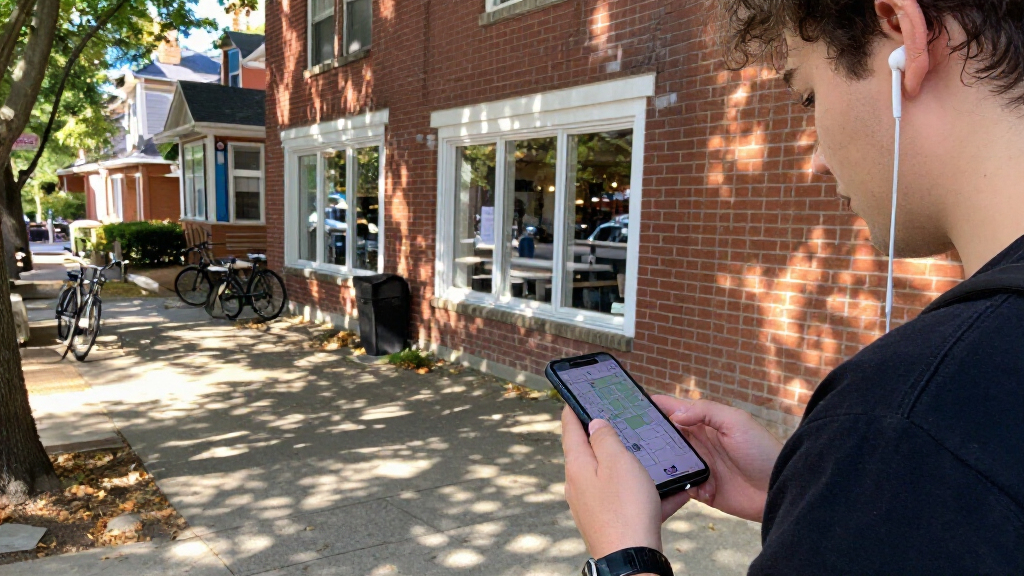
IdeaNavigator AI has outlined a concept for a walking app that generates location-based audio about nearby history, buildings and other local details. The proposal calls for a two-city test, but no launched product, measured results or verified accuracy findings are provided.
IdeaNavigator AI has proposed an audio walking app that would generate narration tied to a user’s live route, offering stories about nearby history, architecture and other details as the person walks. The proposal sets out a possible product and validation plan, not a launched service: no app, operating cities, accuracy results or user-retention data are identified, according to the concept published on the IdeaNavigator AI website.
According to IdeaNavigator AI’s concept, the app is aimed at people who want their neighborhood walks and trips narrated. A user would start a walk, and the app would produce location-grounded audio that responds as the route reaches corners or landmarks. Suggested narration includes local history, building features and unusual details. The plan also lists history, architecture and nature themes, along with the ability to save favorite routes.
IdeaNavigator AI argues that existing audio options leave a gap: podcasts generally are not tied to a listener’s location, while conventional tour apps tend to focus on landmark districts. Its proposal suggests that streets outside established tourist areas could provide material for narration, drawing on open information such as historical records, architecture data and place records. Those descriptions are the proposal’s assessment of the market; it supplies no comparative research or product testing to establish how large the gap is.
The proposed business model combines a consumer subscription with a licensing tier for tourism boards. For an initial test, the plan recommends launching in two cities, tracking walks per week and retention at week four, and checking narration accuracy on a sample of routes. It does not name the cities, set a target retention rate or describe the audit method. These proposed features, commercial options and test measures are outlined in IdeaNavigator AI’s published concept; no pilot results are reported.
Product concept · Walking audio
Find Local Stories With An App That Narrates Your Walk
IdeaNavigator AI proposes a location-aware audio app that could tell stories about history, architecture and local details as people walk. The concept includes a two-city test; no launch, pilot results or verified accuracy findings are reported.
01 / The proposed experience
Audio that follows the walk
The concept aims to make neighborhood strolls and trips more informative. As a walker reaches a place, the app would generate relevant audio from local information, rather than requiring a fixed tour chosen in advance.
01 · Discover
Stories nearby
Potential narration could cover local history, building features, nature and unusual details along the route.
02 · Adapt
Location-led listening
A user’s changing position would organize the experience, with audio responding as the walk reaches corners or landmarks.
03 · Keep
Favorite routes
The proposal includes saving preferred walks, though no app or user-tested features are identified.
02 / A possible workflow
From live route to local narration
IdeaNavigator AI suggests using open records and place information to produce route-specific audio. The concept does not name a model, dataset or fact-checking method.
Start a walk
The listener begins a route in the proposed app.
Locate nearby places
Route signals connect the walk to local records and places.
Generate audio
A language model could shape available information into narration.
Review accuracy
A proposed route sample audit would examine reliability.
03 / The format
From fixed tours to live routes
The proposal positions location-aware narration between general listening and prepared guided tours. This is the concept’s framing; it is not supported by comparative product research.
| Audio format | How it works | Potential limitation | Proposed app |
|---|---|---|---|
| Podcasts | General listening that can accompany a walk. | Usually not tied to the listener’s location. | Would respond to route and nearby places. |
| Conventional tour apps | Prepared audio for selected landmarks or districts. | Often centered on established attractions. | Could include ordinary streets and neighborhoods. |
| Live route narration | Stories generated as a walk unfolds. | Accuracy, relevance and safety remain untested. | Location becomes the organizing feature. |
The claimed opportunity beyond tourist areas is IdeaNavigator AI’s market assessment. The concept provides no comparative research or testing to establish the size of that gap.
04 / Validation plan
A two-city pilot is proposed
The next step in the concept is a limited test, but the plan names no cities, dates, sample size, success thresholds or detailed audit method.
Usage
Walks per week
Track how often participants use the experience during the pilot.
Return use
Week-four retention
Measure how many participants remain active after four weeks; no target rate is provided.
Trust
Route accuracy review
Audit narration from a sample of routes; error definitions and reviewers are unspecified.
05 / Open questions
Demand and reliability are untested
No public app listing, completed trial, user figures, subscription pricing or tourism-board agreements are reported. Several practical details also remain unanswered in the proposal.
Accuracy
How are stories checked?
The proposal does not explain how facts, disputed accounts or generated interpretation would be reviewed and refreshed.
Safety
How does audio avoid distraction?
No guidance is given for crossings, roads, pausing playback or managing attention while walking.
Privacy
What happens to route data?
Location privacy practices, data controls and options for keeping route history private are not described.
Access
What does it require?
Battery use, mobile data needs and accessibility features are not addressed in the published concept.
Trace the proposal
Testing Audio Beyond Tourist Routes
If developed and validated, a location-aware narrator could make local audio discovery useful beyond the best-known attractions. A person walking through an ordinary residential area might hear material about nearby buildings or local history without choosing a fixed, professionally produced tour in advance. That could broaden the settings in which audio guides are useful, particularly for residents and travelers exploring on foot. This is a potential use described by IdeaNavigator AI, not a demonstrated outcome.
The proposal also points to a potential change in how such content is made. It says language models can generate narration from open data on demand, which could reduce the cost of preparing a separate recording for every route. But generation does not itself establish that the accounts are accurate, engaging or safe to use while walking. The concept’s stated accuracy audit recognizes one of the central practical questions: whether route-specific narration can be trusted.
For tourism organizations, the suggested licensing tier could offer a way to present local stories across more than a small set of flagship attractions. Whether such organizations would pay for it, and whether travelers would adopt a separate subscription, are untested. The proposal matters as a product hypothesis, not evidence that a new market or business model has already succeeded.
Popular right now

Bose QuietComfort Wireless Noise Cancelling Headphones, Sandstone

Bose QuietComfort Ultra Wireless Noise-Cancelling Headphones with Spatial Audio, Black

Shark Rotator Lift-Away Upright Vacuum with HEPA Filter (NV501)
As an affiliate, we earn on qualifying purchases.
From Fixed Tours to Live Routes
The concept sits between two familiar audio formats: general listening, which can accompany a walk but does not respond to surroundings, and guided tours that follow prepared routes through selected sites. IdeaNavigator AI’s suggested approach is to make the user’s changing location the organizing feature, generating narration as the walk unfolds rather than limiting it to a pre-recorded landmark itinerary. This comparison and proposed approach come from the company’s published concept; it does not include comparative product research.
Its rationale is that language models could make it cheaper to prepare route-specific audio by using open records and place information. The proposal does not identify a particular model, dataset, technical partner or method for checking facts before narration reaches a listener. It also does not describe how the app would handle gaps in available local information, disputed historical accounts or incorrect location signals. These details matter because the app’s central promise depends on relevant, reliable narration, not simply on producing audio.
The plan remains at the idea and validation stage in the material provided. It outlines a test in two cities and names week-four retention and accuracy reviews as measures, but reports no completed pilot or user response. That distinction is important: the proposed workflow and business model are recommendations for testing, rather than demonstrated features or outcomes.
Demand and Accuracy Still Untested
The IdeaNavigator AI concept page identifies no launch announcement, public app listing, company operating the product or completed trial. It is therefore unclear whether the proposal has moved beyond planning, when a test might begin, or which cities could take part. The material also provides no user numbers, subscription pricing, tourism-board agreements or retention figures.
Accuracy is another open question. The proposal recommends auditing narration on a sample of routes but does not specify what counts as an error, who would review the scripts, how frequently information would be refreshed or how sensitive historical claims would be handled. Nor does it explain how the app would distinguish verified records from generated interpretation. Until those issues are tested, claims about reliable, location-grounded storytelling remain unproven product aims.
The intended experience raises practical questions as well. IdeaNavigator AI’s published proposal gives no information about battery use, mobile data requirements, accessibility, privacy practices for location tracking, or how narration would avoid distracting people near roads and crossings. It does not say whether users could pause audio, report an error or choose to keep their route data private. These are not reported defects; they are details not addressed in the proposal.
A Two-City Pilot Would Test Use
IdeaNavigator AI’s proposal describes a pilot across two cities as the next step. It recommends measuring walks per week and how many participants remain active at week four, alongside an accuracy review of narration from a sample of routes. No dates, locations, sample size or performance thresholds are supplied, so there is no confirmed timetable or benchmark against which a result could be judged.
If a pilot is announced, the details to watch include how local information is sourced and checked, how frequently listeners receive narration, and whether people return after trying the app. Evidence of repeat use would help assess whether the format is useful beyond an initial novelty; an accuracy audit could show whether generated stories are dependable enough for everyday use. No such findings are available yet.
For now, the development described by IdeaNavigator AI is a proposal for a narrow first test, with a defined audience and possible revenue routes. Whether it becomes an app, attracts tourism-board partners or delivers dependable local storytelling remains to be seen.
Source: IdeaNavigator AI
Key Questions
Has the walking app launched?
No launch is reported. IdeaNavigator AI has outlined a product concept and a proposed validation plan, but provides no app release details or completed pilot results.
What would the app do?
A user would start a walk and receive audio generated around the route, with proposed stories about history, buildings and local details. The concept also lists history, architecture and nature themes and saved routes.
How would the proposal test whether people want it?
IdeaNavigator AI’s proposal recommends a test in two cities, measuring walks per week and retention at week four. The cities, participant numbers and success criteria have not been specified.
How will narration accuracy be checked?
The plan proposes auditing narration on a sample of routes, but does not give the review method, error standard or fact-checking process. No accuracy results are reported.
How might the app make money?
IdeaNavigator AI’s concept suggests a consumer subscription and a licensing tier for tourism boards. It does not provide prices or report any signed partnerships.
Source: IdeaNavigator AI