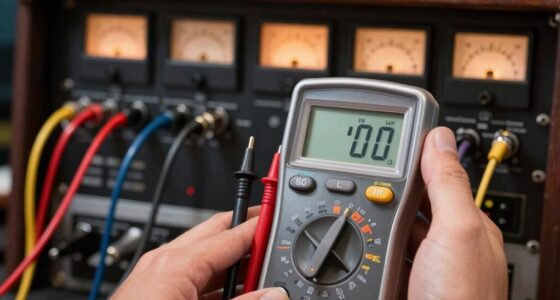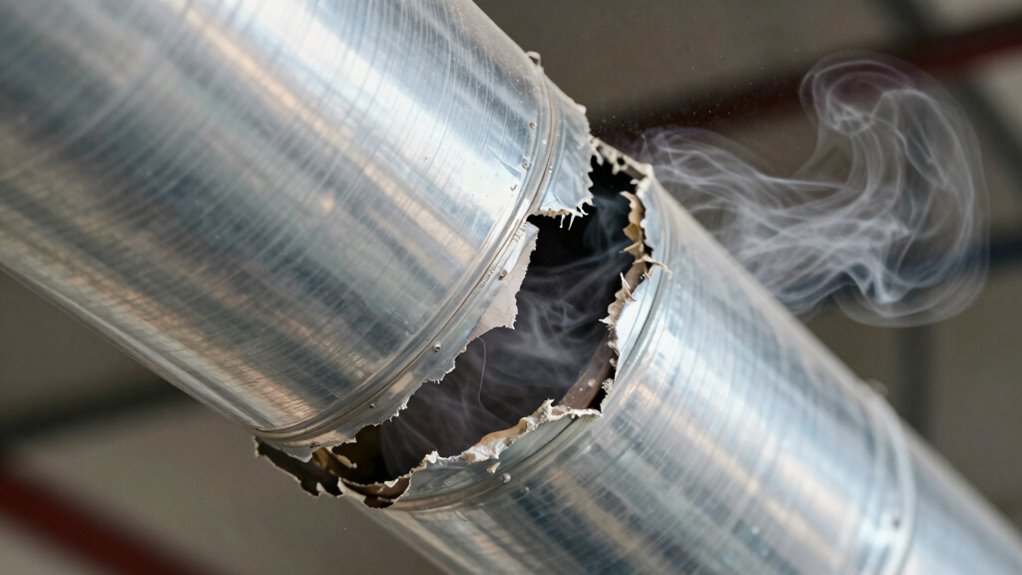
Duct leakage is a sneaky problem that wastes energy and drives up your utility bills because conditioned air escapes before reaching your rooms. Poorly sealed or damaged ducts force your HVAC system to work harder, causing uneven temperatures and drafty spots. To curb this, you can easily spot leaks and seal them using affordable methods like mastic or foil tape. Keep your ducts sealed to save energy and improve comfort—there’s more to uncover if you continue exploring.
Key Takeaways
- Duct leaks allow conditioned air to escape, reducing HVAC efficiency and increasing energy bills.
- Hidden leaks cause uneven temperatures and drafts, impacting home comfort and air quality.
- Detecting leaks involves visual inspections, listening for hissing, and using tools like smoke pencils or leak testers.
- Sealing leaks with mastic or foil tape restores proper airflow, saving energy and extending HVAC lifespan.
- Regular maintenance and airtight duct sealing prevent energy waste and improve overall home performance.
What Is Duct Leakage and Why Does It Matter?
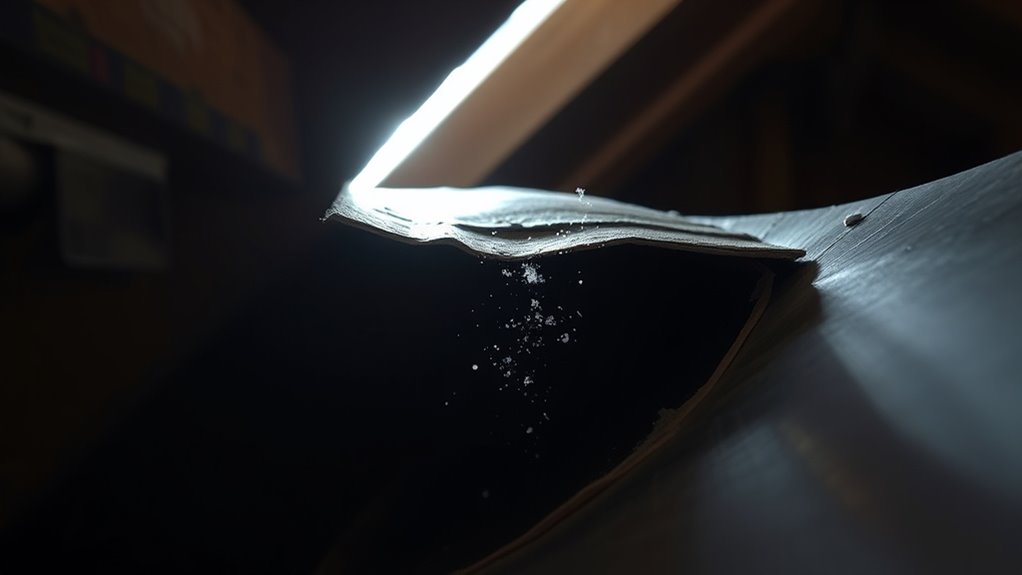
Have you ever wondered why your heating and cooling bills are higher than expected? Duct leakage occurs when air escapes from gaps or holes in your duct system, disrupting airflow dynamics. Proper duct design is essential to guarantee efficient delivery of heated or cooled air, but leaks compromise this balance. When ducts aren’t sealed correctly, conditioned air doesn’t reach its intended destination, forcing your HVAC system to work harder. This inefficiency wastes energy and raises utility costs. Duct leakage can also cause uneven temperatures throughout your home, making some rooms uncomfortable. Understanding how duct design influences airflow helps you recognize the importance of sealing leaks. Keeping your ducts airtight ensures ideal airflow, reduces energy waste, and keeps your home comfortable year-round. Additionally, projector technology plays a role in enhancing home entertainment, paralleling the importance of precise design in maintaining system efficiency.
How Can You Spot Signs of Duct Leaks in Your Home?
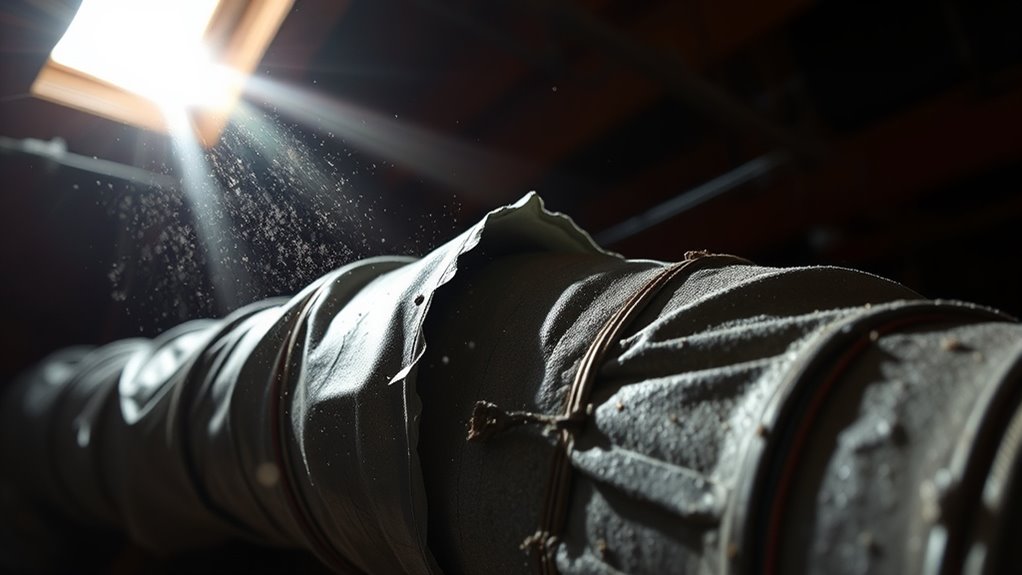
If your energy bills seem higher than they should be or some rooms feel unevenly heated or cooled, these could be signs of duct leaks. Check your duct system for visible damage or disconnected sections, especially in attics, basements, or crawl spaces. Pay attention to airflow patterns—if airflow seems weak in certain vents or inconsistent across rooms, leaks might be affecting your system’s performance. Listen for hissing sounds near registers or along duct runs, which can indicate escaping air. Additionally, hot or cold spots in your home, or increased dust and debris around vents, can point to compromised duct integrity. Being attentive to these signs helps you identify duct leaks early, so you can take action before they considerably impact your comfort or energy costs. Using specialized home security cameras can also help monitor areas like attics or basements where leaks are common.
Why Do Duct Leaks Lead to Higher Energy Bills?
When your duct leaks, conditioned air escapes before it reaches your living spaces, making your system work harder. This increased effort leads to higher energy demand and rising cooling and heating costs. Understanding this connection helps you see why fixing leaks can save you money on your energy bills. Simple strategies for sealing duct leaks can make a significant difference in maintaining a calm and organized home.
Loss of Conditioned Air
Duct leaks allow conditioned air to escape before reaching its intended spaces, forcing your HVAC system to work harder to maintain comfortable temperatures. When conditioned air leaks out, your system compensates by running longer, increasing energy consumption. Poor duct insulation can worsen this problem, as it allows more heat transfer and makes it harder to keep the air at the desired temperature. Additionally, leaks disrupt airflow balance, causing uneven heating or cooling throughout your home. As your system struggles to deliver consistent comfort, it consumes more energy and increases your bills. Sealing leaks and improving duct insulation restore proper airflow, ensuring conditioned air reaches its destination efficiently. Proper duct sealing helps maintain your home’s comfort while reducing unnecessary energy waste.
Increased Energy Demand
Leaking ducts cause your HVAC system to work harder, which directly increases your energy consumption and bills. When conditioned air escapes through leaks, your system has to run longer to maintain your desired indoor comfort. This extra effort reduces your system’s energy efficiency, wasting electricity and increasing costs. As your system works harder, it consumes more fuel or electricity, leading to higher energy bills each month. The inefficiency caused by duct leaks also means your heating and cooling are less effective, forcing your system to overcompensate. Over time, this added demand not only raises costs but also strains your equipment, possibly leading to early wear and tear. Fixing duct leaks helps your system operate more efficiently, saving you money and keeping indoor comfort steady. Sealing duct leaks can significantly improve your system’s performance and energy savings.
Higher Cooling and Heating Costs
Because your HVAC system works harder to compensate for lost conditioned air, your energy bills start to climb. Duct leaks cause your system to run longer, increasing energy consumption. The duct material and installation methods markedly influence leak severity; poorly sealed or flexible ducts are more prone to leaks. When conditioned air escapes, your heater or air conditioner must work overtime to reach your desired comfort level. This added workload raises your energy costs, especially during extreme weather. Properly sealed ducts with durable materials and professional installation can reduce leaks and improve efficiency. Addressing duct leaks not only lowers your bills but also enhances indoor comfort by maintaining consistent temperatures. Regular duct maintenance can prevent leaks and ensure your system operates at peak efficiency. Fixing leaks is a smart investment to keep energy costs in check and your home comfortable year-round.
How Can You Detect Leaky Ducts Yourself?
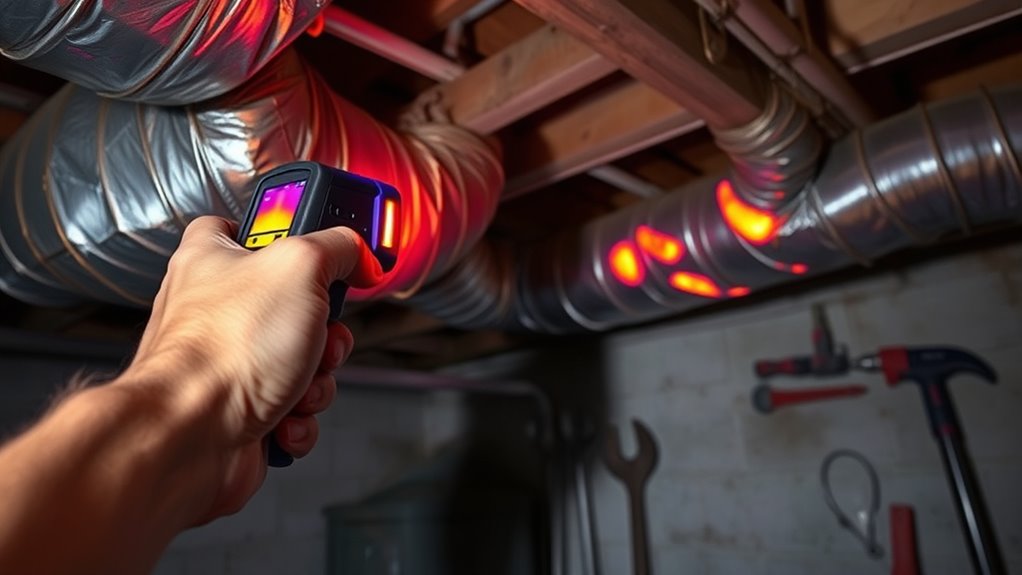
You can start by inspecting your ducts visually for any obvious tears, holes, or loose connections. Listening carefully around your ductwork can help you hear hissing or whistling sounds that indicate leaks. Combining these simple checks makes it easier to spot problem areas without professional tools. Additionally, using a detection method like a smoke pencil or soapy water can help you identify leaks more precisely.
Visual Inspection Techniques
Detecting leaky ducts through visual inspection is a practical first step in maintaining your HVAC system. Start with a thorough duct inspection, checking for obvious signs of damage, disconnections, or tears in the ductwork. During your visual assessment, look for bent, crushed, or disconnected sections, as these often indicate leaks. Inspect joints, seams, and connections for gaps or loose fittings. Also, watch for dust or debris around duct joints, which can signal air escaping. Use a flashlight to examine dark or hidden areas more effectively. Keep an eye out for mold or moisture, which may point to leaks causing condensation. Regular visual assessments help you identify potential issues early, allowing you to take corrective action before energy loss becomes costly. Additionally, sizing and load‑planning tools can assist you in understanding your home’s airflow needs and pinpointing problematic areas.
Listening for Leaks
Listening for leaks is a practical way to identify duct issues that may not be visible during a visual inspection. By paying attention to sounds in your duct system, you can perform simple diy detection of leaks. Turn on your HVAC system and listen carefully near the ductwork, especially at joints and seams. You might notice hissing, whistling, or other unusual noises indicating escaping air. To improve your chances of detecting leaks:
- Focus on areas where the system is quiet, as leaks create distinct sounds.
- Use a flashlight to help locate any visible cracks or disconnected sections.
- Check for drafts or temperature differences along duct runs when the system is operational.
- Recognize that Free Floating techniques can also be employed to assess duct integrity without invasive methods.
Listening for leaks isn’t just effective; it’s a cost-efficient first step toward sealing your ducts and saving energy.
What Are Cost-Effective Ways to Seal Your Ducts?
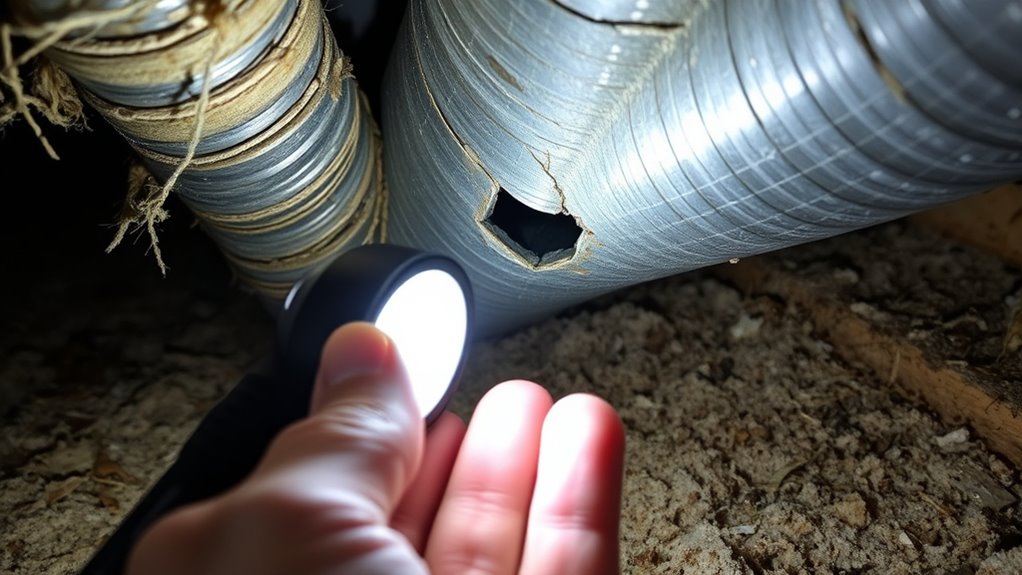
Sealing your ducts doesn’t have to be expensive or complicated. Start with simple sealing methods like using mastic or foil tape around seams and joints. These materials are affordable and effective when applied correctly. To identify leaks, use inspection tools such as a flashlight or smoke pencil to spot visible gaps and holes. For more thorough detection, a duct leakage tester or blower door test can help locate hard-to-see leaks. Before sealing, clean the ducts to ensure good adhesion. Applying sealant properly around connections and joints reduces air loss and improves system efficiency. Regular inspections and sealing maintain energy savings and comfort over time. Additionally, smart‑home integration can help monitor duct performance and alert you to potential leaks remotely.
How Fixing Duct Leaks Benefits Your Home in the Long Run
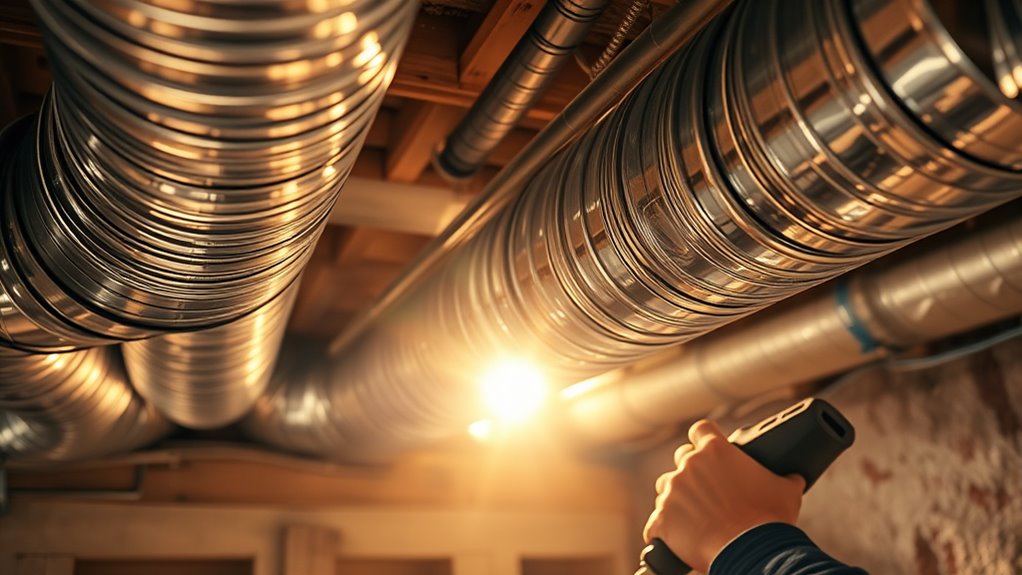
Fixing duct leaks not only improves your home’s immediate comfort but also delivers long-term benefits that save you money and enhance efficiency. By sealing leaks, you reduce energy waste, allowing your heating and cooling systems to work smarter, not harder. This boosts your home’s energy efficiency and maintains consistent indoor comfort year-round. Over time, you’ll notice lower utility bills and fewer system breakdowns. Additionally, addressing duct leaks reduces drafts and uneven temperatures that can cause discomfort.
- Save money on energy bills
- Extend the lifespan of your HVAC system
- Create a more comfortable, stable indoor environment
Investing in duct repairs now pays off by making your home more efficient and comfortable in the long run.
How Can You Keep Your Ducts Sealed Over Time?

Wondering how to keep your ducts sealed over time? The key is regular maintenance and proper materials. Start by inspecting your ducts for any signs of leaks or damage. Use duct tape as a quick fix, but remember it’s not a long-term solution. For a more durable seal, apply mastic sealant to joints and seams. Mastic creates a flexible, airtight barrier that lasts longer and resists temperature changes better than tape. Seal all accessible connections, registers, and vents thoroughly. Revisit these areas annually or after major home renovations. Keeping your ducts properly sealed minimizes air leaks and maintains energy efficiency. Combining routine inspections with the right sealing methods ensures your ducts stay sealed and your home stays comfortable for years to come.
Frequently Asked Questions
How Often Should I Have My Duct System Professionally Inspected?
You should have your duct system professionally inspected at least once every 3 to 5 years, but more frequent seasonal checks are recommended if you notice uneven heating or increased energy bills. Regular inspections help identify leaks and damage early, ensuring your system runs efficiently. Staying on top of inspection frequency keeps your home comfortable, saves money, and prevents duct leakage from becoming a bigger problem down the line.
Can Duct Leaks Cause Indoor Air Quality Problems?
Think of your duct system as the heart of your home’s air circulation. When leaks occur, they let indoor pollutants escape or bring in outdoor contaminants, causing indoor air quality problems. These leaks can introduce dust, mold, or chemicals into your living space, making it harder to breathe comfortably. Sealing leaks improves air circulation, keeps pollutants out, and helps you enjoy cleaner, healthier indoor air every day.
Are There Specific Signs That Indicate Duct Leaks in Certain Seasons?
Yes, seasonal indicators and temperature fluctuations can reveal duct leaks. In extreme weather, you might notice inconsistent heating or cooling, drafts, or hot and cold spots in your home. During winter, if your energy bills spike unexpectedly or you feel chilly despite your system running, it could signal leaks. Conversely, in summer, uneven cooling or increased energy use also suggests duct issues. Keep an eye on these seasonal signs to catch leaks early.
What Tools Do Professionals Use to Locate Hidden Duct Leaks?
Professionals use tools like smoke pencils and ultrasonic detectors to find hidden duct leaks. Smoke pencils help you see air leaks by producing visible smoke near joints and seams, revealing escape points. Ultrasonic detectors pick up high-frequency sounds caused by escaping air, making leaks easier to identify, especially in hard-to-see areas. These tools allow you to accurately locate leaks, ensuring you can seal them and improve your home’s energy efficiency effectively.
How Long Does It Typically Take to Seal All Duct Leaks in a Home?
Sealing your duct leaks is like repairing tiny leaks in a boat’s hull—timing matters. Typically, it takes a professional one day to complete the sealing process, including the inspection timeline. The initial inspection identifies leaks, then sealing follows. Once done, your system becomes airtight, saving energy and money. Your home’s comfort improves, and the effort pays off in just a short amount of time.
Conclusion
By sealing your duct leaks, you’re closing the door on wasted energy and soaring bills. Think of your ducts as the veins of your home—if they’re leaky, energy rushes out like blood through a crack. Taking steps to fix and maintain them keeps your home running smoothly, saving you money and comfort long-term. Don’t let hidden holes drain your energy; patch them up and let your home breathe easy.