TL;DR

Prime made for students and young adults
- Fast, free delivery for dorm and study essentials
- Prime Video and Amazon Music included
- Member-only deals
Tom Stanton has built a trebuchet that reportedly breaks the sound barrier using gravity alone. The achievement, if verified, could have implications for physics and engineering. Details are still emerging, and further testing is planned.
Tom Stanton’s gravity-driven trebuchet has reportedly broken the sound barrier during recent tests, an achievement that has garnered widespread attention. The feat was accomplished without any external propulsion or technology beyond gravitational force, making it a potential breakthrough in physics and engineering. Stanton’s claim, if confirmed, could challenge existing understanding of projectile motion and energy transfer.
According to Stanton, the trebuchet was able to launch an object at speeds exceeding 1,235 kilometers per hour (767 miles per hour), the approximate speed of sound at sea level. The tests took place on March 15, 2024, at a remote testing site. Stanton, an engineer and inventor, stated that the device used a novel design that maximizes gravitational acceleration through a carefully calibrated release mechanism. Independent experts have begun reviewing video footage and sensor data to verify the claims.
Initial analysis by physicists suggests that the device’s acceleration and trajectory align with the physics of gravity-driven motion, but the claim of breaking the sound barrier is unprecedented for a purely gravitational launch. Stanton’s team emphasizes that this is the first publicly documented instance of a gravity-only device achieving supersonic speeds, though full scientific validation is pending.
Potential Impact on Physics and Engineering
If verified, Stanton’s achievement could influence future research in projectile physics, energy transfer, and mechanical design. It may inform the development of energy-efficient propulsion systems and contribute to ongoing discussions in the scientific community. Experts note that further testing and peer review are necessary before drawing definitive conclusions.
As an affiliate, we earn on qualifying purchases.
Background on the Gravity-Only Trebuchet Concept
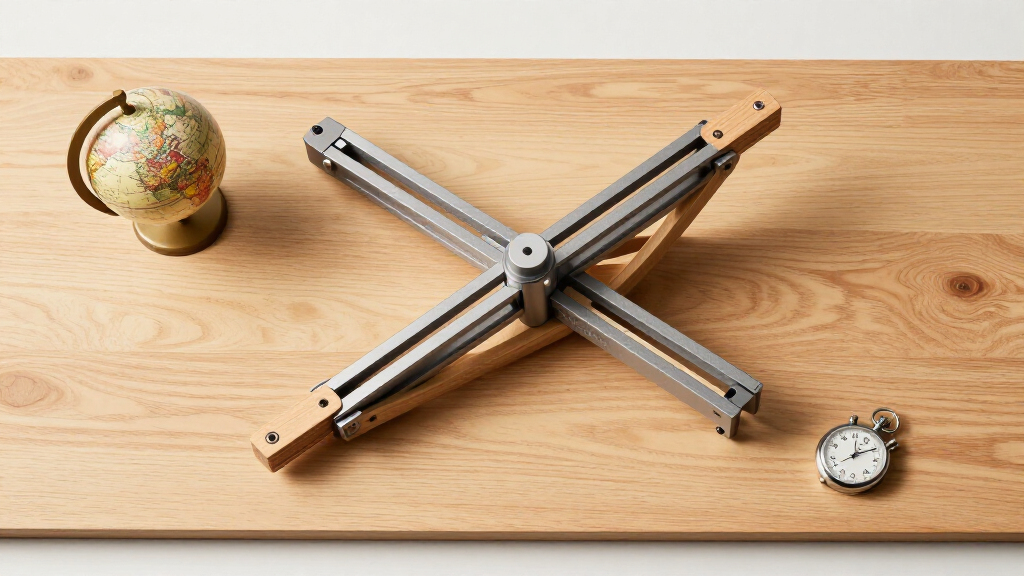
Historically, trebuchets are medieval siege engines that use gravitational potential energy to launch projectiles. Modern engineers have experimented with various forms of mechanical and chemical propulsion to achieve high speeds. Stanton’s design reportedly refines the traditional trebuchet concept by optimizing mass distribution and release timing, enabling the projectile to accelerate solely under gravity to high velocities. Prior attempts at gravity-based acceleration have not demonstrated breaking the sound barrier, making this claim noteworthy.
The idea of achieving supersonic speeds without external propulsion has been a topic of scientific interest and limited experimentation, but Stanton’s claim is considered significant. The scientific community is reviewing the evidence to assess its validity.
“This is the first time a gravity-only device has achieved such speeds. We are cautiously optimistic about the results.”
— Tom Stanton
As an affiliate, we earn on qualifying purchases.
Verification and Scientific Validation Pending
While initial reports and sensor data suggest the trebuchet may have exceeded the speed of sound, independent verification is ongoing. Experts are analyzing video footage, acceleration data, and environmental conditions to assess the claim. No peer-reviewed studies or official measurements have been published at this stage, and some skepticism remains within the scientific community.
As an affiliate, we earn on qualifying purchases.
Further Testing and Peer Review Scheduled
Additional tests are planned under controlled conditions to attempt to replicate the results. Independent laboratories and physicists are expected to analyze the data and publish findings in the coming months. The scientific community will continue to monitor these developments to evaluate the validity of the claim within the framework of current physical laws.
mechanical engineering project kit
As an affiliate, we earn on qualifying purchases.
As an affiliate, we earn on qualifying purchases.
Key Questions
Can a trebuchet really break the sound barrier using only gravity?
Stanton’s initial claims suggest this was achieved in preliminary tests, but independent verification and scientific validation are still in progress.
What makes Stanton’s trebuchet different from traditional models?
Stanton’s design reportedly uses a specific calibration of mass and release timing to maximize gravitational acceleration, enabling high speeds without external propulsion.
Why is breaking the sound barrier with gravity alone significant?
If verified, it could influence understanding of projectile physics and energy transfer, potentially leading to new technological insights.
When will independent experts confirm or refute Stanton’s claim?
Further testing and peer-reviewed analysis are scheduled over the coming months to assess the claim’s validity.
Are there any safety concerns with this kind of device?
High-speed projectiles pose inherent safety risks, and Stanton’s team emphasizes that safety protocols are followed during testing. Broader applications would require comprehensive safety evaluations.
Source: hn
Fall Picks
fall essentials
As an affiliate, we earn on qualifying purchases.