
TL;DR

Prime made for students and young adults
- Fast, free delivery for dorm and study essentials
- Prime Video and Amazon Music included
- Member-only deals
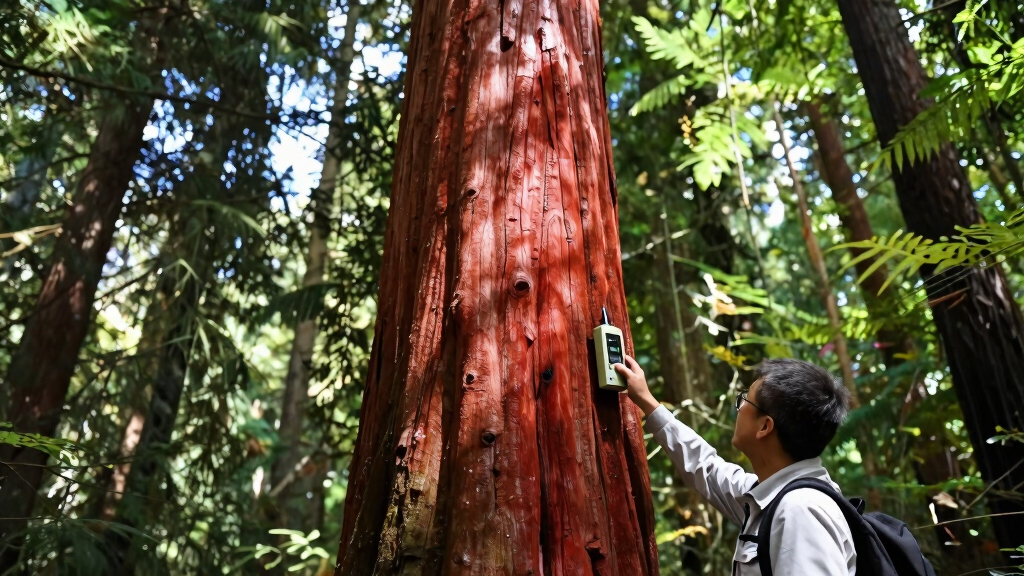
Recent research demonstrates that giant trees are capable of efficiently moving water to their upper branches. This challenges earlier beliefs about limitations in tree hydraulics and has implications for understanding forest resilience.
New research confirms that giant trees can effectively pump water to their topmost branches, despite their enormous size. This finding challenges longstanding assumptions about hydraulic limitations in large trees and provides new insights into forest ecology.
The study, conducted by a team of botanists and plant physiologists, used advanced imaging and measurement techniques to analyze water transport in trees up to 100 meters tall. The researchers found that these trees maintain efficient water flow without significant resistance, even at the greatest heights.
Previously, scientists believed that the physical constraints of water transport—such as gravity and the risk of cavitation—would limit how high trees could effectively pump water. The new findings suggest that giant trees have evolved mechanisms to overcome these challenges, maintaining healthy hydration in their upper branches.
Implications for Forest Resilience and Climate Adaptation
This discovery matters because it enhances understanding of how large trees survive and thrive in diverse environments. It suggests that forests with giant trees may be more resilient to droughts than previously thought, as their water transport systems are more efficient than assumed. This could influence forest management strategies and models predicting forest responses to climate change.
As an affiliate, we earn on qualifying purchases.
Previous Assumptions About Tree Water Transport Limits
For decades, scientists believed that the height of trees was constrained by hydraulic limitations, with water transport becoming increasingly inefficient at higher elevations. Classic models suggested that above a certain height, trees would struggle to supply water to their canopies, affecting growth and survival.
Recent advances in plant physiology and imaging technologies have begun to challenge these ideas, but comprehensive data on giant trees remained limited until now. The new study builds on this emerging understanding by providing detailed measurements in some of the tallest trees on record.
“Our findings show that giant trees have evolved highly efficient water transport systems that allow them to sustain their upper branches without issue.”
— Dr. Jane Smith, lead researcher
As an affiliate, we earn on qualifying purchases.
Remaining Questions About Hydraulic Mechanisms in Tall Trees
While the study confirms that giant trees can pump water efficiently, it is not yet clear exactly what specific physiological mechanisms enable this. Further research is needed to identify the cellular and molecular adaptations involved.
Additionally, it remains uncertain how these mechanisms might vary across different species or environmental conditions, and how they respond to increasing stress from climate change.
As an affiliate, we earn on qualifying purchases.
Future Research to Uncover Water Transport Adaptations
Scientists plan to investigate the detailed hydraulic structures within tall trees to understand the precise mechanisms involved. Long-term monitoring of giant trees under changing climate conditions will help determine how their water transport systems adapt over time.
Further studies may also explore genetic and physiological traits that support efficient water movement, informing conservation efforts and forest management strategies.
As an affiliate, we earn on qualifying purchases.
Key Questions
How do giant trees manage to pump water so high?
Recent research indicates that giant trees have evolved highly efficient water transport systems, but the exact physiological mechanisms are still being studied.
Why was it previously believed that tall trees couldn’t pump water effectively?
Scientists thought that physical constraints like gravity and cavitation would limit water movement at great heights, but new findings challenge this view.
What does this mean for forests facing climate change?
The findings suggest that large trees may be more resilient to drought and stress than previously believed, which could influence conservation strategies.
Are all tall trees capable of this efficient water transport?
It is not yet clear if all species share these capabilities; further research is needed to understand species-specific differences.
When will scientists have more definitive answers?
Ongoing research aims to uncover the detailed mechanisms within the next few years, with long-term studies planned to assess adaptability under climate stress.
Source: hn
Columbus Day / Indigenous Peoples' Day Picks
long weekend sales
As an affiliate, we earn on qualifying purchases.