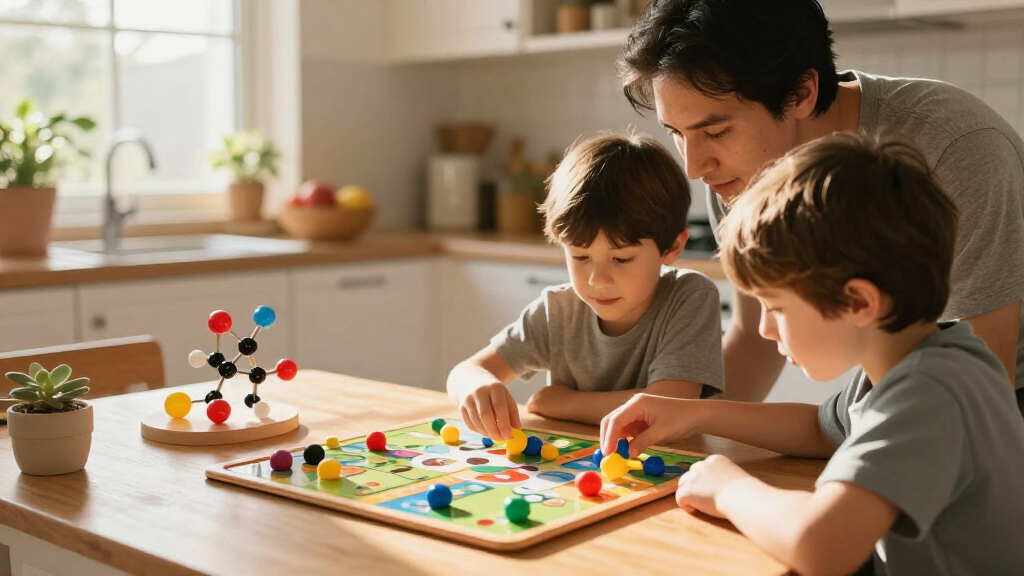
Educational science board games can turn topics like chemistry, biology, space, and ecology into hands-on play. My best overall pick is Cytosis, which links cell biology concepts to strategic decisions, while Periodic stands out for chemistry fans and National Geographic Rock Bingo offers a more approachable way into earth science. The main tradeoff is depth versus accessibility: richer science can bring more rules, while quick trivia and matching games are easier to start but teach less through play. The 12 options here span both styles, along with several focused science card games. Read on for the full breakdown and a guide to choosing the right fit.

Prime made for students and young adults
- Fast, free delivery for dorm and study essentials
- Prime Video and Amazon Music included
- Member-only deals
Key Takeaways
- Cytosis and Peptide use strategy to connect play with biology, while trivia titles lean more on recall than on modeling scientific processes.
- Periodic and Ion suit chemistry learners, but they approach the subject differently: one centers on element combinations, the other on building compounds.
- Rock Bingo and Guess in 10: National Geographic Animals are more approachable for younger or less game-focused players than the heavier science strategy choices.
- Ecosystem and Planet Strategy foreground interconnected systems, making them better fits for players drawn to relationships and planning than rapid-fire facts.
- The strongest choice depends on the learning goal: use a focused science game for subject practice, or choose broader trivia and animal games for lighter, mixed-age play.
| Planet Strategy Board Game |  | Best for Visual Ecology Learning | Brand: Blue Orange Games | Players: 2–4 | Recommended age: 8 years and up | VIEW LATEST PRICE | See Our Full Breakdown |
| Periodic: A Game of the Elements |  | Best for Chemistry Strategy | Brand: Genius Games | Genre: Strategy | Players: 2–6 | VIEW LATEST PRICE | See Our Full Breakdown |
| National Geographic Rock Bingo and Gemstone Trivia Game for Kids |  | Best Hands-On Geology Set | Brand: Blue Marble | Age range: 6 years and up | Educational objective: Rocks, minerals, and gemstones | VIEW LATEST PRICE | See Our Full Breakdown |
| Higher or Lower Science Trivia Card Game |  | Best Portable Science Quiz | Brand: Quokka | Players: 2+ | Question count: 500+ | VIEW LATEST PRICE | See Our Full Breakdown |
| Peptide: A Protein Building Strategy Card Game |  | Best for Cell Biology | Brand: Genius Games | Game type: Strategy card game | Players: 2–5 | VIEW LATEST PRICE | See Our Full Breakdown |
| MindWare Science Trivia Challenge Game | 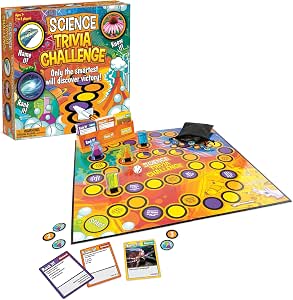 | Best for Mixed-Age Groups | Brand: MindWare | Age range: Listing: ages 7 and up; manufacturer recommendation: ages 8 and up | Players: Up to 4 | VIEW LATEST PRICE | See Our Full Breakdown |
| The Awkward Yeti Organ Attack Card Game |  | Best for Humorous Anatomy Learning | Players: 2–6 | Recommended age: 8 years and up | Playing time: About 30 minutes | VIEW LATEST PRICE | See Our Full Breakdown |
| Ecosystem Family Card Game |  | Best for Ecology and Biodiversity | Brand: Genius Games | Players: 2–6 | Playing time: 15–20 minutes | VIEW LATEST PRICE | See Our Full Breakdown |
| Space Board Game for Kids and Families |  | Best for Space Trivia Across Ages | Brand: Quokka | Manufacturer: Adducate | Model: BGSpaceExplorer50 | VIEW LATEST PRICE | See Our Full Breakdown |
| Ion: A Compound Building Game (2nd Edition) |  | Best for Learning Chemistry Through Play | Brand: Genius Games | Players: 2–7 | Playing time: 20–30 minutes | VIEW LATEST PRICE | See Our Full Breakdown |
| Cytosis: A Cell Biology Board Game |  | Best for Strategic Cell Biology | Brand: Genius Games | Genre: Educational, Family | Players: Listed as 2, 3, 4 or 10+; exact player range is unclear | VIEW LATEST PRICE | See Our Full Breakdown |
| Skillmatics Guess in 10: National Geographic Animals |  | Best for Quick Science-Themed Play | Brand: Skillmatics | Age range: 6 years and up | Number of players: 2 or more | VIEW LATEST PRICE | See Our Full Breakdown |
| educational science board game | Brand | Players | Recommended age | Included components |
|---|---|---|---|---|
| Planet Strategy Board Game | Blue Orange Games | 2–4 | 8 years and up | — |
| Periodic: A Game of the Elemen | Genius Games | 2–6 | — | — |
| National Geographic Rock Bingo | Blue Marble | — | — | — |
| Higher or Lower Science Trivia | Quokka | 2+ | 8 years and up | — |
| Peptide: A Protein Building St | Genius Games | 2–5 | 10 and up | Peptide game |
| MindWare Science Trivia Challe | MindWare | Up to 4 | — | — |
| The Awkward Yeti Organ Attack | — | 2–6 | 8 years and up | Cards |
| Ecosystem Family Card Game | Genius Games | 2–6 | 12 years and up | Game |
| Space Board Game for Kids and | Quokka | 2–6 | 8 years and up | 50 space cards, 6 astronaut tokens, 1 game board |
| Ion: A Compound Building Game | Genius Games | 2–7 | 8 years and up | 1 Science Behind booklet |
| Cytosis: A Cell Biology Board | Genius Games | Listed as 2, 3, 4 or 10+; exact player range is unclear | — | Cytosis: A Cell Biology Game |
| Skillmatics Guess in 10: Natio | Skillmatics | — | — | 50 game cards, 6 clue cards, 1 card holder, instruction manual, travel-friendly box |
More Details on Our Top Picks
Planet Strategy Board Game
Planet makes habitat relationships tangible: players draft magnetic landscape tiles and shape a three-dimensional world over 12 turns, aiming to attract animal life. That spatial puzzle gives families an approachable way to discuss how environments support different species, though the game is less direct about teaching formal science facts than Periodic: A Game of the Elements or Peptide. Its magnetic tiles and distinctive planet cores give it a strong table presence, while the tile-placement rules keep the strategic challenge accessible to a broad age range. The tradeoff is a narrower focus on habitat-building and a player count of just two to four; groups seeking quick trivia or a wider mix of science topics may prefer Higher or Lower Science Trivia. I’d choose Planet for visual, hands-on ecology play rather than a structured lesson in biology.
Pros:- Three-dimensional planet cores make habitat-building easy to visualize.
- Magnetic landscape tiles support hands-on drafting and placement.
- Animal objectives connect strategic choices with habitat suitability.
- Accessible rules can work for family or adult play.
Cons:- The science learning is centered on habitats rather than a broad range of topics.
- A two-to-four-player limit excludes larger groups.
- Tile drafting and spatial planning may not appeal to players who prefer trivia or card-driven play.
Best for: Families with children eight and older who enjoy spatial puzzles and want to talk about habitats and animal life while playing.
Not ideal for: Large groups or buyers seeking explicit chemistry or biology instruction; the game supports only two to four players and centers on tile placement.
- Brand:Blue Orange Games
- Players:2–4
- Recommended age:8 years and up
- Play mechanism:Tile drafting and placement
- Planet cores:4
- Magnetic continent tiles:50
- Animal cards:45
- Edition:Standard Edition
Our verdict“Choose Planet for family-friendly, spatial ecology play, but pick Periodic or Peptide for more direct coverage of specific science concepts.”
Periodic: A Game of the Elements
Periodic is the clearest pick here for players who want chemistry to shape the decisions, not just decorate the theme. Players use periodic trends to move across the table, discover elements, and collect points, turning the periodic table into a tactical map. That makes it more concept-focused than Planet, whose learning leans toward habitats and spatial planning, and more strategic than the quick question format of Higher or Lower Science Trivia. Its range of two to six players also suits classrooms and larger family groups better than several options in this lineup. The tradeoff is that players need some curiosity about chemistry to connect with the game; those seeking a broad sampler of science topics may find its focus narrow. The listing also gives no play-time estimate or detailed component inventory, making session planning less predictable.
Pros:- Uses periodic trends as part of movement and decision-making.
- Element discovery and set collection give chemistry concepts a strategic context.
- Supports two to six players, accommodating larger groups than Planet or Peptide.
- Designed for both family play and classroom use.
Cons:- Its chemistry focus may not engage players looking for a wider science mix.
- No play-time estimate is provided in the supplied product data.
- The supplied component information is limited to “Game.”
Best for: Families, science clubs, and teachers looking for a strategy game for ages 10 and up that centers play on periodic-table concepts.
Not ideal for: Groups uninterested in chemistry or buyers who need a stated play time and detailed component list before choosing a classroom game.
- Brand:Genius Games
- Genre:Strategy
- Players:2–6
- Age range:10 years and up
- Play mechanism:Tactical movement and set collection
- Science focus:Periodic table and chemistry principles
- Edition:Standard Edition
- Model number:GOT1008
Our verdict“Pick Periodic when your group wants chemistry concepts woven into tactical play and can accommodate a focused subject.”
National Geographic Rock Bingo and Gemstone Trivia Game for Kids
National Geographic Rock Bingo and Gemstone Trivia pairs familiar game formats with physical specimens, so children can connect facts about rocks and minerals to objects they can examine. Its over 150 specimens and mix of bingo, memory, gem-tac-toe, trivia, and card games offer more activity variety than Periodic, which focuses on chemistry strategy, and more tactile learning than Higher or Lower Science Trivia. The fact cards can also serve as flash cards, giving families a simple way to revisit information outside a game. This is the strongest choice for younger children starting with geology, but not every included activity will suit every age: some games may work better with older kids. It is also a subject-specific set rather than a wide-ranging science board game, so buyers wanting one game for chemistry, biology, and space topics should look elsewhere.
Pros:- Includes over 150 rock and mineral specimens for hands-on exploration.
- Offers several formats, including bingo, memory, trivia, and gem-tac-toe.
- Fact cards can double as a review aid outside the games.
- Geology-focused activities suit children starting to learn about minerals and gems.
Cons:- Some of the games may be better suited to older children than the youngest listed age group.
- Its science coverage is limited to rocks, minerals, and gemstones.
- The multiple activities may be less appealing to players looking for one deeper strategy game.
Best for: Families with children six and older who want a tactile introduction to rocks, minerals, and gemstones through several short game formats.
Not ideal for: Buyers seeking a strategy-heavy board game or broad science coverage; the activities focus on geology, and some may be better suited to older children.
- Brand:Blue Marble
- Age range:6 years and up
- Educational objective:Rocks, minerals, and gemstones
- Games:Rock bingo, mineral memory, gem-tac-toe, trivia, and card games
- Specimens:Over 150 rocks and minerals
- Playing cards:52
- Language:English
- Dimensions:7.28 x 2.17 x 10.04 inches
- Model number:NGRKBINGO
Our verdict“Choose this set for tactile, child-friendly geology activities, not for broad science coverage or sustained strategic play.”
Higher or Lower Science Trivia Card Game
Higher or Lower Science Trivia is the easiest option in this group to bring along: it is a compact card game with 500+ questions and rules designed for quick starts. That format favors casual conversation and making educated guesses over the deeper system-based learning in Periodic or Peptide. For families, parties, and travel, its two-or-more-player setup and age-eight recommendation make it a flexible choice when a full board game would be cumbersome. The breadth of questions promises variety, but trivia depends on players enjoying recall and guessing; it does not give the same hands-on connection to specimens as the National Geographic geology set or the spatial choices of Planet. It also needs at least two people, so it is not a solo learning activity. I’d pick it for lively, low-setup science conversation, not structured teaching of one subject.
Pros:- More than 500 questions provide a large pool of prompts.
- Compact card format is suited to travel and outings.
- Quick-to-learn play makes it easy to include different ages in a group.
- Encourages conversation and science-related guessing.
Cons:- Requires at least two players.
- Trivia and recall may be less engaging than the strategic play in Periodic or Peptide.
- Does not offer the physical specimens or focused, hands-on subject exploration of the geology set.
Best for: Families and groups with children eight and older who want a lightweight science quiz for travel, parties, or a quick game night.
Not ideal for: Solo learners or players who prefer building, collecting, or hands-on science activities over answering trivia questions.
- Brand:Quokka
- Players:2+
- Question count:500+
- Recommended age:8 years and up
- Material:Cardstock
- Language:English
- Dimensions:4.13 x 2.75 inches
- Power source:None
Our verdict“Choose this for portable, casual science quizzing with a group, but look to Planet or Peptide for more involved play mechanics.”
Peptide: A Protein Building Strategy Card Game
Peptide turns a specific biology process into a card-drafting challenge: players gather amino acids and mRNA nucleotides, use organelle cards, and build protein chains to score. That gives it a more focused molecular lesson than Planet, whose science centers on habitats, and a more developed strategy structure than the question-and-answer play of Higher or Lower Science Trivia. With a stated 30–45 minute playing time and support for two to five players, it offers a defined session for family or classroom groups aged 10 and up. The main tradeoff is its specialized vocabulary and subject matter; players without interest in cell biology may find the theme harder to connect with than the geology activities in the National Geographic set. The listing also provides little component detail beyond the game itself, so buyers cannot gauge the card mix from the supplied information.
Pros:- Makes protein-building concepts part of the core game objective.
- Covers amino acids, mRNA, tRNA, ATP, organelles, and polypeptide chains.
- Card drafting adds strategic choices beyond straightforward science trivia.
- Stated 30–45 minute playing time helps groups plan a session.
Cons:- Specialized biology content may not appeal to players seeking varied science topics.
- Recommended for ages 10 and up, limiting suitability for younger children.
- The supplied component description is sparse.
Best for: Teachers, science-minded families, and older children who want a strategy card game about protein translation and cell biology.
Not ideal for: Younger children or casual groups seeking broad science topics; the game focuses on molecular biology concepts and is recommended for ages 10 and up.
- Brand:Genius Games
- Game type:Strategy card game
- Players:2–5
- Playing time:30–45 minutes
- Recommended age:10 and up
- Science concepts:mRNA-to-protein translation, polypeptide chains, proteins, amino acids, organelles, tRNA, and ATP
- Model number:GOT1003
- Included components:Peptide game
Our verdict“Pick Peptide for a focused, strategy-led introduction to protein translation, but choose Higher or Lower for lighter, broader science quizzing.”
MindWare Science Trivia Challenge Game
Beginner and advanced question levels give this trivia game a useful advantage for families with players at different ages or science backgrounds: one group can share a game without every question landing at the same difficulty. Its 216 double-sided cards, observation tokens, die, and pawns add a board-game structure beyond simple question-and-answer play, while solo mode offers an option when no group is available. Compared with Space Board Game for Kids and Families, which focuses on space clues across three difficulty levels, this covers a broader range of science trivia. The tradeoff is that its learning is driven by answering questions rather than building a scientific model or ecosystem. The age guidance also varies: the listing says 7 and up, while the manufacturer recommendation is 8 and up, so I’d follow the higher age for younger players.
Pros:- Beginner and advanced questions help players with different knowledge levels share a game.
- 216 double-sided cards provide a substantial pool of science questions.
- Solo or group play offers flexibility when player availability changes.
- Tokens, a die, and pawns give trivia a board-game structure.
Cons:- The listing and manufacturer differ on the minimum recommended age.
- Learning relies mainly on recalling answers rather than experimenting or constructing concepts.
- Play is limited to four players.
Best for: Families or classrooms with up to four players who want science trivia at more than one difficulty level, plus an occasional solo option.
Not ideal for: Buyers seeking hands-on science building or a tightly defined subject; this game centers on trivia, and its age guidance is inconsistent for seven-year-olds.
- Brand:MindWare
- Age range:Listing: ages 7 and up; manufacturer recommendation: ages 8 and up
- Players:Up to 4
- Contents:216 cards, die, 50 observation tokens, token bag, 4 pawns
- Language:English
- Material:Paper
- Game type:Educational trivia board game
- Play modes:Solo or group play
Our verdict“Choose it for flexible, mixed-age science trivia, but look elsewhere if you want a more hands-on learning format.”
The Awkward Yeti Organ Attack Card Game
Organ Attack turns anatomy into a take-that card game: players use afflictions against opponents’ organs and immunity cards to defend them. That comic, competitive framing can make health and body topics more approachable for older children, teens, and adults than a straightforward quiz. Unlike MindWare Science Trivia Challenge Game, which tests broad science knowledge with questions, this pick anchors play in human anatomy and card-driven tactics. Its book-style case is easy to store and carry, and a roughly 30-minute session suits a quick game night. The humor is also its main limitation: some affliction cards cover mature or sensitive subjects, so families may want to review the content first. It requires at least two players, making it less flexible than MindWare’s solo-capable trivia game.
Pros:- Makes human anatomy and health the focus of a humorous, interactive game.
- Combines attack and immunity cards with strategic decisions.
- Supports 2–6 players across children, teens, and adults.
- Book-style case gives the card game portable storage.
Cons:- Requires at least two players and has no solo mode.
- Some affliction cards address mature or sensitive topics.
- Its learning focus is anatomy rather than a broad range of science subjects.
Best for: Families, teens, or adult groups who want an anatomy-themed card game with humor, direct interaction, and at least two players available.
Not ideal for: Solo players, younger children who may be uncomfortable with illness-related humor, or buyers who want a calm, non-confrontational science game.
- Players:2–6
- Recommended age:8 years and up
- Playing time:About 30 minutes
- Material:Paper
- Included components:Cards
- Container:Hardcover book-style case
- Educational objective:Learn about human anatomy and health
- Expansions:Malady Madness; Free Radical
Our verdict“Pick Organ Attack for social, anatomy-focused play if your group is comfortable with its edgy humor.”
Ecosystem Family Card Game
Ecosystem Family Card Game makes ecological relationships the play challenge: players draft and arrange animal and habitat cards to create an ecosystem, with biodiversity contributing to the game’s strategy. That gives it a more connected subject focus than MindWare Science Trivia Challenge Game, where learning comes through answering questions across science topics. Its 15–20 minute play time makes it a practical choice for a short family or classroom activity, while drafting asks players to weigh how choices fit together rather than simply recall facts. The age recommendation of 12 and up is a real dividing line; it is less suited to younger family groups than Space Board Game for Kids and Families, recommended from age 8. New players may also need practice before the card combinations and strategy feel intuitive.
Pros:- Connects animal and habitat choices to ecology and biodiversity.
- Drafting encourages strategic thinking about how cards fit together.
- A 15–20 minute session fits short game nights or classroom activities.
- Supports groups of 2–6 players.
Cons:- Recommended for ages 12 and up, limiting its fit for younger children.
- Gameplay may take practice to master.
- The supplied product information identifies components only as a game, giving buyers limited detail about what is included.
Best for: Families with players aged 12 and up, or teachers seeking a short ecology activity centered on biodiversity and strategic card choices.
Not ideal for: Families with younger children or groups wanting a very simple first science game; the age guidance is higher and the gameplay can take practice to master.
- Brand:Genius Games
- Players:2–6
- Playing time:15–20 minutes
- Recommended age:12 years and up
- Material:Cardboard
- Included components:Game
- Model year:2019
- Educational focus:Ecology and biodiversity
Our verdict“Choose Ecosystem for a brief, strategy-led ecology game with older children or adults, rather than for a beginner game aimed at young kids.”
Space Board Game for Kids and Families
Three difficulty levels make this space-themed clue game a flexible pick for groups with varied experience, while questions about planets, moons, and other space objects keep the subject focused. Players move across an illustrated galaxy board using a mix of strategy and luck, so it feels more like a family board game than a stack of trivia cards. Compared with MindWare Science Trivia Challenge Game, it trades broad science coverage and solo play for a dedicated space theme and support for up to six players. The 20–60 minute playing time leaves more room for a full group session, but is less predictable than the shorter Ecosystem Family Card Game. Clue-based trivia will not suit everyone, and the compact 8.66-inch board may feel small for groups wanting a larger tabletop centerpiece.
Pros:- Focuses on planets, moons, and other space objects.
- Three difficulty levels accommodate different experience levels.
- Supports 2–6 players for family and group play.
- Includes space cards, astronaut tokens, and an illustrated board.
Cons:- Clue-based trivia may not appeal to players who prefer strategy or hands-on science.
- The 20–60 minute playing-time range makes session length less predictable.
- The board measures 8.66 x 8.66 inches, which may feel compact for some groups.
Best for: Families or groups of 2–6 who want space facts, multiple difficulty levels, and a shared board-game format for players ages 8 and up.
Not ideal for: Players who dislike clue-based trivia, want science topics beyond astronomy, or prefer a short, consistently timed game.
- Brand:Quokka
- Manufacturer:Adducate
- Model:BGSpaceExplorer50
- Recommended age:8 years and up
- Players:2–6
- Playing time:20–60 minutes
- Difficulty levels:3
- Included components:50 space cards, 6 astronaut tokens, 1 game board
- Board dimensions:8.66 x 8.66 inches
Our verdict“Choose this for a group-friendly space trivia game with adjustable difficulty, but not if you want broader science coverage or a predictable short session.”
Ion: A Compound Building Game (2nd Edition)
Ion: A Compound Building Game puts chemistry into the decisions players make: they draft cards and pair positively and negatively charged ions to build neutral compounds and score points. That mechanism offers a more direct connection between play and a scientific idea than the question-led format of MindWare Science Trivia Challenge Game, while remaining a faster, lighter option than a broader science board game. It supports 2–7 players and takes about 20–30 minutes, making it flexible for small groups or a busy game night. The science booklet adds context beyond scoring, and an advanced radioactivity mode gives experienced groups another route to explore. That mode is not equally suitable for every table: it is recommended for experienced players and groups of four or more. Players seeking broad science coverage may prefer MindWare’s trivia mix.
Pros:- Card drafting connects decisions to ionic charges and neutral compounds.
- Science booklet explains the chemistry behind the game.
- Supports 2–7 players and a 20–30 minute play session.
- Advanced radioactivity mode offers an added challenge for experienced groups.
Cons:- The subject is focused on chemistry rather than a range of science topics.
- The advanced radioactivity mode is recommended for experienced players and groups of four or more.
- The supplied component details name the science booklet but do not describe the full card contents.
Best for: Families, educators, or science-minded groups who want to practice ionic bonding through card drafting, with an optional advanced mode for experienced players.
Not ideal for: Buyers looking for a broad science survey or groups that want every mode to be accessible to beginners; the radioactivity mode has specific experience and group-size guidance.
- Brand:Genius Games
- Players:2–7
- Playing time:20–30 minutes
- Recommended age:8 years and up
- Edition:2nd Edition
- Model year:2022
- Material:Paper
- Included components:1 Science Behind booklet
- Educational focus:Ionic bonding and compound building
Our verdict“Pick Ion for a focused, game-based introduction to ionic bonding, especially if your group wants a chemistry challenge beyond science trivia.”
Cytosis: A Cell Biology Board Game
Cytosis makes cell biology the structure of the game, not just a theme: players place workers to gather resources and use them to build enzymes, hormones, and receptors. That gives science-minded families a strategic activity with concepts woven into their choices, while the included peer-reviewed educational booklet offers added context beyond the turns themselves. Compared with Peptide: A Protein Building Strategy Card Game, Cytosis focuses on a broader set of cell processes rather than protein construction alone. The tradeoff is a roughly 90-minute playtime, which asks for more attention and time than a short trivia or card game. The listed player count is also unclear, so I would check the game’s packaging or instructions before planning a larger classroom group.
Pros:- Builds cell biology concepts into worker-placement decisions
- Includes a peer-reviewed educational booklet for added learning context
- Offers strategic, screen-free play
- Suited to family, classroom, and science-enthusiast settings
Cons:- Approximately 90 minutes may be too long for shorter attention spans or brief lessons
- The listed player count is unclear, complicating plans for larger groups
Best for: Families with science-interested children ages 10 and up, or educators seeking a longer strategy game to pair with a cell biology unit.
Not ideal for: Players looking for a quick, simple science game, or teachers who need a clearly stated player limit for group planning.
- Brand:Genius Games
- Genre:Educational, Family
- Players:Listed as 2, 3, 4 or 10+; exact player range is unclear
- Playing time:Approximately 90 minutes
- Minimum age:10 years
- Included components:Cytosis: A Cell Biology Game
- Model number:GOT1006
- Warranty:No warranty
Our verdict“Choose Cytosis for a longer, strategy-led introduction to cell biology, but check the player limit before buying for a group.”
Skillmatics Guess in 10: National Geographic Animals
Guess in 10: National Geographic Animals turns animal facts into a compact deduction game: players ask up to 10 yes-or-no questions to identify an animal. The clues encourage children to sort information and communicate their reasoning, making this a more accessible starting point than the worker-placement strategy in Cytosis. Its 20-minute sessions and travel-friendly box also suit car trips or short family game breaks. The tradeoff is that the science stays focused on animal identification and trivia; it does not build the extended biology model or strategic depth found in Cytosis. It also needs at least two players, so it will not fill the role of a solo activity. I’d choose it for quick, conversational learning rather than a lesson centered on detailed scientific systems.
Pros:- Question-based play practices logical deduction and clear communication
- Animal clues make science-themed play accessible to younger children
- Portable box and short sessions suit travel and brief breaks
- Includes clue cards to add variety to guessing
Cons:- Requires at least two players
- Focuses on animal identification rather than deeper scientific systems or strategy
- No product warranty is listed
Best for: Families with children ages 6 and up who want a portable, quick animal-learning game for trips or short play sessions.
Not ideal for: Solo players or older science-game fans seeking detailed biology concepts and sustained strategic decisions.
- Brand:Skillmatics
- Age range:6 years and up
- Number of players:2 or more
- Average playtime:20 minutes
- Included components:50 game cards, 6 clue cards, 1 card holder, instruction manual, travel-friendly box
- Material:Paper
- Model number:SKILL1728GNGA
Our verdict“Pick Guess in 10 for portable animal trivia and quick deduction practice, not for a detailed science curriculum or solo play.”

How We Picked
I compared these 12 games by how directly their play connects to science learning, how easy the rules appear to teach, and whether players make meaningful decisions or mainly answer prompts. I also considered subject focus, likely age and experience fit, replay potential, and how comfortably each option can serve families or learning groups. These criteria favor games that make scientific ideas part of the play loop, rather than relying on a science label alone.
The ranking puts Cytosis first for its clear biology focus paired with strategic play. Games such as Periodic, Ion, and Peptide follow as stronger subject-specific choices, while trivia, bingo, and animal guessing games rank higher for accessibility than for conceptual depth. I treated narrower appeal and a steeper learning curve as real tradeoffs, not automatic flaws; the best pick changes with the players and the learning goal.
| educational science board game | Brand | Material |
|---|---|---|
| Planet Strategy Board Game | Blue Orange Games | — |
| Periodic: A Game of the Elemen | Genius Games | — |
| National Geographic Rock Bingo | Blue Marble | — |
| Higher or Lower Science Trivia | Quokka | Cardstock |
| Peptide: A Protein Building St | Genius Games | — |
| MindWare Science Trivia Challe | MindWare | Paper |
| The Awkward Yeti Organ Attack | — | Paper |
| Ecosystem Family Card Game | Genius Games | Cardboard |
| Space Board Game for Kids and | Quokka | — |
| Ion: A Compound Building Game | Genius Games | Paper |
| Cytosis: A Cell Biology Board | Genius Games | — |
| Skillmatics Guess in 10: Natio | Skillmatics | Paper |
Factors to Consider When Choosing Educational Science Board Games
Before choosing, decide what you want the game to do: introduce a topic, reinforce classroom learning, or simply prompt science conversation during family play. These distinctions matter more than a game’s science-themed artwork, and they can help you avoid buying a game that is either too demanding or too shallow for your group.
Match the Game to the Learning Goal
A game can teach facts, help players recognize patterns, or model how parts of a system interact; those outcomes are not interchangeable. If a learner needs subject practice, choose a title built around that discipline rather than a general trivia game with occasional science questions. For deeper understanding, favor play that asks players to make choices based on scientific relationships. A quick question-and-answer format may be more inviting, but it often checks recall rather than showing why a process works. A common mistake is choosing the broadest science label when a narrower topic would better match the learner’s current interest. Think about what you want players to remember or explain after the game ends.
Check Complexity Against the Group
Rule complexity affects whether a game reaches the table, especially when adults and children have different experience with strategy games. Look for a challenge that lets the intended players make decisions without requiring a long rules lesson before the science begins. Younger players may benefit from short turns, concrete visuals, or simple prompts, while experienced players may prefer layered choices. Do not assume an educational game is automatically suitable for a classroom or a mixed-age family. A game pitched at the oldest player can leave younger participants waiting for help, while one pitched too low can lose older players’ interest. If the group varies widely, prioritize easy-to-explain rules and opportunities for discussion.
Choose Between Recall and Systems Thinking
Trivia and guessing games are useful for quick recall, conversation, and low-pressure entry into science topics. Strategy games can ask players to connect ideas, manage resources, or anticipate consequences, which may support richer discussion but usually calls for more attention. Neither format is universally better: a fast game may be the right choice for a short family session, while a longer strategic format can suit players ready to explore a subject. Avoid treating a correct answer as proof of deep understanding. Ask whether the game encourages players to explain their choices or only reward recognition. That difference can guide whether you want a review tool or a more involved learning activity.
Consider Subject Focus and Transfer
Focused games can give learners a memorable way into chemistry, cell biology, or ecology, but the knowledge may stay tied to that subject. Broader games can work across different interests and groups, though they may cover each topic less deeply. If a learner is already fascinated by one field, a specialized game can build on that motivation. For a shared household or learning club with varied interests, broader themes may see more repeat use. A common buying mistake is choosing a narrow game because its subject sounds educational without checking whether anyone wants to play that subject repeatedly. Consider whether the game can spark questions beyond its own cards and turns.
Think About Replay and Group Use
Replay value depends on more than the number of cards or possible combinations. Players may tire of a game if questions become familiar, or return to it often if each session produces different choices and discussion. Group size and turn length also shape whether a title works for a class, a family evening, or one-on-one play. Before buying, check the game’s stated player range and age guidance, then ask how long your group will realistically stay engaged. A compact card format may be convenient to bring along, but portability does not guarantee that the content suits every setting. For regular use, favor a format that fits the time and attention available.
Pay for Depth Only When It Fits
A more involved science game can offer richer decisions and a stronger connection between mechanics and subject matter, but that depth has little value if the group avoids the rules. Simpler games may be the better choice for first introductions, short sessions, or players who prefer conversation over planning. If you are buying for a motivated learner, a focused strategy title can justify its added complexity by giving the subject room to develop. For a broad age range, ease of teaching and flexible participation may matter more than detailed simulation. Do not equate a longer or more elaborate game with better learning. Pay for the kind of engagement your players will actually use.
Frequently Asked Questions
Which game is the best starting point for a child who is new to science games?
Start with a format that keeps rules light and makes the subject easy to recognize, rather than choosing the most detailed science simulation. Rock Bingo offers a visual, approachable entry into rocks and gemstones, while Guess in 10: National Geographic Animals uses animal clues for an accessible guessing format. The better fit depends on whether the child enjoys matching or asking questions. A strategy game can come later if the player wants more planning and subject depth. Check the age guidance and play style against the child’s attention span, not only their interest in science.
Are science trivia games as educational as strategy games?
They can support learning, but they tend to teach differently. Trivia games give players practice retrieving facts and can quickly reveal what they already know. Strategy games may ask them to apply relationships or make choices within a model, which can prompt more explanation and discussion. Neither format guarantees learning on its own; conversation after a turn can add useful context. Choose trivia for quick review and broad participation, and choose strategy when players are ready to spend more time with a topic.
Should I choose Periodic or Ion for a chemistry-focused player?
Choose based on the kind of chemistry engagement the player wants, not just the shared subject label. Periodic focuses on elements and their combinations, while Ion centers on building compounds. A learner who is working with element identities may prefer the former, while someone interested in how compounds form may prefer the latter. Check which concepts align with the player’s current coursework or curiosity. If possible, read the rule overview first: the game mechanics and complexity can matter as much as the chemistry topic.
Can one game work for both family play and classroom learning?
Some games can move between those settings, but the group size, session length, and learning goal may change how well they work. A classroom often benefits from simple turns and clear prompts so players do not spend most of the session learning rules. Family groups may welcome more strategy if everyone enjoys longer play. Think about whether the game gives quieter players a way to participate and whether it can be paused or explained in sections. For classroom use, pair play with a short follow-up question so players connect game choices to the science topic.
Is a focused science game a better buy than a general trivia game?
A focused title is usually the stronger match when a learner already cares about a topic or needs practice in a specific area. A general trivia game can suit groups with mixed interests and may be easier to bring out for casual play. The tradeoff is depth: broad coverage often gives less time to any one concept. Consider how often the group will revisit the subject and whether the game supports discussion beyond correct answers. If interest is uncertain, a broad and accessible format may be a safer introduction; a focused game makes more sense once the topic has a willing audience.
Conclusion
For most buyers seeking a blend of science connection and meaningful play, I recommend Cytosis as best overall. Choose Rock Bingo as best value for accessible earth-science play, and Periodic as best for chemistry-focused players; Guess in 10: National Geographic Animals is my pick for beginners who prefer quick, approachable turns. For biology strategy, compare Peptide with Cytosis, while Ion suits players interested in compound building. A premium-style choice should be the more involved game your group will actually revisit, not simply the one with the most demanding rules. Match the subject and format to the players, and the right game becomes much easier to choose.
Halloween Picks
halloween
As an affiliate, we earn on qualifying purchases.