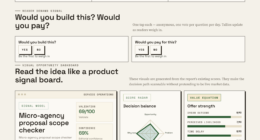

📊 Full opportunity report: Thrymvault: A System Around Your Content on ThorstenMeyerAI.com — validation score, market gap, and execution plan.
TL;DR
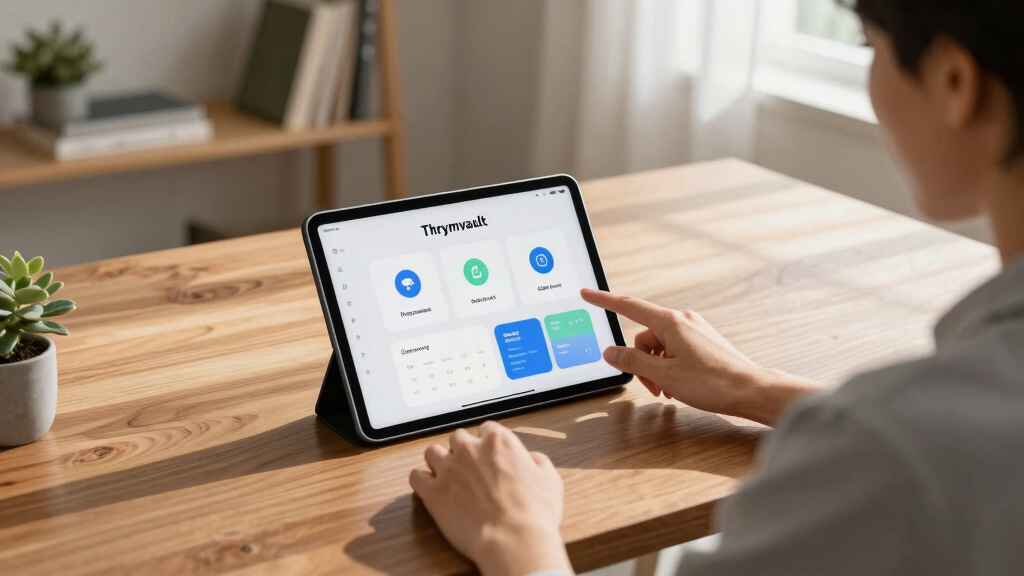
Thrymvault introduces a new content management system that consolidates ideas, drafts, assets, and feedback into one private, self-hosted workspace. Its unique structure combines documents, databases, and AI prompts to streamline content workflows.
Thrymvault has launched a private, self-hosted content workspace that consolidates ideas, drafts, assets, and feedback into a single environment. This development aims to address the widespread issue of scattered content workflows, offering creators a unified platform to streamline their processes. The company claims this approach reduces time spent managing multiple tools and improves content organization and collaboration.
The core feature of Thrymvault is its integration of documents and structured databases within one workspace. Unlike traditional tools that force users to choose between freeform documents and structured data, Thrymvault combines both. A single page can contain a long-form draft alongside a plan, while a database can store ideas, videos, scripts, and performance notes, all linked and viewable in multiple formats—such as kanban, calendar, or search—without duplication.
The platform also includes an AI layer built around saved prompts, enabling repeatable workflows like summarization, title generation, or content repurposing. Instead of a chat box, users access a library of proven prompts that can be run across multiple records in bulk, reducing manual effort and ensuring consistency. Additionally, Thrymvault offers portals—public, read-only views with selective property access—that allow sharing polished content with clients or stakeholders without exposing internal notes or drafts. Feedback and comments are tightly integrated, maintaining context and streamlining review cycles. The platform emphasizes security and role-based access, ensuring private workspaces can safely collaborate with external partners or clients.
A System Around Your Content
One self-hosted workspace where ideas, drafts, assets, clients, feedback, and reusable AI prompts finally know about each other — instead of scattered across notes, sheets, folders, and chat threads.
Typed properties, relations, and saved views mean the same records become a writing queue, a kanban board, a calendar, or a searchable archive — and each record carries a rich-text body, so the plan and the draft live together.
+ token
+ passphrase
- This is the capability set. Drawn from Thrymvault’s own product documentation — what the workspace is for and how its pieces fit.
- Early-stage, in active build. Some surfaces are more settled than others; treat described capabilities as design, not a finished-product guarantee.
- No deploy-and-verify story yet. Unlike the shipped products in this series, there’s no public-launch writeup attached here — when there is, it gets the same treatment.
- The promise is “lose less.” Not “do more” — less time hunting, copying, asking, and rebuilding, because the pieces share one roof you own.
Independent commentary, produced with AI assistance under human editorial oversight. The views are the author’s own and may change. This is not business, financial, legal, or technical advice. Thrymvault is an early-stage, self-hosted product in active development; described capabilities reflect its design and may change. Product, model, and company names are trademarks of their respective owners; mention does not imply endorsement.
Why Thrymvault’s Unified System Changes Content Workflows
This development matters because it addresses a common pain point for content creators and teams: the fragmentation of tools and scattered information. By unifying ideas, drafts, assets, and feedback into one private workspace, Thrymvault aims to reduce time spent searching, copying, and reconciling different versions. This can lead to increased productivity, clearer project tracking, and more consistent content output. Its AI automation further enhances efficiency by automating repetitive tasks, while portals enable secure, client-facing sharing without the need for multiple platforms or duplicated content. Overall, Thrymvault’s approach could reshape how teams organize and execute content strategies, especially for agencies, freelancers, and internal teams managing complex workflows.

ZimaCube Pro 6+4 Bay NAS, Intel Core i5-1235U, Built-in 256GB SSD, 10GbE + Dual 2.5GbE, Dual TBT4, PCIe Expansion, Self-Hosting Server, Powered by ZimaOS (Pro)
6-Bay Archive Storage + 7th-Bay NVMe Workspace – Built for high-capacity storage and high-speed active workloads. Supports up…
As an affiliate, we earn on qualifying purchases.
As an affiliate, we earn on qualifying purchases.
Background and Industry Landscape of Content Management Tools
Current content management often involves multiple disconnected tools—Google Docs, spreadsheets, asset drives, feedback channels—which creates inefficiencies and version confusion. Many platforms attempt to combine some features but still fall short in providing a truly integrated environment. In recent years, there has been a push toward unified workspaces that blend structured data with freeform content, but most solutions remain either too rigid or too fragmented. Thrymvault’s emphasis on self-hosting and combining documents with databases and AI workflows positions it as a distinctive offering in this landscape, responding to the demand for more cohesive, customizable tools tailored to content creators’ needs.
“Most tools force a choice: a documents app or a database. Thrymvault refuses that choice, bringing both into one workspace that truly understands your content.”
— Thorsten Meyer, founder of Thrymvault
AI prompt library for content creators
As an affiliate, we earn on qualifying purchases.
As an affiliate, we earn on qualifying purchases.
What Aspects of Thrymvault Are Still Developing
Details about the platform’s scalability, long-term security, and integrations with existing tools are still emerging. It is not yet clear how well Thrymvault will perform in large teams or enterprise environments, or how its AI prompts will evolve with user feedback. Additionally, the availability of the platform—whether it will be open for self-hosting or offered as a managed service—remains to be clarified.
private content workspace software
As an affiliate, we earn on qualifying purchases.
As an affiliate, we earn on qualifying purchases.
Next Steps for Adoption and Platform Expansion
Thrymvault plans to open beta testing soon, inviting early adopters to evaluate its features. Future updates are expected to include enhanced integrations, expanded AI workflows, and potential SaaS options. The company will likely gather user feedback to refine the platform’s capabilities and security model. Watch for announcements regarding official launch timelines and onboarding resources.
content collaboration platform
As an affiliate, we earn on qualifying purchases.
As an affiliate, we earn on qualifying purchases.
Key Questions
Can Thrymvault be used by teams or only individuals?
Thrymvault is designed to support both individual creators and team environments, with role-based access and collaboration features under development.
Is Thrymvault a cloud-based platform?
No, Thrymvault is built around self-hosting, allowing users to run the workspace on their own servers for privacy and control.
What types of content can I manage in Thrymvault?
The platform supports ideas, drafts, scripts, videos, notes, assets, and performance data, all linked within a unified workspace.
Will Thrymvault integrate with existing tools like Slack or Google Drive?
Integration plans are still under discussion; current focus is on providing a comprehensive, self-contained environment, with future integrations possibly on the roadmap.
Source: ThorstenMeyerAI.com