
You might think surface prep isn’t crucial, but for window cleaning robots, it’s vital. Proper cleaning and dry surfaces guarantee good adhesion, preventing slips, detachment, or operational failures. Dirt, dust, or moisture weaken suction cups and magnets, making your robot less effective. Even small irregularities can cause navigation issues. If you want to maximize performance, avoid accidents, and extend your robot’s lifespan, understanding and improving surface preparation is essential. Keep going to discover more about how to get it right.
Key Takeaways
- Proper surface prep ensures sensors are accurately calibrated for reliable obstacle detection and navigation.
- Clean surfaces improve adhesion, preventing slips and detachment during cleaning operations.
- Surface irregularities and dirt reduce grip, requiring better prep for effective robot performance.
- Environmental factors like humidity can weaken adhesion, making surface cleanliness even more critical.
- Skipping surface prep increases operational failures, cleaning inefficiencies, and potential damage to the robot.
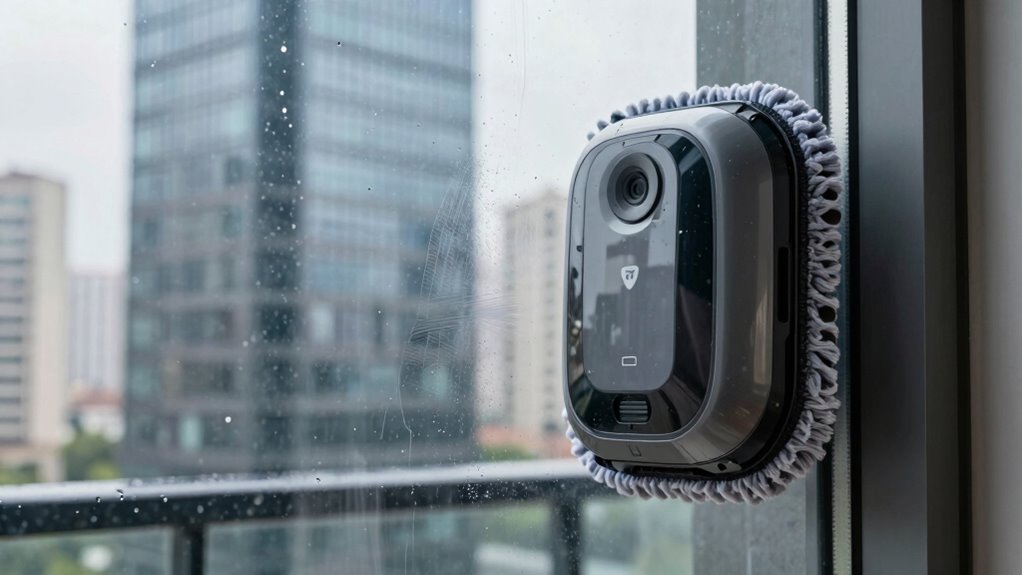
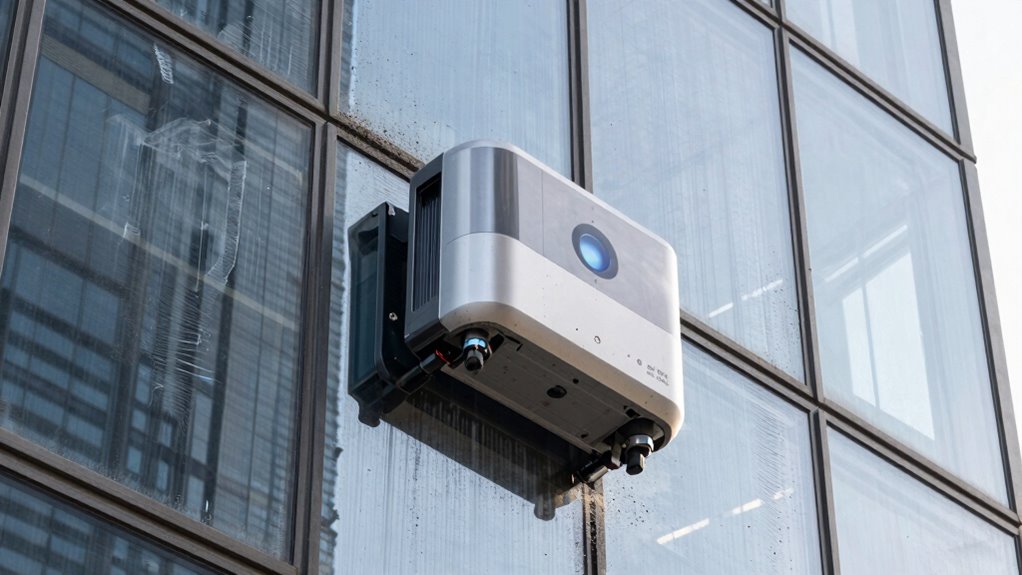
While window cleaning robots have advanced considerably, they still struggle to deliver spotless results on surfaces that aren’t properly prepared. One of the key reasons is that these machines depend heavily on precise robot sensor calibration. If the sensors aren’t correctly calibrated, the robot can misjudge distances, fail to detect edges, or lose grip, leading to missed spots or even falls. Proper sensor calibration ensures that the robot accurately perceives the window’s surface and obstacles, which is vital for effective cleaning. Without it, even the most sophisticated robot can’t perform at its best, especially on uneven or textured surfaces.
Proper sensor calibration is essential for effective window cleaning robot performance on all surfaces.
Another essential aspect often overlooked is surface adhesion techniques. These robots rely on suction cups, magnets, or microfiber pads to cling to glass surfaces. If the surface isn’t properly prepared, these adhesion methods can falter. Dust, dirt, or smudges reduce the effectiveness of suction or grip, causing the robot to slip or detach unexpectedly. Before starting the cleaning process, you need to verify the window is clean and free of debris. This simple step enhances the robot’s ability to stick securely and move smoothly across the surface. Additionally, some advanced robots are equipped with sensors that gauge surface smoothness and determine ideal adhesion points. However, these systems only work well if the surface is adequately prepared beforehand. Proper surface condition is essential for optimal adhesion and performance.
Surface adhesion techniques are also influenced by environmental conditions. High humidity or condensation can weaken suction cups or dampen microfiber pads, impairing grip. In such cases, wiping the surface dry and waiting for favorable conditions can make a significant difference. Many robot models have built-in features to adjust suction power or pressure based on surface feedback, but these are limited if the surface isn’t prepped properly. That’s why a meticulous approach to surface preparation—cleaning, drying, and sometimes even slightly sanding rough patches—is vital to maximize the robot’s adhesion potential. Proper sensor calibration is crucial for the robot to navigate effectively, especially on challenging surfaces, and can prevent operational issues caused by environmental factors. Additionally, understanding how surface conditions impact adhesion can help you troubleshoot problems more efficiently.
Ultimately, the success of window cleaning robots hinges on thorough surface prep. Verifying proper robot sensor calibration allows the machine to navigate efficiently, while employing effective surface adhesion techniques guarantees it stays firmly attached during operation. Skipping these steps might seem minor, but it can severely impact cleaning quality and safety. Investing time in proper preparation not only improves results but also extends the lifespan of the robot by reducing unnecessary strain or falls. In short, good surface prep isn’t just a recommendation; it’s a necessity if you want your window cleaning robot to perform at its highest level.

BINMIT Window Cleaner Robot with 4 Cleaning Modes, 8000Pa Suction Dual Direction Auto-Spray Window Cleaner, Intelligent Path, Edge Detection, Remote Control, 15-Stage Anti-Fall System for Windows
【Wide-Angle Upgrade Ultrasonic Spraying System】– An innovative dual nozzles misting system turns water into a fine mist that…
As an affiliate, we earn on qualifying purchases.
As an affiliate, we earn on qualifying purchases.
Frequently Asked Questions
How Do Surface Contaminants Affect Robot Cleaning Efficiency?
Surface contaminants like dust accumulation and oil residue directly reduce your robot’s cleaning efficiency. Dust buildup creates a barrier that prevents the mop or squeegee from making proper contact, while oil residue causes slipping and streaks. These contaminants make it harder for the robot’s sensors to detect edges and dirt, leading to incomplete cleaning. To optimize performance, you need to thoroughly prep surfaces, removing dust and oil beforehand.
Can Surface Prep Extend the Lifespan of Cleaning Robots?
Think of surface prep as armor for your robot, much like a knight’s shield. Proper surface conditioning reduces dirt and debris, which can wear down parts over time. This proactive approach extends your cleaning robot’s lifespan, lowering maintenance needs and preventing damage. Regular surface prep ensures the best efficiency, keeps the robot running smoothly, and preserves its components. In summary, good surface conditioning is your robot’s best defense against premature wear and tear.
What Tools Are Best for Pre-Cleaning Surfaces?
You should use a soft brush or microfiber cloth for pre-cleaning surfaces, focusing on debris removal to prevent scratching. Make certain sensor calibration is accurate so the robot navigates effectively. For stubborn dirt, a gentle wipe with a damp cloth can help, but avoid harsh chemicals. Proper pre-cleaning tools not only improve cleaning efficiency but also protect your robot’s sensors, extending its lifespan and ensuring thorough, safe window cleaning.
How Often Should Surfaces Be Prepared Before Robot Use?
Think of your surfaces like a freshly paved road—smoothness matters. You should prepare surfaces before robot use as often as cleaning frequency demands, especially if the surface texture tends to trap dirt or grime. Regular prep guarantees your robot works efficiently, reducing streaks and missed spots. Typically, a quick wipe or brush-down before each cleaning session is enough, but more frequent prep might be needed for high-traffic or heavily soiled areas.
Are There Specific Surface Materials That Hinder Robot Cleaning?
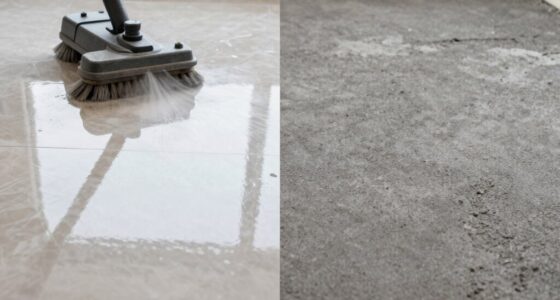
Certain surface materials, like textured glass or rough concrete, can hinder your robot’s cleaning efficiency due to their complex surface texture. Chemical residues, such as cleaning sprays or pollutants, can also impair adhesion and performance. You should thoroughly clean and dry these surfaces beforehand. Smooth, non-porous surfaces with minimal residues allow the robot to work effectively, ensuring better cleaning results and reducing the risk of malfunction.

Dqkhoicvf Robot Vacuum Cleaner Accessories 7 Series Window Treasure Suction Cup W830/833/850/83S/836/860/880
W830/833/850/83S/836/860/880
As an affiliate, we earn on qualifying purchases.
As an affiliate, we earn on qualifying purchases.
Conclusion
Just as a painter needs a pristine canvas to create a masterpiece, your window cleaning robot relies on proper surface prep to do its best. Without it, you’re risking streaks, missed spots, and frustration—like a ship sailing into stormy seas without a steady crew. Remember, even the smartest robots can’t work miracles if the foundation isn’t prepared. Take the time to prep your windows, and watch your clarity shine brighter than ever.

HCDZ Replacement Remote Control for Electric Window Glass Cleaning Smart Robot (Create Wipebot)
IR replacement remote control as shown
As an affiliate, we earn on qualifying purchases.
As an affiliate, we earn on qualifying purchases.

HIXZAP Window Cleaning Robot – Double Helix 4800-6400Pa Suction, Dual Ultrasonic Spray, 85ml Tank, Edge Detection, Anti-Drop, 3 Cleaning Modes for Streak-Free Glas (White)
Revolutionize Your Cleaning Routine Experience effortless window cleaning with our automatic robot cleaner. Featuring bidirectional ultrasonic atomization, it…
As an affiliate, we earn on qualifying purchases.
As an affiliate, we earn on qualifying purchases.