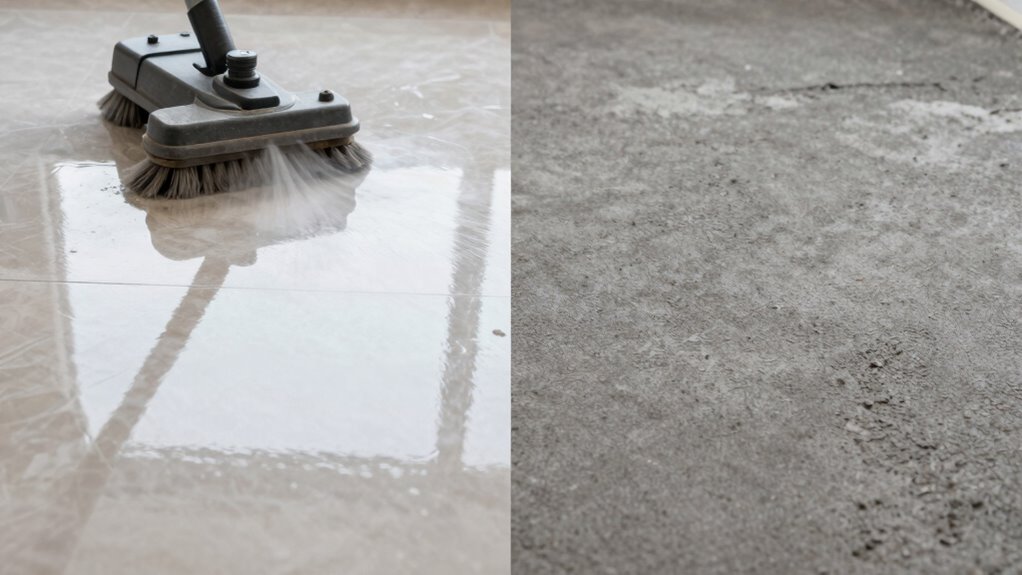

Floor scrubbers work differently on sealed and unsealed surfaces because each surface type responds uniquely to cleaning techniques and equipment settings. Sealed floors resist absorption, allowing for higher pressure, vigorous scrubbing, and stronger cleaning solutions without damage. Unsealed surfaces, being porous, need gentle scrubbing and less moisture to avoid deterioration. Understanding these differences helps you choose the right approach—keep exploring to discover how to optimize your cleaning routines effectively.

Prime made for students and young adults
- Fast, free delivery for dorm and study essentials
- Prime Video and Amazon Music included
- Member-only deals
Key Takeaways
- Sealed surfaces resist absorption, allowing for higher pressure and vigorous scrubbing without damage.
- Unsealed surfaces are porous, requiring gentle cleaning to prevent erosion and moisture infiltration.
- Strong cleaning solutions and deep scrubbing are suitable for sealed floors, but can harm unsealed ones.
- Protective sealants reduce wear and make unsealed surfaces easier to clean, affecting scrubber effectiveness.
- Equipment settings are adjusted based on surface porosity and durability to optimize cleaning and prevent damage.
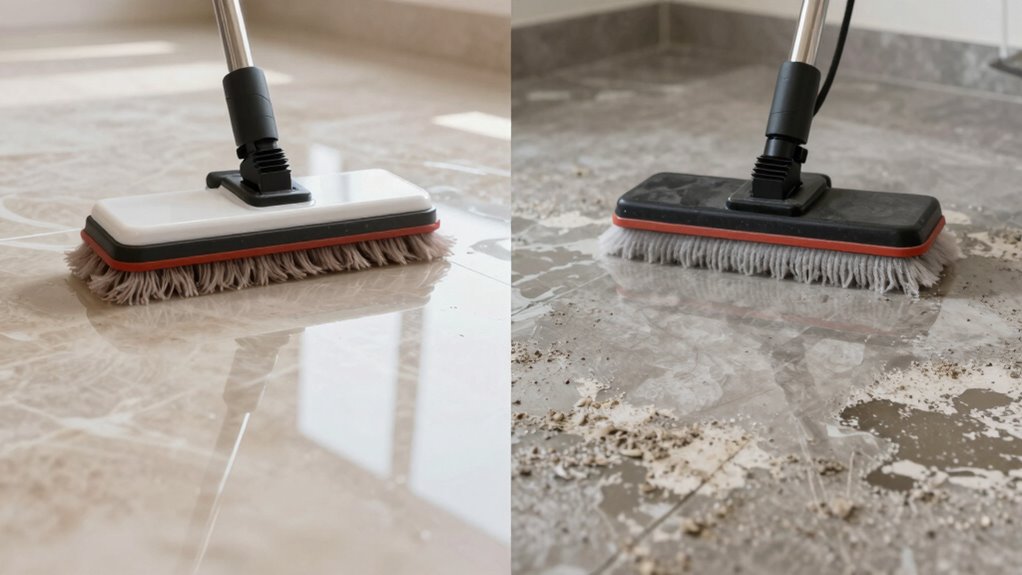
When choosing a floor scrubber, it’s important to take into account whether your surfaces are sealed or unsealed, as this impacts cleaning effectiveness and equipment choice. Sealed surfaces usually have a protective coating that prevents liquids and debris from penetrating the material, while unsealed surfaces are more porous and absorbent. This distinction greatly influences how your floor scrubber interacts with the surface and how you should approach maintenance routines to preserve surface durability. For unsealed surfaces, it’s especially crucial to consider their porosity, since it affects moisture absorption and overall surface integrity. Additionally, understanding the surface porosity helps determine the appropriate cleaning methods to avoid unnecessary damage.
On sealed floors, a floor scrubber can work more aggressively because the protective coating minimizes the risk of damage. You can use higher pressure settings, more vigorous scrubbing brushes, and stronger cleaning solutions without worrying about harming the surface. These surfaces tend to be more resilient, so maintenance routines can include regular deep cleaning to remove embedded dirt and stains. Since the seal prevents moisture from seeping into the material, your primary concern is keeping the surface clean and preventing the buildup of grime that can degrade the seal over time. Proper maintenance routines help extend the lifespan of sealed floors, maintaining their shiny appearance and surface integrity.
Unsealed surfaces demand a different approach. Because they’re porous, they absorb moisture, dirt, and cleaning agents more readily. When using a floor scrubber on unsealed floors, you need to be cautious with pressure and chemical use to avoid damaging the surface or causing premature wear. Gentle scrubbing is often enough to clean effectively, but the key is to prevent excessive moisture from penetrating the material, which can lead to deterioration and compromise surface durability. Regular inspections and surface protection measures are vital for maintaining unsealed floors over time. Implementing protective coatings or sealants can significantly reduce the frequency and intensity of cleaning needed, thereby extending the life of the surface. Maintenance routines on unsealed floors should include frequent cleaning to prevent dirt from embedding deeply and causing surface erosion. Additionally, applying sealants periodically can help protect the surface and reduce the intensity of cleaning needed over time.
electric floor scrubber for sealed floors
As an affiliate, we earn on qualifying purchases.
As an affiliate, we earn on qualifying purchases.
Frequently Asked Questions
Can Floor Scrubbers Damage Sealed Surfaces Over Time?
Yes, floor scrubbers can damage sealed surfaces over time if you don’t practice proper surface protection and scrubber maintenance. Aggressive scrubbing or using harsh chemicals can wear down the sealant, leading to potential damage. To prevent this, regularly check your equipment and use gentle cleaning agents. Proper surface protection and routine scrubber maintenance make sure your sealed floors stay intact and look their best without risking unnecessary damage.
Are Specific Cleaning Solutions Needed for Unsealed Floors?
Yes, you need specific cleaning solutions for unsealed floors. Chemical compatibility is essential because unsealed surfaces are more porous, meaning they absorb liquids more easily. Using the wrong cleaning solution can damage the surface or cause discoloration. Choose products formulated for porous materials to prevent harm, and always test on a small area first. This approach guarantees your cleaning process protects the floor’s integrity and keeps it looking its best.
How Often Should I Reseal My Flooring for Optimal Scrubbing Results?
You should reseal your flooring every 1 to 3 years, depending on sealing frequency and surface durability. Regular resealing maintains a protective barrier, ensuring best scrubbing results and prolonging your floor’s lifespan. If you notice wear or staining, it’s time to reseal. Prioritize your floor’s health by monitoring its condition, and reseal proactively to keep surfaces resilient, clean, and looking their best.
Do Scrubbers Use More Water on Unsealed Floors?
Yes, scrubbers tend to use more water on unsealed floors. The porous surface absorbs water more easily, leading to increased water consumption during cleaning. This can impact cleaning efficiency, as more water may mean longer drying times and potential streaks. To optimize results, you might consider adjusting water flow settings or using a scrubber with adjustable controls, ensuring you balance water use with effective cleaning.
Can Using a Scrubber Improve the Longevity of Sealed Floors?
Using a scrubber can indeed improve the longevity of sealed floors by enhancing sealed surface maintenance. Modern scrubber technology advancements guarantee thorough cleaning without damaging the seal, removing dirt, grime, and debris that wear down the surface over time. Regular use maintains the protective layer, prevents scratches, and preserves the floor’s appearance, ultimately extending its lifespan. You get a cleaner, more durable floor that looks better longer with consistent, proper maintenance.
gentle floor scrubber for unsealed surfaces
As an affiliate, we earn on qualifying purchases.
As an affiliate, we earn on qualifying purchases.
Conclusion
Understanding how floor scrubbers work differently on sealed and unsealed surfaces guarantees you choose the right cleaning method every time. When you know the nuances, you prevent damage and extend the life of your floors—saving you from a cleaning nightmare that could last longer than a lifetime. With this knowledge, you become a cleaning superhero, transforming your space effortlessly and making dirt tremble at your newfound expertise. Master these differences, and your floors will thank you for it!
commercial floor scrubber with adjustable pressure
As an affiliate, we earn on qualifying purchases.
As an affiliate, we earn on qualifying purchases.
floor cleaning machine for porous surfaces
As an affiliate, we earn on qualifying purchases.
As an affiliate, we earn on qualifying purchases.
Fall Picks
fall essentials
As an affiliate, we earn on qualifying purchases.